


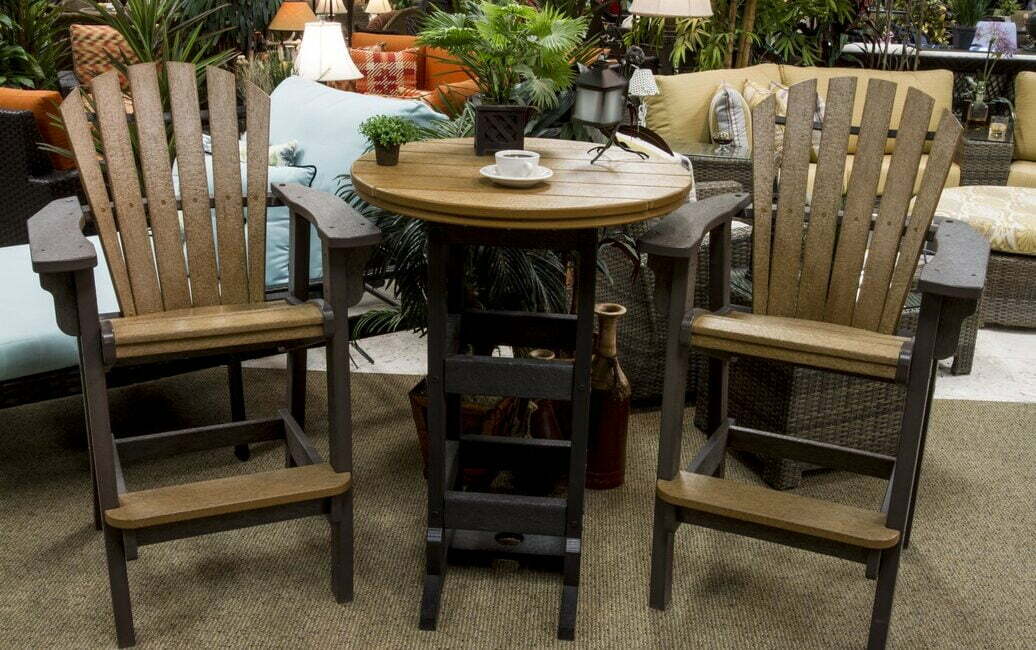
A round outdoor dining table for small patio spaces solves a problem nearly every Florida homeowner runs into: how to seat the people you love on a slab that never feels quite big enough. Whether your patio is a compact screened lanai in Naples, a courtyard in the Treasure Coast, or a townhome deck along the Gulf Coast, the shape of the table matters as much as its size. Round tables flow around tight corners, seat an extra guest when needed, and keep conversation easy in the kind of cozy outdoor rooms Florida living is built around. Here is why the round shape consistently outperforms a rectangle in small spaces, and how to size one correctly.
The Geometry That Makes a Round Outdoor Dining Table for Small Patio Layouts Fit
Start with the corners. A rectangular table has four sharp corners that jut into walkways and catch hips and shins as people move around a tight patio. A round outdoor dining table for small patio use has no corners at all, so it tucks into a square footprint while leaving smooth, predictable paths on every side. That single difference can reclaim a foot or more of usable walking space on a typical 10-by-10-foot lanai, which is the difference between a patio that feels cramped and one that breathes.
Round tables also use floor space more efficiently for seating. Because every seat faces the center, you can add a chair almost anywhere along the perimeter when an extra guest shows up, rather than being locked into a fixed number of edge seats. A 48-inch round comfortably seats four and squeezes in five or six for a casual cookout, while a rectangle of the same area forces you to leave the short ends empty or risk knocking elbows. In a state where impromptu gatherings happen the moment the rain clears on a summer afternoon, that flexibility earns its keep. There is a visual benefit too: a round form softens a boxy patio and draws the eye toward the center of the space rather than to its walls, which makes a cramped slab feel calmer and more deliberately designed. If you are weighing shapes and materials before you decide, our look inside the Palm Casual factory shows how each table is built to the dimensions Florida patios actually need.

Better Conversation and Easier Serving
The round shape does something a rectangle cannot: it puts everyone within easy eye contact and conversation range. At a long rectangular table, the person at the far end is effectively at a different dinner. Around a 48-inch round, all four or five diners share one sightline, which suits the relaxed, social style of Florida outdoor entertaining where the meal often stretches across a slow Gulf Coast evening.
Serving is simpler too. A round table has a single shared center that every guest can reach, so platters of grilled shrimp, a pitcher of sweet tea, or a bowl of salad live within arm’s reach of the whole group. There is no need to pass dishes down a line, which keeps the meal relaxed and the table tidy. For families with children, the lack of corners removes a genuine bump hazard at the exact height of a toddler’s forehead, a small but real benefit on a busy patio where little ones weave between chairs. Older guests appreciate the round shape too, because they can reach a seat from any direction rather than squeezing past a fixed run of edge chairs. When you are choosing a center for the table, a built-in umbrella hole is worth specifying in Florida; the summer UV index regularly climbs into the very-high range, and a center umbrella shades the whole table evenly because the round shape distributes that shadow in a circle rather than leaving the ends of a rectangle exposed. That even shade keeps a meal comfortable from noon through the late-day sun.
Sizing a Round Table Without Crowding the Space
Getting the diameter right is where small patios succeed or fail. The working rule is to leave 36 inches between the table edge and any wall, railing, or planter so chairs can pull out and people can walk behind seated guests. If your patio measures 10 by 10 feet, that math points to a 42-to-48-inch round as the sweet spot, seating four with comfortable circulation. Drop to a 36-inch round bistro table for a balcony or a corner reading nook that seats two.
Quick Diameter Guide for Florida Patios
- 36-inch round: seats two to three, ideal for balconies and townhome decks.
- 42-inch round: seats four, fits a 9-by-9-foot lanai with room to move.
- 48-inch round: seats four to six, the most versatile size for a 10-by-12-foot patio.
- 54-inch round: seats six, best reserved for patios at least 12 by 12 feet.
Chair selection affects the count too. Armless chairs and sling seats tuck fully under the table, letting you store the whole set in a smaller footprint between meals. Bulkier cushioned chairs need more perimeter, so size down the table or up the patio accordingly. The table base style plays a part as well: a single pedestal base lets chairs slide in from any angle, while a four-leg base can block a chair from tucking into a corner. Measuring your slab and bringing those numbers to a showroom takes the guesswork out of it, since seeing real chairs around a staged table reveals tight spots that a tape measure alone can miss.

Materials That Last in the Florida Climate
A small patio table works hard, so material choice determines how long it stays beautiful. Powder-coated and cast aluminum round tables resist rust, shrug off Florida’s 70-plus-percent humidity, and stay light enough to reposition without two people. HDPE recycled lumber tops bring a warm, plank-style look that never needs sealing and handles salt-air corrosion within five miles of the coast better than natural wood, which warps and grays in this climate. For a glass-topped round, tempered safety glass resists the thermal stress of going from a cool morning to a scorching afternoon.
Because our tables are Florida-built in our Orlando factory and sold at factory-direct pricing, you can choose the top material, the base finish, and the diameter that fit your patio rather than settling for a single big-box configuration. That matters most in tight spaces where an inch in either direction changes how the patio functions. Storing or covering the table ahead of the daily summer storms and during hurricane season, June 1 through November 30, keeps it looking new for years. The U.S. National Weather Service publishes Florida’s seasonal outlook and daily forecasts at weather.gov, a handy bookmark for timing cushion storage around afternoon thunderstorms. With the right material and the right diameter, a round table turns even the smallest Florida patio into a real dining room. To see the options in person and compare finishes against your space, visit our Bonita Springs showroom.
Styling a Round Table to Feel Bigger Than It Is
A few styling choices make a small round table read as generous rather than tight. A pedestal or single-column base, instead of four legs, frees up foot room so chairs slide all the way under and the floor stays visually open. A lighter table finish bounces light around the space and keeps the patio feeling airy under Florida’s bright skies. Skip the heavy centerpiece; a low, simple arrangement or a slim umbrella pole keeps sightlines clear and the table usable.
Coordinate the chairs in a single finish for a calm, uncluttered look that makes the footprint feel intentional. Stackable or folding sling chairs let you clear the patio entirely for a yoga mat, a kiddie pool, or storm prep, then reset for dinner in minutes. Add an outdoor rug sized to sit just under the table and chairs to define the dining zone without crowding the walkways. These small moves turn a compact slab into a patio that hosts comfortably, proves that the right round table can do more in less space, and makes the most of every square foot Florida living gives you.
Frequently Asked Questions
What size round table fits a small Florida patio?
For most small patios, a 42-to-48-inch round table is the sweet spot, seating four to six while leaving room to move. Leave at least 36 inches between the table edge and any wall or railing so chairs pull out freely. On a balcony or townhome deck, drop to a 36-inch round that seats two to three without crowding the space.
Why is a round table better than a rectangle for small spaces?
A round table has no corners to jut into walkways, so it tucks into a square footprint while keeping smooth paths on every side. That reclaims usable floor space on a tight lanai. Round tables also let you add a chair anywhere along the edge for an extra guest, and they put everyone within easy conversation and serving reach.
What material holds up best for an outdoor table in Florida?
Powder-coated and cast aluminum resist rust and handle Florida’s high humidity and coastal salt air, while HDPE recycled lumber tops never need sealing and won’t warp like natural wood. Tempered glass tops resist thermal stress from cool mornings to hot afternoons. All three outperform untreated wood, which grays and warps quickly in the Florida climate.
Should a small round patio table have an umbrella hole?
In Florida, an umbrella hole is well worth having. The summer UV index regularly reaches the very-high range, and a center umbrella shades a round table evenly because the shadow falls in a circle. That even coverage keeps every seat comfortable from midday through the late-afternoon sun, extending how long you can enjoy a meal outdoors.
If a small patio has been keeping you from hosting the dinners you want, Palm Casual can help you find a round table sized exactly to your space. Call our team at (407) 299-9188 or stop by our Bonita Springs showroom to measure options against real chairs, compare finishes in Florida light, and see how factory-direct pricing makes a custom-fit table affordable.
Explore Palm Casual
Factory-direct pricing with a risk-free 30-day trial. Visit a showroom or call (407) 299-9188.
Explore Our Buying Guides
Looking for expert advice? Read our Complete Guide to Patio Furniture in Florida or Ultimate Guide to Outdoor Furniture in Florida for tips on materials, maintenance, and choosing the right set for your space.
