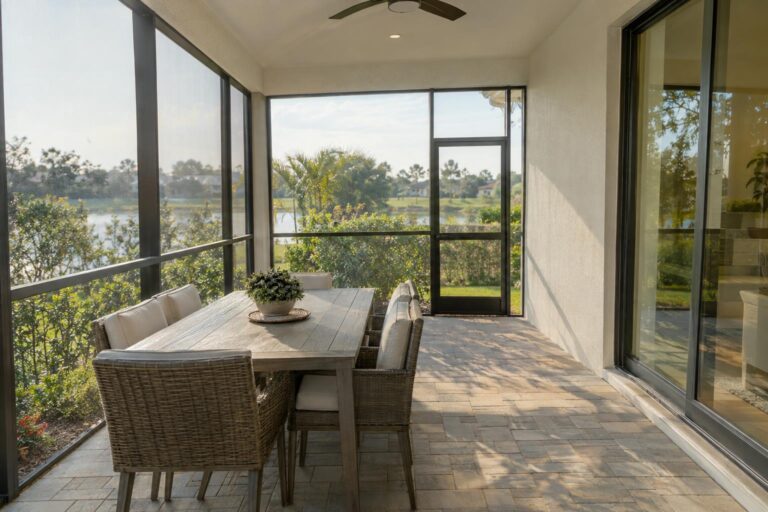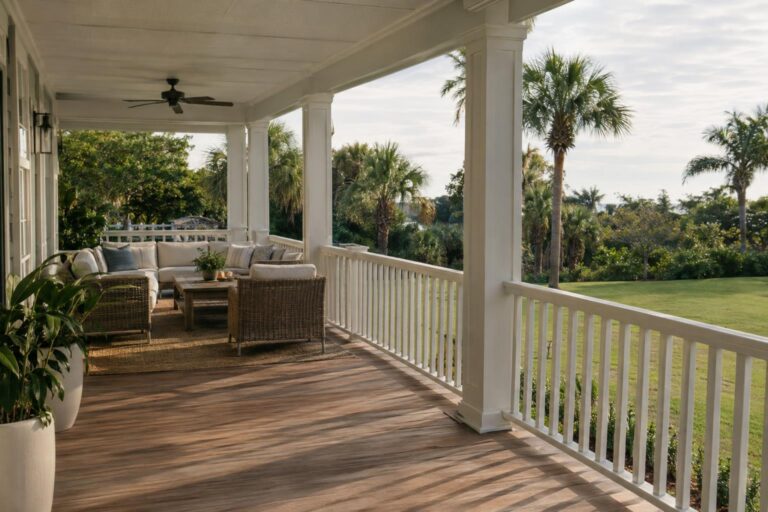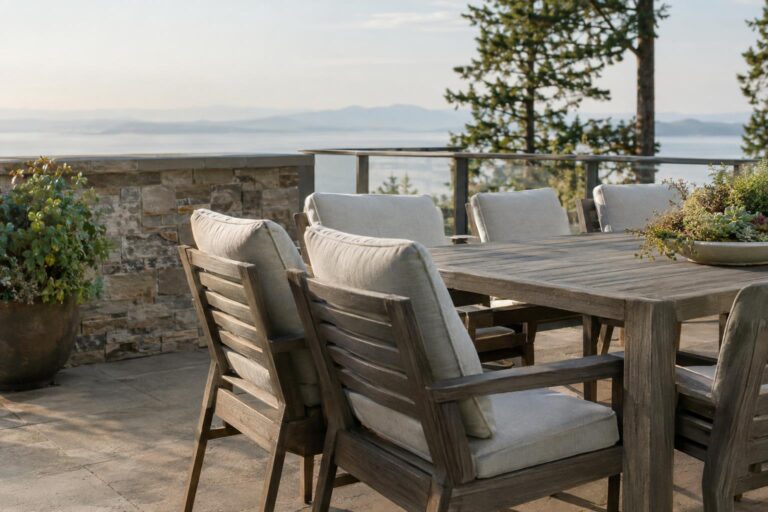

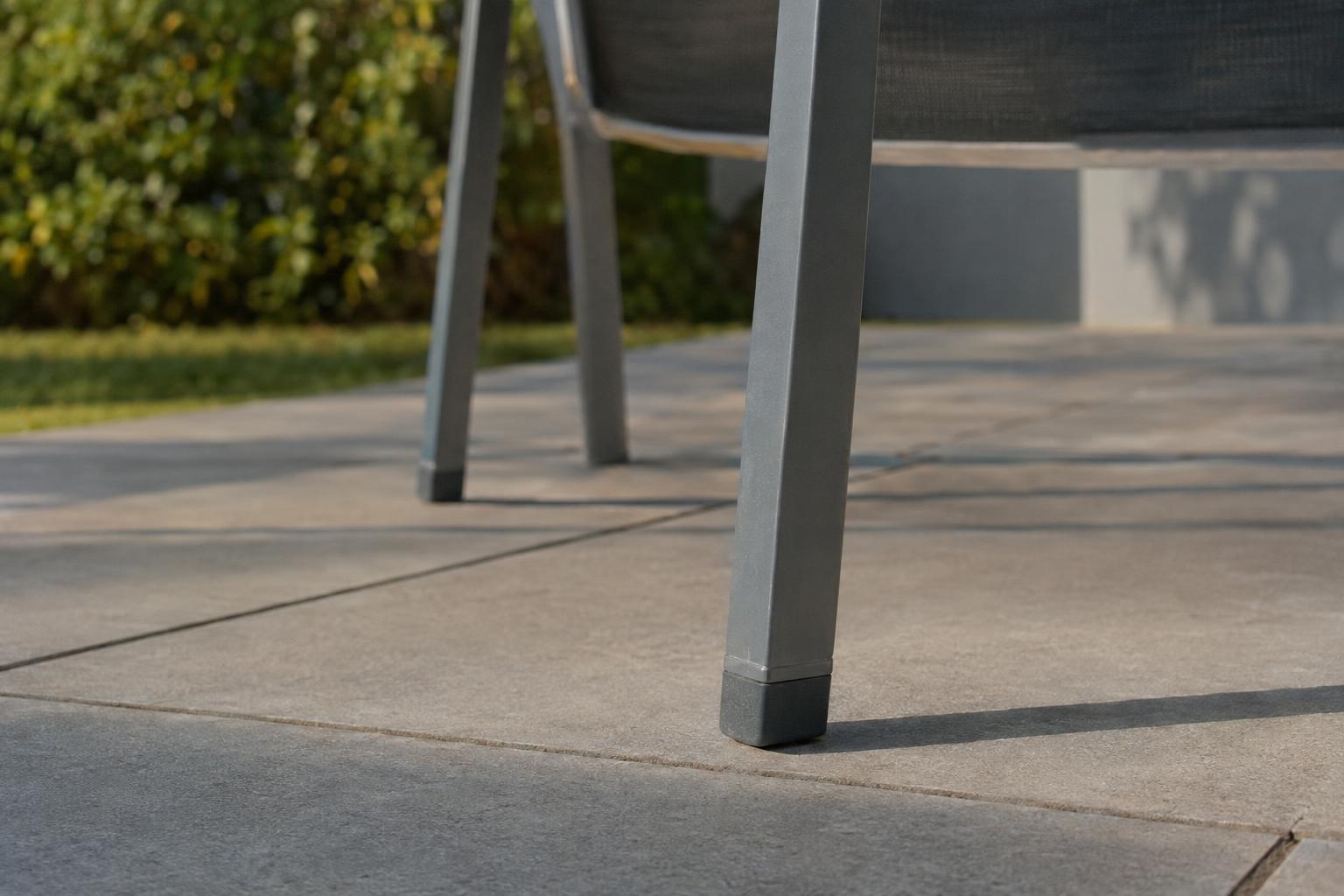
Most shoppers choose a chair for its frame, cushions, and finish, then forget the small parts that actually touch the floor. This guide covers patio chair glides for tile and lanai floors: what the feet under your chairs and tables do, why they leave marks, and how to choose, check, and replace them. Whether your lanai has glazed tile, stone-look tile, a textured coating, or a screen-enclosure slab, the right feet protect the surface, keep furniture steady, and cut down on the scraping sound every time someone pulls out a chair. For a wider look at choosing outdoor pieces, see our patio furniture guide.
Why Tile and Lanai Floors Get Scuffed
Marks on a lanai floor rarely come from furniture alone. They come from furniture plus whatever is trapped between the foot and the floor. Outdoors, that is almost always grit: sand tracked in from the yard, dust that blows through the screen, and fine debris from the pool deck or driveway. When a chair moves, those particles act like sandpaper under the foot.
Grit and Debris
A clean, hard foot on a clean floor can slide without much harm. Add a few grains of sand and the same foot leaves fine lines, especially on glossy tile where light catches every scratch. Sweeping the floor before you rearrange furniture removes most of the problem.
Wet Surfaces
Water carries grit around and makes it easy to grind in. Wet feet and wet floors also change how a chair behaves, which we cover below.
Dragging and Pulling Out
The biggest source of wear is simple habit. Pulling a chair out from a table drags all four feet across the floor, often with a person already leaning on it. Lifting a chair even a few inches before moving it saves both the floor and the foot.
Glide Materials in General Terms
Chair feet come in a few common types, and each behaves differently outdoors. Check the specific frame you own, because leg shape and foot style vary.
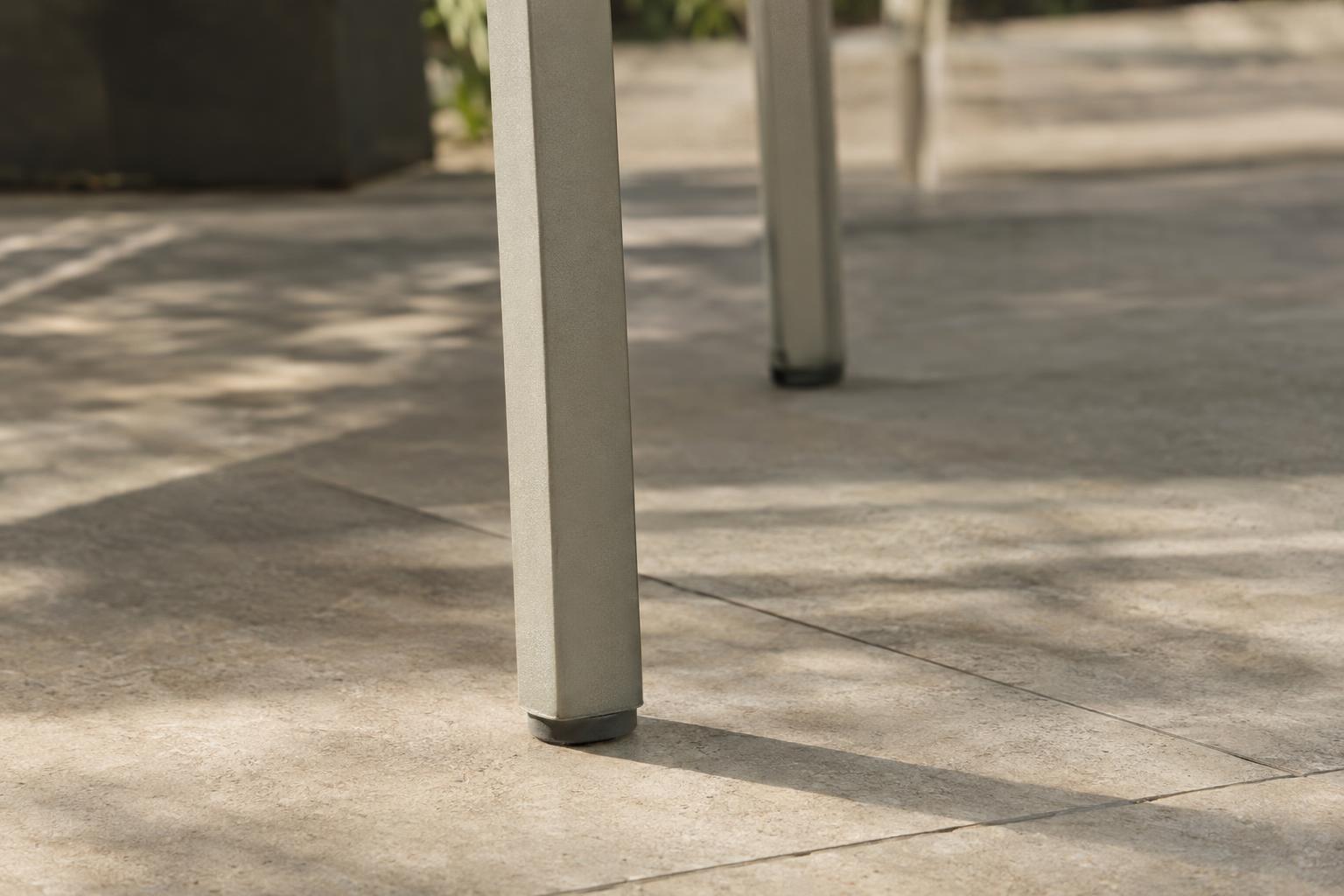
Nylon and Hard Plastic Glides
These are smooth, firm, and common. They slide easily and tend to be quiet on tile. The trade-off is that they can slide more than you want on a wet or glossy surface.
Felt Pads
Felt works well indoors because it cushions the floor and muffles noise. Outdoors it is a weaker choice. Felt holds onto sand and dust, and once grit embeds in the fibers, the pad can scratch the very surface it was meant to protect.
Rubber and Soft Caps
Rubber or rubber-like caps grip better, which helps chairs stay put on smooth tile. They are usually a good match for wet areas. Because they grip, they can also stick and skip when dragged across textured surfaces, so lift rather than slide. Some caps can leave dark marks on light flooring, so test one in a hidden corner if you are unsure.
A Simple Approach to Choosing Glides for Tile and Lanai Floors
Start with the floor, match the foot to it, then match the size of the foot to the leg.
Swivel and Tilting Glides vs. Flat Fixed Feet
A fixed foot is a flat cap that stays at one angle. It only sits fully flat when the leg is perfectly vertical. A swivel or tilting glide has a small pivot so the base can follow a slight lean in the leg. That keeps the whole base flat against the floor and reduces the sharp edge that can dig in. On chairs with angled legs, a pivoting glide often protects the floor better, while a fixed foot is simple and steady on straight legs.
Glide Size and Leg Tube Shape
Legs may be round, square, oval, or flat-sided, and the inner size varies. A glide that is too small can pop off or pinch the end of the tube. One that is too big can wobble or fall out. Measure the outer width of the leg, note the shape, and bring the details when you ask for a replacement.
Slipping, Sliding, and Noise
A glide that is perfect for moving a chair can be a problem when you sit down. On smooth glazed tile after rain or pool splash, a chair with hard plastic feet may slide backward as someone sits or forward as they stand. Falls on wet walking surfaces are a well-known cause of injury, and NIOSH publishes general information on preventing falls, a useful reminder to take wet floors seriously.
Noise follows the same pattern. Hard feet on hard tile create a scrape and a squeak, while softer caps are quieter but may grab. A few practical habits help:
- Choose a softer, grippier cap for areas near the pool or an open edge where the floor stays wet.
- Save very slick glides for dry, covered spots where you move chairs often.
- Towel the floor and feet dry when you can, and avoid sitting down quickly on a wet floor.
Uneven Floors and Adjustable Levelers
Many lanai floors slope slightly for drainage, and textured or stone-look tile can be uneven from joint to joint. A table that rocks is hard on the glides, because one foot carries most of the weight and wears fast. If you are dealing with that, our page on setting up furniture on an uneven patio surface walks through the options in more detail.
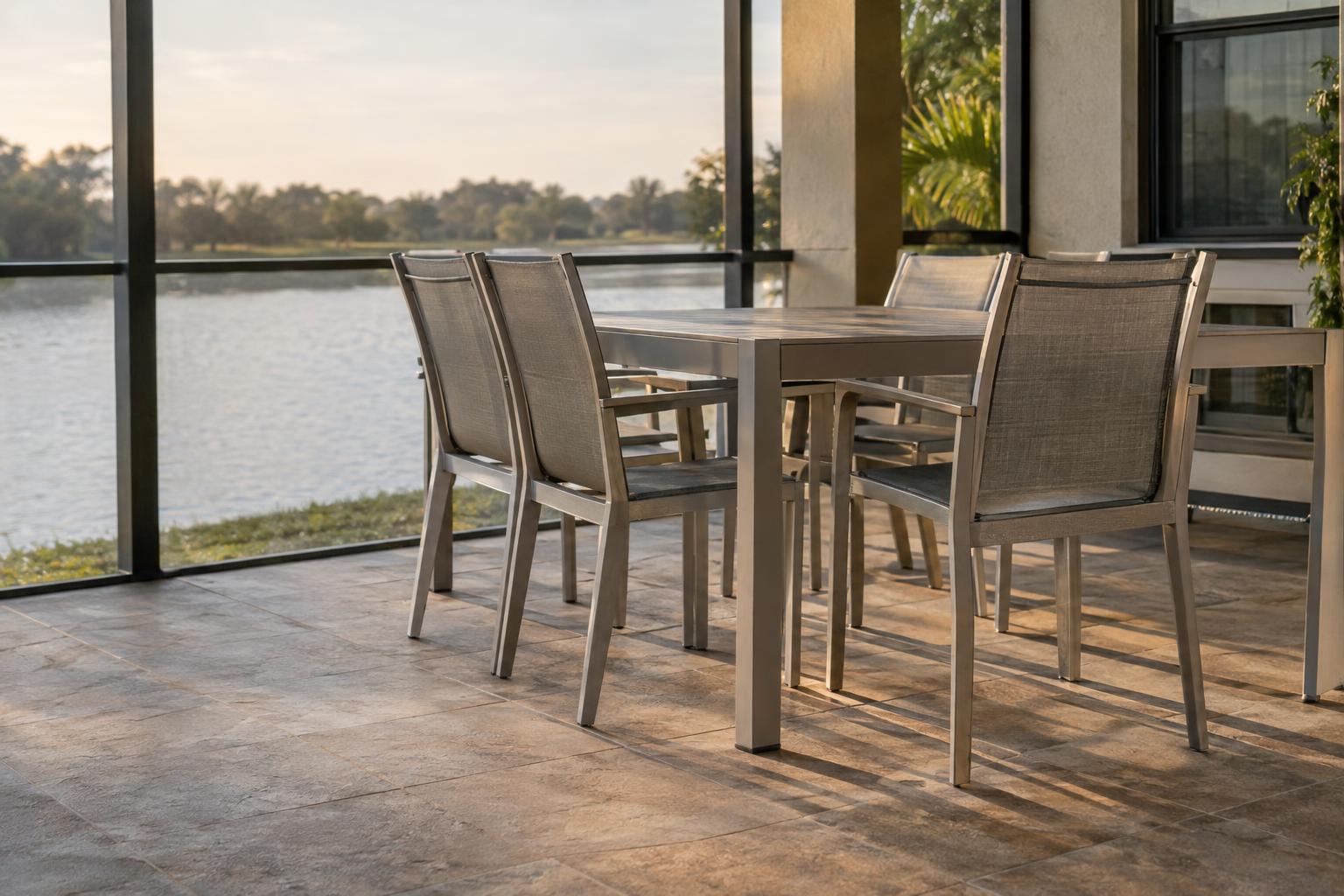
Some pieces use adjustable levelers, which are small threaded feet that can be turned up or down by a few turns. They let you correct a wobble without shimming. If your table has them, adjust one leg at a time with the table empty, then check that the piece sits firm. If your table does not, ask the showroom whether a leveling option exists for that frame before you stack up makeshift shims.
Florida Weather and Worn Feet
Florida conditions are hard on small plastic parts. Sun can dry and crack caps, humidity keeps pads damp, and salt in coastal air can speed up wear on feet and the metal around them. A worn glide can expose a hard edge of the leg that scratches the floor.
Replacing a worn foot is usually a small job. Take the old one with you, or note the leg shape and size, and ask the showroom or a hardware supplier for the correct fit. Palm Casual has been in business since 1976 in Orlando, and we offer in-house repair services and replacement parts availability, so ask the showroom about the specific piece you own (you can also read about Palm Casual's Orlando factory and history). We cannot say which size fits your piece without seeing it, so bring details or a photo.
A Short Inspection Checklist
Set a reminder to check feet at the start of each season and after storms. It takes only a few minutes.
- Tip each chair back gently and look at every foot for cracks, flat spots, or missing pieces.
- Look for embedded grit, sand, or small stones in felt and rubber.
- Press on each cap to see whether it is loose or has hardened.
- Run a finger over the underside to feel for sharp or exposed edges.
- Rock the table and chairs to find wobbles, then adjust levelers or replace the worn foot.
- Sweep or rinse the floor, then look for fresh scratch lines that suggest a foot has failed.
Frequently Asked Questions
Are felt pads a good choice on a lanai floor?
Felt is quiet and soft, but it traps sand and dust, and outdoors the fibers stay damp longer. Once grit builds up, the pad can scratch rather than protect. If you use felt, check and clean it often, or choose a rubber or plastic cap instead.
How often should I check the feet on patio chairs and tables?
A quick check at the start of each season is a good habit, with an extra look after a storm or heavy use. Replace any foot that is cracked, flattened, loose, or full of embedded grit.
Will the right glide stop a chair from sliding on wet tile?
It can help, but no foot removes the risk completely. Softer, grippier caps generally hold better on wet glazed tile than hard plastic, though a grippy foot can catch when a chair is pushed back, so lift the chair rather than dragging it. Keep the area dry when you can and sit and stand slowly on a wet floor.
Can I replace the feet on my patio furniture myself?
Often yes, because many feet press or screw into the end of the leg. The main task is finding the correct size and shape for your frame. Ask the showroom or a hardware supplier, and bring the old foot or a clear photo of the leg end.
If you want help choosing furniture that suits your floor, call Palm Casual at (407) 299-9188 or visit our showroom to talk through your lanai and the pieces you already own.
Explore Palm Casual
Factory-direct pricing with a risk-free 30-day trial. Visit a showroom or call (407) 299-9188.
Explore Our Buying Guides
Looking for expert advice? Read our Complete Guide to Patio Furniture in Florida for tips on materials, maintenance, and choosing the right set for your space.