


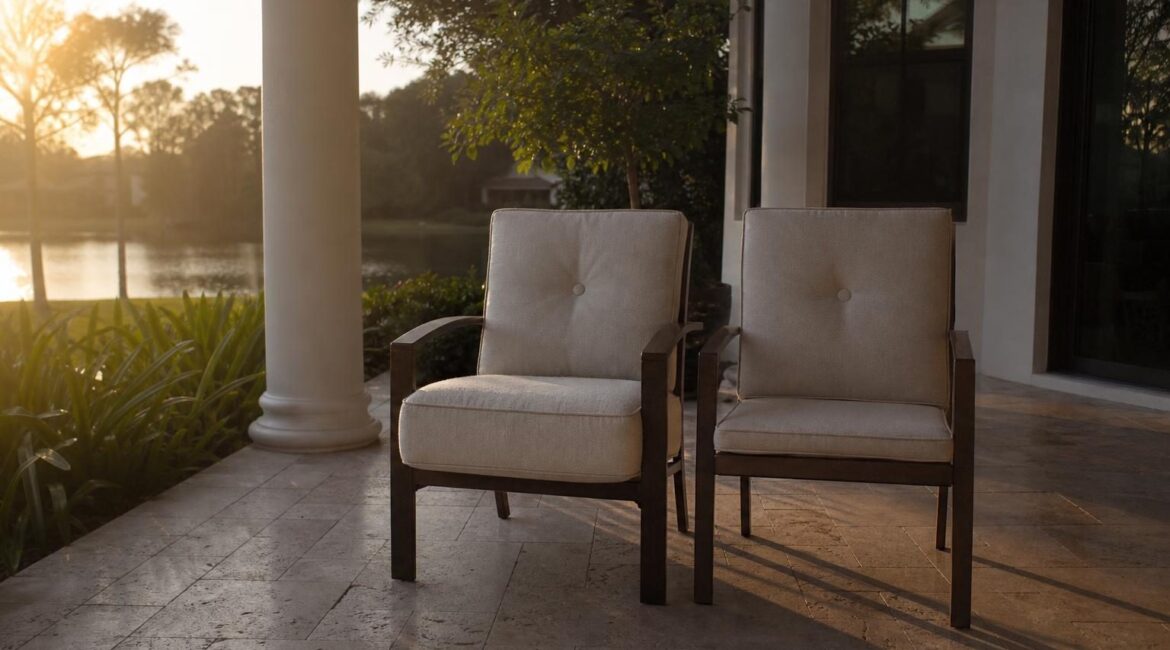
Two patio chairs can look nearly identical in a photo and feel completely different the moment you sit down. The difference usually comes from the cushion, and the choice between firm vs plush outdoor seat cushions shapes how you will actually use your patio far more than most buyers expect.
A cushion that suits a long, slow afternoon with a book is rarely the one that suits a two-hour dinner with friends. Understanding what firm and plush each do well, and what they trade away, helps you pick seating you will sit in every day instead of every other week.
Firm vs Plush Outdoor Seat Cushions: How Each One Feels in Use
Start with the basics of what you are feeling. A firm seat cushion pushes back. Your weight compresses it only a little, so your hips stay close to where the frame put them, and the seat keeps a flat, supportive surface. A plush cushion gives way. You sink in, the cushion rises around your thighs, and the seat feels soft and enveloping right away.
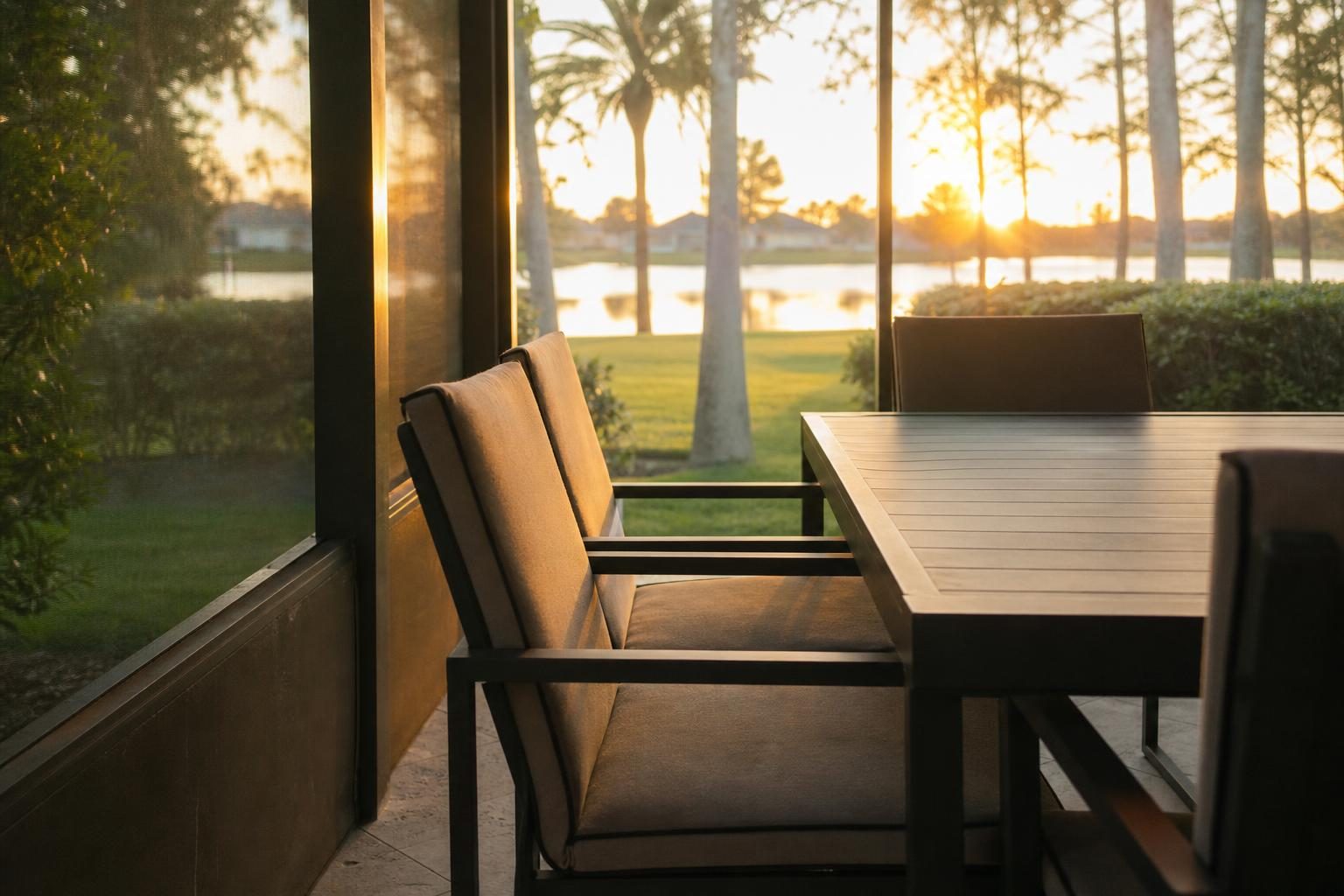
Neither one is better in every situation. Firm cushions tend to be thinner or built around denser foam, which keeps posture upright and makes it easy to stand up. Plush cushions are typically thicker, sometimes with a softer foam core or an added wrap of fiber around it, and they trade some support for a relaxed, sink-in feel.
Here is how the two usually compare in day-to-day terms:
- Posture: firm holds your back and hips in a neutral line, while plush lets your pelvis roll back and your knees rise.
- Getting up: firm seats release you easily, while deep plush seats can take a little push, especially for anyone with stiff knees or hips.
- Shape over time: firm cushions usually show less obvious dents after a season of use, while plush cushions can show a visible body impression where you sit most.
- First impression: plush wins in the first ten seconds, but firm often wins after an hour.
That last point matters when you shop. A soft cushion feels wonderful for a minute, which is how long most people test furniture.
Match the Cushion to How You Actually Sit
The most useful question to ask is not which cushion is nicer but where the seat will live and what people will do in it. Different spots on the patio ask for different things.
Dining chairs
People at a dining table sit upright, lean forward to reach food, and shift often. Firm cushions suit that posture. They keep you at a comfortable height relative to the table, so your elbows are not hovering above the surface, and they do not swallow you when you slide your chair in. A very thick, soft seat can raise you higher than the table was designed for, which feels awkward by the second course.
Lounge chairs and deep seating
For conversation groups, sofas and chairs meant for reading or afternoon naps, plush seats make sense. Deep seating is built for leaning back, tucking a foot up and staying awhile, and a softer cushion supports that relaxed angle. Check how the back cushion works with the seat, because a plush seat paired with a hard, straight back can leave you feeling tilted forward.
Bistro and balcony seating
Small chairs on a balcony or by a front door often get short, frequent use: a morning coffee, a phone call, a quick sit while the kids play. A slim, firm cushion is usually the practical answer here because it stays put, dries quickly and does not overwhelm a small frame.
A quick self-check
Ask yourself three questions before you decide. How long will people usually stay seated? Will they be eating, talking or resting? And does anyone in your household find low or soft seats difficult to get out of? If the honest answers are long, resting and yes, lean plush but moderate. If they are short, eating and no, lean firm. Many households mix the two. For more on how cushions behave through Florida rain, see how quick-dry foam cushions handle Florida afternoon storms.
What Florida Humidity and Rain Mean for Cushion Feel
Comfort is only half the story on a Florida patio. Outdoor cushions face humidity that never really leaves, sudden afternoon downpours and strong sun, and each of those interacts with firmness in a different way.
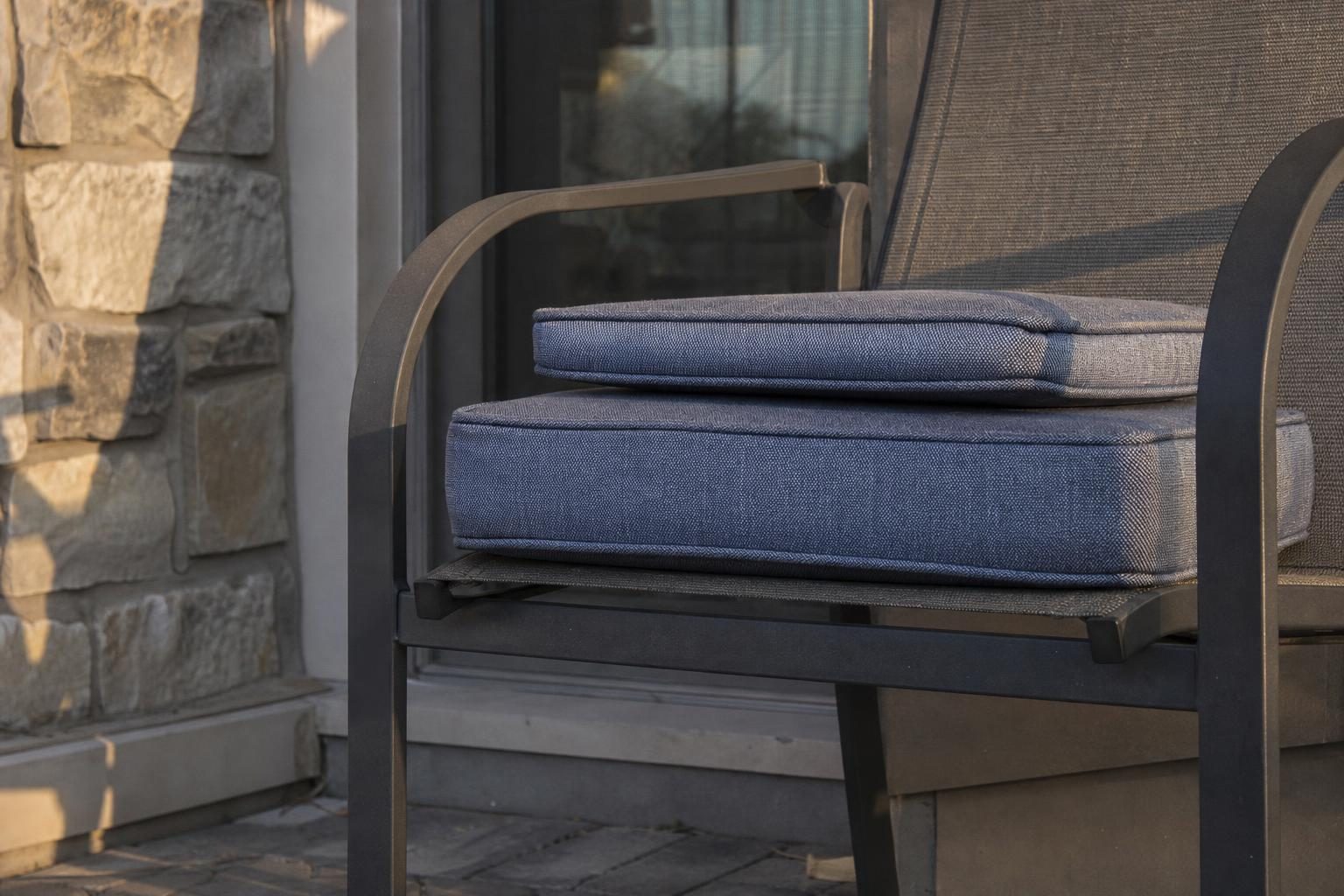
Thickness affects drying. A thick plush cushion holds more material, so it usually takes longer to dry through after a soaking rain than a thin firm one. Foam construction matters too. Open-cell, quick-drying foam is typically designed to let water pass through rather than hold it, and many outdoor cushions are built around that idea. The specific foam, fill and cover on any given Palm Casual piece depends on the product, so ask a showroom team member which construction the seat you like uses.
The fabric shell changes the picture as well. Performance fabrics such as Sunbrella are made for outdoor use and are designed to resist fading and moisture, which means the fabric itself is less likely to be what wears out first. What tends to change over the years is the cushion inside, which softens, compresses and loses some of its bounce.
A few practical habits keep any cushion feeling better for longer:
- Stand cushions on their edge or lean them against the frame after heavy rain so air reaches both faces.
- Rotate and flip reversible seats so wear does not concentrate in one spot.
- Keep the drainage gaps and slats under the seat clear of leaves and debris so water does not pool beneath the cushion.
- Bring cushions under cover or indoors during storm warnings when that is easy to do.
Salt air near the coast and the constant moisture inland can both encourage mildew on a cushion that stays damp, so a seat that dries reasonably fast is worth some weight in your decision. For a broader look at how the whole seating group holds up outdoors, see our patio furniture guide. The general idea of how foam and fabric layer together is also covered in this overview of cushion construction.
How to Test Cushions in a Showroom
Sitting for a few seconds tells you very little. A short, deliberate routine tells you much more, and it takes only a few minutes.
- Sit for at least five minutes. Let your weight settle. Notice whether your lower back and thighs are still comfortable or whether you have started to shift.
- Feel the frame through the cushion. Slide your hand between the cushion and the seat edge. If you can feel the frame or slats easily through a thick-looking cushion, it may be softer than it appears.
- Stand up three times. Push out of the seat without using the arms if you can. If you struggle, imagine doing it after a long dinner.
- Check the height. With the cushion compressed, your feet should rest flat and your knees should sit roughly level with your hips.
- Press and release. Push a hand into the cushion and watch how quickly it recovers. A slow rebound often signals softer foam that may take a deeper impression over time.
- Bring your usual company. If two people of different sizes will share a loveseat, have both sit down and see whether the middle sags.
Ask a team member whether cushions for the piece you like are available in different thicknesses or feels. Palm Casual has been in business for more than 40 years, and helping people find the right seat is a large part of what showroom conversations are about. The real answer to firm vs plush outdoor seat cushions is the one that fits how you sit, how long you sit and how your patio handles weather, so give yourself time to test both before you decide.
Frequently Asked Questions
Are firm cushions better for people with back or hip pain?
Many people with back or hip discomfort find firmer seats easier because they hold posture and make standing simpler. Comfort is personal, though, so sit in both types for several minutes and check with your own doctor if you have a specific medical concern.
Do plush outdoor cushions flatten faster?
Softer, thicker cushions often show body impressions sooner than dense, firm ones, especially in the seat you use most. Rotating cushions and giving them time to dry between uses can slow that down.
Can I use different cushion feels on the same patio?
Yes, and many households do. Firmer seats at the dining table and softer ones in the lounge area is a common and practical combination. Keep fabric colors consistent so the space still looks unified.
How do I know if a cushion will dry quickly after Florida rain?
Thinner cushions and quick-drying foam construction usually shed water faster than thick, dense fill. Because construction differs by product, ask a Palm Casual showroom team member about the specific seat you are considering.
Get Started at a Palm Casual Showroom
Sit in the seats you are considering, take your time and bring the people who will use them. Call us at (407) 299-9188 to reach a team member, or learn how our furniture is built and sold at our factory page.
Explore Palm Casual
Factory-direct pricing with a risk-free 30-day trial. Visit a showroom or call (407) 299-9188.
Explore Our Buying Guides
Looking for expert advice? Read our Complete Guide to Patio Furniture in Florida or Ultimate Guide to Outdoor Furniture in Florida for tips on materials, maintenance, and choosing the right set for your space.
