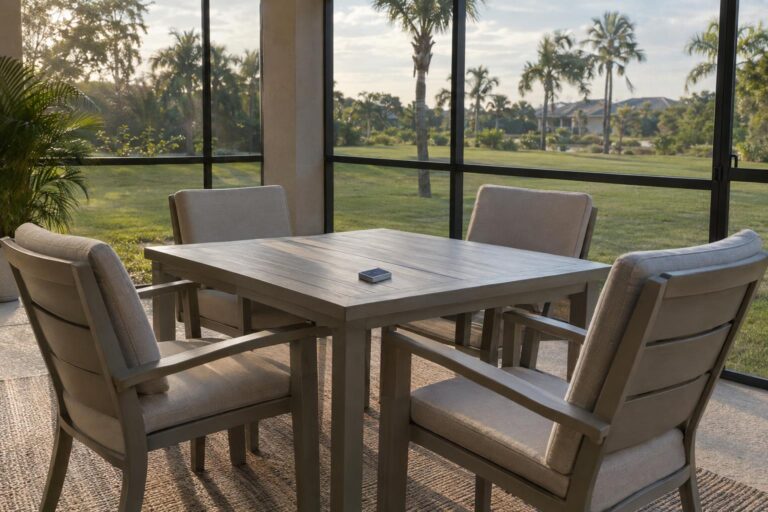

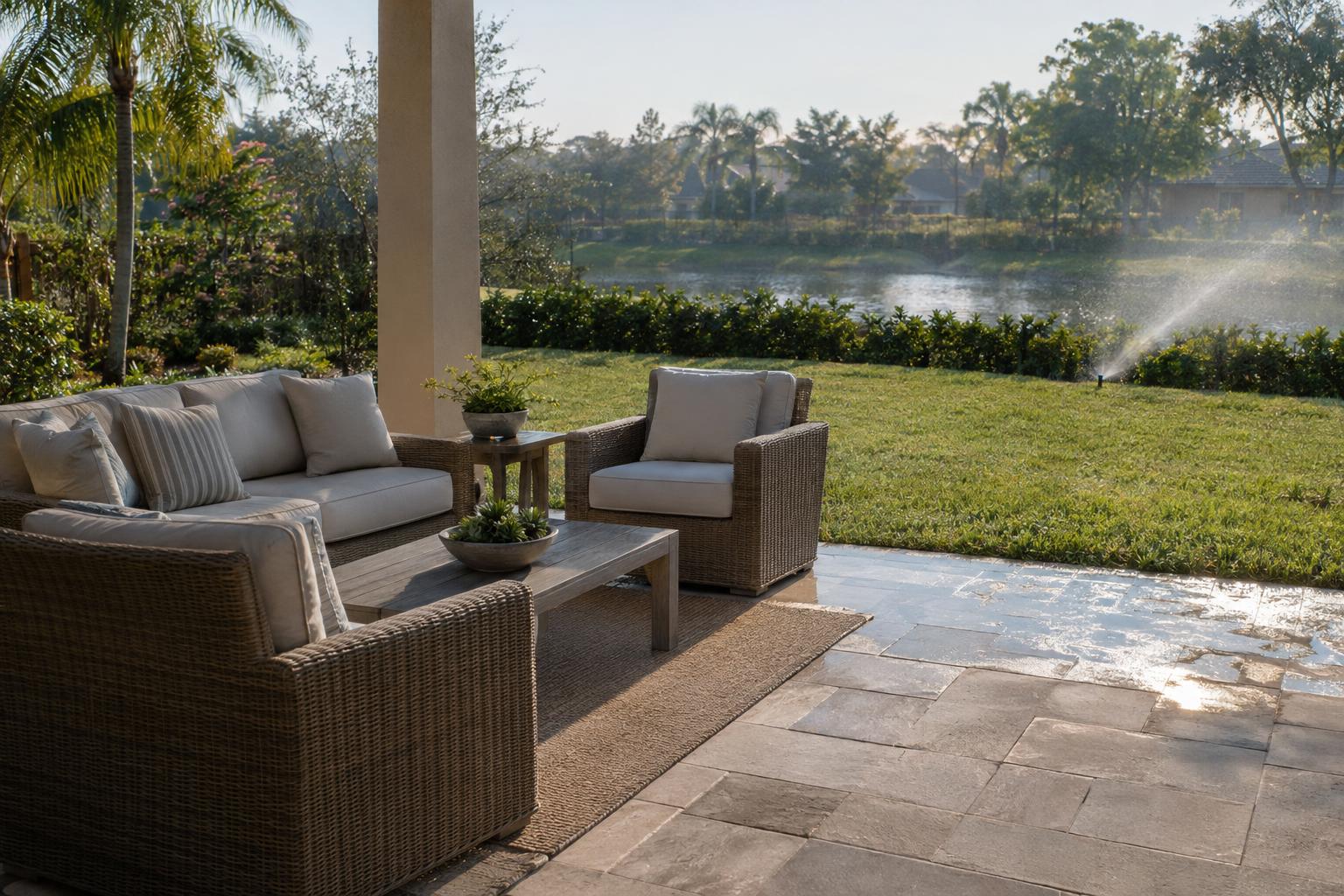
If your patio sits near a lawn, there is a good chance your irrigation system waters your furniture on many mornings without anyone noticing. The decision in front of you is simple: adjust the sprinklers, move the furniture, or change the schedule. Sprinkler hard water stains on patio furniture are different from rain spots, leaving a chalky film or orange-tinted marks that build up one watering at a time, so it pays to sort out the water before you worry about the furniture.
Why Sprinkler Water Is Different From Rain
Rain is mostly clean water that runs off and dries evenly. Irrigation water comes from a well, a municipal supply or a reclaimed line, and depending on the source it can carry dissolved minerals or iron. When a fine mist lands on a frame, a table top or a cushion and evaporates in the Florida sun, the water leaves and the minerals stay behind. Repeat that on many mornings and the residue can become visible.
What the marks usually look like
Mineral-rich water tends to leave a whitish, chalky haze or small dried rings, often on dark frames and glass where it shows most. Water that carries iron can leave an orange or rusty tint that may show up on light surfaces and fabric. A stain that looks like rust is not always rust from your furniture, so look at the pattern before you assume the frame is failing. Marks that follow the arc of a sprinkler head point to the water source.
Which water source you have matters
Ask whoever maintains your irrigation, or check your utility information, whether the system runs on city water, a private well or reclaimed water. Depending on the source, irrigation water can carry dissolved minerals or iron, so it helps to know which one you have. If you do not know the source, treat the first month of observation as your answer. The marks, or the lack of them, will tell you how much the water is leaving behind.
Walk the System While It Runs
The most useful step costs nothing. Set your irrigation timer to run a zone manually, or wait for a scheduled cycle, and stand on the patio while it runs. Watch where the water actually lands. Many people are surprised to see how far a head throws water onto a seating area.
What to look for
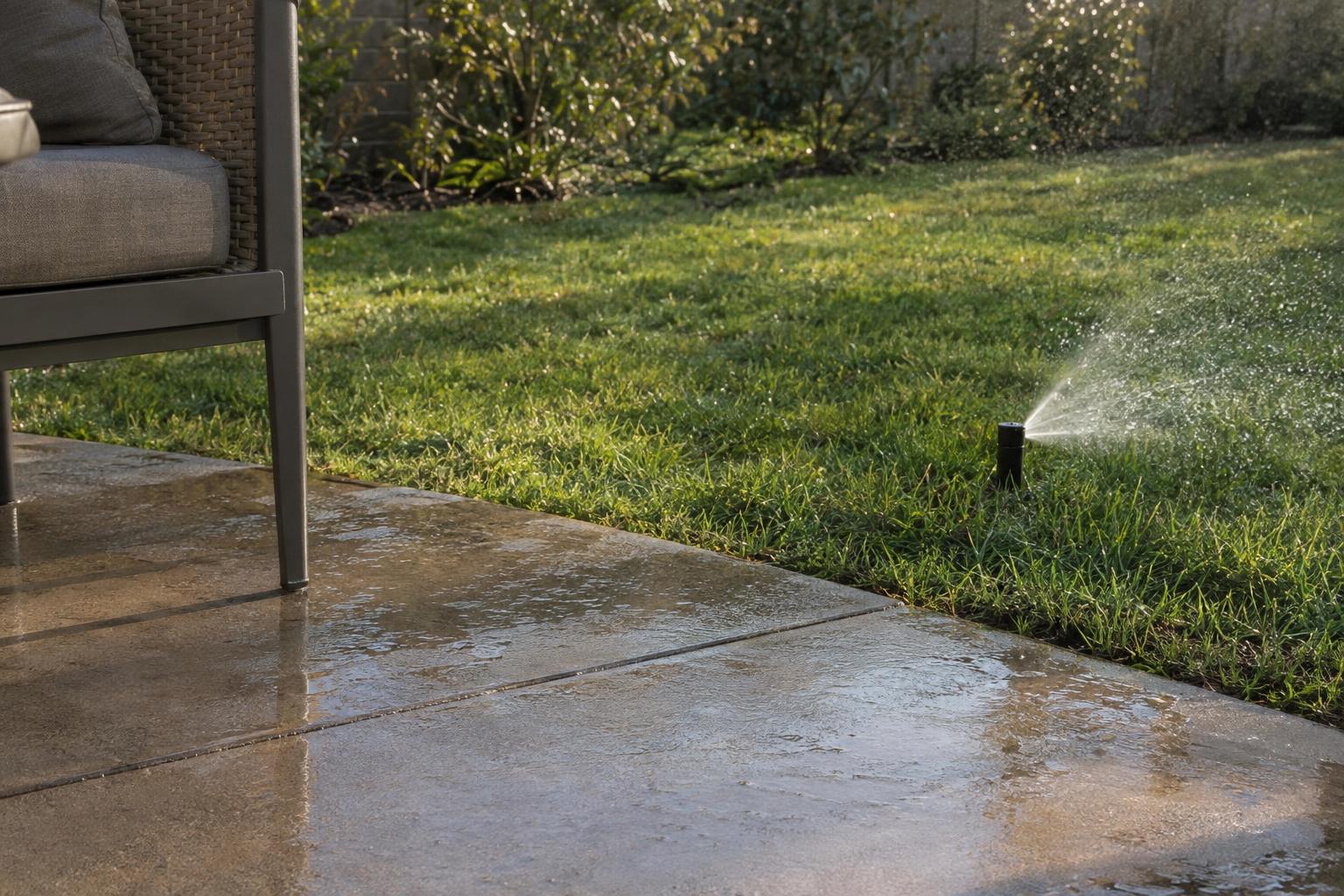
- Heads that sit close to the patio edge and throw across the slab.
- A spray that reaches the legs, seat height or table top of your furniture.
- Wind carrying fine mist farther than the nozzle is set to throw.
- A neighbor’s zone that reaches your side of a fence or hedge.
- Drip or leaking heads that wet one spot every time, even after the zone shuts off.
Take a few photos of the wet areas or mark them with chalk on the slab so you remember them once everything dries. Do the check again on a breezier morning, because a light wind can change the pattern completely.
Fix the Water Before You Move the Furniture
If a head throws onto the patio, adjusting the head is usually the cleanest answer, because it also stops waste. A landscaper or irrigation contractor can redirect an arc, narrow the throw or swap a nozzle so the water stays on the lawn and beds where it is useful. The University of Florida Extension explains how residential timers and zones are programmed in its guide to operation of residential irrigation timers, which is a helpful read before you talk with a contractor about changing start times or zone settings.
Timing versus patio use
Many systems run before sunrise, which keeps water off the patio during dinner but leaves it on surfaces for the early hours. If your furniture is out overnight, the water dries slowly in damp shade. If your schedule runs later in the morning or in the evening, the spray can hit cushions you are about to sit on. Think about when your patio is actually used, then ask whether the zone nearest the seating area can run at a different time or for a shorter cycle. Do not cut back watering that your lawn needs just to protect furniture. Redirecting a head usually solves the problem without changing how much the grass gets.
Mind the cushions
Cushions dry slowly in shade, so on days the system runs, lift them off the seats or bring them indoors. Our article on cleaning Sunbrella cushions step by step covers what to do once fabric has picked up a mark.
Set Up the Furniture Group Out of Reach
Sometimes the sprinkler cannot move. A head may serve a bed that needs it, or the patio layout may leave you very little room. In that case the furniture moves instead. A few feet often makes the difference between a group that stays clear and one that gets a daily light shower.
Ways to keep pieces out of range
- Shift the seating group toward the house wall and away from the nearest head.
- Place tables and chairs so the longest throw of the spray falls beyond them.
- Keep cushions in a deck box or indoors if the zone runs while you are away.
- Choose a day when you are home to run any manual cycles.
If the layout simply does not leave a dry area, that is worth knowing before you buy. Ask a showroom team to help you think through a layout that fits a smaller dry zone, or review the patio furniture guide for help picking a set that suits your space.
A Safe First Response When Marks Appear
Marks can show up anyway, even with careful placement. The goal of your first response is to remove what you can without damaging the finish. No single method suits every material, so start gentle and stop if anything looks like it is lifting or dulling.
Rinse, then wipe
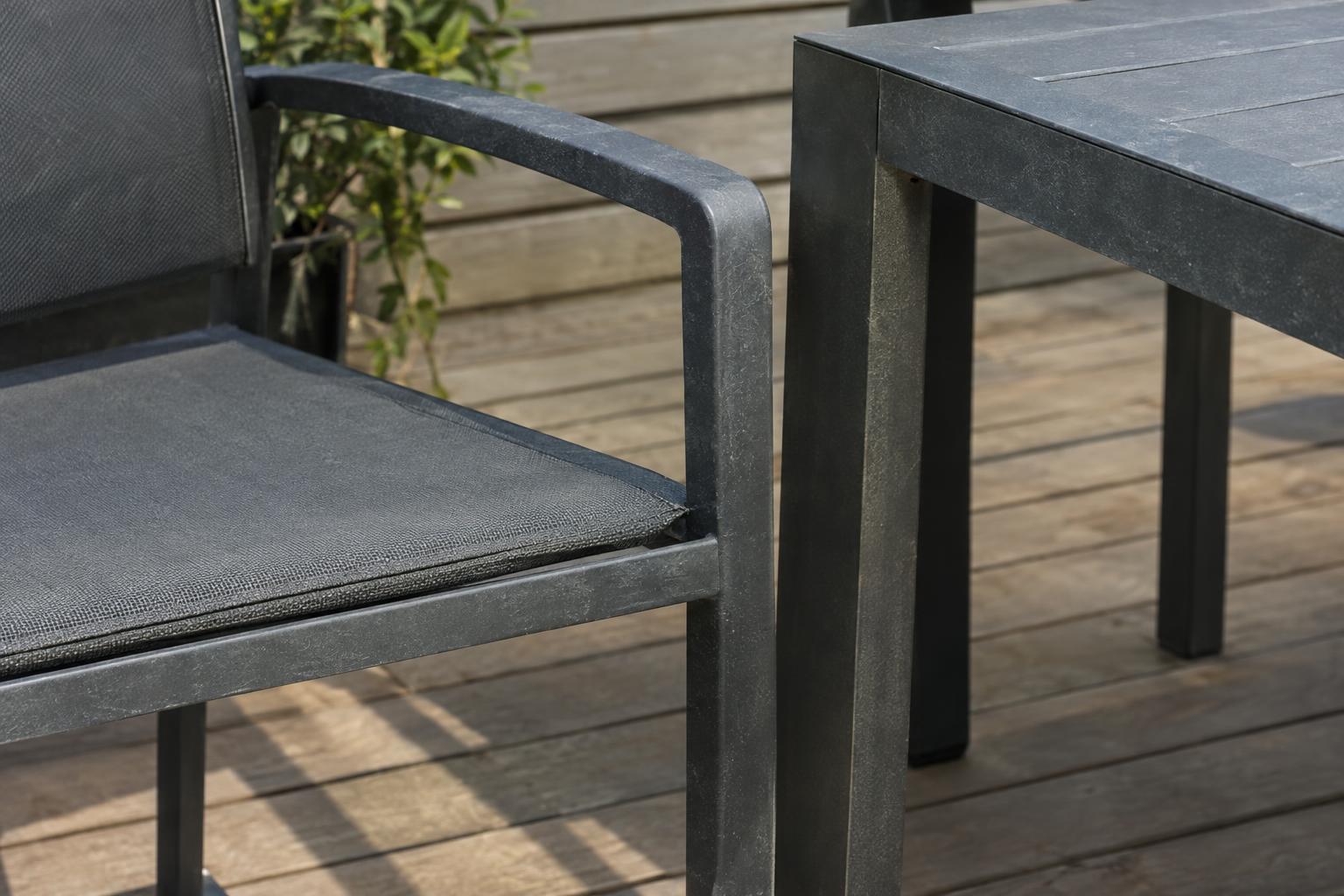
Begin with a rinse of fresh water from a hose on a gentle setting, which removes loose mineral residue before it bakes in. Then use a soft cloth with a little mild soap and water, wipe in the direction of the surface and rinse again. Dry the piece with a clean towel so the water does not leave new rings. Skip stiff brushes, abrasive pads and harsh chemicals, and avoid aggressive spraying that could force water into joints.
Test a hidden spot first
Try any cleaning step on an area that is out of sight, such as the underside of a rail or the back of a leg, and give it time to dry before you decide it is safe. Finishes and fabrics vary from piece to piece. If a mark looks orange, rusty or stubborn, stop there. Our article on how aluminum develops surface corrosion explains how oxidation can start where a finish is scratched, and the showroom team can point you to the right next step for your specific frame.
Stay Ahead of It With a Simple Routine
A short seasonal habit keeps small films from turning into fixed problems. Once a month during the watering season, look over the frames, glass and cushions on the side nearest the lawn. If you see a light haze, wipe it that week rather than waiting.
- Run the system once a season and watch where the spray lands.
- Rinse frames and table tops with fresh water after a heavy watering week, and lift cushions on damp mornings so they can air out.
- Re-check heads after landscaping changes, since a new bed can change the throw.
If a cushion mark involves more than water, such as suntan lotion or food, the article on cleaning food and sunscreen marks from outdoor cushions is the better starting point.
Frequently Asked Questions
Can sprinkler water really mark patio furniture?
Yes, it can. Sprinkler hard water stains on patio furniture start when irrigation water evaporates from a surface and leaves dissolved minerals behind as a chalky film. Iron in the water may leave an orange tint. How much shows up depends on your water source and how often the spray lands on the same spot.
Is it better to move the furniture or adjust the sprinklers?
Adjusting the head is usually the better long-term fix because it keeps the water on the lawn. If the head cannot move, shifting the seating group out of the spray path works well. Many homeowners end up doing a little of both.
What should I do first if I find chalky or orange marks?
Rinse the surface with fresh water, wipe it gently with a soft cloth and mild soapy water, and dry it. Test the method on a hidden spot before you treat a visible area. If the mark remains, ask your local showroom about your specific material.
Does my water source change what shows up?
It can. Depending on the source, irrigation water may carry dissolved minerals or iron, and those are what stay behind when the water dries. Watch the first few weeks after you set up your furniture to see whether residue is building. Moving pieces out of the spray path helps with any water source.
If you would like help choosing a layout or a set that suits a patio with irrigation nearby, visit a Palm Casual showroom or call (407) 299-9188. Our team has been helping Florida homeowners with outdoor furniture since 1976 and can also talk through in-house repair services and replacement-parts availability for pieces you already own.
Explore Palm Casual
Factory-direct pricing with a risk-free 30-day trial. Visit a showroom or call (407) 299-9188.
Explore Our Buying Guides
Looking for expert advice? Read our Complete Guide to Patio Furniture in Florida for tips on materials, maintenance, and choosing the right set for your space.