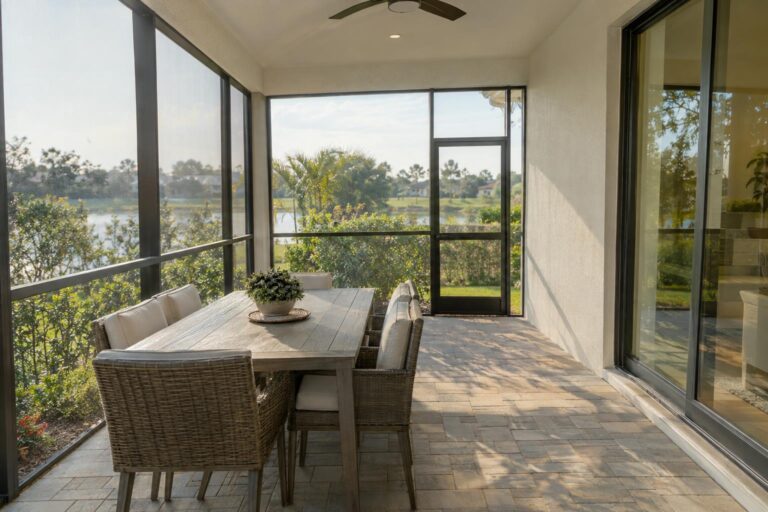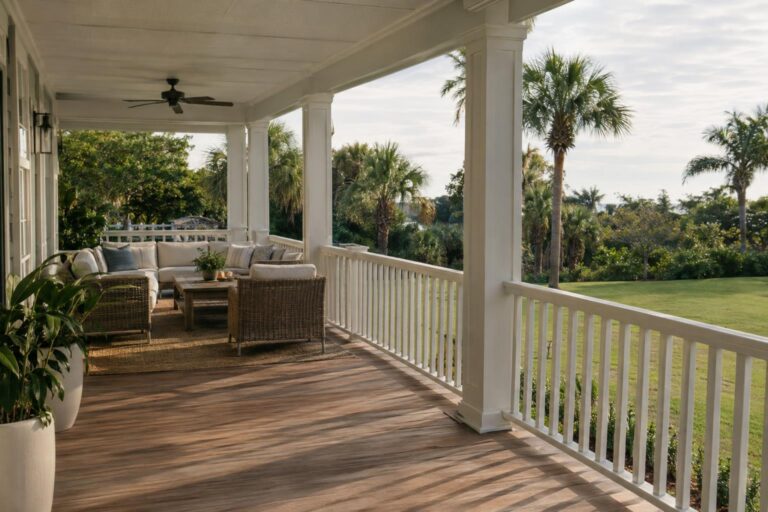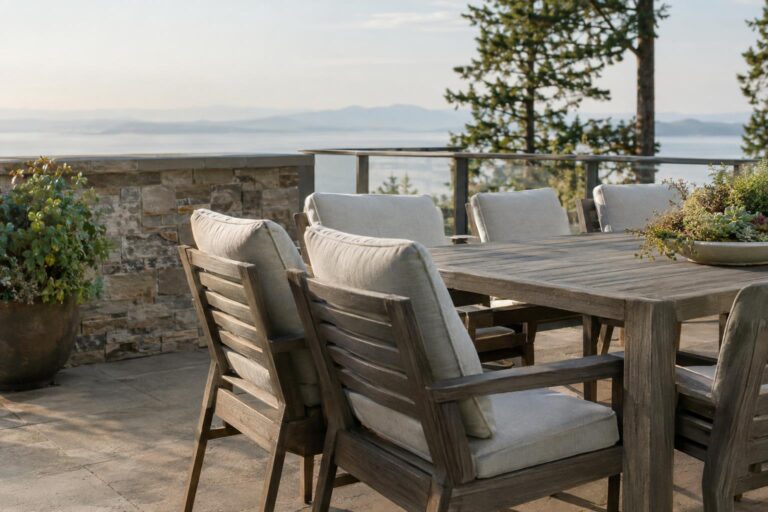

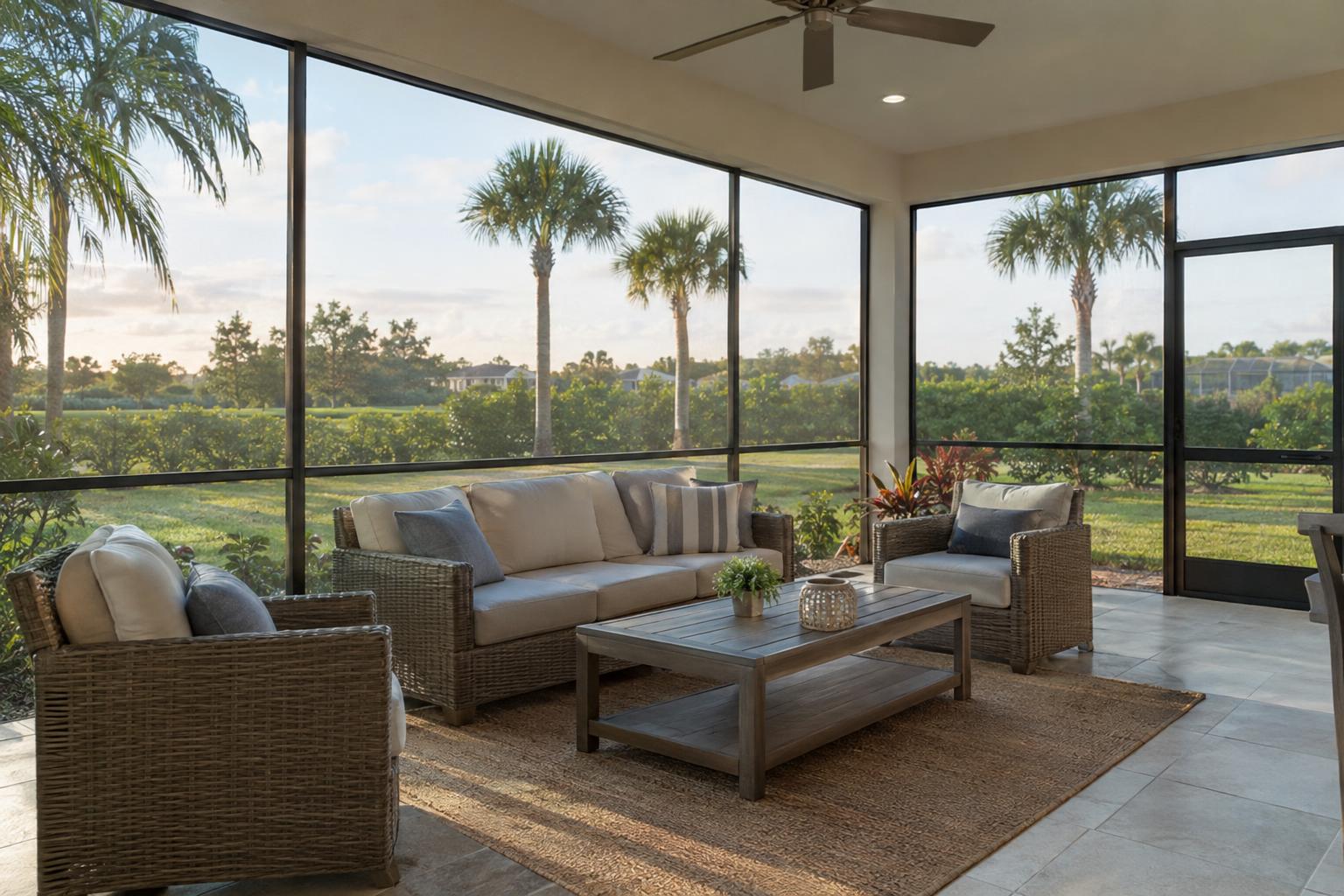
Most Florida patios arrive with colors already decided. The screen enclosure frame, the door and window trim, the railing, the house paint and the pavers were all chosen long before anyone shopped for chairs. That leaves one real choice for the furniture: blend with those fixed colors, or contrast with them on purpose. Choosing patio furniture color for a screen enclosure starts with looking at what is already there, then deciding how much visual weight you want the furniture to carry, and testing your pick in daylight before you commit.
Start With the Colors You Cannot Change
Walk outside and look at the patio the way a stranger would. Which colors repeat? Most lanais and porches have two or three that show up everywhere, and they set the tone for the whole space. Write them down or take a few photos in even daylight so you can compare later.
The fixed colors to list
- The screen enclosure or pool cage frame, which is often the largest continuous color you see from a seat.
- Door frames, window trim and fascia that sit within view of the seating area.
- Railings, columns and any built-in benches or planters.
- The house wall behind the furniture, since it becomes the backdrop.
- The floor: pavers, concrete, tile or decking.
Which one matters most
The color that fills the most of your field of view usually matters most. On an enclosed lanai that is typically the enclosure frame and the wall behind your seating. On an open patio it may be the pavers and the house paint instead. Decide which one dominates, then treat the rest as supporting colors.
What Blending Does
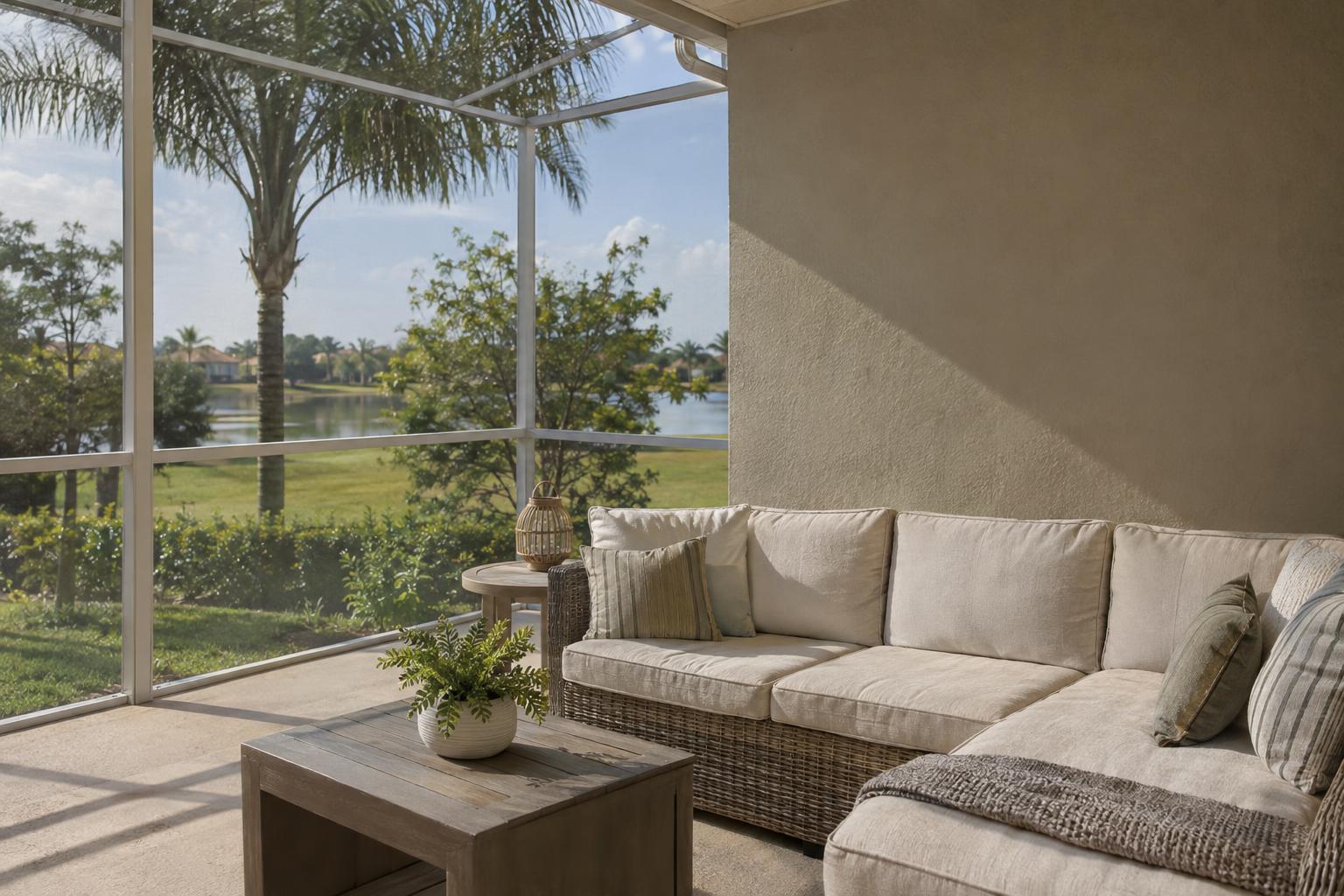
Blending means choosing a frame finish close to the dominant fixed color, or at least in the same family. A white enclosure with white trim and white-framed furniture, or a bronze enclosure with deep brown furniture frames, are the usual examples. The result tends to be calm. Because the furniture does not break up the lines of the room, the eye reads the space as one piece rather than several.
Why it helps a small lanai
In a compact space, every color change adds visual noise. When the furniture frames sit close to the surrounding colors, the chairs and tables recede, and the cushions, the plants and the view past the screen become the focus. That is why blending is a common choice when a lanai feels crowded or when you want the space to look larger than it is.
Where blending can fall flat
If everything is nearly the same color, the room can feel flat or even a little heavy, particularly with darker tones. A bit of variation, such as lighter cushions against a darker frame, keeps a blended scheme from looking like one solid block.
What Contrast Does
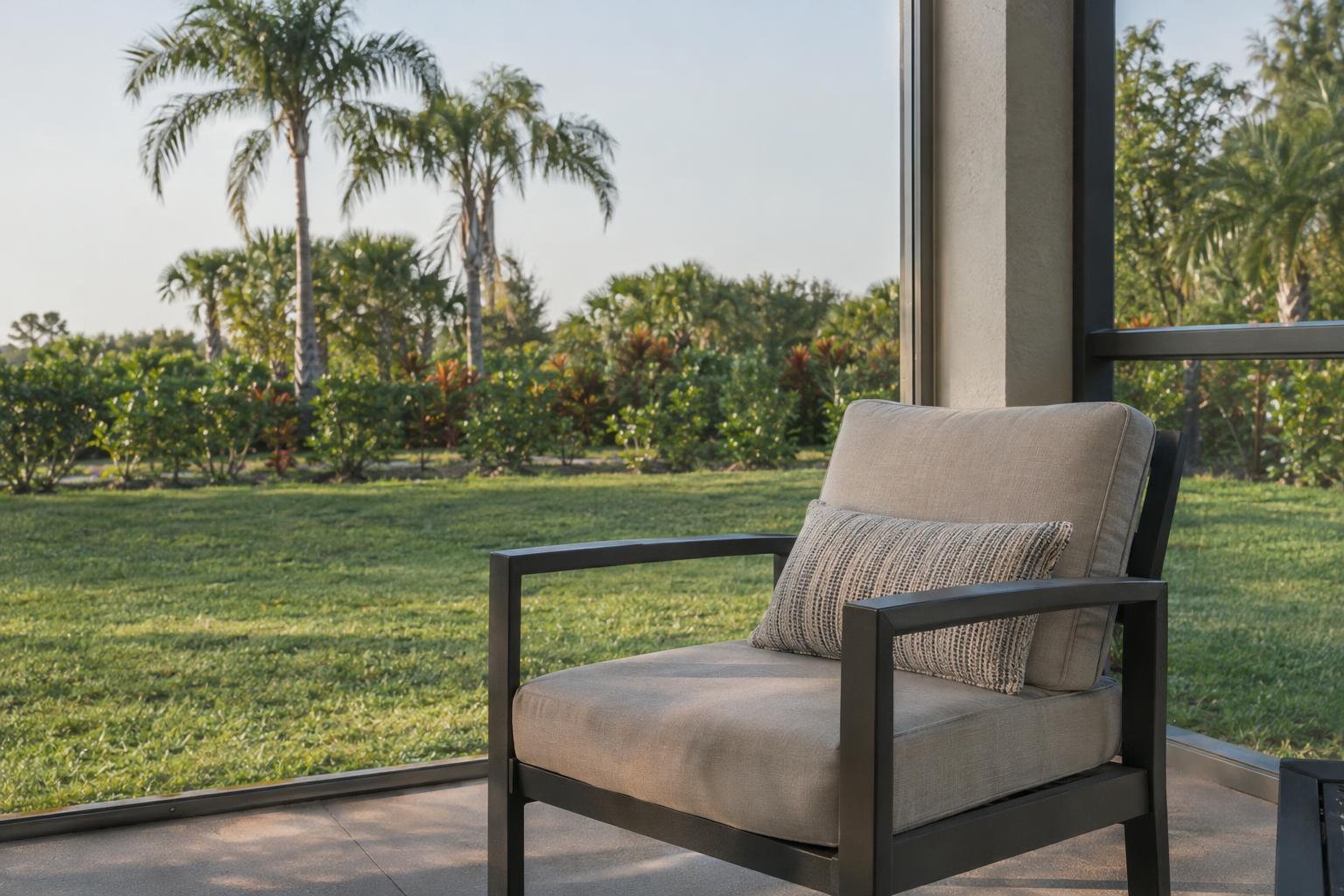
Contrast means picking a frame finish that stands apart from the fixed colors on purpose. A black or dark bronze frame in front of a white enclosure and white trim is the classic example, and the reverse works as well. Contrast gives the furniture visual weight. The chairs and tables read as distinct shapes, which can make a seating area feel defined and intentional.
Where contrast works well
Contrast tends to suit larger patios and open lanais, where the furniture has room to stand out without crowding the eye. It also works when the surroundings are plain. A neutral wall and light trim give a darker frame a clean backdrop, and the lines of the furniture become part of the design.
What to watch
A strong contrast also shows every shape, so a dining set with a lot of curves or scrollwork will look busier than a set with simple straight lines. If you already plan to mix finishes in one set, our article on two-tone aluminum frames covers how that approach looks on a Florida lanai.
How Common Fixed Colors Pair With Light and Dark Frames
No pairing is right for every home, but a few general patterns come up again and again. Treat these as starting points rather than rules.
White enclosure and trim
Lighter frames blend and read as airy. Darker frames contrast sharply and look crisp against the white. Mid-tones can look slightly muddy next to bright white, so a clearly light or clearly dark choice often looks more settled.
Bronze or dark brown enclosure
Dark frames blend and give a rich, grounded look, while lighter frames pop against the dark lines of the cage. Sand and light neutral tones often sit comfortably between the two.
Black enclosure or railings
Black frames blend into black structures almost completely. Light and mid-tone frames contrast, and they tend to keep a black structure from dominating the room.
Sand, tan or beige trim
Warm neutrals pair easily with both light and dark frames. If the trim is warm, a stark white frame can look a little cold next to it, so softer light tones or deeper browns often sit better.
Why the Color You See Is Not the Color You Chose
A frame finish rarely looks exactly the same in a store or catalog photo as it does at home. Florida light is strong, and several things change how a color reads once it is on your patio.
Sun on the floor
Light surfaces bounce more sunlight than dark ones, and your pavers or floor tile do the same. A light floor can make a frame look brighter, and a dark floor can make the same frame look deeper. The U.S. Department of Energy makes the light-versus-dark point for roofs in its guidelines for selecting cool roofs, noting that light-colored roof materials typically reflect much more sunlight than dark ones. That page is about roofs, so treat it only as an analogy for how light and dark surfaces behave around your seating.
The view through the screen and the time of day
Screen mesh softens light and slightly dims what sits behind it, and trees and lawn throw a green cast that shifts how warm or cool a finish appears. Late afternoon light is also warmer than morning light, so a bronze that looks neutral at ten may look warmer at five.
How to Test Before You Decide
You do not need to guess. A simple test in your own space tells you more than any description.
- Take a photo of the enclosure frame, the trim and the wall behind your seating in daylight.
- Ask your local Palm Casual showroom what is available to view.
- Compare any finish you are shown with the photo of your enclosure frame, then look again in the morning and in the late afternoon.
- Check it from the seat you use most, not just from the doorway.
If you are adding to a set you already own, our guide to powder-coat color matching across multi-piece aluminum sets explains how to keep a set looking matched, and finish differences between production runs are one reason to read it. Heat is a separate consideration from looks, and we cover it in our article on why powder-coated white sets stay cooler.
A Quick Rule for Patio Furniture Color for a Screen Enclosure
If you cannot decide, use the space itself as the tiebreaker.
- Small or busy lanai: blend, and let cushions and plants supply the color.
- Large, open or plain space: contrast, so the furniture has a clear shape.
- Several fixed colors competing: match the one that fills the most of your view and ignore the rest.
- Still undecided: choose a neutral that sits between your lightest and darkest fixed colors.
For help thinking through the rest of the layout, the patio furniture guide is a good companion to this decision.
Frequently Asked Questions
Should patio furniture match the screen enclosure frame exactly?
It does not have to. A close match gives a calm look, but a deliberate contrast can look just as polished. What tends to look unplanned is a near miss, where the furniture is almost the same color but not quite.
Can I mix light and dark frames on one patio?
Yes, as long as the mix looks intentional. Repeating each color at least twice, such as two dark chairs and a dark side table with lighter pieces elsewhere, helps the pairing feel planned.
Does the cushion color change how the frame color looks?
It can. Light cushions on a dark frame make the frame look crisper, while cushions in the frame color make the whole group look more solid. Pick cushions after you settle on the frame so you can judge the two together.
What if my enclosure and trim are different colors?
Choose the one that fills more of your view from the seating area and treat the other as an accent. Your local Palm Casual showroom can tell you what is available to view.
When you are ready to talk through finishes, visit a Palm Casual showroom or call (407) 299-9188, and our team can talk through the pieces you are considering.
Explore Palm Casual
Factory-direct pricing with a risk-free 30-day trial. Visit a showroom or call (407) 299-9188.
Explore Our Buying Guides
Looking for expert advice? Read our Complete Guide to Patio Furniture in Florida for tips on materials, maintenance, and choosing the right set for your space.