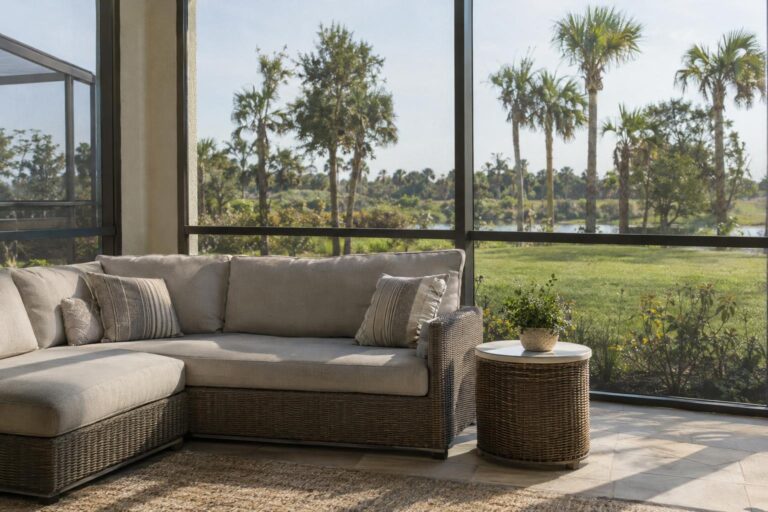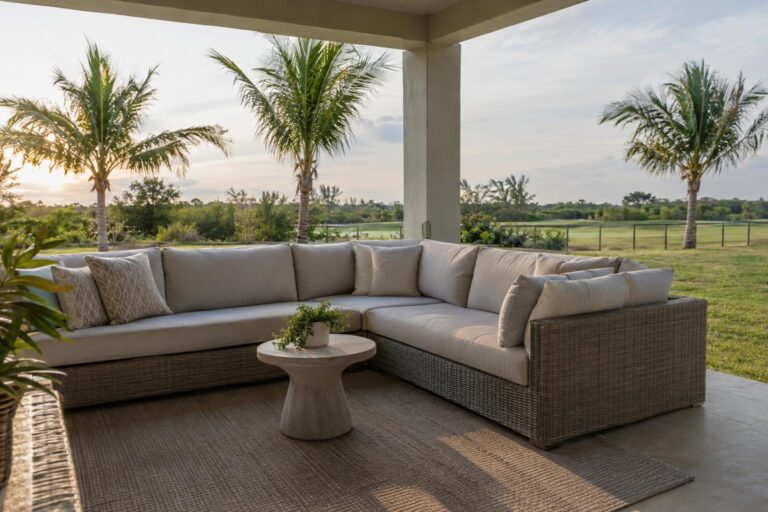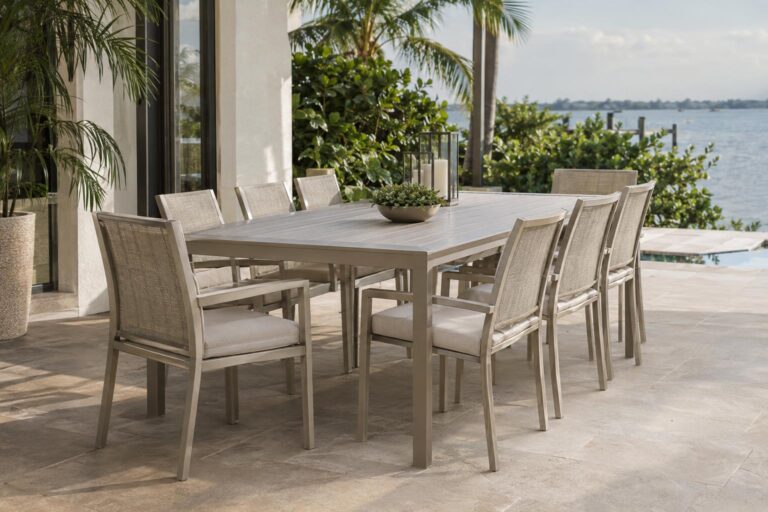

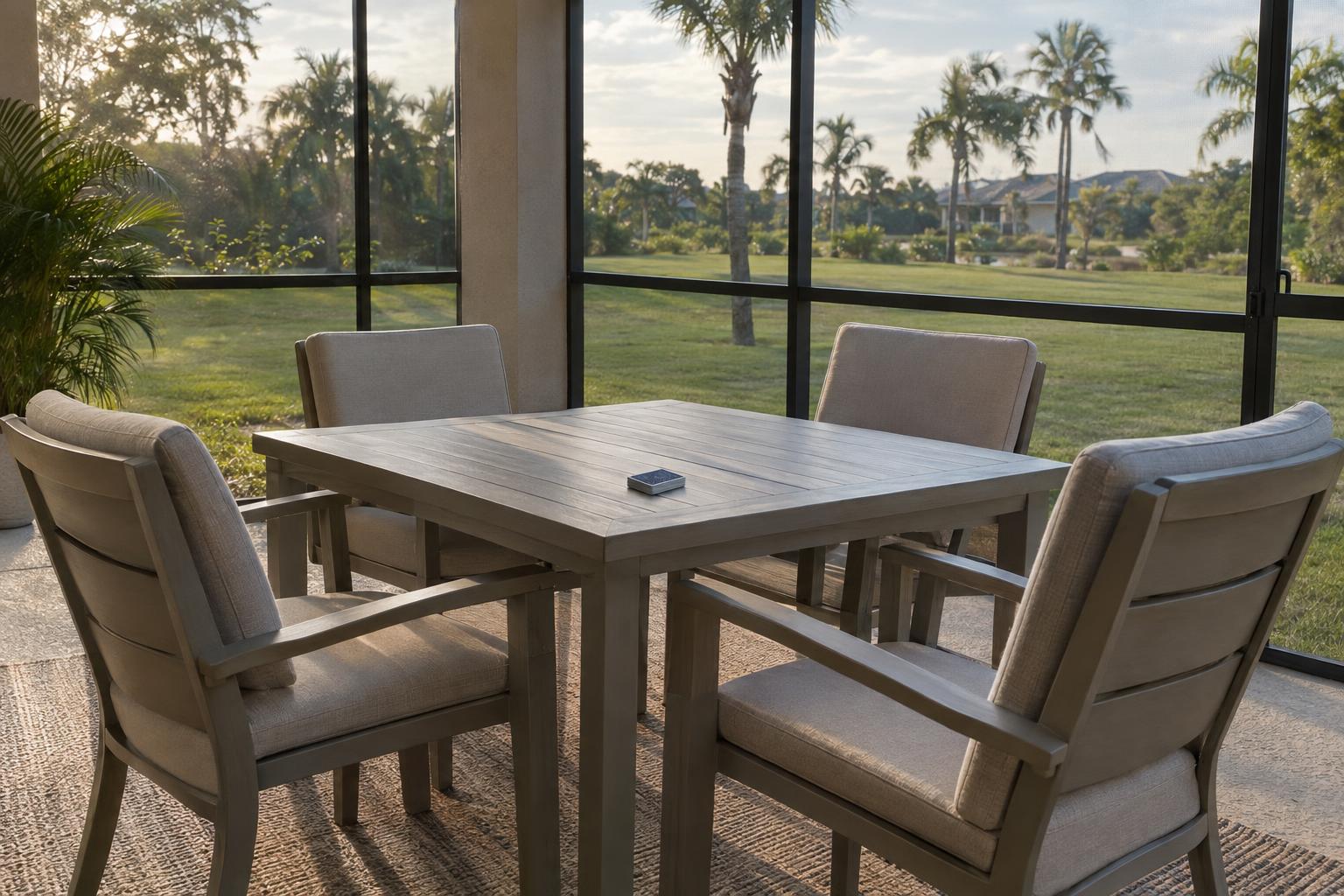
Card night on the patio sounds easy until a table rocks every time someone deals, a breeze scatters the discard pile and the chairs get uncomfortable by the second hand. The decision is what makes a patio table for card games work for an hour or two at a stretch, and it comes down to a steady top, comfortable edges, chairs you can sit in for a long while and a spot that keeps cards in place. Most of it you can judge in a few minutes of sitting at a piece, so it helps to know what to test before you buy.
Start With a Flat, Steady Top
Games ask more of a tabletop than a plate of dinner does. Cards slide, dice roll, and small tiles or tokens drop into any gap they can find. A top that is flat and does not move under your hands matters more than almost any other detail.
Solid tops and slatted or open tops
A solid top gives small pieces a continuous surface, so a card can be flicked across it and a die rolls without catching an edge. A slatted or open top has narrow gaps between the boards or rods. Those gaps are fine for drinks and plates, and they let rain drain, but a coin-sized token or a thin card corner can drop into one. If your games use small pieces, look closely at how wide the gaps are and whether the surface between them feels level under a sheet of paper.
Wobble is the real enemy
Sit at the table, rest both hands on the top and push down on one edge, then the other. A well-built table should feel settled. Also check the ground beneath it, because pavers, a tile lanai or a slightly sloped slab can make a steady table rock. Ask what is available to view at your showroom, and how a piece sits on a flat floor.
Look at the Table Edge and the Reach
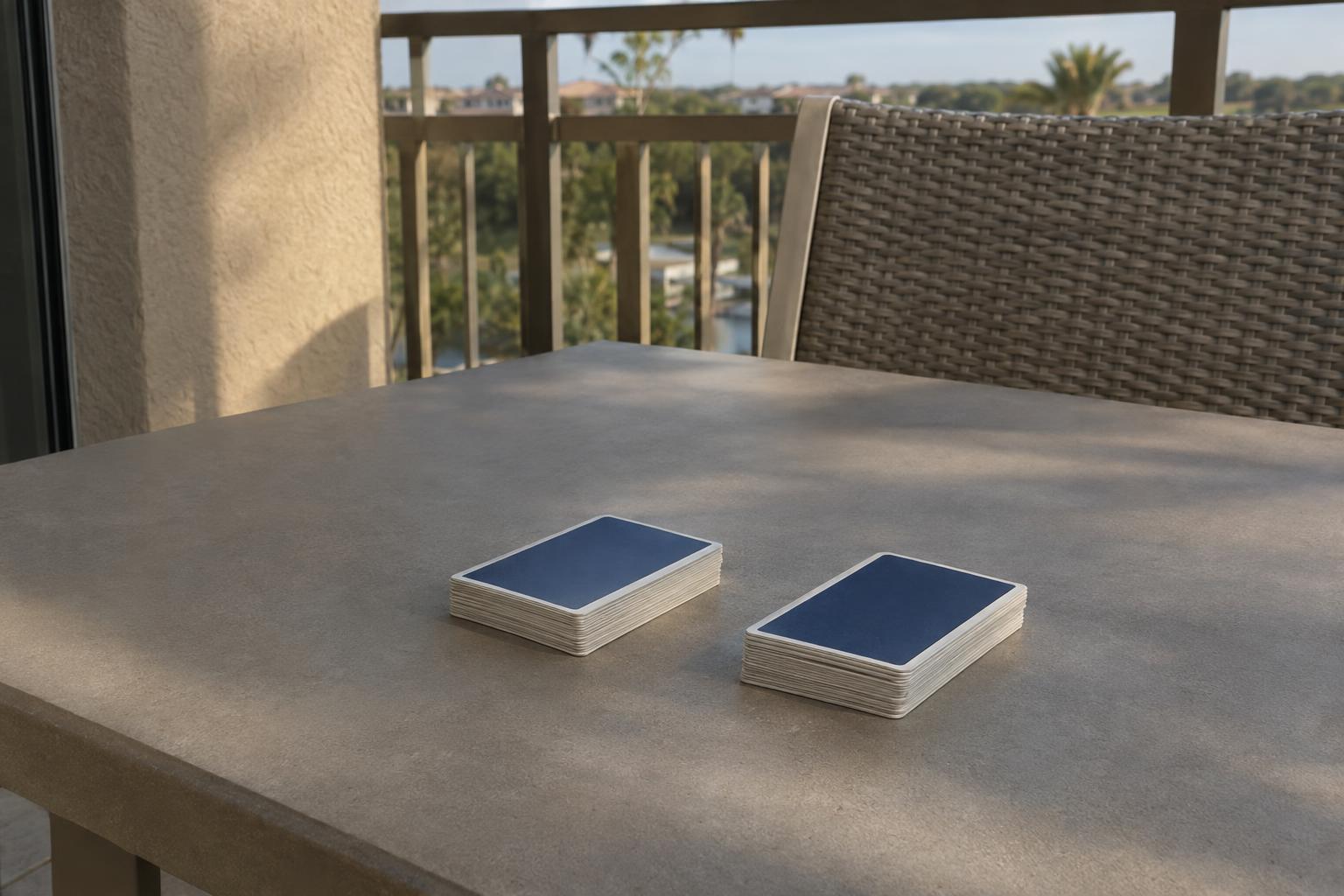
During a long game your forearms spend a lot of time on the table, so the edge matters. A sharp or hard edge presses into the arm, while a rounded or softly shaped edge is easier to rest on. Run a forearm along the edge in the showroom rather than judging it by photo.
Reach across the table
Card and board games need everyone to reach the middle of the table without stretching. Sit-test the actual piece to see whether you can reach the center with your elbow bent. If you are still deciding on a shape, our comparison of a round vs rectangle patio table covers that choice separately.
Table height for games
Dining height suits cards and board games because you sit upright with your forearms level. Lounge or chat height, with a lower table and deeper seats, is better for a drink and a conversation than for dealing hands, since you end up leaning forward and bending over the table. If you want one table to handle dinner and game night, dining height is typically the more practical choice.
Choose Chairs You Can Sit In for an Hour or Two
A dinner can end in forty minutes. A card game often cannot. Chairs that feel fine for a short sit can start to bother your back and shoulders by the second hour, so test them the way you will use them.
Back support and arms
- Sit upright and check that the back reaches high enough to support you, not just your lower back.
- Lean forward as if you were picking up a card, then lean back, and notice whether the seat lets you do both comfortably.
- Look at the arms. Chairs with arms are comfortable for resting, but the arms need to clear the table edge so you can pull in close.
- Sit for a few minutes, not a few seconds, and see how your legs and lower back feel.
Our post on whether patio armchairs fit under a table apron explains how to check the hidden clearance between the arm and the underside of the table, which is the detail that decides how close a seated player can get to the game.
Swivel chairs for turning to talk
Game night is as much about conversation as cards, and a chair that turns lets you face the person speaking without scraping a chair across the floor. If your group likes to chat between hands, look at outdoor swivel dining chairs and decide whether the extra motion helps or distracts when you are holding a hand. Ask your local showroom what you can try in person.
Keep the Breeze From Running the Game
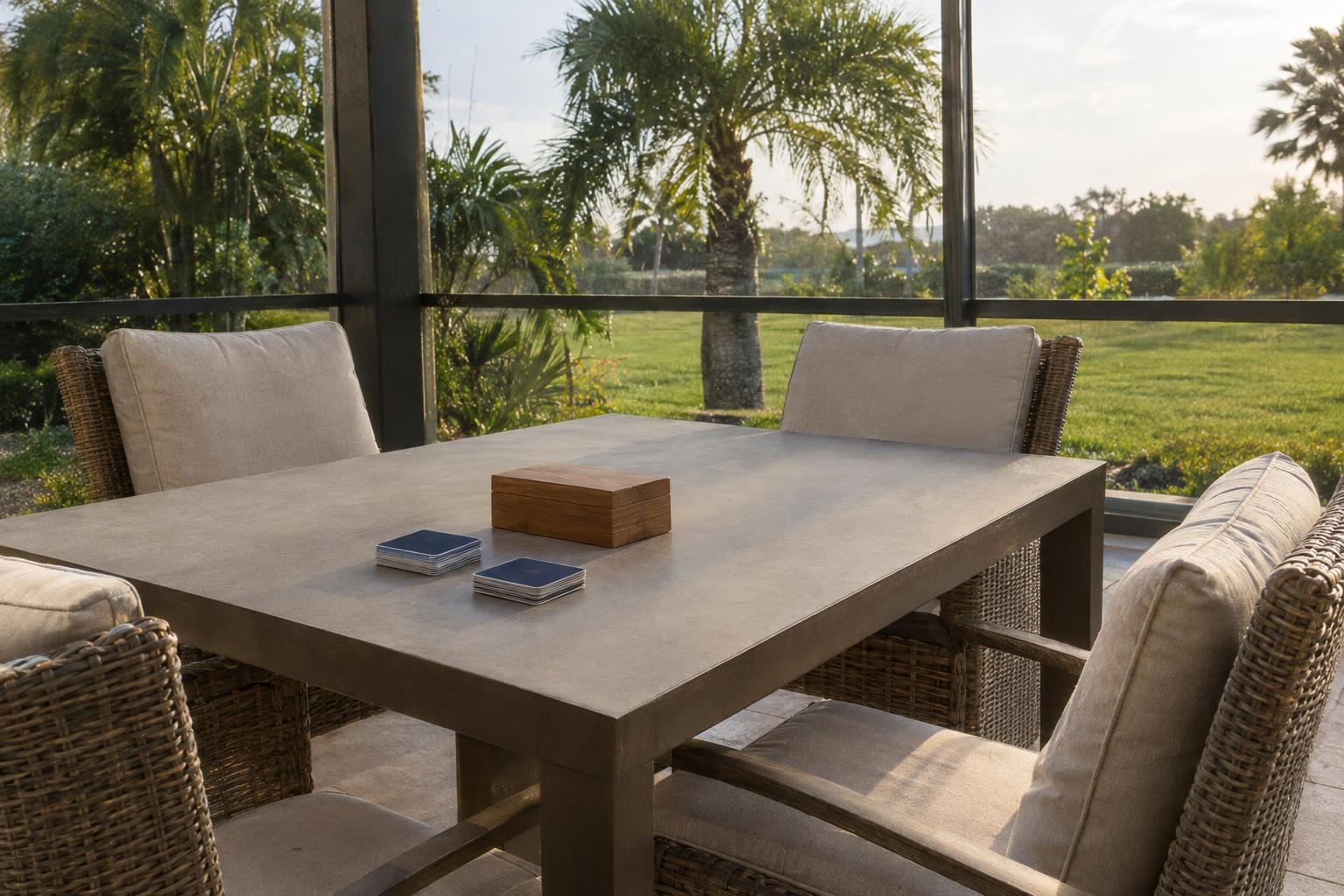
Playing cards are light, and moving air picks them up. The National Weather Service’s Beaufort wind scale lists a moderate breeze, 13 to 18 miles per hour, as raising dust and loose paper, and a smaller breeze can still nudge a lightweight card out of place. You do not need strong wind to have an unhappy game.
Where to put the table
- Set it against a wall or beside a solid screen so the wind has less room to cross the top.
- A screened lanai often keeps the air calmer than an open yard.
- Keep the table out of the direct path of a ceiling or standing fan, which can scatter cards from a single direction.
- Rotate the table position after a windy day shows where the air actually moves.
A table with a solid top and a little weight to it tends to feel steadier when the air picks up, but sit at it and test the piece itself instead of trusting a general rule.
Plan for Light and Glare
Glossy cards catch the sun, and a bright glare across a card face makes it hard to read a hand. Notice where the afternoon sun falls on the table during the hours you play. A covered patio or a seat position with the light at your side, not straight across the table, usually cuts the glare. If your lanai is bright, a table with a calmer, less shiny surface can be easier on the eyes than one with a highly reflective top.
Give drinks their own spot
Keep a side table close to the game so glasses stay off the playing surface. A drink next to a deck of cards is an accident waiting to happen, and a nearby side table lets everyone set a glass down without reaching over the game. Ask your local showroom which side tables pair well with the table and chairs you are considering.
A Quick Showroom Test Before Game Night
You can learn most of what you need in a few minutes at a showroom. Bring the way you actually play: a deck of cards in your pocket helps.
- Sit in each chair for several minutes and notice your back, shoulders and legs.
- Rest both forearms on the table edge and see whether the edge is comfortable.
- Push down on each corner of the top to check for wobble.
- Reach to the center of the table with your elbow bent.
- Check the gaps on a slatted top, and picture a small piece falling through.
- Pull the chair in as you would for a hand, then lean back, and check that the arms clear the edge.
Ask the Palm Casual showroom team about the specific pieces you try, since details such as size and finish vary by collection and are best confirmed on the actual piece.
Frequently Asked Questions
Is a slatted top a problem for card games?
It can be if your games use small pieces, because narrow gaps can catch a token or the corner of a thin card. Cards themselves usually play fine across a slatted top when the gaps are small and the surface is level. Test the one you like with a deck before deciding.
Should a patio table for card games be higher than a regular dining table?
Not usually. Dining height lets you sit upright with your forearms level, which suits dealing and holding a hand. A lower chat-height table tends to make you hunch forward over the game.
How can I stop cards blowing around on the patio?
Move the table against a wall or into a screened area, and keep it out of the direct line of a fan. A calmer spot helps more than any single accessory.
Do I need arms on every chair?
No, it depends on your group. Arms are comfortable for resting during a long game, but they have to clear the table edge so you can pull in close. Some players prefer armless chairs at the table for the freedom to sit close and shift position.
If you would like to sit at a few tables and chairs before game night, visit a Palm Casual showroom or call (407) 299-9188. Palm Casual has offered factory-direct outdoor furniture since 1976, and you can sit at tables and chairs to see what is available to view.
Explore Palm Casual
Factory-direct pricing with a risk-free 30-day trial. Visit a showroom or call (407) 299-9188.
Explore Our Buying Guides
Looking for expert advice? Read our Complete Guide to Patio Furniture in Florida for tips on materials, maintenance, and choosing the right set for your space.