


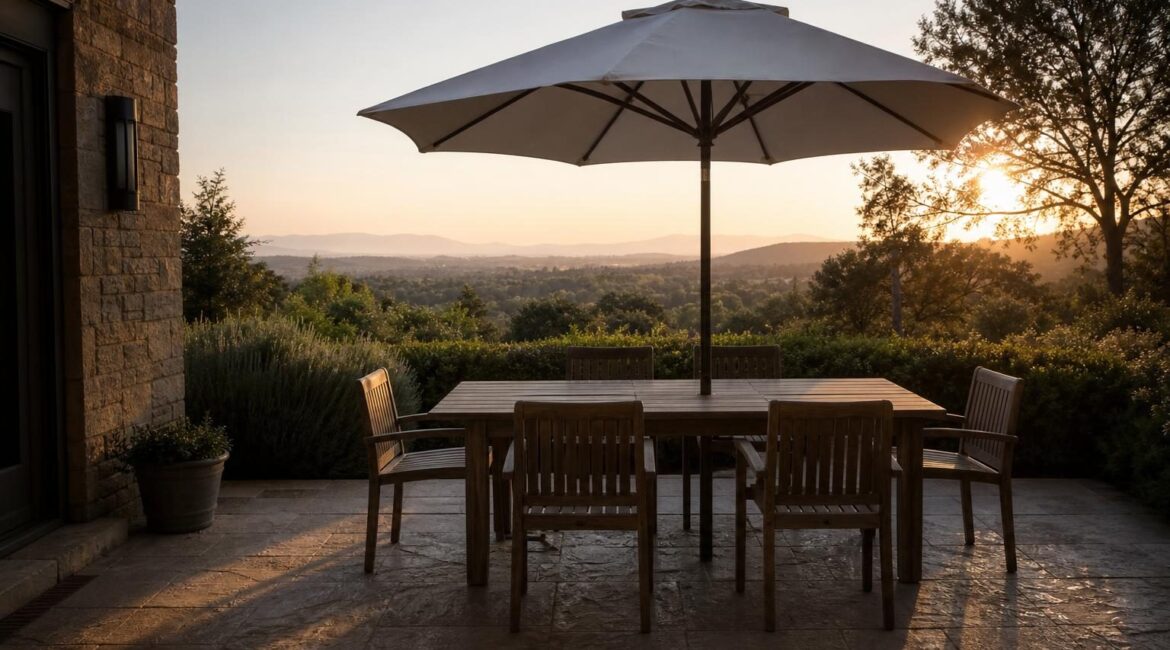
Getting patio umbrella sizing right comes down to a bit of measuring before you shop, rather than picking whatever size looks proportional in a photo. A properly sized umbrella should shade your entire table and seating area through most of the day, not just the center of the table at high noon. This patio umbrella sizing guide walks through the measurements and pole style decisions that make the difference.
An undersized umbrella is one of the most common regrets shoppers mention after buying online without measuring first, since photos rarely convey true scale. Taking ten minutes to measure your table and seating footprint before you shop, and understanding the difference between a center-pole and cantilever design, will get you a much more useful amount of shade for the space you actually have.

Why Umbrella Sizing Gets Overlooked
Umbrellas are often the last item added to a patio dining or lounge setup, purchased almost as an afterthought once the table and chairs are already in place. That ordering tends to work against good sizing, since shoppers frequently reach for whatever diameter looks visually similar to the table rather than measuring the actual seating footprint that needs shade. Treating umbrella size as its own measured decision, rather than a quick add-on, is the simplest way to avoid ending up with a canopy that only shades the centerpiece and not the people sitting around it.
Measuring Your Table for the Right Diameter
Start by measuring the diameter or width of your table, then add roughly two to three feet on each side to determine the umbrella diameter you actually need. As a rough guideline, a table around 4 feet across generally needs an umbrella close to 7 to 8 feet in diameter, while a 6 to 8 foot table typically calls for a 9 to 11 foot umbrella to provide meaningful shade coverage beyond just the tabletop itself.
It helps to think about shade coverage across the whole seating area, not just the table surface. As the sun moves throughout the day, shade shifts, so an umbrella sized only to the table’s edge may leave chairs in direct sun for parts of the afternoon even though the table itself stays shaded.
A Simple Measuring Checklist Before You Shop
Before heading to a showroom or browsing umbrella options, jot down three numbers: the diameter or length of your table, the outer edge of your seating area including chairs pulled out, and the height of any nearby roofline, tree branch, or overhang that could limit how tall an open umbrella can stand. Having those three measurements in hand turns umbrella shopping into a much faster, more confident process than guessing at the counter.
Measuring Your Seating Area, Not Just the Table
If your table is surrounded by lounge chairs or a larger seating group rather than just dining chairs pulled up close, measure the full footprint of the seating area, including how far chairs sit from the table’s edge. A wider seating spread needs a proportionally larger umbrella, or in some cases a large offset umbrella positioned to cover the seating area rather than being centered directly over the table.

Accounting for Overhead Clearance
An open umbrella needs more vertical clearance than its closed height suggests, since the canopy extends outward and slightly upward when fully deployed. Check for low tree branches, a lanai roofline, or a second-story overhang before finalizing a tall umbrella pole, particularly for cantilever styles where the canopy sits at an angle rather than dead center over the pole.
Cantilever vs. Center-Pole Umbrellas
A center-pole umbrella rises through a hole in the middle of the table, or stands in its own base positioned at the table’s center. This style is typically more budget-friendly and works well for straightforward dining setups where the pole in the middle of the table does not interfere with how the space is used.
A cantilever umbrella, sometimes called an offset umbrella, has its pole positioned to the side with an arm extending the canopy over the seating area. This style is well suited to lounge seating groups, tables with an umbrella hole, or spaces where a center pole would be awkward or interfere with movement around the table. Cantilever umbrellas also allow more flexibility in tilting and rotating the canopy to follow the sun through the day.

Umbrella Fabric and Vent Design
Umbrella canopy fabric matters just as much as the frame. Sunbrella and similar solution-dyed acrylic fabrics resist fading better over years of direct sun compared to lower-grade polyester canopies, which is worth prioritizing on a large umbrella that stays outside year-round. A vented canopy top, where a small opening near the peak lets wind pass through rather than catching under the fabric like a sail, also improves stability in Florida’s gusty afternoon storms and is a detail worth asking about regardless of which pole style you choose. Closing the canopy whenever the umbrella is not in use, and especially ahead of a gusty afternoon storm or overnight, also reduces the wind load on both the fabric and the frame and helps the whole umbrella hold up better over a Florida season of near-daily sun and sudden squalls.
Pole Placement and Base Weight Considerations
Whichever style you choose, the umbrella base needs to be weighted appropriately for Florida’s afternoon winds, particularly for larger canopy sizes that catch more wind than a compact umbrella. Cantilever umbrellas in particular rely on a heavier base since the weight is offset rather than centered, so checking the recommended base weight for your specific umbrella size is worth doing rather than assuming any base will do.
Our showroom has multiple umbrella sizes and both pole styles set up so you can see real shade coverage rather than estimating from a diameter number alone. Bringing your table dimensions when you visit helps our team recommend the right size and style for your specific setup, and standing under a floor sample is the fastest way to judge how much shade a given diameter really provides.

Plan for weather as well as everyday shade: review National Weather Service wind-safety guidance and follow the umbrella manufacturer’s instructions for closing and storage.
Frequently Asked Questions
What size umbrella do I need for a 6 foot patio table?
For a table around 6 to 8 feet long, a patio umbrella in the 9 to 11 foot diameter range typically provides adequate shade coverage beyond just the tabletop itself, accounting for seating pulled up around the edges.
What is the difference between a cantilever and center-pole umbrella?
A center-pole umbrella rises through the middle of the table or its own base, while a cantilever umbrella has an offset pole with an arm extending the canopy over the seating area, which works well for lounge groups or spaces where a center pole would be in the way.
How much bigger should an umbrella be than my table?
A common guideline is adding about two to three feet of umbrella diameter beyond each side of the table, which helps shade shift with the sun throughout the day rather than only covering the tabletop at midday.
Do cantilever umbrellas need a heavier base?
Yes, because the canopy weight is offset rather than centered over the base, cantilever umbrellas generally require a heavier base than a comparable center-pole umbrella to stay stable in wind. Checking the manufacturer’s recommended base weight for your specific canopy size is the most reliable way to confirm you have enough stability.
Want help measuring for the right umbrella size? Visit our North Fort Myers showroom or call (407) 299-9188 and bring your table dimensions along.
Explore Palm Casual
Factory-direct pricing with a risk-free 30-day trial. Visit a showroom or call (407) 299-9188.
Explore Our Buying Guides
Looking for expert advice? Read our Complete Guide to Patio Furniture in Florida or Ultimate Guide to Outdoor Furniture in Florida for tips on materials, maintenance, and choosing the right set for your space.
