
Choosing between a single center base and four corner legs is one of the most practical decisions in outdoor dining, and it changes how every meal feels. In the pedestal vs four leg patio table legroom comparison, the base style decides where your knees go, how many chairs fit, and how steady the table feels on a real patio surface. Here are the trade-offs in plain terms.
Pedestal vs. Four-Leg Tables: Where Your Knees and Chairs Go
A four-leg table puts a support at or near each corner. A pedestal table puts one column, or sometimes a cross-shaped base, under the center of the top. That one difference changes what your legs live with for an entire dinner.
Knee clearance and legroom
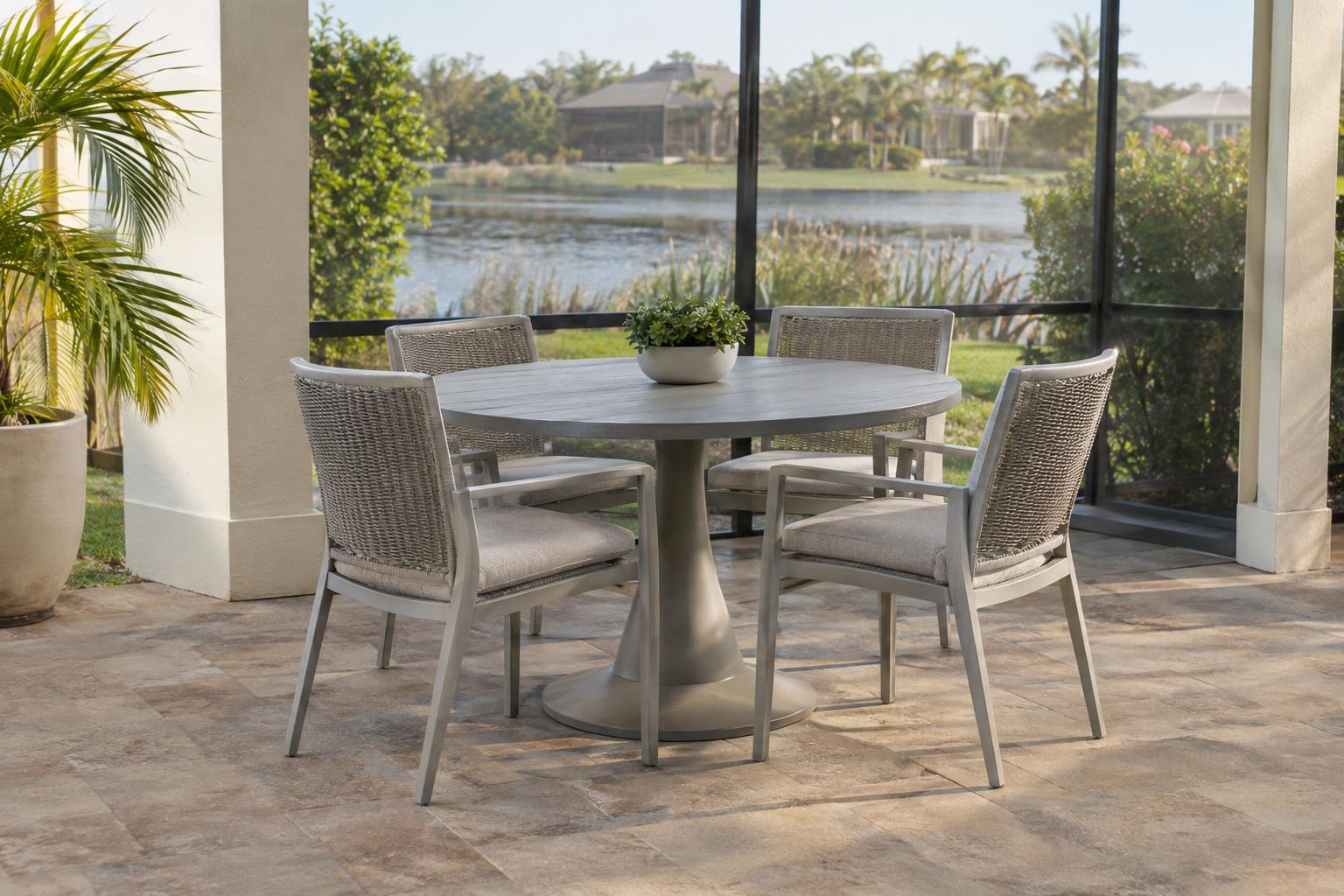
With a pedestal, the space under the edge of the top is open all the way around. Nothing sits where your knees naturally land, so you can scoot in, cross your legs, or turn sideways without bumping a post. With corner legs, each leg occupies a spot someone might want to use.
The flip side is that a center column or a wide base can meet the feet of tall guests, especially on a small table. Typical dining table heights run roughly 28 to 30 inches, but the footprint of the base is specific to each piece, so check the actual table.
How much overhang helps
Legroom is not only about the base. How far the top extends past the supports matters just as much, and our article on how much table overhang and leg room you need goes through the spacing in detail.
Seating flexibility and squeezing in an extra chair
Because pedestal tables have no corner posts, chairs can go anywhere along the edge. If two friends arrive unexpectedly, you can pull in another chair and shift everyone slightly. That freedom is the biggest everyday advantage of a center base.
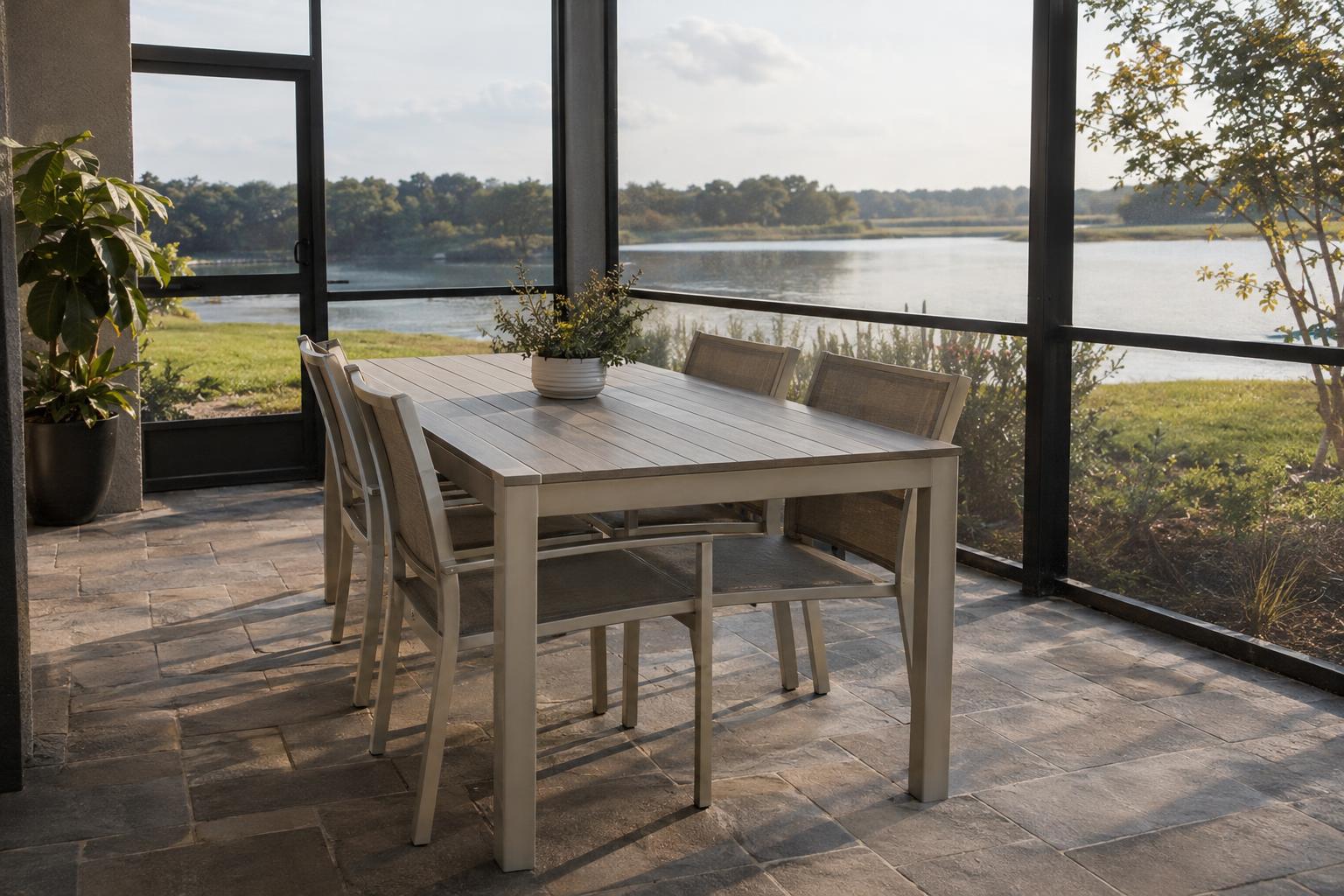
Four-leg tables are less forgiving. Corner legs often mark the spots where chairs do not fit well, so a table sold as a six-seater may seat four comfortably on the sides and one at each end. If you host larger groups, picture where each person will sit relative to the legs before you decide.
Corner legs blocking chairs
A common complaint about four-leg tables is a chair that will not slide in because an arm or seat edge catches a leg. Chairs with arms are the usual culprit. Look for tables with legs set in from the corners, which leaves more room at the ends, though this varies from piece to piece. Pedestal tables mostly avoid the problem, though wide arm chairs can still bump a broad base. Test the pairing either way.
Table shapes and which bases usually pair with them
Round and square tops are the natural home of the pedestal. A center support balances weight evenly in every direction, and round pedestal tables keep seating equal on all sides, which encourages conversation.
Long rectangular tables are different. A single column under a long top would struggle to resist tilt at the ends, so rectangular tables more often use four legs, end supports, or a trestle-style base with a beam along the length. There are exceptions, including some rectangular and oval designs with wide double pedestals, so look at how a specific table is built instead of relying on a rule of thumb.
- Round top: usually pairs well with a pedestal and gives the most flexible seating.
- Square top: a pedestal suits smaller sizes, while larger ones may be steadier on four legs.
- Rectangular top: often built with legs or a trestle-style base for steadiness at the ends.
Stability, wobble, and tipping
Stability is where four legs have a natural edge. Four contact points near the corners resist rocking, especially when someone leans on one side. A pedestal puts all the support in one place, so the base needs to be heavy and wide enough to hold the top level.
Uneven floors and gentle slopes
Many patios have a slight pitch for drainage, and surfaces settle over time. A four-leg table that wobbles can often be fixed by adjusting one corner. A pedestal on a slope can lean, and its single contact area makes fine adjustment harder unless the feet are adjustable. If your patio has a noticeable pitch, ask whether the base has levelers and how they work.
Leaning on the edge
A well-proportioned pedestal handles ordinary use, but a narrow base can feel less forgiving. Press down on the edge in the showroom and see how it responds.
Florida wind, umbrellas, and weight
Afternoon sea breezes and summer storms are part of life in Florida. The National Weather Service describes the risks of high winds on its wind safety page, a useful reminder to secure or move light furniture when a strong gust is expected.
Umbrella setups matter too. On a pedestal table, the center opening for an umbrella pole usually sits directly over the base, so the pole and the support line up. On a four-leg table the pole passes through the middle of the top and down between the legs, and some people prefer a separate stand for that reason. A canopy catches wind like a sail either way, so a closed umbrella in strong gusts is a good habit.
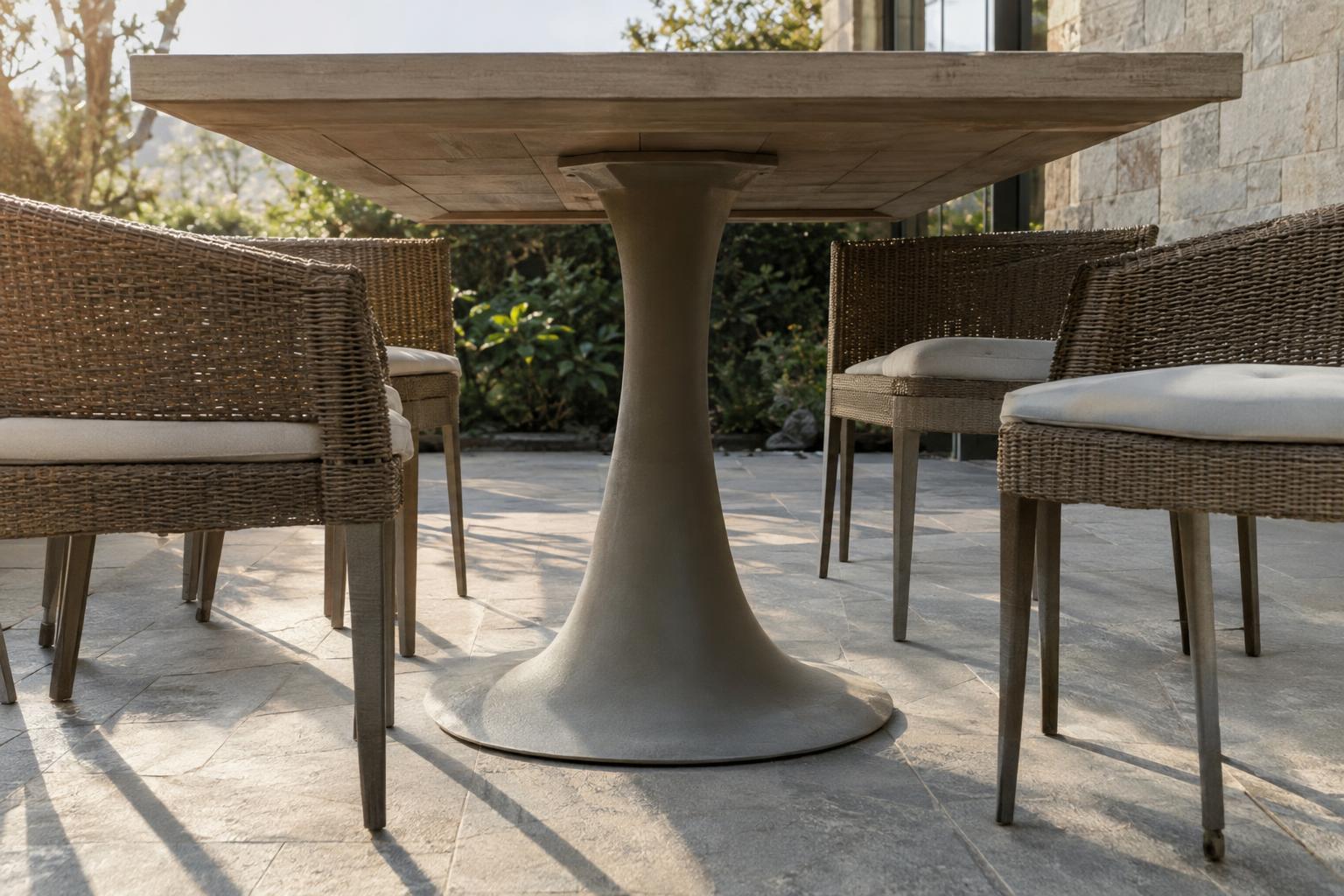
Table weight and moving it
A heavier table resists wind better but is harder to rearrange. Pedestal tables concentrate weight in the base, while four-leg tables spread it across the frame and are often easier to slide as one unit. Ask about the specific table’s weight before you buy.
Cleaning, feet, levelers, and frame materials
Florida humidity and rain mean the underside of a table needs attention too. A pedestal base has a wide footprint where water can collect, and the joint between column and base can hold moisture. Four legs offer small contact points that usually drain freely but add four spots to wipe down.
- Rinse the base with fresh water and dry the contact area after heavy rain to limit standing moisture and mildew.
- Look for levelers, which let you correct for an uneven surface.
Frame materials in general terms
Outdoor table frames are commonly aluminum, cast aluminum, wicker-wrapped, or poly lumber. Aluminum is generally lightweight and resists rust, while cast aluminum tends to feel heavier. Wicker-wrapped pieces pair a structural frame with a woven look, and poly lumber is a molded material that does not need staining. Read the care instructions for the particular table.
Palm Casual has sold outdoor furniture from Orlando since 1976, and because we work factory-direct, our team can usually explain how a frame is built. You can read more on the page about Palm Casual’s factory information. Palm Casual also offers in-house repair services and replacement-parts availability, so ask your showroom about the specific piece you own.
A decision checklist and bring-your-chairs showroom tips
- How many people sit at the table on a typical night, and on a big weekend.
- Whether the top is round, square, or rectangular, and which bases suit that shape.
- Whether your patio is level or slopes enough to need adjustable feet.
- How windy your spot is, and whether the table stays out or gets stored.
- Whether the umbrella goes through the table or beside it.
- Who will move and clean the table, and how heavy is too heavy for them.
Test it in person
Bring your own chairs, or at least the seat width and arm height. Sit at the table in each chair, put your knees where they naturally go, and check that you can slide in and out without catching a leg or base. Lean gently on an edge and shift the table an inch or two to see how it handles.
Frequently Asked Questions
Is a pedestal table better for legroom than a four-leg table?
Usually yes for open knee room along the edge, because nothing sits at the corners. The trade-off is that a center base can meet feet on smaller tables, so sit at the actual table to be sure.
Can a rectangular patio table have a pedestal base?
Some rectangular and oval designs use a wide or double pedestal, but long tables more commonly use four legs or a trestle-style base for steadiness at the ends. Check how the specific table is built.
Which base works better with an umbrella through the table?
Pedestal tables usually line the umbrella opening up over the base, which keeps the support centered. Four-leg tables can work well too, particularly with a separate stand. Close the umbrella when strong wind is expected.
How do I stop a patio table from wobbling on an uneven surface?
Look for adjustable feet or levelers and use them to offset a slight slope. Four-leg tables can often be fixed by adjusting one corner, while a pedestal needs the whole base to sit level.
If you are weighing pedestal and four-leg designs for your own patio, visit our showroom with your chairs, or call Palm Casual at (407) 299-9188 and our team will help you find the base that fits your space. You can also review the patio furniture guide before you come in.
Explore Palm Casual
Factory-direct pricing with a risk-free 30-day trial. Visit a showroom or call (407) 299-9188.
Explore Our Buying Guides
Looking for expert advice? Read our Complete Guide to Patio Furniture in Florida for tips on materials, maintenance, and choosing the right set for your space.