


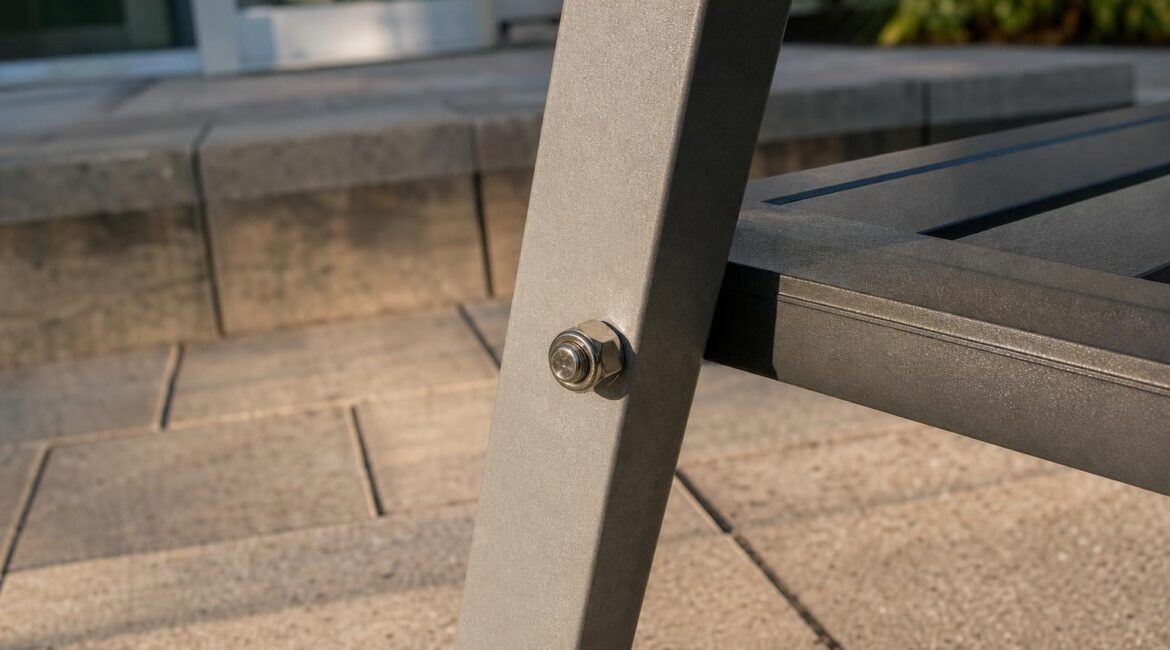
When a patio chair starts to look tired, the frame is rarely the first thing to go. More often it is a small bolt with an orange streak running down the finish, or a screw that no longer turns. Fasteners are tiny compared with the furniture they hold together, yet they take the same humid, salty, rain-soaked abuse as everything else.
That is why stainless steel hardware on patio furniture deserves a closer look before you buy. Knowing what the hardware is made of, and what to look for, helps you avoid rust stains, wobbly joints and stubborn repairs down the road.
Why Fasteners Matter More Than They Look
Every chair, table and sofa is held together by joints, and joints are only as reliable as the hardware inside them. A strong frame with a weak fastener still loosens, rocks and eventually needs attention.
Florida makes this more demanding than most places. Humidity keeps metal slightly damp for long stretches, rain seeps into every seam and coastal air carries salt that speeds up corrosion. Fasteners sit right in the crevices where water lingers, and they are often bare metal with little coating to protect them. That combination turns small design shortcuts into visible problems within a few seasons.
Weak hardware tends to show itself in a few ways:
- Rust streaks: orange or brown trails below a bolt head stain the finish and are hard to remove.
- Seized fasteners: corroded threads lock in place, so a simple tightening turns into a stripped head or a broken screw.
- Peeling or worn plating: plated finishes can wear through where a wrench or washer bites, exposing bare steel underneath.
- Loosening joints: pitted or thinned hardware can lose its grip, so chairs start to wobble.
Many of these issues can be reduced by what the hardware is made of and how it is paired with the frame, which is the reason fastener material is worth a question at the showroom. Our patio furniture guide covers the frame side of the equation in more depth.
Stainless Steel Hardware on Patio Furniture vs Plated Steel: What Differs
Hardware falls into a few common families, and they behave very differently outdoors.
Plated or coated steel
Ordinary steel screws are often coated with zinc or a similar plating to slow rust. The coating works for a while, but a scratch from a wrench or a chip from tightening exposes the steel beneath. In wet, salty conditions, plated steel is usually the first to show rust. It is common in indoor-oriented or budget hardware, so an outdoor piece is worth checking.
Stainless steel
Stainless steel contains chromium, which forms a thin protective surface layer that helps it resist rust. It is far more tolerant of moisture than plain steel, and it is a common choice for outdoor fasteners. Stainless is not stain-proof, though. In harsh coastal exposure it can still develop light surface discoloration if it is never rinsed. For an accessible explanation of how it works, the overview of stainless steel covers the basics.
Grades within stainless
Not all stainless is equal. Common grades used in fasteners include 304 and 316. Grade 316 contains added molybdenum and is generally regarded as better for salt-heavy environments, which is why it is often called marine grade. Grade 304 is a solid general-purpose option for many outdoor uses. If you live close to the water, that difference is worth asking about. The grade a particular piece uses depends on the product, so ask a Palm Casual showroom team member what hardware a specific item was built with instead of assuming.
Other options
Some pieces rely on hardware made of aluminum, brass or nylon, and some use rivets or hidden connections so no visible bolts appear at all. Each has strengths, and there is no single right answer. What matters is that the hardware suits the frame material and the setting.
How Hardware Interacts With an Aluminum Frame
Metals in contact with each other in wet conditions can react, and that reaction is called galvanic corrosion. When two different metals touch in the presence of moisture, one can corrode faster than it would alone. The galvanic corrosion overview explains why the pairing matters.
On an aluminum patio piece, that means the fastener and the frame are working together, for better or worse. Bare steel touching aluminum in a wet spot is a common recipe for white, powdery corrosion on the aluminum around the bolt and rust on the bolt itself. Stainless fasteners are a common choice on aluminum frames because they resist rusting themselves, but any two dissimilar metals touching in a wet spot can still react, so a protective finish, a washer or a small barrier between the metals helps reduce contact.
Those details are especially relevant for cast aluminum, where joints and brackets carry weight. If you are comparing that material, our cast aluminum patio furniture page is a helpful starting point, and it pairs well with the questions in this article.
Here is what to inspect on a piece you are considering:
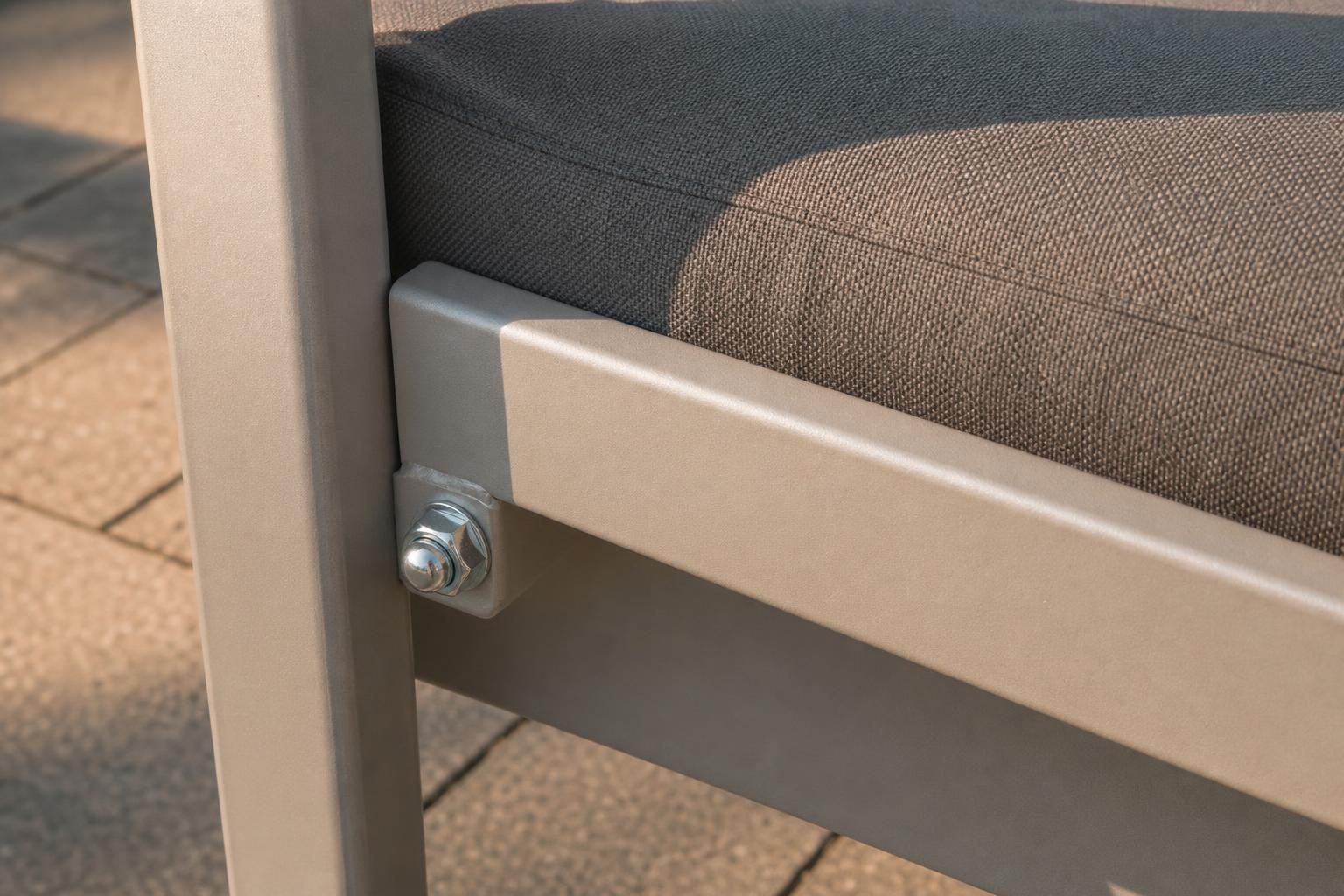
- Look at the bolt heads: they should look uniform and free of orange tinge, flaking or dull white residue.
- Check where metal meets metal: look for washers, sleeves or finish covering the contact point.
- Feel for smooth turning: if a fastener is accessible and turns cleanly with hand tools, that is a good sign of quality threads.
- Look for exposed threads: long, bare thread ends can trap moisture and corrode first.
- Ask about the model: the specific hardware depends on the item, so a quick question can save you a surprise.
Questions to Ask and Habits That Protect Hardware
You do not need to become a metallurgist. A few informed questions and a little routine care go a long way.
Before you buy, consider asking:
- What are the fasteners on this piece made of, and is that the same throughout?
- Are any bolts hidden, sealed or covered by caps?
- If a screw eventually strips or a part wears, can replacement parts be found for this item? Palm Casual offers replacement-parts availability and in-house repair services, so it is worth asking how that works for the piece you like.
- Is any hardware likely to sit in standing water, such as under a table top or along a leg base?
After you bring furniture home, small habits protect what you have:
- Rinse the furniture with fresh water occasionally, especially near the coast, so salt does not sit on bolts and joints.
- Check bolts every few months and snug any that have loosened before they wobble the joint.
- Touch up chips in the finish near hardware so bare metal is not left exposed.
- Wipe away standing water from seat frames and leg bases after storms.
Hardware rarely makes the marketing photos, but it is often what separates furniture that ages gracefully from furniture that needs constant attention. When you compare stainless steel hardware patio furniture options, look for a solid frame, thoughtful hardware pairing and a team that can answer questions about how each piece is put together.
Frequently Asked Questions
Is stainless steel hardware rustproof?
Stainless resists rust much better than plain or plated steel, but it is not completely immune. In salty coastal air it can develop light surface marks if it is never rinsed. Regular fresh-water rinsing keeps it looking its best.
What is the difference between 304 and 316 stainless?
Both are stainless, but 316 includes molybdenum and is generally considered better for salt exposure. For inland patios 304 is often adequate. Ask about the specific hardware on the piece you are considering.
Why do I see rust streaks on my aluminum chair if the frame does not rust?
Aluminum does not rust, but steel bolts attached to it can. The orange streaks usually come from the fasteners, not the frame. Replacing them with better-suited hardware often solves it.
Can worn or corroded hardware be replaced?
Often yes, if the right size and type can be matched. Bring the piece or a photo of the fastener to a showroom and ask a team member about repair and replacement options.
Get Started at a Palm Casual Showroom
Bring your questions about construction and ask to look closely at how each piece is assembled. Call (407) 299-9188 to speak with a team member, or see how our furniture is made at our factory page.
Explore Palm Casual
Factory-direct pricing with a risk-free 30-day trial. Visit a showroom or call (407) 299-9188.
Explore Our Buying Guides
Looking for expert advice? Read our Complete Guide to Patio Furniture in Florida or Ultimate Guide to Outdoor Furniture in Florida for tips on materials, maintenance, and choosing the right set for your space.
