


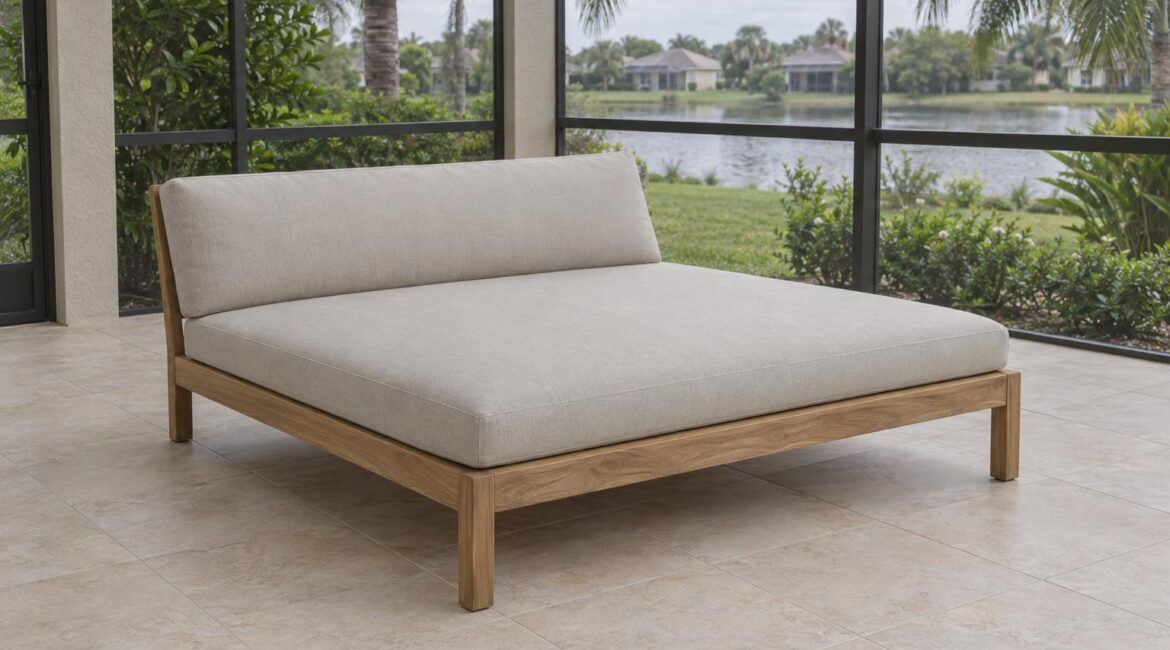
An outdoor double chaise lounge creates one shared place to stretch out. Two single chaises give each person a separate piece that can face a different direction or occupy a different part of the patio. The choice starts with how two people want to use the space, then comes down to the exact furniture measurements and the walking room around it.
Palm Casual lists both a Monterey Double Chaise and a Monterey Chaise Lounge in its aluminum collection. Use those listings to start a showroom conversation, and ask the team to confirm the intended seating configuration, dimensions, and features of the specific pieces. A product name or photograph alone cannot establish seating capacity or tell you how an arrangement will fit.
Start with shared time or separate preferences
A double chaise makes sense when relaxing together is the main purpose of the area. You might want one destination for a quiet afternoon, positioned toward the same view. Think about whether you both enjoy that spot at the same time and whether the available sitting and lounging space feels comfortable for both of you.
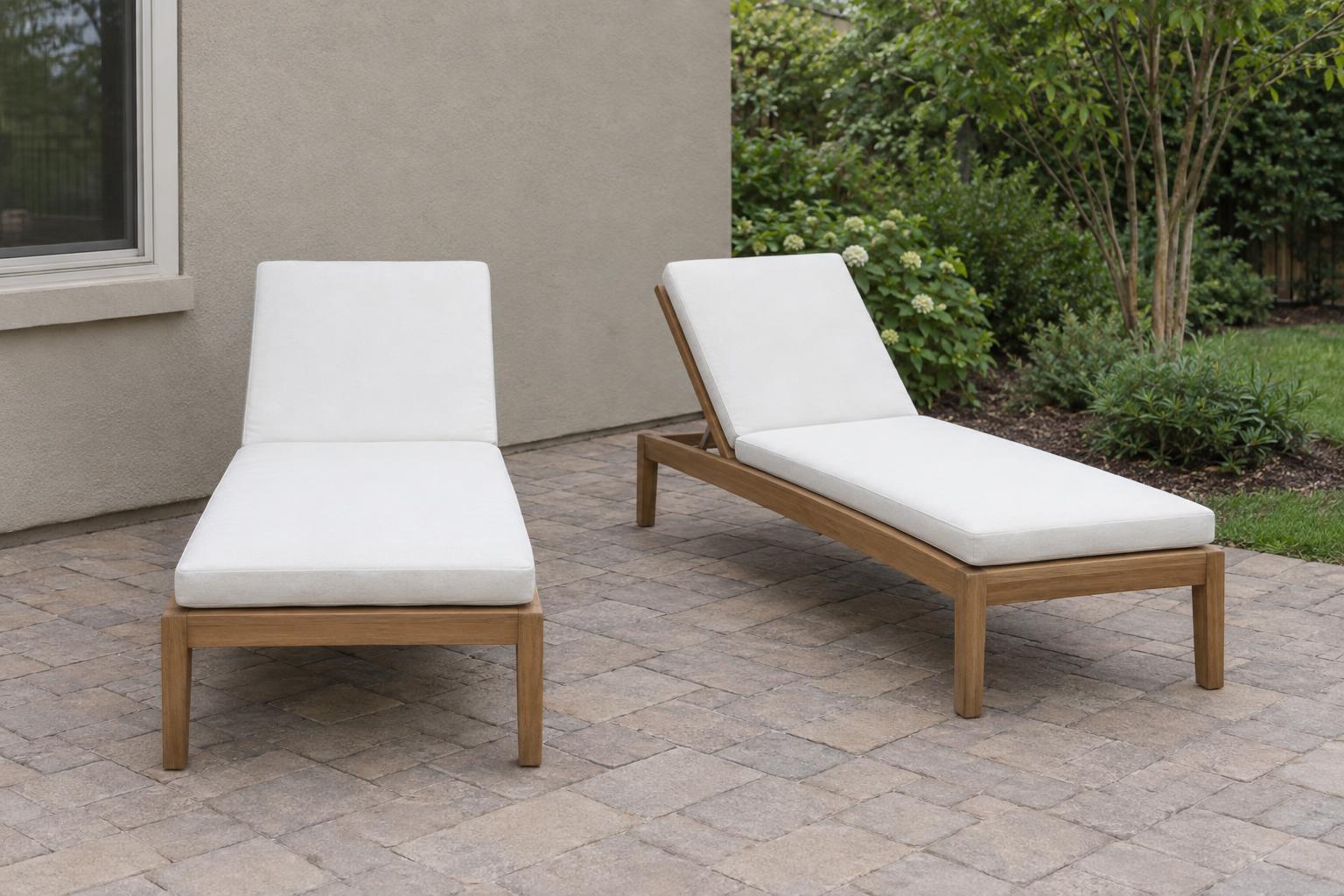
Two singles suit a household with different routines. One person can use a chaise near the screened wall while the other chooses a different view. The chairs can remain together most days and separate when needed. That flexibility comes from having two pieces; it does not depend on assuming either model has wheels, folds, or stacks.
If guests will use the loungers more often than a regular pair, consider how comfortable visitors will feel sharing one unit. Separate chaises let each guest choose a personal spot. A double may still be the right choice, but make that decision around the people who will actually use it.
Compare the complete arrangement, including access
Do not assume a double occupies less space than two singles. Start with the exact overall width and length of each candidate. For two single chaises, add the gap you want between them. For the double, check how each person will get in and out, particularly if one side sits next to a wall or screen.
Then include the space outside the furniture outline. A layout can fit on paper while leaving an awkward route to the house. Mark the outlines on the patio with removable tape, including any table you intend to keep beside the loungers. Walk from the door to the far end of the space and try the route while someone else stands where a seated person’s legs would be.
Compare both layouts in the same usable area. Keep door swings, steps, screen doors, and the path to other seating clear. Use your household’s access needs to judge the result rather than relying on a universal gap measurement that may not suit your patio.
Check comfort with both people present
A double’s width is only part of the comfort question. Sit on it together, using the positions you expect to use at home. Check elbow room, the reach to the arms, and how easily each person can stand up. Notice whether one person has to move before the other can leave.
With singles, compare the seat and back support separately for each user. Matching chairs may look balanced, but the same cushion feel may not suit everyone. Ask which cushion options belong to the exact model rather than assuming the photographed fabric or cushion is the only available choice.
For either arrangement, ask the showroom to demonstrate the back adjustment, if the model has one. Confirm whether the positions you want are available and, on a double, whether any adjustment is shared or independent. Do not infer independent backrests from the word “double” or expect two singles pushed together to feel like one continuous seat.
Plan for different shade preferences
Look at the patio during the hours you normally relax outside. A spot shaded in the morning may be exposed later. With a double chaise, both users occupy the same general part of the patio. Two singles can be placed in different areas if one person wants more shade or a different outlook.
That does not mean the chairs will be easy for one person to move. Check the actual handling requirements, the surface underfoot, and the route between possible positions. If moving them is impractical, judge the arrangement as a fixed layout.
Furniture placement also does not replace sun protection. The EPA’s UV Index guidance explains how sun exposure varies with UV levels. Use that guidance when planning time outside, and consider whether each lounging position gives you access to the shade you prefer.
Give each person a practical place for belongings
Before deciding, place an imaginary book, phone, and drink beside each user. On a double, a table on only one side may be convenient for one person and awkward for the other. Tables on both sides need additional floor space, which belongs in the layout comparison.
Two singles can share a table between them, provided both people can reach it comfortably. They can also use separate tables when placed apart. Try the reach from the position you use for reading or resting, rather than judging it only while sitting upright at the front of the cushion.
Include the table’s base as well as its top when marking the layout. A table that seems small from above can still interrupt the route around a chaise. The better arrangement gives both users access to belongings without turning the space between the furniture into an obstacle course.
Think through delivery and where the furniture will go
Measure the route from the delivery entrance to the final position. Include gates, turns, screen openings, and narrow passages. Ask the showroom how the selected item arrives and which dimensions matter along that route. A wide unit deserves particular attention at tight turns, but two individual pieces also need a workable path.
If you plan to move the furniture into a garage or enclosed room at certain times, mark that destination too. Compare the actual stored arrangement, and confirm whether any proposed folding, stacking, or disassembly is supported for the model. Avoid buying on the assumption that a feature exists because another chaise has it.
Discuss who will handle the pieces and how often. Two singles let you move one piece at a time, but that alone does not establish that either will be manageable for a particular person.
Compare complete quotes before choosing
Ask for a quote for one double and a separate quote for two singles in the configuration you want. Confirm the included cushions, selected fabric, any coordinating tables, and delivery details. Comparing one double’s price with one single’s price does not answer the cost of furnishing two lounging places.
Keep the finish and cushion choices comparable when evaluating the totals. If one option includes something the other does not, ask for that difference to be identified. Neither arrangement is automatically the less expensive purchase.
A double is a strong candidate when shared lounging, one location, and comfortable access all work together. Two singles are a strong candidate when separate placement and different preferences matter more. If the measurements or comfort test reveal a compromise, reconsider the layout before choosing the furniture.
Frequently Asked Questions
Does a double chaise always save space?
No. Compare the exact unit dimensions with the combined dimensions of two singles, their intended gap, nearby tables, and access around both arrangements. The usable layout matters more than the number of pieces.
Can two single chaises replace a double?
They provide separate lounging places and can be positioned together. Their arms, frames, and cushions may leave a divide, so do not expect a continuous lounging surface. Test the arrangement if that matters to you.
Does “double” mean each person has a separate reclining back?
The name alone does not establish that feature. Ask for a demonstration of the exact model’s adjustment and confirm how it operates before ordering.
What should we bring to the showroom?
Bring patio and doorway measurements, photographs of the walking routes, and notes about who will use the loungers. Visit together when possible so both users can compare comfort and access.
Visit our Palm Casual showroom locations to plan an in-person comparison, or contact Palm Casual with your layout questions. Ask the local showroom about the 30-day trial period and its return and exchange terms.
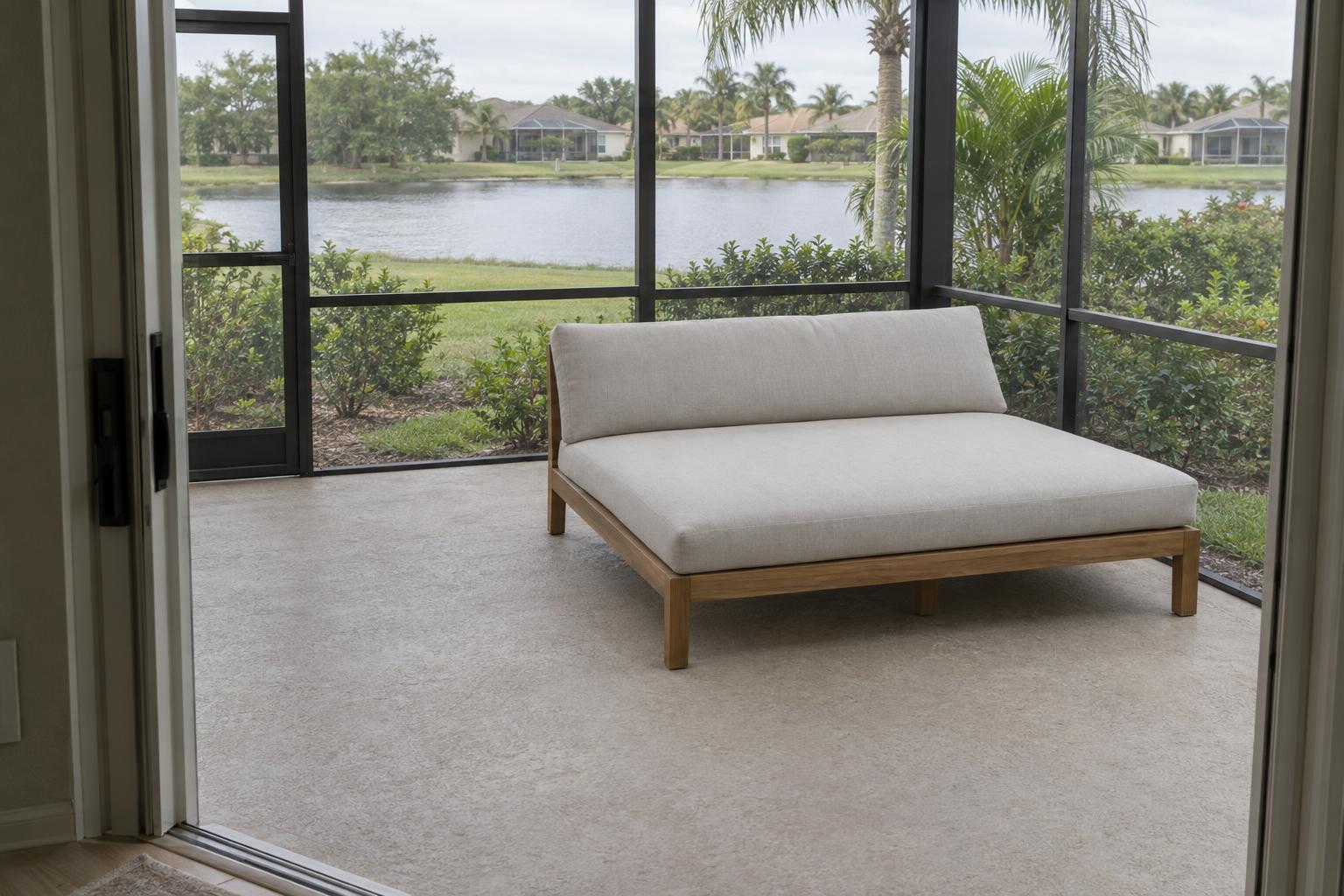
Images in this article are AI-generated illustrations of generic chaise arrangements. They do not depict a specific Palm Casual model, a real installation, or a measured floor plan.
Explore Palm Casual
Factory-direct pricing with a risk-free 30-day trial. Visit a showroom or call (407) 299-9188.
Explore Our Buying Guides
Looking for expert advice? Read our Complete Guide to Patio Furniture in Florida or Ultimate Guide to Outdoor Furniture in Florida for tips on materials, maintenance, and choosing the right set for your space.
