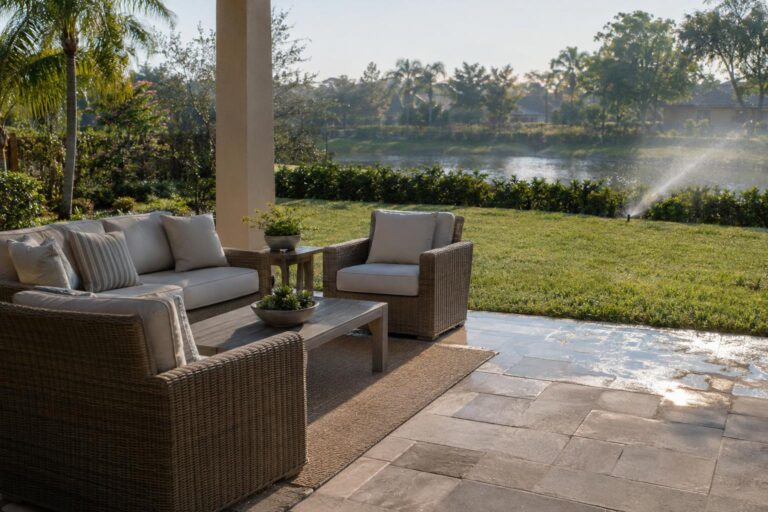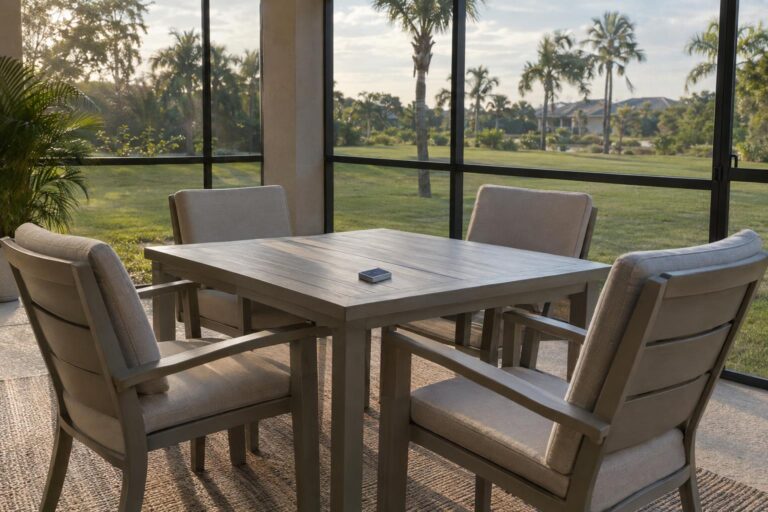

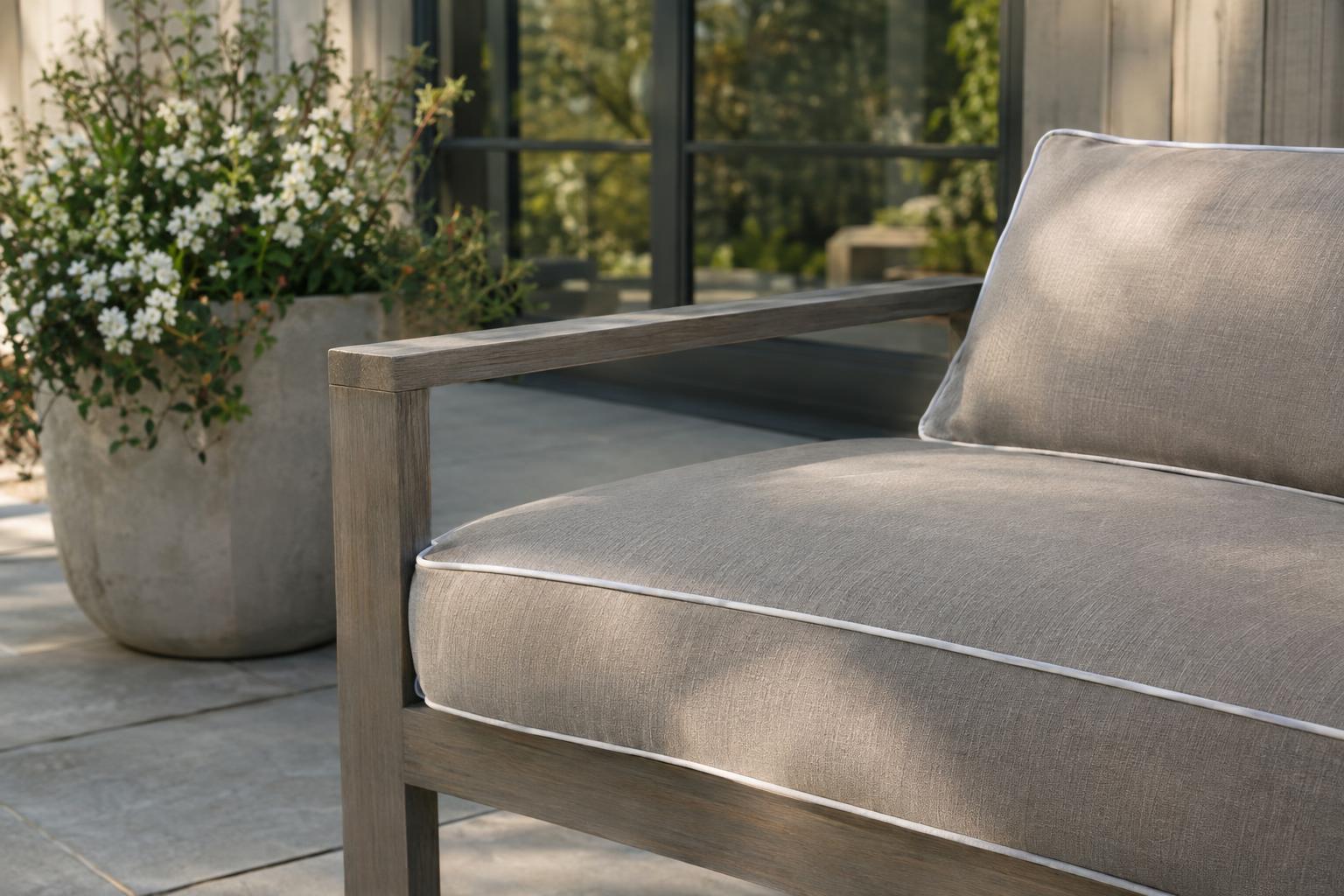
When an outdoor cushion starts looking tired, the fabric face is rarely the first thing to go. The edges and stitching take the abuse, which is why outdoor cushion piping seams wear is worth understanding before you buy. Here is what to look at, why it matters in Florida, and how to check a cushion yourself.
Where Outdoor Cushions Show Wear First
Think about how a cushion lives. People slide in and out of the seat, drag a hip across the front edge, and push a back cushion against the frame. Rain soaks it, the sun bakes it dry, and humidity lingers in the folds. The flat face of the fabric spreads that stress around, while a seam concentrates it into a thin line of thread.
That is why edges, corners and stitched lines show fuzzing, color loss or a small gap first.
Piping, Boxed Edges and Knife Edges Explained
Four edge styles are common on outdoor seat and back cushions, and each handles wear a little differently.
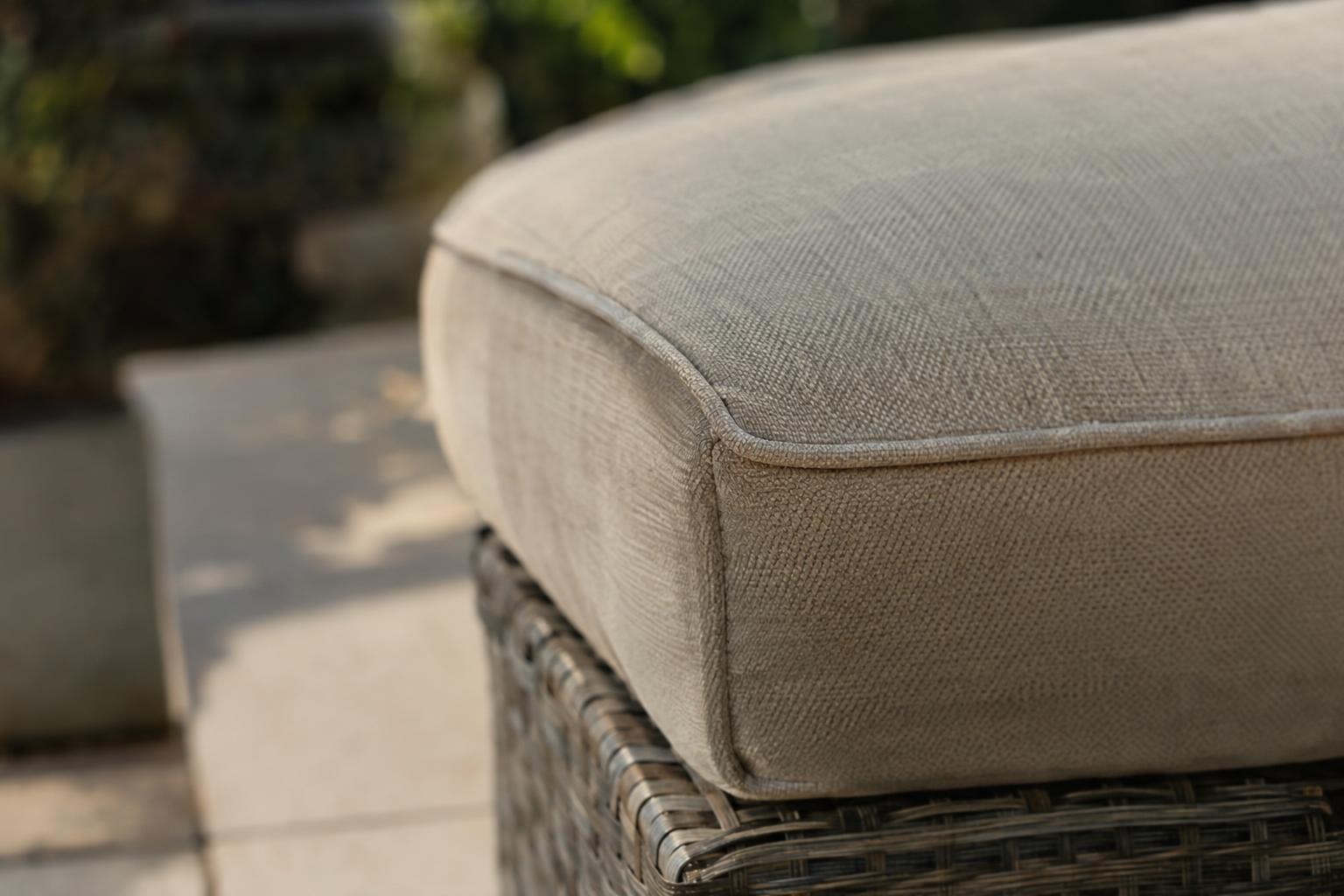
Piping or welt cord
Piping is a narrow fabric tube, usually wrapped around a thin cord, sewn into the seam. It gives the cushion a crisp outline and adds a little protection, since the cord takes the rubbing that would otherwise land on the fold of the fabric. It also adds another layer to sew through, so the stitching needs to be even and snug.
Boxed edges
A boxed cushion has a top panel, a bottom panel and a strip between them, often called the boxing strip or gusset. This gives the cushion real thickness and a tailored look. It also creates four seams around the top and four around the bottom, with corners where stitching and fabric meet at an angle. Those corners are the spots to inspect most closely.
Contrast piping
Piping in a different color is a popular design choice, but it sits on the most exposed ridge of the cushion. Any fading, fuzzing or dirt shows against the body fabric, so a matching color is more forgiving.
Knife edges
A knife edge has no boxing strip. The top and bottom panels are sewn together along the perimeter and the fill forms a soft, pillowy shape. With fewer seams there is less to fail, but the single seam carries all the load, so the stitch quality matters even more.
Thread, Stitching and Seam Placement
Thread is easy to ignore because it is such a small part of the cushion. Yet it is the part that actually holds everything together. Many of the popular outdoor fabrics, including solution-dyed acrylics of the Sunbrella type, are made to stand up to sun and moisture. If the seams are sewn with ordinary thread that breaks down in ultraviolet light, the fabric can outlast the stitching and the cushion will open up along its seams while the fabric still looks fine. Ask whether the cushion is sewn with UV-resistant outdoor thread, and check the specific cushion.
Stitch quality shows in a few ways. Look for stitches that are even in length, tight enough to sit flat, and free of skipped spots. In general terms, a double-stitched seam, or a seam with a second row of stitching close to the first, offers more backup than a single line, because one broken thread does not open the whole seam. Treat that as a rule of thumb and look at the actual seam.
Placement matters too. Seams that run where the body sits take more friction than seams tucked at the back or underside. Corners deserve extra attention because fabric is bunched, turned and stitched through several layers there.
Why Piping and Seams Wear Faster in Florida
Our climate is hard on stitched edges for a few reasons that stack up together.
- Strong sun. Ultraviolet light weakens unprotected thread over time, and exposed piping sits right on the sunniest ridge of the cushion.
- Humidity and mildew. Moisture lingers in seams and folds, and mildew likes to start where dirt and dampness collect, which is often along piping.
- Afternoon storms. A cushion that soaks and then dries again and again puts repeated stress on the fill, the fabric and the thread.
- Frame contact. Cushions shift against the edges of the frame, and the rubbing lands directly on corners and welt cord.
Construction details that look minor indoors become real differences outdoors. For more on how the rest of the cushion handles water, our guide to outdoor cushion zippers and drainage looks at the other half of the story.
Cleaning Habits That Spare Your Seams
How you clean can add years to a cushion or take them away. The goal is to lift dirt before it works into the stitching, without hammering the thread.
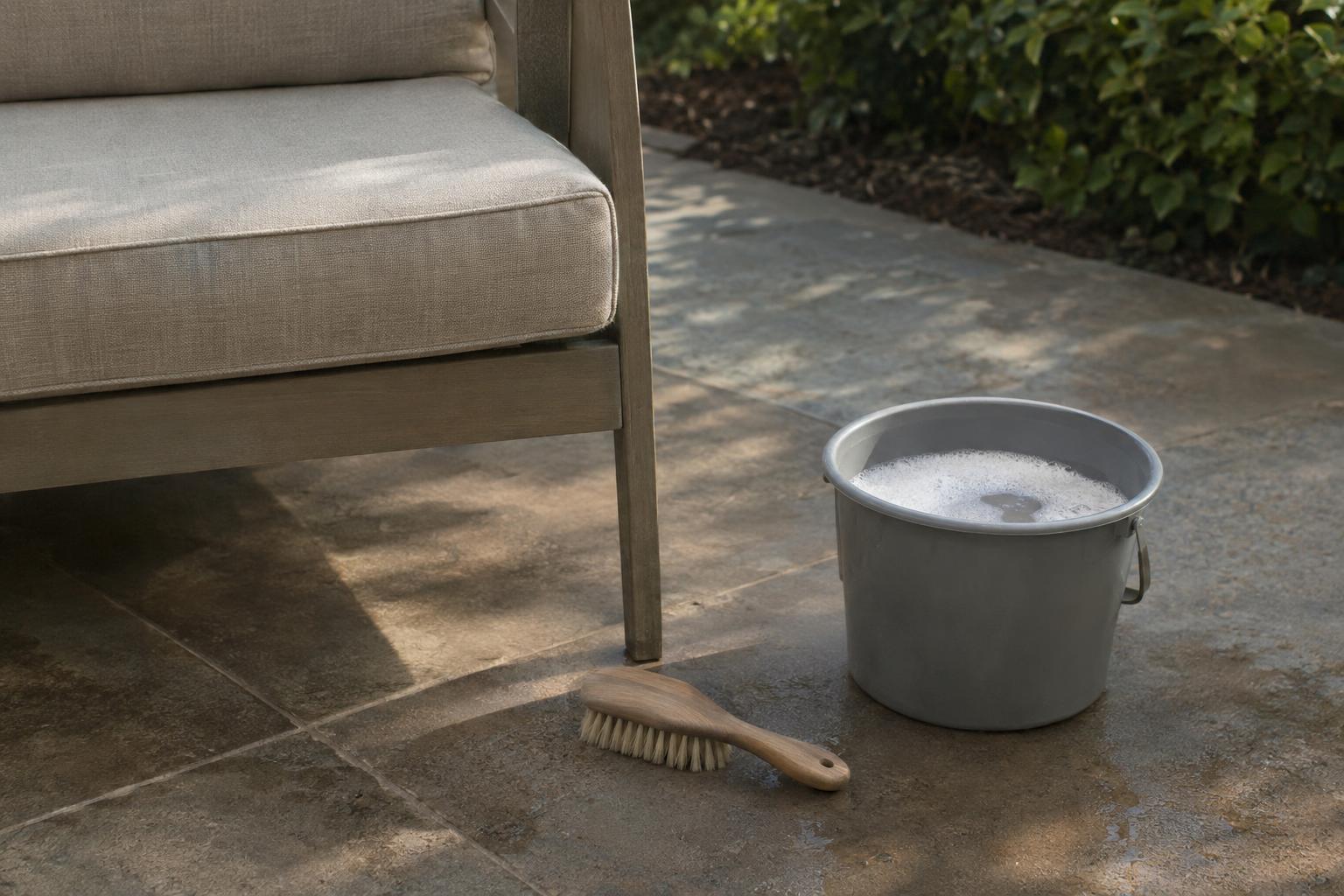
- Brush loose dirt and debris off regularly with a soft brush, working along the seam rather than across it.
- Use mild soap and lukewarm water, and rinse well so residue does not attract more dirt.
- Skip pressure washers. A strong jet can force water into the seam, fray thread and push fill out through needle holes.
- Let cushions dry fully, standing on edge if possible, so moisture does not sit in the folds.
For fabric-specific advice, the maker’s own instructions are the best source. Sunbrella publishes cleaning guidance on its how to clean Sunbrella fabric page, and the same habit applies to any outdoor fabric: follow the care directions for the specific cushion.
How to Inspect a Cushion in the Showroom
You do not need tools. Pick the cushion up and give it a minute of attention.
- Run your thumb along the piping. It should feel smooth and consistent, with no lumps, gaps or spots where the cord has twisted.
- Look for puckering. Wavy or gathered fabric beside a seam often points to tension problems in the sewing.
- Check for loose threads. A few tiny trimmed ends are normal. Long trailing threads or skipped stitches are not.
- Test the corners. They should fill out evenly and sit square, without sagging or looking pinched.
- Match the cushion to the frame. Press it into the seat and see how the edges meet the frame, since a poor fit means extra rubbing.
It is also a good moment to ask what thread was used and how the cushion is constructed. Palm Casual was founded in Orlando in 1976 and sells factory-direct, so you can read more about Palm Casual’s factory information before you visit.
When to Reupholster, Repair or Replace
Not every worn seam means a new cushion. A small separation along a seam, or a short stretch of loose thread, is often a quick repair if you catch it early. Palm Casual offers in-house repair services and replacement-parts availability for its furniture frames; for a cushion, ask the showroom what is possible for your piece.
Replacement is usually the better call when the fabric itself is thin or faded across large areas, when several seams are opening at once, when the fill has flattened or turned musty, or when mildew has set deep into the cushion. In those cases, new stitching on tired material rarely lasts. Reupholstering with new fabric can make sense if the fill and shape are still good.
Before you buy any set, our patio furniture guide can help you weigh how the cushions, frame and finish work together.
Frequently Asked Questions
Does contrast piping fade or wear faster than the rest of the cushion?
It can look worn sooner because contrast piping sits on the exposed ridge, takes the most rubbing, and shows any fuzzing or fading against the body fabric. Matching piping hides this better, while contrast piping is a design choice worth making if you like the look and plan to care for it.
Is a double-stitched seam always better?
Generally it offers more backup, since a second row can hold if the first one breaks. Thread and tension still matter, so inspect the actual cushion.
Can I pressure wash my outdoor cushions?
We do not recommend it. A strong jet can loosen thread, force water into the seams and push fill through the needle holes. A soft brush, mild soap and a gentle rinse are safer for the stitching.
How do I know if the thread is made for outdoor use?
Ask the showroom and check the specific cushion. Thread made for outdoor use is designed to resist sunlight and moisture, and it matters most on solution-dyed acrylic fabrics, where the fabric can outlast weaker thread.
If you would like to feel the difference in seams and edges for yourself, visit our showroom or call Palm Casual at (407) 299-9188 and we will walk you through the construction details on the pieces you are considering.
Explore Palm Casual
Factory-direct pricing with a risk-free 30-day trial. Visit a showroom or call (407) 299-9188.
Explore Our Buying Guides
Looking for expert advice? Read our Complete Guide to Patio Furniture in Florida for tips on materials, maintenance, and choosing the right set for your space.