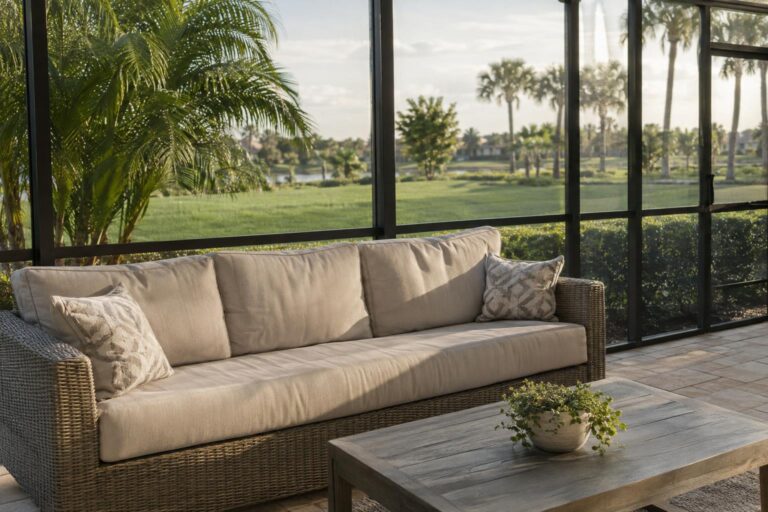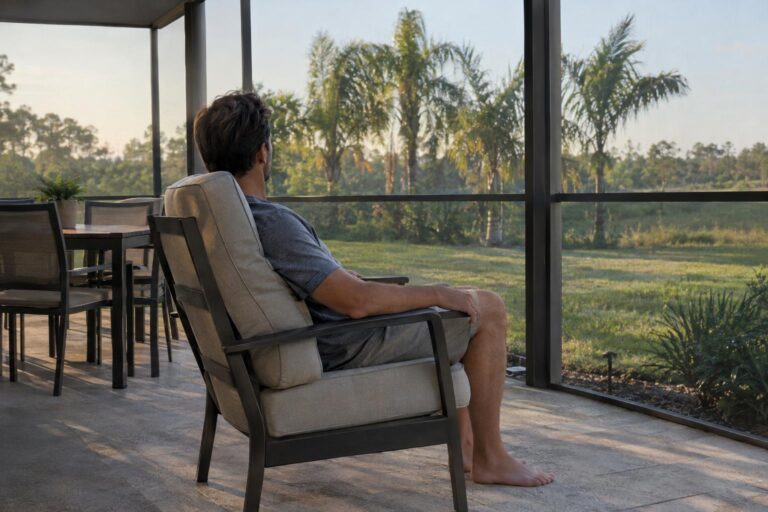

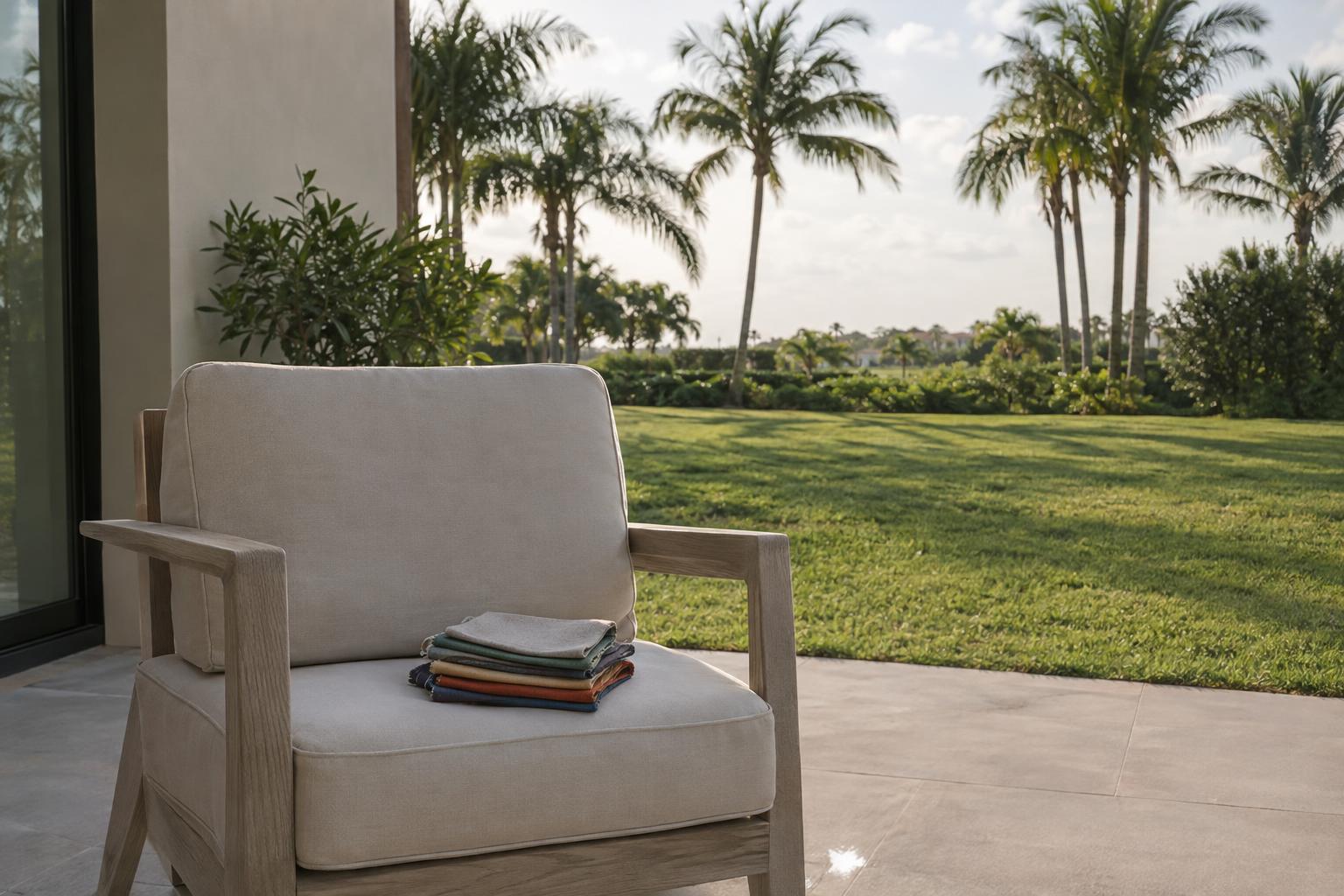
A fabric color that looks calm and rich in a showroom can turn flat, yellow or oddly gray on your own patio by midafternoon. Outdoor light is brighter and bluer than indoor light, it changes all day, and it bounces off whatever is nearby. Judging outdoor cushion fabric color well comes down to a viewing method: where you look, when you look, and what you compare it against. This is the method, step by step.
Why Outdoor Light Changes Fabric Color
Color is the light that reaches your eye after it bounces off a surface. Change the light and you change the color. Outdoors, three things shift constantly: the brightness, the direction of the sun, and the tint of whatever surrounds the fabric.
Brightness and shade
Full sun can make a medium color look lighter and a pale one look almost white. Deep shade does the opposite and can turn a warm tone dull or a navy nearly black. A lanai or screened porch sits somewhere in between, with a soft, even light that is different again from a patio with open sky above it.
Tint from the surroundings
A swatch picks up color from its neighbors. A green hedge adds a faint green cast, a warm paver adds a warm one, and a white wall behind it brightens everything. Your cushions will live in that exact mix, which is why a swatch should be judged there rather than somewhere neutral.
Check at Three Times of Day
The easiest improvement to your method costs nothing: look more than once.
- Morning: cooler, softer light that is often the most flattering to blues and greens.
- Midday: the strongest light, which tends to wash out pale colors and make patterns look sharper.
- Late afternoon: warmer, lower light that pulls out yellows and reds and can make cool colors look muddier.
Pay particular attention to the hours when your family actually sits outside. If you mostly use the patio in the evening, the late-day view matters more than noon.
Full sun and shade, dry and wet
Move the swatch between the brightest and the darkest spots your cushions will occupy. A color you love in full sun but dislike in shade, or the other way around, is telling you something useful before you order.
The wet look
Outdoor fabric gets damp from dew, rain and humidity. Many fabrics look a little deeper in color when they are wet, then return to normal as they dry. Dampen a corner of a sample if you are allowed to, or simply look at a fabric display after a rain, so a damp morning does not come as a surprise.
View it clean
A dusty or pollen-dusted swatch will read as duller than it really is. Brush loose dust off a sample before you judge the color. Our guide to cleaning Sunbrella cushions describes using a soft-bristle brush for loose dirt.
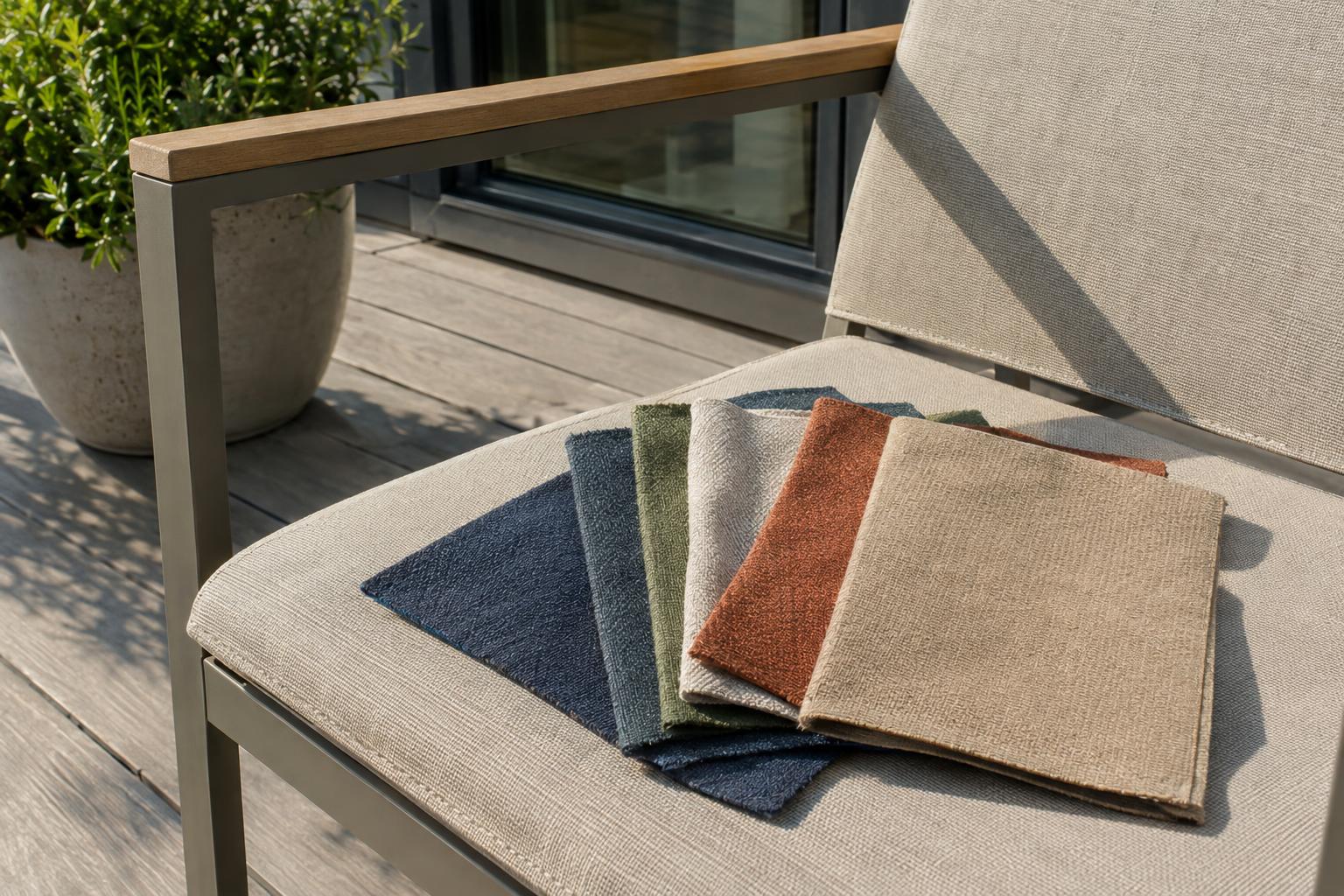
Hold It the Way a Cushion Sits
A seat cushion lies mostly flat and faces the sky. A back cushion stands nearly upright and faces the room. The same fabric catches light very differently in each position, and many woven and textured fabrics shift in shade depending on which way the surface faces.
- Lay the swatch flat on the seat to see how it will look as a seat cushion.
- Prop it upright against the back of a chair to see how it will look as a back cushion.
- Tilt it slowly and watch whether the color changes with the angle.
Stripes and patterns also change with distance. A pattern that looks bold at arm’s length can blend into a soft texture from across the patio, and the reverse can happen too. Step back several paces, then look again from where you would typically sit.
Compare against the frame, the floor and the plants around it
Colors are judged in company. Put the swatch directly on the frame, the way a cushion will rest on it. Then look at it beside the surface under your feet and the colors you see past the patio edge.
Be honest about contrast. A swatch that looks great next to a white frame may look very different against bronze or black. For help with how a color fits an overall design, our guide to choosing the right colors for your outdoor furniture covers the decision itself. Here the aim is only to see the real color clearly.
Screens, Brochures and Phone Photos Can Mislead
It is tempting to pick from a picture on a phone. That is also the least reliable way to see color.
Why screens differ
Every screen has its own brightness and color setting, and most phones adjust automatically to the room. The same fabric can look noticeably different on two devices side by side. Screens also cannot show the weave, so a fabric that reads smooth in a picture may look quite textured in person.
Why printed pages differ
Printed brochures and color charts use ink on paper, while Sunbrella describes its fabrics as 100% solution-dyed acrylic, with color saturated into the fiber before it is spun into yarn. Ink on a page cannot always reproduce that depth, or a woven blend of two yarns. Use brochures to narrow your choices, not to make the final call.
Why your own photos fool you
Phone cameras automatically correct for the scene. Take a picture of a swatch in deep shade and the camera brightens it. Take one in strong sun and it darkens it. The photo is a record of what the camera decided, not what you saw. If you take pictures to share with family, label them with the time of day and expect the color to look a little different from the real thing.
Look at something bigger than a chip
A small square is a poor stand-in for a whole cushion. Small chips cannot show how a pattern repeats, how wide stripes will read, or how a large area of one color feels. A color you like in a two-inch square can feel heavy or loud across an entire sofa.
Whenever you can, look at a larger piece of the fabric, a finished cushion on display, or a full-size sample of the pattern. If you are choosing between a Sunbrella fabric and a PVC plastic fabric, view each type in the larger format as well. The two can have a different feel and sheen even when the colors look close. If you want to browse current Sunbrella options first, see Sunbrella fabric patterns and colors for 2026 outdoor rooms.
Narrow to Two Finalists and View Them Together
Judging many fabrics at once leaves you with a blur. A cleaner approach is to cut the list down in stages.
- Pick three or four fabrics you like in the showroom or in a brochure.
- If a sample can be borrowed, view it on your patio at the three times of day above. If not, look at the display in the best daylight available and note what you see.
- Drop the ones that disappoint in either sun or shade.
- Place the final two side by side, on the frame, in the same light, and look at them for a few minutes.
- Walk away, come back an hour later, and check which one you reach for.
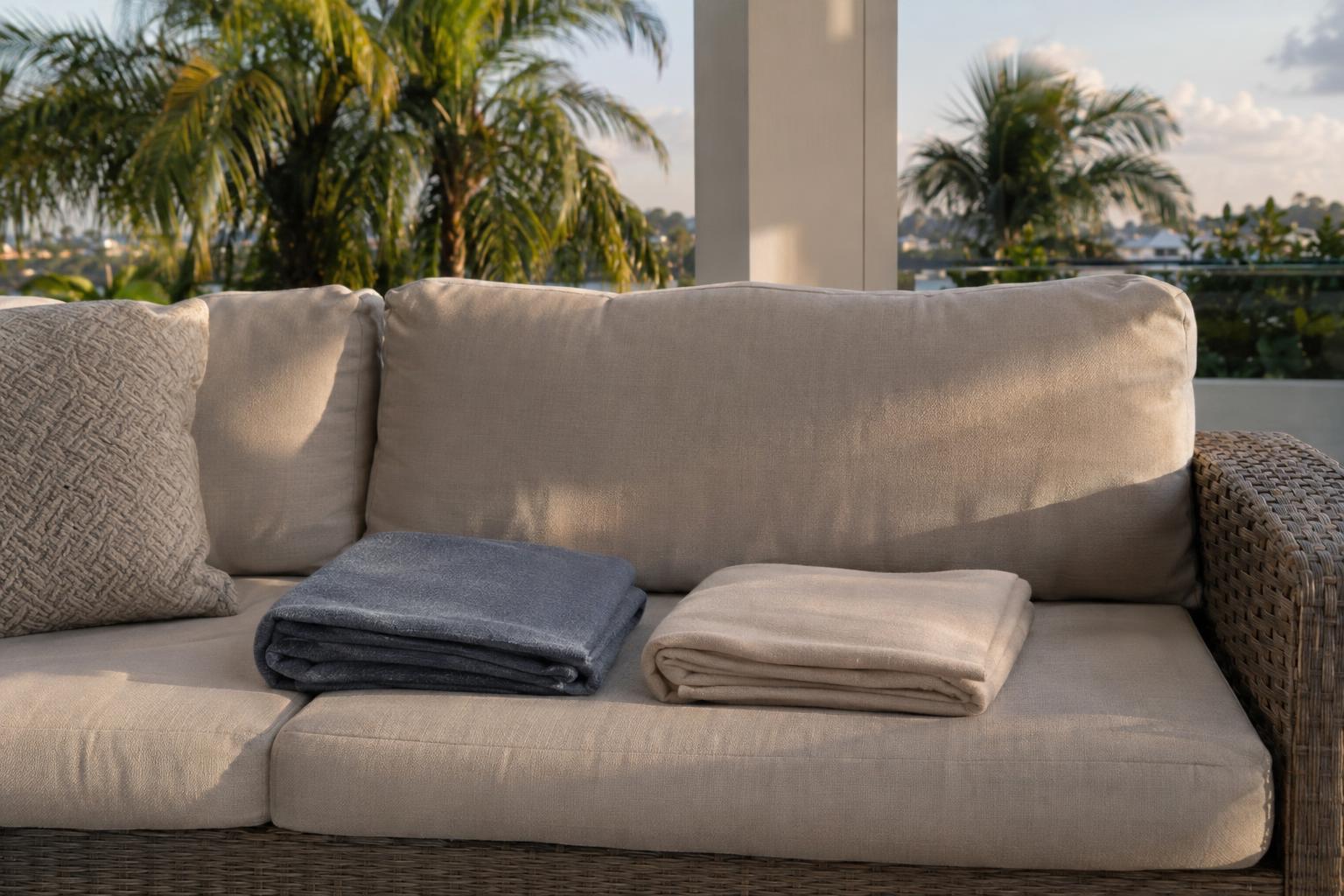
Side-by-side viewing matters because eyes adjust quickly. Looking at one color alone, you quickly stop noticing what is off about it. Two together make the differences obvious.
What to Ask at the Showroom
Showrooms differ in what they have on hand, so ask rather than assume. Useful questions include which fabric displays or sample pieces you can see in person, whether a larger sample of a pattern is available, and whether there is a place to see fabrics in natural daylight. Palm Casual offers Sunbrella and PVC plastic fabrics, so ask your local showroom how each can be viewed. For fade behavior over time, our article on color selection for patio cushions and fading is the right companion to this one.
Palm Casual has been selling factory-direct outdoor furniture from Orlando since 1976, so a showroom visit is a reasonable place to start comparing fabrics in person.
Frequently Asked Questions
Why does my outdoor cushion fabric color look different at home than in the showroom?
Showroom lighting is steady and usually warmer or cooler than outdoor daylight, and your patio adds color from walls, plants and pavers. Viewing the fabric in your own light, at several times of day, shows how it will really look.
Should I trust a color on my phone screen?
Use it only to narrow your choices. Screens vary in brightness and tint, and phone cameras adjust the picture automatically, so a photo rarely matches the real fabric. Check the final candidates in person.
Does a wet cushion look a different color?
Many fabrics look somewhat deeper when damp and return to their normal shade once dry. It helps to see a sample after dew or rain so the change is not a surprise.
How many fabric samples should I compare at once?
Start with three or four, then narrow to two and place them side by side on the frame in the same light. Comparing too many at once makes every color start to look the same.
If you would like to see fabrics in person, visit a Palm Casual showroom or call (407) 299-9188 and ask what fabric displays or samples are available to look at.
Explore Palm Casual
Factory-direct pricing with a risk-free 30-day trial. Visit a showroom or call (407) 299-9188.
Explore Our Buying Guides
Looking for expert advice? Read our Complete Guide to Patio Furniture in Florida or Ultimate Guide to Outdoor Furniture in Florida for tips on materials, maintenance, and choosing the right set for your space.