


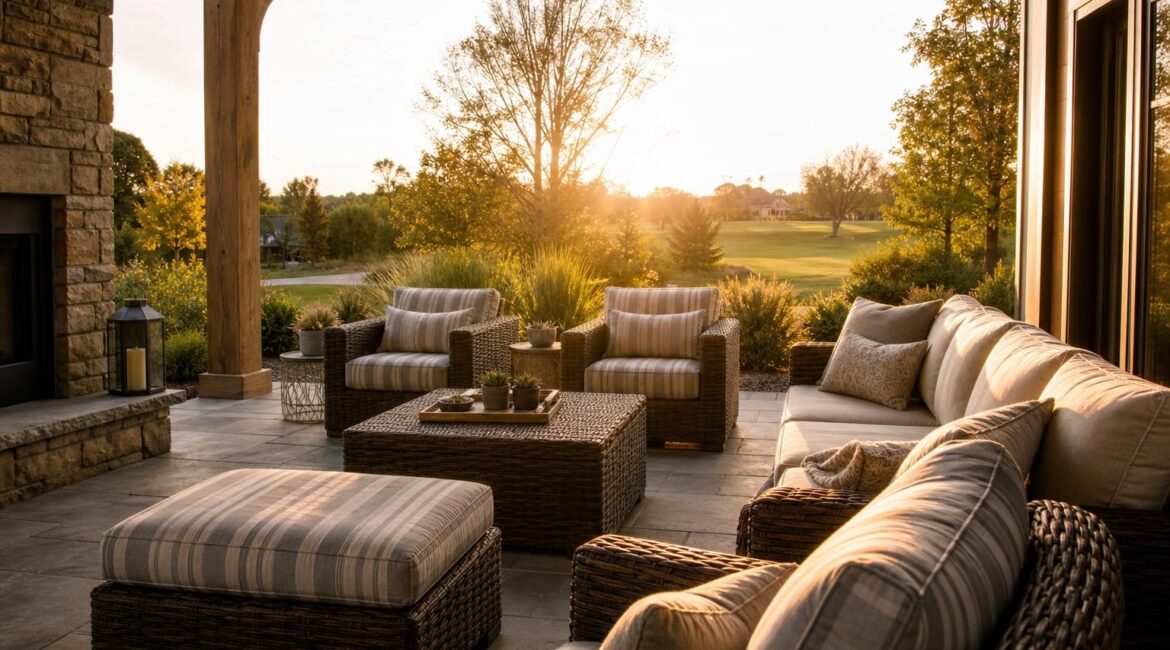
Choosing Sunbrella fabric patterns for outdoor furniture is one of the more enjoyable parts of putting together a patio, but it can also be the step where shoppers get stuck staring at dozens of swatches. Pattern, color, and frame finish all work together to set the tone of an outdoor room, and a little bit of structure in how you choose makes the process faster and the result more cohesive.
Because Sunbrella fabric is meant to stay on your furniture for years, not just one season, it is worth slowing down on this decision rather than grabbing the first swatch that catches your eye. This guide walks through how to think about pattern selection by function, what colors and combinations are popular for 2026 outdoor rooms, how to coordinate fabric with your frame finish, and what solution-dyed construction actually means for long-term color performance in Florida sun.

Why This Decision Is Worth Slowing Down For
Cushions are often the single most visible design element on a patio, more so than the frame underneath in many cases, since fabric covers the largest visual surface area of a seating group. That makes fabric selection one of the highest-impact style decisions in the entire outdoor furniture buying process, which is exactly why it deserves more than a quick glance at a swatch card before checkout.
Start With How the Space Is Used
Before looking at pattern books, think about how the furniture will actually be used. A dining set that hosts weekly family meals benefits from a solid or subtly textured Sunbrella fabric that hides everyday spills and crumbs better than a busy print. A lounge area meant for relaxing with a book can handle a bolder stripe or a woven pattern, since it sees lighter, less frequent use. Matching fabric choice to real-world function first keeps the rest of the decision simpler.
Patterns and Colors Trending for 2026 Outdoor Rooms
This year’s most requested Sunbrella looks lean toward warm neutrals — sandy taupes, soft greiges, and warm ivories — paired with one accent color rather than several competing prints. Classic stripes remain a steady favorite for a coastal Florida look, especially in navy, terracotta, or seafoam tones against a natural woven base. Textured solids that mimic linen or canvas are also popular for homeowners who want the durability of performance fabric with a softer, less “outdoor” look.

Bold botanical and tropical prints still have a place, particularly as accent pillows rather than full cushion sets, giving a room personality without overwhelming the whole seating area. Mixing one patterned fabric with two coordinating solids tends to photograph and live better long-term than an all-over print on every cushion.
Coordinating Fabric With Your Frame Finish
Frame finish plays a bigger role in the final look than most shoppers expect. Cast aluminum frames in a dark bronze or matte black finish tend to ground brighter or lighter fabric colors, making pale ivory or soft blue cushions pop rather than wash out. Lighter frame finishes, like a driftwood gray or textured white, pair naturally with warmer fabric tones such as terracotta or a warm taupe stripe, since the overall palette stays soft rather than stark.

Wicker frames add their own texture to the mix, so a simpler solid or two-tone stripe usually reads better against a woven surface than an equally busy pattern, which can visually compete with the frame’s texture rather than complement it.
Layering Texture With Pattern
Beyond color and print, Sunbrella fabrics also vary in weave texture, from smooth canvas-like weaves to more nubby, linen-inspired textures. Layering a textured solid on a lounge chair with a smoother woven stripe on a nearby sofa can add depth to an outdoor room without introducing another competing pattern. This layering approach is especially useful in larger outdoor living areas that combine dining, lounge, and bar seating in view of each other, since it ties the zones together visually while still letting each area feel distinct.
Piping and welt detailing along cushion edges is another small but meaningful choice. A contrasting piping color in a coordinating Sunbrella solid can sharpen the look of a patterned cushion and make the whole set feel more custom, while matching piping keeps the focus entirely on the main fabric pattern.
Understanding UV and Fade Performance
Sunbrella fabric is solution-dyed, meaning the color is built into the fiber itself rather than applied as a surface coating. This construction is a big part of why the fabric resists fading from ongoing sun exposure better than many standard upholstery fabrics, which is especially relevant in Florida’s strong, near-daily sun. Darker colors and saturated prints will still show more visible fading over years of direct sun than lighter neutrals, simply because color shift is easier to notice on deep tones. Rotating cushions periodically and choosing covered or partially shaded seating areas for the darkest fabric choices can help colors stay truer for longer. Routine care helps just as much as color choice here: brushing off loose dirt, rinsing away salt spray and pollen, and spot-cleaning the occasional spill with mild soap and water keeps the woven surface clean without harsh scrubbing. Because the color runs through each fiber rather than sitting on top of it, a thorough cleaning refreshes the fabric without stripping or dulling the pattern the way it can on surface-printed material, so the same cushions can be freshened up repeatedly over the years they spend outdoors.
Our showroom keeps a full wall of current Sunbrella options on display, organized by color family, so you can hold swatches up against an actual frame finish before committing. Bringing a photo of your patio or a paint chip from your home’s exterior can help our team pull coordinating options quickly, and seeing fabric under real daylight rather than showroom lighting alone gives a much more accurate sense of true color.

As you compare swatches, use Sunbrella’s outdoor upholstery fabric guide to review fabric-selection considerations alongside the colors and patterns you prefer.
Frequently Asked Questions
What makes Sunbrella different from regular outdoor fabric?
Sunbrella fabric is solution-dyed, which means color pigment is added during fiber production rather than sprayed on afterward. This construction gives the fabric strong resistance to fading from ongoing sun exposure compared to many standard fabrics, and it is a large part of why the fabric has remained a go-to choice for Florida outdoor rooms for decades.
Do darker Sunbrella colors fade faster than light colors?
All fabric experiences some color change with years of direct sun exposure, but fading is generally more visible on darker or highly saturated colors than on lighter neutrals, simply because the contrast in color shift is easier to see.
How do I choose a pattern that won’t look dated in a few years?
Pairing one patterned fabric, like a classic stripe, with coordinating solid colors tends to age better visually than covering every cushion in the same bold print, since it gives you flexibility to update accent pieces without replacing the whole set.
Can I mix different Sunbrella patterns on the same patio?
Yes, many outdoor rooms mix a primary solid or textured fabric on main seating with a coordinating stripe or print on accent pillows. Staying within one or two color families keeps a mixed-pattern room feeling intentional rather than mismatched, and bringing a fabric swatch from one piece when shopping for another helps confirm the pairing works before you commit.
Want to see current Sunbrella patterns against real frame finishes? Stop by our Bonita Springs showroom or call (407) 299-9188 and our team can help you coordinate fabric, frame, and pattern for your outdoor room.
Explore Palm Casual
Factory-direct pricing with a risk-free 30-day trial. Visit a showroom or call (407) 299-9188.
Explore Our Buying Guides
Looking for expert advice? Read our Complete Guide to Patio Furniture in Florida or Ultimate Guide to Outdoor Furniture in Florida for tips on materials, maintenance, and choosing the right set for your space.
