


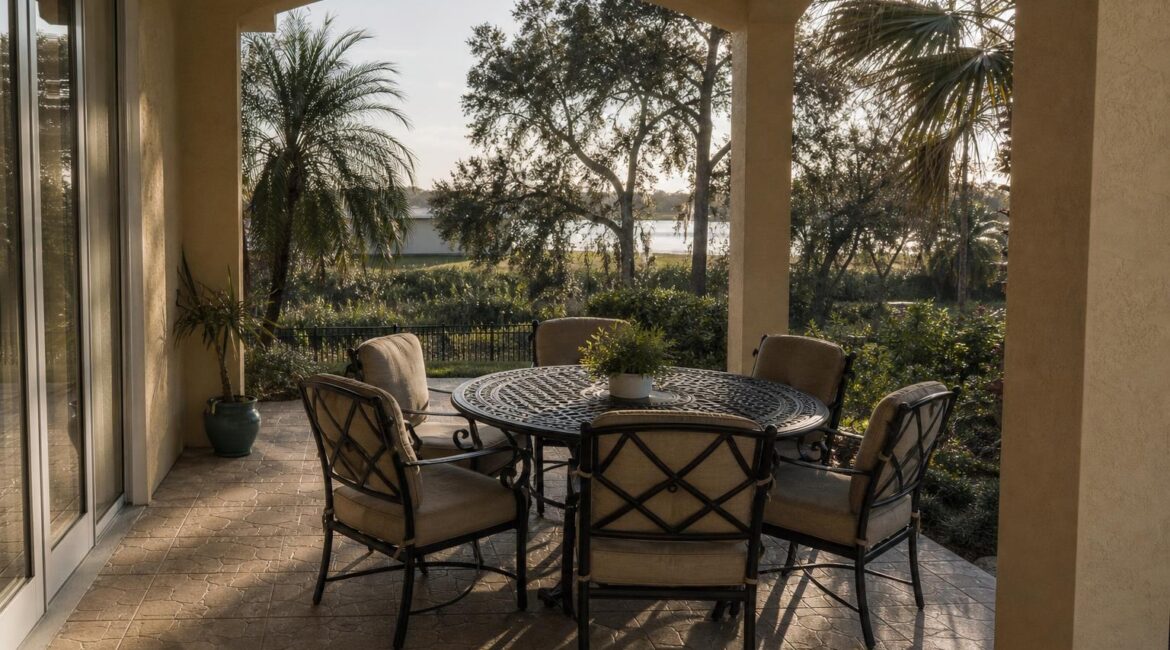
Picking a patio dining table shape is one of those decisions that looks simple until you start measuring your actual space. Round, rectangular, and square tables all seat people comfortably, but each shape moves through a footprint differently, seats a different number of people well, and handles traffic flow around it in its own way. Getting the shape right before you fall in love with a specific finish will save you a return trip and a lot of rearranging.
Table shape also affects how a dining area relates to the rest of your patio or lanai. A shape that fits the footprint well leaves enough room for a nearby lounge area or simply a clear walking path, while the wrong shape for the space can make an otherwise generous patio feel tight. This guide breaks down round, rectangular, and square tables one at a time, then walks through a simple process for matching shape to your footprint, seating needs, and how people actually move through the space.

Why Table Shape Deserves Its Own Decision
Shoppers often choose a dining collection based on finish and material first, then default to whatever shape that collection happens to come in. Flipping that order — starting with shape based on your footprint and seating needs, then narrowing material and finish within that shape — usually leads to a better long-term fit, since a beautiful table that does not suit the space ends up being worked around every single day it is used.
Round Tables for Conversation and Tight Corners
Round patio dining tables are a strong choice for smaller or irregularly shaped patios because they have no corners to navigate around, which makes it easier to pull chairs out and walk past the table even in a tighter footprint. Round tables also tend to encourage conversation since everyone is roughly the same distance from everyone else, without one person stuck at a far end.
The tradeoff is seating capacity. A round table generally seats fewer people than a rectangular table of a similar overall footprint, so if you regularly host six or more guests, a large round table can start to feel crowded or require an oversized diameter that overwhelms a smaller patio.
Rectangular Tables for Larger Gatherings and Defined Areas
Rectangular tables are the most efficient shape for seating larger groups, since you can add length without adding much width, fitting more chairs without the table becoming unwieldy. They also tend to define a dining zone clearly within a larger patio or lanai, visually separating the eating area from a lounge or conversation area nearby.

Rectangular tables need a bit more planning around traffic flow, particularly at the ends, where you want at least a few feet of clearance for chairs to slide out and for people to walk past comfortably. A long rectangular table pushed too close to a wall or railing will feel cramped no matter how nice the finish is.
Square Tables for Small Patios and Balconies
Square tables work well in compact spaces like condo balconies or small courtyard patios, especially for two to four people. Because all four sides are equal, a square table tends to feel balanced in a small square or nearly-square footprint, where a long rectangular table would look out of proportion.

Square tables scale up less gracefully than rectangular ones. A large square table meant to seat six or eight can end up with an uncomfortably wide reach across the middle for passing dishes, so square shapes generally work best when kept to smaller seating counts.
Oval Tables as a Middle Ground
Oval tables borrow some benefits from both round and rectangular shapes. Like a rectangular table, an oval can extend length to fit more chairs without becoming excessively wide, but the rounded ends soften the corners the way a round table does, which can make it easier to navigate in a space with foot traffic passing on one end. Oval tables tend to work particularly well on patios that are longer than they are wide but still narrower than what a full rectangular table would comfortably need.
The one tradeoff with oval tables is that finding matching bench seating or built-in corner configurations can be more limited than with rectangular tables, since ovals do not have a flat corner to anchor an L-shaped bench. For most standard dining chair setups, though, this is a minor consideration.
Matching Shape to Footprint, Seating Count, and Traffic
A practical way to narrow down shape is to measure your patio footprint first and mark it out with painter’s tape or string, then think about how many people you realistically seat on a regular basis versus for occasional larger gatherings. Leave at least three feet of clearance on all sides of the table for chairs and walking room, more if the area doubles as a walkway to another part of the yard or pool. It also helps to plan for how much table edge each seat needs; allowing roughly two feet of width per place setting keeps elbows, plates, and serving dishes from crowding, and that number quickly rules some shapes in or out once you know your regular headcount. For a footprint that has to flex between everyday meals and the occasional larger gathering, it usually feels better to size the table around the number of people you seat most nights rather than around its busiest day of the year.
If your space is long and narrow, a rectangular table almost always makes better use of the footprint than a round one. If your patio is closer to a square shape or you are working with a smaller balcony, a round or square table will typically feel more proportional. Our showroom floor has multiple shapes and sizes set up side by side, which makes it much easier to visualize scale than looking at dimensions on a spec sheet alone, and our team can help translate your measurements into a realistic sense of how a given table will actually sit in your space.

After choosing a table shape, check its seating height too. POLYWOOD’s chair-to-table height guide explains the dining, counter, and bar categories.
Frequently Asked Questions
What patio table shape is best for a small balcony?
Square or small round tables tend to work best on balconies because they fit compact footprints without creating awkward corners or excess overhang, and they suit smaller seating counts of two to four people well. A bistro-sized version of either shape is usually the most practical starting point for a balcony under roughly forty square feet.
How many people can a round patio table seat comfortably?
It depends on the diameter, but most round patio tables comfortably seat four to six people. Beyond that, the diameter needed to fit more chairs often becomes too large for anything but a very spacious patio.
Is a rectangular or oval table better for a narrow patio?
A rectangular or oval table generally makes better use of a narrow, elongated footprint than a round or square table, since the length can extend along the space without adding much extra width.
How much clearance should I leave around a patio dining table?
A good general guideline is at least three feet of clearance on all sides so chairs can be pulled out and people can walk around the table comfortably, with more room if the area is also a walkway.
Not sure which shape fits your patio? Visit our Tampa showroom to see table shapes and sizes side by side, or call (407) 299-9188 to talk through your footprint with our team.
Explore Palm Casual
Factory-direct pricing with a risk-free 30-day trial. Visit a showroom or call (407) 299-9188.
Explore Our Buying Guides
Looking for expert advice? Read our Complete Guide to Patio Furniture in Florida or Ultimate Guide to Outdoor Furniture in Florida for tips on materials, maintenance, and choosing the right set for your space.
