


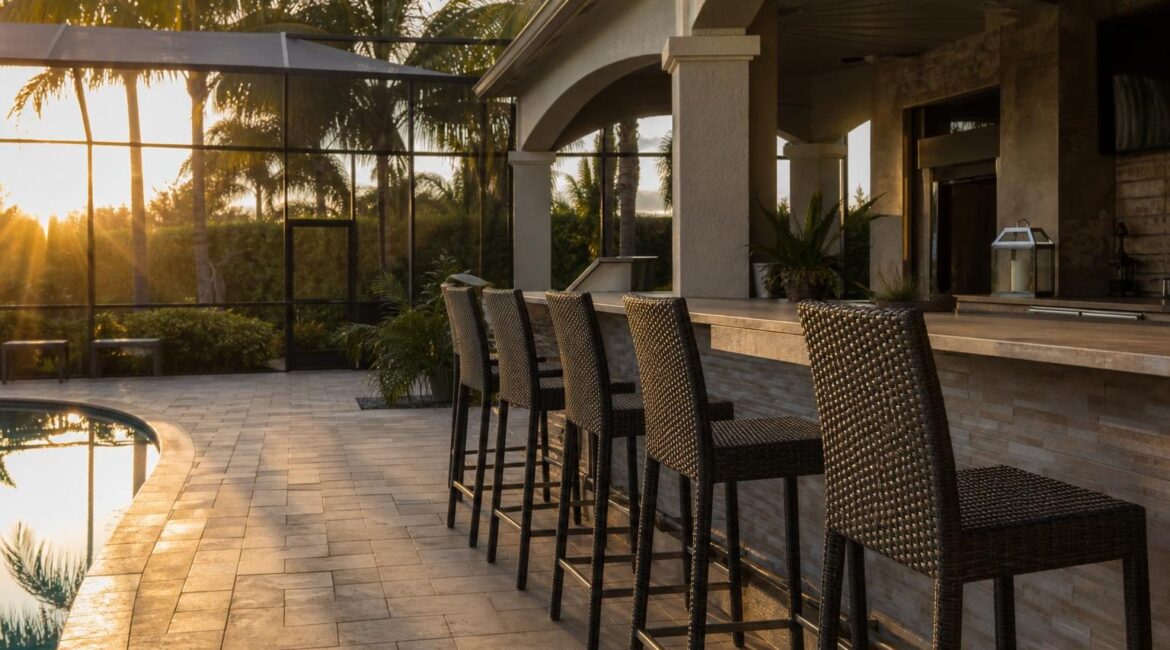
Setting up a patio bar or an outdoor bistro nook usually comes down to one practical question: counter height or bar height? Outdoor bar stools come in both, along with a range of base styles and materials, and matching those details to your specific setup makes the difference between stools that get used daily and stools that end up in the way.
Beyond height, there are a handful of details — base style, seat material, footrest placement, and how the stool holds up near a pool or under Florida sun — that separate a stool you will love using every evening from one that ends up pushed into a corner after the first season. This guide covers each of those details so you can walk into a showroom already knowing what questions to ask.

Why Patio Bars Need Different Stool Rules Than Kitchen Bars
Indoor bar stool shopping usually focuses on style first, since indoor surfaces do not have to contend with humidity, rain, or direct sun. Outdoor bar stools need to hold up to all three, which changes the priority order: material and frame construction come first, then base style, and finally aesthetic details like finish color and seat texture, since a stool that looks great but traps water or corrodes quickly will not stay in good shape for long on a Florida patio.
Counter Height vs. Bar Height: Measuring Your Setup Correctly
The single most important measurement is the height of the surface the stools will sit at. Counter-height stools typically pair with surfaces around 34 to 36 inches tall, which matches most built-in outdoor kitchen counters and many patio islands. Bar-height stools are built for taller surfaces, generally 40 to 42 inches, which is the standard for freestanding patio bar tables and elevated bistro-style setups.
Mixing up the two is a common mistake — a bar-height stool at a counter-height surface leaves guests hunched over, while a counter-height stool at a true bar table leaves legs dangling with no footrest in reach. Measuring your actual surface before ordering, rather than guessing based on how the space looks, avoids this entirely.
Swivel vs. Stationary Bases
Swivel stools let guests turn to face a conversation, the pool, or the view without having to physically move the stool, which is especially useful in a patio bar setup where people are often facing different directions throughout an evening. The tradeoff is, on some models, more moving parts to keep clean of sand or debris, and a swivel base can add a bit more depth to the stool’s footprint than a simple four-leg stationary design.

Stationary stools are simpler mechanically and often lighter, making them easier to move around or store away during a storm. For a bistro nook that is more about quick seating than an entertaining hub, stationary stools are usually the more practical and budget-friendly choice.
Base Styles: Four-Leg, Pedestal, and Adjustable
Beyond swivel versus stationary, stool bases also vary by structure. A four-leg base is the most traditional and often the most stable option on uneven paver or stone surfaces, since each leg can be shimmed individually if needed. A pedestal base has a cleaner look and simplifies cleaning underneath the stool, though it can feel less stable on soft ground like grass or loose gravel. Adjustable-height stools, which telescope between counter and bar height, are a flexible option for households still finalizing their outdoor bar setup or for a bistro nook that occasionally hosts both dining and drinks at different table heights.
Materials That Hold Up at an Outdoor Bar
Aluminum-framed stools are a popular choice for patio bars because they are lightweight enough to move easily but still sturdy under regular use. Woven wicker seats add a softer, more furnished look and work well when the bar area is under a covered lanai with decent airflow. Poly lumber and marine-grade polymer stools bring a more substantial, all-weather feel and tend to suit a more rustic or coastal-styled outdoor bar.

For a bar area near a pool or splash zone, prioritize stools with quick-drying seats and footrests that are not prone to holding standing water, since that area sees more moisture exposure than a typical dining spot. A quick rinse-down routine after heavy pool use also helps any material last longer between deeper cleanings.
Footrests, Seat Depth, and All-Day Comfort
A built-in footrest, whether it is a full ring around the base or two side rails, makes a real difference in comfort for stools used regularly over longer stretches, such as during a game on TV or a longer dinner conversation. Without a footrest, taller stools can leave legs dangling uncomfortably, especially for shorter guests. Seat depth and back height also matter more than shoppers often expect; a stool with some back support, even a low one, tends to feel noticeably more comfortable for sitting longer than fifteen or twenty minutes compared to a fully backless design. Spacing matters for comfort too: leaving roughly two feet of counter or table width per stool gives each person room for elbows and a drink without knocking into a neighbor, which is the same guideline that determines how many stools a given bar surface can realistically hold. If the bar sees regular evening use, it is worth sitting on a floor model for a few minutes in the posture you would actually relax in, since seat height, footrest reach, and back support all read differently over a longer sit than in a quick test.
Fitting Stools Into a Bistro Nook
Smaller bistro nooks benefit from backless or low-profile stools that tuck in fully when not in use, keeping walkways clear. If the nook doubles as a spot for quick meals as well as drinks, a stool with some back support makes longer sitting more comfortable without taking up significantly more space than a backless design.
Our showroom has a full lineup of counter-height and bar-height stools set up so you can sit at both and feel the difference in scale before deciding. Bring your surface height measurement and our team can help you match the right stool style to your patio bar or bistro setup.

For a manufacturer’s reference when checking stool and table labels, consult POLYWOOD’s chair-to-table height guide. Confirm the actual dimensions of the pieces you plan to pair.
Frequently Asked Questions
What is the difference between counter-height and bar-height stools?
Counter-height stools are built for surfaces around 34 to 36 inches tall, while bar-height stools are built for taller surfaces around 40 to 42 inches. Measuring your actual counter or table height first ensures you order the correct one.
Are swivel bar stools worth the extra cost outdoors?
Swivel stools add convenience for entertaining spaces where guests face different directions throughout the evening, such as toward a pool or a nearby view. For a simpler bistro nook, stationary stools are often a practical, low-maintenance option.
What material holds up best for outdoor bar stools near a pool?
Aluminum frames with quick-drying seats generally perform well near pools since they resist standing water and dry quickly. Poly lumber and marine-grade polymer stools are also strong options for wetter, high-splash areas.
How many bar stools fit at a standard patio bar table?
It depends on the table’s length, but a typical rectangular patio bar table comfortably fits three to four stools, while smaller round or square bar tables usually accommodate two to three. Leaving roughly two feet of width per stool along the table’s edge is a reasonable planning guideline.
Ready to compare counter-height and bar-height stools in person? Visit our North Fort Myers showroom or call (407) 299-9188 and our team will help you outfit your patio bar.
Explore Palm Casual
Factory-direct pricing with a risk-free 30-day trial. Visit a showroom or call (407) 299-9188.
Explore Our Buying Guides
Looking for expert advice? Read our Complete Guide to Patio Furniture in Florida or Ultimate Guide to Outdoor Furniture in Florida for tips on materials, maintenance, and choosing the right set for your space.
