


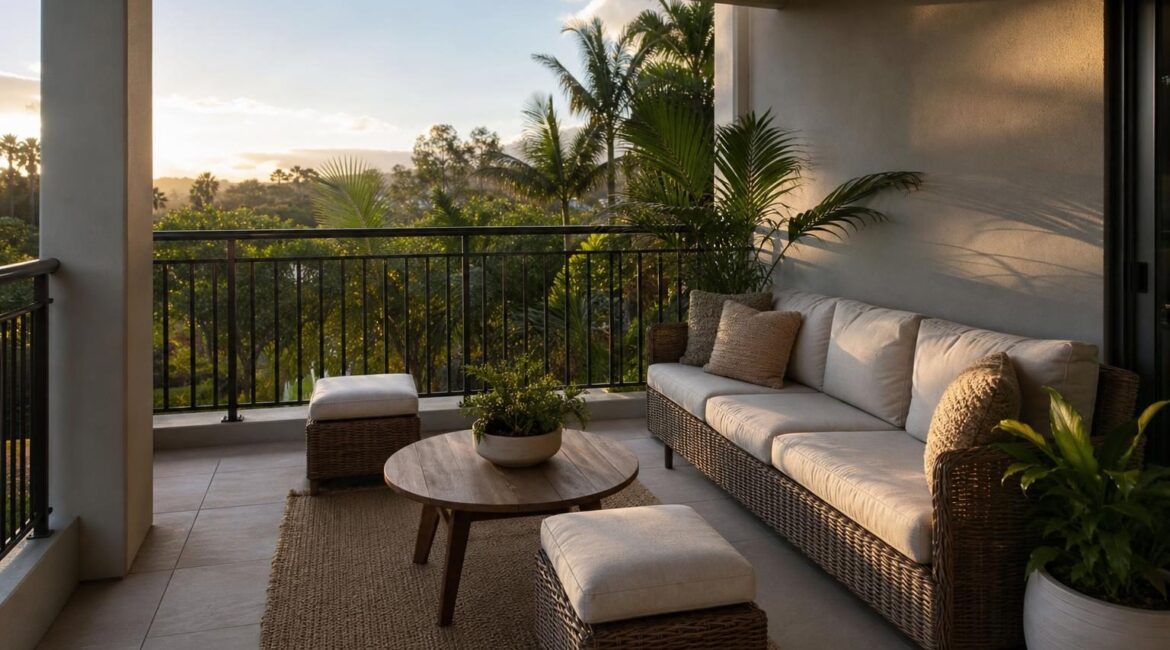
Patio ottomans are one of the most useful pieces in a small outdoor space precisely because they are not locked into a single job. On a tight lanai or a condo balcony, where every square foot has to earn its place, an ottoman can serve as a footrest one evening, extra seating when guests show up unannounced, and a spot to set drinks the rest of the time.
Small-space furniture shopping usually means prioritizing pieces that flex with how you actually live day to day, rather than furnishing for one specific use case. An ottoman is one of the clearest examples of that idea in action. This guide covers how to size an ottoman for your space, which materials suit frequent multipurpose use, and how to style one or two ottomans into a small seating area so the space feels complete rather than sparse.

Thinking of Furniture in Terms of Jobs, Not Just Categories
One useful way to shop for a small outdoor space is to list the jobs you need furniture to do — a place to sit, a place to rest feet, a surface for drinks, and occasional extra seating — rather than shopping by furniture category first. An ottoman often ends up covering two or three of those jobs at once, which is why it tends to be one of the most efficient purchases for a small lanai or balcony pound for pound, or square foot for square foot.
Why Ottomans Work Harder Than a Single-Purpose Chair
A small patio has limited room for dedicated furniture, and every extra chair takes up floor space you may not have to spare. An ottoman solves this by folding several functions into one compact footprint. Paired with a lounge chair, it becomes a footrest. Pulled up to a coffee table, it becomes a spot to set a tray of drinks or a stack of magazines. Pulled over next to the sofa, it becomes an extra seat for a third or fourth person without needing to bring out another chair.
Ottomans as a Flexible Starting Point for New Patios
For anyone just starting to furnish a new patio or lanai, ottomans can be a smart early purchase precisely because they are so adaptable. Rather than committing to a full sectional or a large dedicated coffee table right away, a pair of well-chosen ottomans lets you live with a space for a season, see how you actually use it, and then add more permanent seating or tables once you have a clearer sense of your patterns.
Choosing the Right Size for Your Space
Ottoman sizing matters more on a small patio than almost anywhere else. A square ottoman in the 18 to 22 inch range is versatile enough to tuck under a table edge when not in use, then pull out for a footrest or extra seat. Larger rectangular or oversized square ottomans, often in the 30 to 36 inch range, can function as a coffee table substitute topped with a tray, which is a smart trick for balconies too small for a full coffee table and seating set.

Round ottomans tend to feel less bulky visually in a tight footprint than square or rectangular versions, since there are no corners to navigate around when moving through the space.
Ottomans as Overflow Seating for Entertaining
When a small patio hosts more guests than its regular seating count, ottomans are often the easiest way to add capacity without rearranging the whole layout. Two or three ottomans pulled in from nearby areas can seat additional guests around a coffee table or fire table without needing to bring in folding chairs, and they tuck back to their original spots once the gathering wraps up, which keeps a small space feeling tidy the rest of the time.
Materials That Suit Multipurpose Use
Woven wicker ottomans bring a furnished, textured look and pair naturally with wicker seating groups, though a cushioned wicker ottoman used frequently as a footrest will benefit from a quick-dry cushion to handle Florida humidity. Poly lumber and marine-grade polymer ottomans offer a more substantial, low-maintenance option that holds up well to being pulled around the patio and repositioned often, since there is no fabric cushion to keep clean.

If you plan to use an ottoman as a table surface regularly, look for a flat, sturdy top design rather than a heavily cushioned dome shape, since a flatter top holds a tray or drinks more securely.
Cushion Tops vs. Flat Tops
Ottomans generally come with either a softly cushioned top or a flatter, more structured top. A cushioned top feels better as a footrest, since it gives a bit under your feet the way a lounge chair cushion would. A flatter, firmer top holds a tray of drinks or a stack of books more securely and resists shifting if you set something down quickly. If you expect to use the ottoman primarily as a footrest, lean toward a cushioned top. If it will more often double as a table, a flatter structured top will serve you better over time.
Styling Ottomans Into a Small Seating Group
In a compact lanai, two smaller ottomans often work better than one large one, since they can be split apart for extra seating and pushed back together to form a single larger surface when needed. Matching the ottoman’s frame finish and fabric to your existing seating keeps a small space from feeling visually cluttered, which matters more in a compact area than in a large open patio where mismatched pieces blend into the overall scale.
Our showroom carries multiple ottoman sizes and materials specifically because small-space furniture needs to be seen and sat on to judge scale accurately. Bring your patio or balcony measurements and our team can help you find an ottoman that pulls double or triple duty in your space, whether that means an extra seat, a footrest, or a stand-in side table.

For an example of care instructions separated by furniture material, consult Tropitone’s product-care guidance. Use your ottoman manufacturer’s own instructions for its frame and cushion.
Frequently Asked Questions
What size ottoman works best for a small balcony?
A square ottoman in the 18 to 22 inch range is generally the most versatile for small balconies, since it can tuck under a table edge and still pull out easily as a footrest or extra seat.
Can a patio ottoman replace a coffee table?
Yes, a larger flat-top ottoman topped with a tray can function as a coffee table substitute, which is a practical option for balconies or lanais too small to fit a full coffee table and separate seating.
What material ottoman is easiest to maintain outdoors?
Poly lumber and marine-grade polymer ottomans require the least routine maintenance since there is no fabric cushion involved, making them a low-upkeep option for furniture that gets moved and repositioned often.
How many ottomans should I get for a small seating area?
Two smaller ottomans are often more flexible than one large one, since they can separate for extra seating when guests visit and push back together to form a larger surface the rest of the time. Starting with two and adding a third later is a reasonable approach if you are unsure how much extra seating you will typically need.
Curious which ottoman size fits your lanai or balcony? Visit our Naples showroom or call (407) 299-9188 and our team can help you plan a small-space seating layout.
Explore Palm Casual
Factory-direct pricing with a risk-free 30-day trial. Visit a showroom or call (407) 299-9188.
Explore Our Buying Guides
Looking for expert advice? Read our Complete Guide to Patio Furniture in Florida or Ultimate Guide to Outdoor Furniture in Florida for tips on materials, maintenance, and choosing the right set for your space.
