


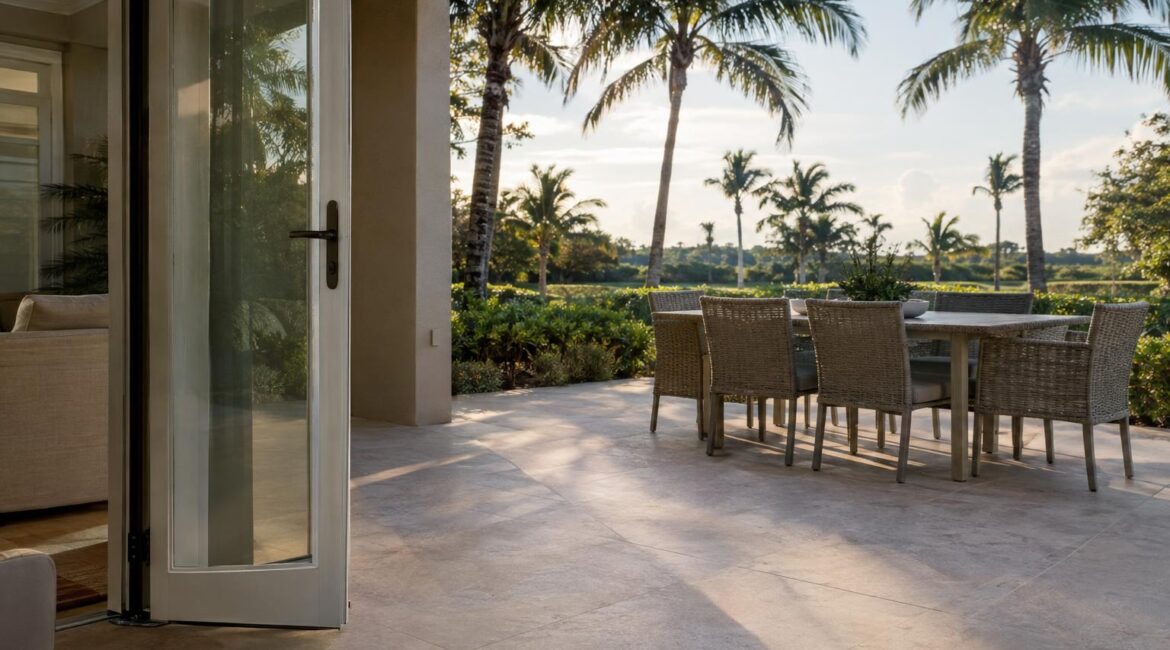
Most people shop for patio furniture by looking at the open space and imagining where a set will go. The door is the part they forget. A door that swings open across your best chair, or a sliding door that cannot open fully because a table is in the way, turns a nice set into a daily annoyance. This page covers patio door swing clearance in the order you should plan it, door first and furniture second, so the path from the house to the yard stays open.
Plan the Door Before the Furniture
Furniture can be moved, but a door only goes where it was installed. That makes the door the fixed point in your layout. Decide how much room it needs, then fit everything else around it.
Three door types, three kinds of space
Each style of door asks for room in a different way, and knowing which one you have changes where the first piece belongs.
- Hinged door: it sweeps a wide arc across the floor, and that arc is the space you must leave empty.
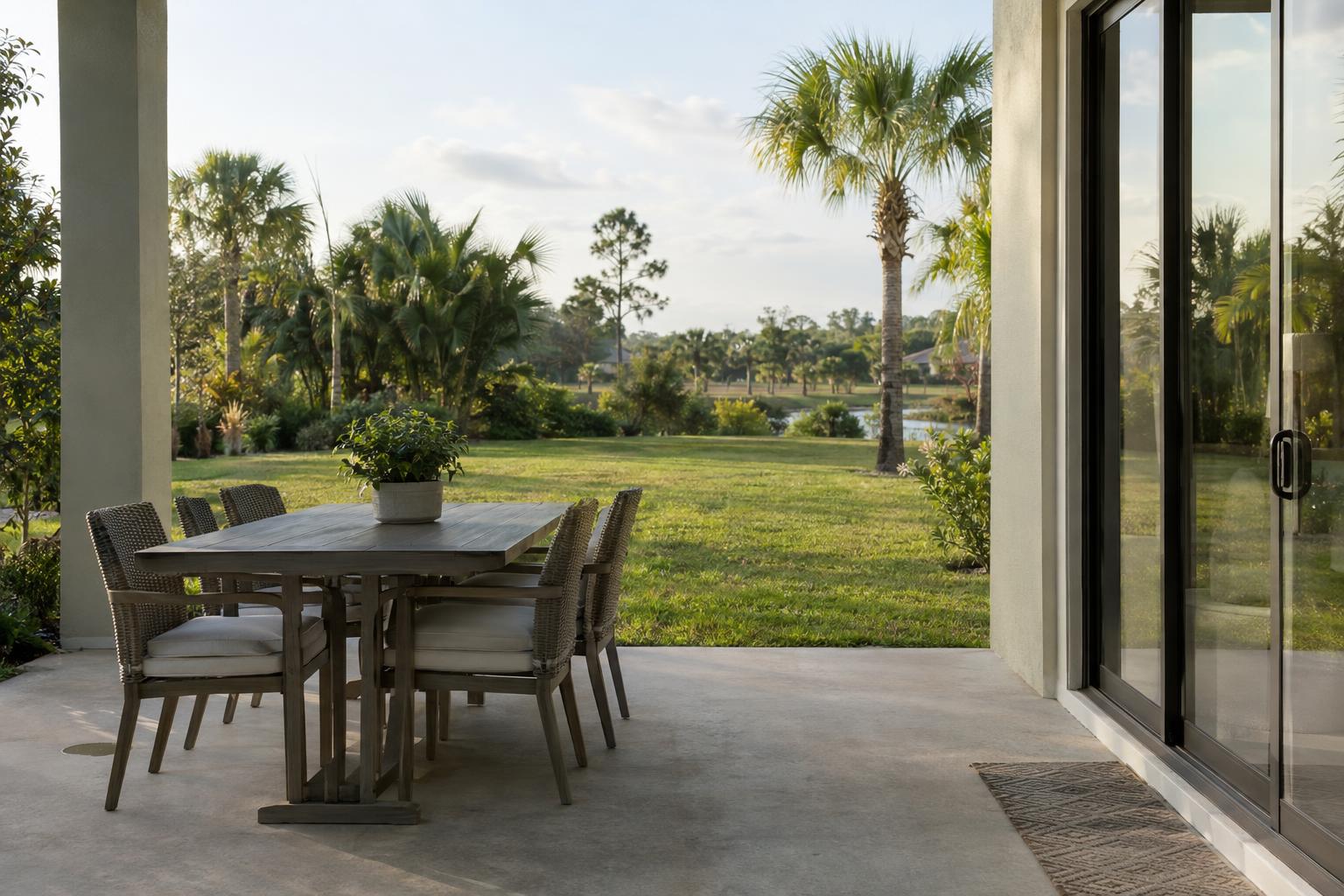
- Sliding door: a sliding glass door is built from two or more panels, some or all of which slide open rather than swing. Nothing sweeps across the patio, but one side of the opening is where people step through, and furniture there is in the way even though the door never moves toward it.
- Screen or lanai door: these often swing outward, so the arc falls on the patio, and they tend to open and close often, which makes a clear zone even more useful.
Inward versus outward swing
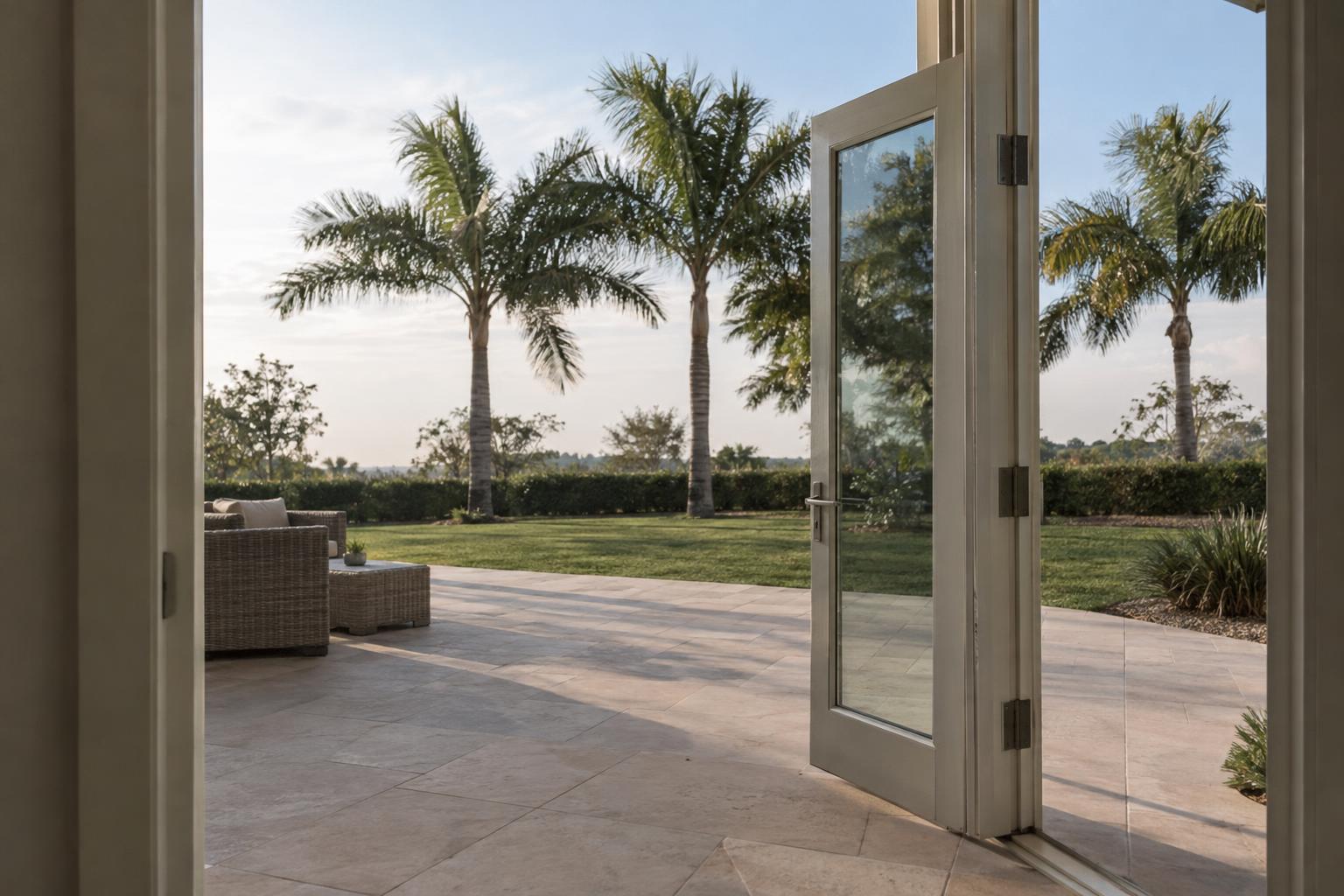
If a door opens toward the house, the patio side stays mostly clear, though you still need a landing space to step onto. If it opens outward, the swing takes up part of the patio, and furniture has to stay outside the full arc of the open door.
Mark the Swing on the Floor
The easiest way to understand a door is to draw it. Open the door fully, then use painter’s tape or chalk on the patio to mark the arc from the hinge to the edge of the door and back to the closed position. The edge opposite the hinge, the free edge, travels the widest path. The shape you create is the zone that must stay empty.
Add room to walk past
Do not stop at the arc itself. Leave room to open the door fully and walk past comfortably, because a person holding a tray does not travel in a straight line. Use this as a planning rule of thumb: when in doubt, leave more space than you think you need, and confirm it by walking through with a plate in each hand.
Check both open and half-open
A door that opens only partway still catches a chair arm. Test it at the angle people actually use. Many doors rest half open on a breezy day.
Place the First Piece Outside the Arc
Once the zone is marked, choose where the first piece goes. Start with the largest item, such as a dining table or sofa, and place it beyond the arc, with its edge at a comfortable distance. Everything else can then be arranged around that anchor.
Keep chair backs out of the zone
People often remember the table and forget the chairs. Pull a dining chair out to sit down, and its back can land inside the arc. Test with the chairs pulled out as well as pushed in.
Side tables and plants near the door
Small pieces next to a door are easy to overlook. A side table that stands just inside the swing edge will be clipped by the door several times a week. Keep the area along the door’s free edge clear, since that is where the door sweeps the widest path. The hinge side moves least, but it still needs room for the door to open fully.
Keep the Door-to-Yard Path Open
Furniture does more than fill a patio; it directs traffic. A clean line from the door to the steps or the yard lets people move without weaving around chairs.
Think about carrying things
Guests carry plates, pitchers and folded chairs through this path, and if you host often, picture a party: people line up near the door with plates, and the first spot outside becomes a bottleneck. Aim for a route wide enough for two people to pass, one coming and one going, and consider moving a seating group a little farther from the door so the whole patio feels bigger. The article on outdoor patio sets in high-traffic areas explains how furniture choices change when a patio is constantly in use.
A landing zone at the threshold
A small clear area just outside the door gives people a place to pause. It also gives the door a place to rest when someone props it open.
Layout ideas for each door type
With a hinged door, keep the whole arc bare and start the first piece just beyond it. Space just outside the arc on the hinge side is usually easier to use than space at the free edge, once you have marked where the open door rests. With a sliding door, set a dining table far enough out that a person can step through the opening and turn without bumping a chair. With a screen door that swings out, use the corner farthest from the swing for the pieces people use most, and treat the swing side as walking space. In every case, the door decides the first placement, and the furniture follows.
Test the plan before you commit
Ask someone to open and close the door while you stand where a guest would stand with a drink in hand. If you have to step aside or shift a chair even once, move that piece. Small adjustments at the start are far easier than rearranging a full set after it arrives.
Measuring, Local Rules and Showroom Questions
Once you know how the door behaves, take your measurements. Our article on measurements for your outdoor furniture layout shows what to record, and how to measure your patio for new furniture walks through the full process. Both are helpful once the swing zone is on your sketch.
Local rules can affect how doors and walkways are laid out. Check with your local building office about anything required in your area, and treat the ideas on this page as planning habits rather than requirements.
Showroom questions to bring
When you visit Palm Casual, bring your sketch with the swing zone drawn on it. Palm Casual has been selling outdoor furniture since 1979, and a showroom team member can help you plan how a set fits around a door. Ask which chairs slide in without a large footprint and which table shapes leave more walking room.
- Which door type do you have, and which way does it open?
- How far does the door swing when fully open?
- Where will the first piece sit, outside the arc?
- Is the path from door to yard clear with chairs pulled out?
Frequently Asked Questions
How much patio door swing clearance do I need?
Leave room to open the door fully and walk past comfortably, with extra space for a person carrying food. Mark the arc on the floor and keep every piece outside it, including chairs pulled out.
Do sliding doors need clearance too?
Yes, though they do not swing. Keep the opening itself clear, since that is where people step through.
What if my door opens outward onto the patio?
Mark the full arc on the patio and treat it as off limits for furniture. Start your layout from the edge of that arc.
Should I worry about building rules for patio doors?
Rules vary by location, so check with your local building office. The ideas here are planning habits for comfort, not code advice.
If you are planning a layout around a door, visit a Palm Casual showroom with your sketch, or call (407) 299-9188 and our team will help you choose pieces that fit.
Explore Palm Casual
Factory-direct pricing with a risk-free 30-day trial. Visit a showroom or call (407) 299-9188.
Explore Our Buying Guides
Looking for expert advice? Read our Complete Guide to Patio Furniture in Florida or Ultimate Guide to Outdoor Furniture in Florida for tips on materials, maintenance, and choosing the right set for your space.
