


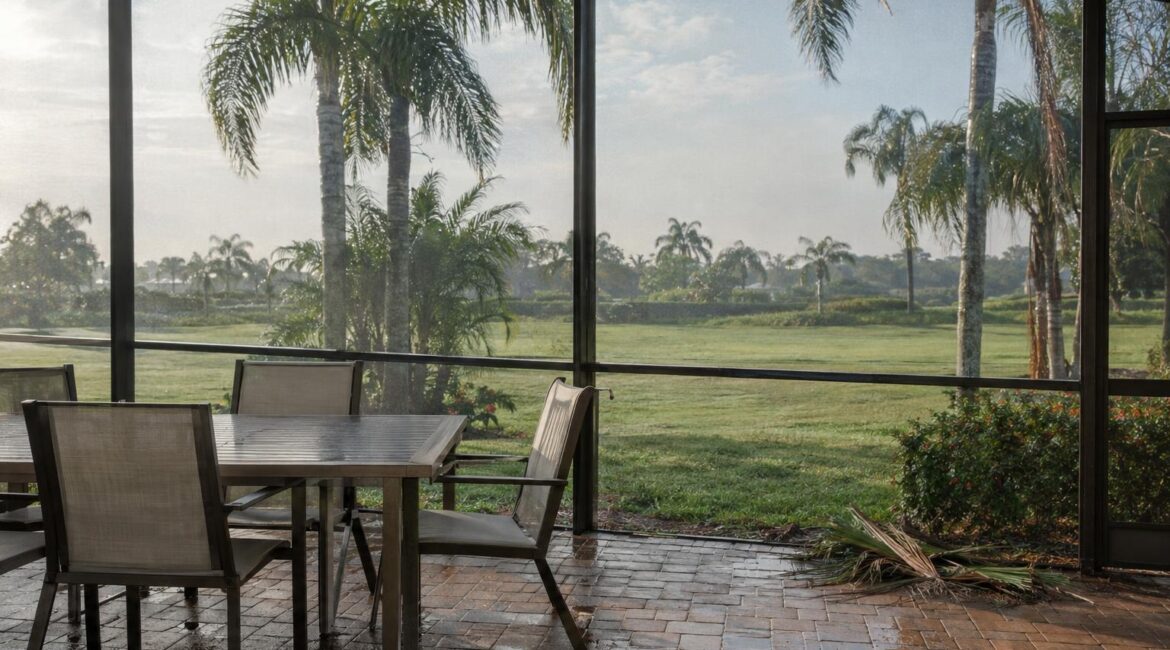
Once the wind and rain have passed, the temptation is to drop the cushions back on the chairs and sit down. A few minutes of looking first is a better plan. Here is how to inspect patio furniture after storm weather has moved through, in an order that puts stability and standing water ahead of everything else, so you know what is ready to use, what needs drying and what should wait for a closer look.
This is a first-day checklist, not a repair guide. If you are still getting ready for the next storm, our guide to preparing patio furniture before a storm covers that side of things.
Start With a Slow Walk Around the Patio
Before you touch anything, walk the whole patio, lanai or porch once without moving a single piece. You are looking for the big picture: what shifted, what tipped, what ended up somewhere it did not start.
Look at where pieces ended up
Note which chairs, tables and umbrellas moved from their usual spots. A piece that slid several feet or flipped over has taken more stress than one that stayed put, and it deserves a closer look later.
Check what is under and behind the furniture
Storms push leaves, palm fronds, twigs and grit into corners, under tables and behind sofas. Clear the loose debris away by hand, wearing gloves if there are broken pieces, torn screen or splintered material nearby.
Test Stability Before Anyone Sits
Stability is the first thing to confirm, because a chair that gives way is a bigger problem than a stain. Do this one piece at a time.
Press and rock each piece
Put your hands on the arms or back of a chair and push gently in each direction. Grab the corner of a table and give it a light shake. You are feeling for wobble, a new rocking motion, a leg that does not sit flat, or a creak that was not there before. Move a rocking piece to a flat spot before you blame the furniture instead of the floor.
Look at the joints and fasteners
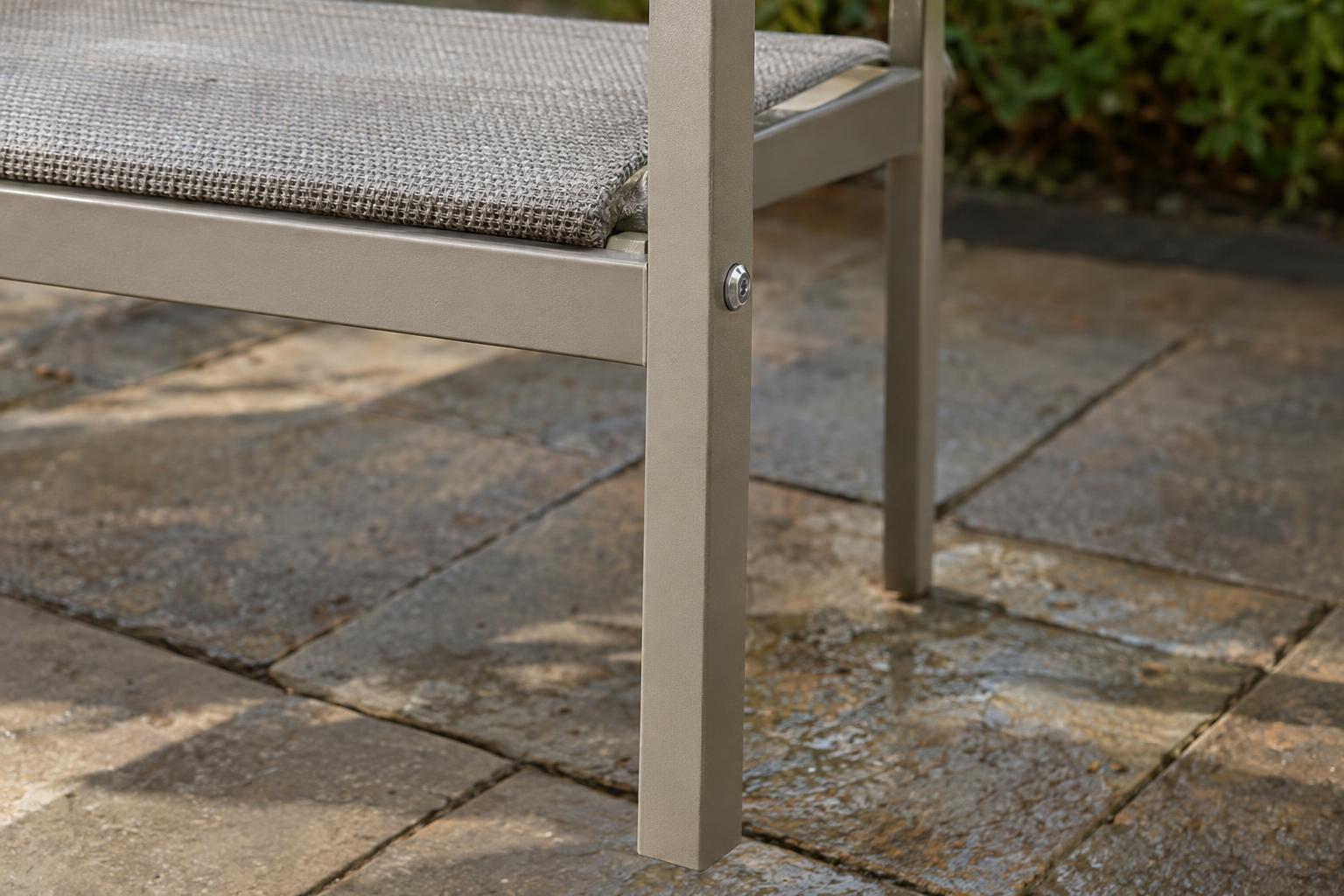
Check where legs meet seats, where arms meet backs and where tabletops meet bases. Look for bolts or screws that have backed out, are missing, or sit at an angle. Look for gaps that were not there before, hairline cracks near a joint, or a frame that looks slightly out of square.
- Loose, missing or bent fasteners
- Gaps or cracks where two parts meet
- Legs or glides that no longer sit level
- Frames that look twisted, bowed or dented
- Rough or sharp edges where something has broken
Set aside anything you doubt
You are the judge of what feels sound. If a piece wobbles, makes a new noise or has a visible crack, set it aside and ask your local showroom about it rather than guess.
Deal With Standing Water First
Water that sits is the quiet problem after a storm. It is easy to miss and it keeps working long after the sky clears.
Look for pooled water in frames and tables
Hollow frames, table bases, umbrella stands and the dished surface of a tabletop can all hold water. Tip chairs and tables gently so any trapped water can drain out. Wipe tabletops and seat surfaces with a dry towel and let air do the rest.
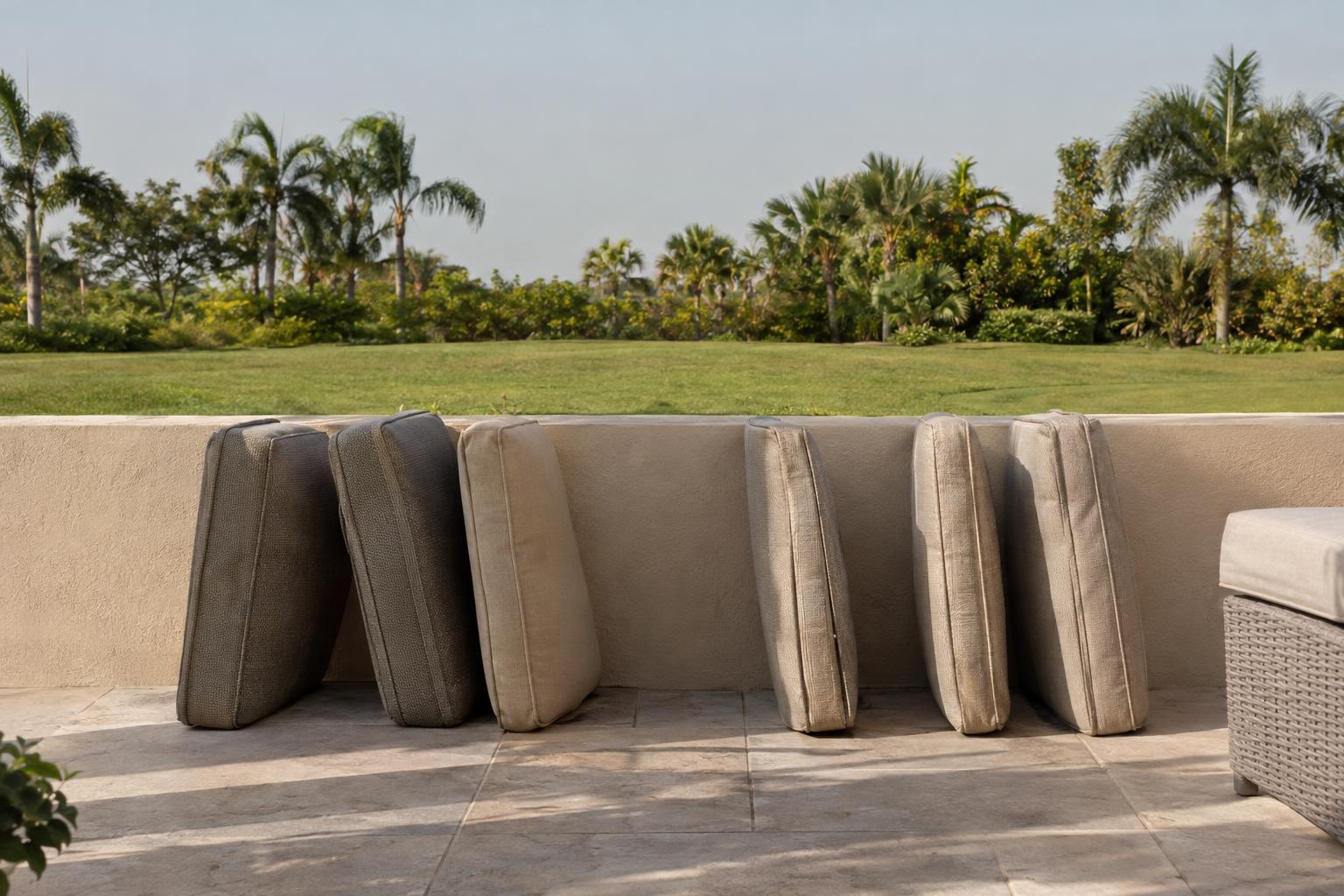
Lift cushions off the frame to dry
Wet cushions sitting on a frame trap moisture against both. Stand them on their edges where air can move around them. For more on how outdoor cushions behave in wet weather, see how outdoor cushions handle a Florida storm.
Inspecting Each Material After a Storm
Different materials show storm stress in different ways. These are general notes, and your own pieces may vary, so use them as a guide for where to look rather than a verdict.
Aluminum
Look at where parts join, and scan for dents or bent legs where a falling branch or a tumble may have hit. Check the powder-coated finish for fresh scrapes or chips, which can be where moisture finds a way in over time.
Wicker and woven pieces
Run your hand lightly along the weave to feel for loose or snapped strands, and look for sections that have pulled away from the frame. Woven pieces can hold water between strands, so let them dry fully in open air. Wear gloves around broken strands, which can leave rough or sharp ends.
Teak and other wood
Look for new splits, lifted splinters and joints that have opened up slightly. Wood often takes on a darker, wetter look after a soaking and then lightens as it dries, so judge it again once it has dried out.
Poly lumber and PVC
Check slats and arms for warping or cracks, and look at the screws or hardware that hold them. Pooled water can sit on flat seat slats, so tip or wipe them dry.
Check Cushions and Fabric for Early Mildew
Mildew likes damp, warm conditions, which is a fair description of Florida after a storm. According to UF/IFAS guidance on controlling mildew, mildew grows best in moist, warm air, and damp items dry faster when they are hung where air can circulate.
What to look and smell for
Check the underside of cushions and the seams, since those stay damp longest. Early mildew can show up as a musty smell, small dark or grayish dots, or a faint fuzzy film. If you notice any of these, move the cushion into open air and let it dry before you decide what to do next, and ask your Palm Casual showroom what is appropriate for the fabric if marks remain.
Decide What to Use, Dry and Set Aside
After the walk-through, sort the furniture into three simple groups.
Ready to use now
These pieces sit flat, feel solid when you press them, have all their fasteners and are dry. Put the cushions back once both the cushion and the seat are dry.
Dry first
These are sound but wet, dirty or carrying debris. Give them time in open air, wipe the surfaces and look again later in the day or the next morning.
Look at later
Anything that wobbles, has a crack, is missing hardware or has a bent frame belongs here. How these damaged pieces are sorted into repair or replacement is covered in our guide to sorting storm damage into repair or replace, so this routine stops at identifying them.
When to Bring a Piece to the Showroom
You do not need to solve every problem on day one. If a piece has a damaged joint, a missing part or a frame you are not sure about, a showroom visit is a sensible next step. Palm Casual offers in-house repair services and replacement-parts availability, so you can bring in the piece or a photo and ask what is possible for that item.
What helps to bring along
- Photos of the damaged area from a couple of angles
- Any parts that came loose, kept together in a bag
Whether a particular piece can be repaired is a question for your local showroom, since it depends on the item.
Frequently Asked Questions
How soon after a storm should I look over my patio furniture?
Plan to inspect patio furniture after storm weather clears, as soon as it is comfortable to be outside and before water has had time to sit in frames and cushions. Look up as well as down, since a loose screen panel or a hanging branch can be a hazard to anyone walking onto the patio.
Is it all right to sit on a chair that feels slightly loose?
Use your judgment and lean toward caution. New looseness often points to a fastener or joint that has changed, so keep that chair out of use until it has been checked.
Why do some pieces smell musty a day or two later?
Moisture that stayed trapped in cushions, woven areas or under furniture can start to smell as it lingers. Moving the item into open air and letting it dry thoroughly often settles it, and a smell that stays after drying is worth a closer look.
Should I move my furniture back to its usual spot right away?
Not until you have checked the spot itself. Sweep away debris and let any wet patio floor dry, then set the furniture back on a clean, level surface so legs and glides sit flat.
If something on your patio needs a second look after the weather, stop by a Palm Casual showroom or call (407) 299-9188 and bring your photos.
Explore Palm Casual
Factory-direct pricing with a risk-free 30-day trial. Visit a showroom or call (407) 299-9188.
Explore Our Buying Guides
Looking for expert advice? Read our Complete Guide to Patio Furniture in Florida or Ultimate Guide to Outdoor Furniture in Florida for tips on materials, maintenance, and choosing the right set for your space.
