


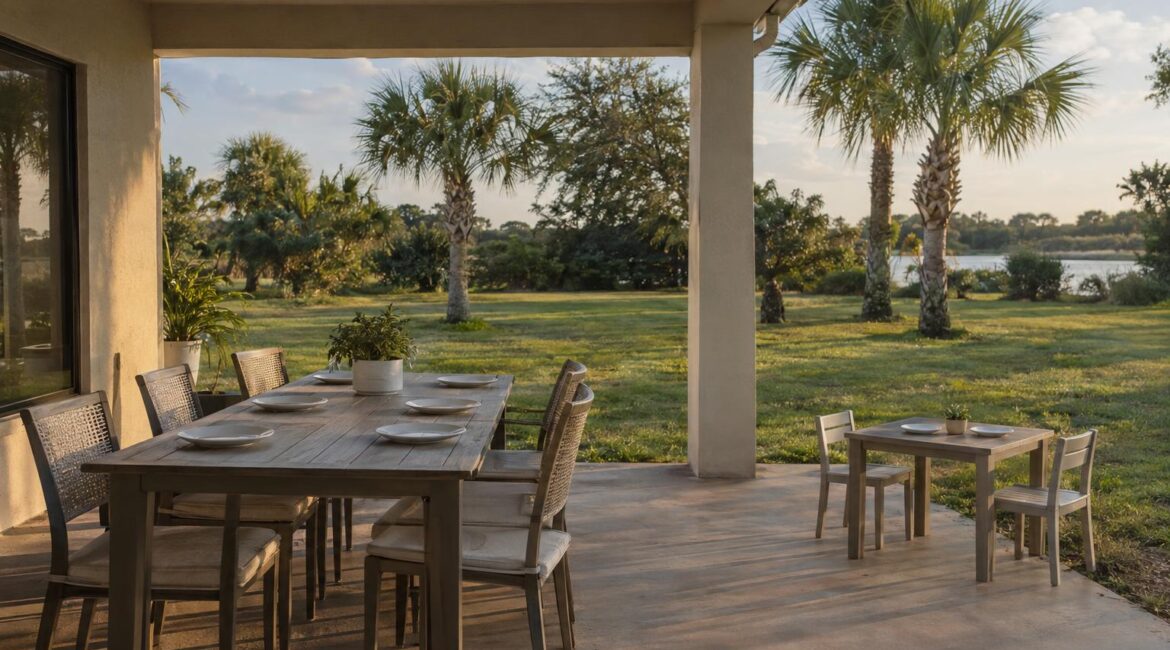
When a family hosts, the outdoor dining table often has to seat everyone from grandparents to young children. You can handle that mix three ways: a bench along one side, extra standard chairs, or a separate smaller table set beside the adults. Each one changes how the meal flows, how much floor space you need, and who has to get up when someone wants more lemonade. This page compares those options so you can plan seating kids at the patio dining table in a way that fits your household and your yard.
Start With Who Sits Where
Before you compare furniture, write down the guest list for a typical gathering and for your biggest one. Count adults, count children, and note who tends to stay seated and who is up and down all evening. The answer to that last question matters more than most people expect.
Everyday headcount versus holiday headcount
A table that suits a weeknight dinner for four can feel small when cousins arrive. Decide whether the extra seats are for one big holiday or for most weekends. A flexible solution, such as a bench or a table you can pull alongside, serves the occasional crowd without crowding the everyday layout. For sizing by headcount, the article on outdoor dining table sizes for Florida family sizes covers that part, so this page stays on seating choices.
Who needs to get out of their seat
Adults who are cooking, serving or topping up drinks need an easy way out. Seat them on the end or the side with the most room, and place children where leaving the table does not force three people to stand.
Option One: A Bench Along One Side
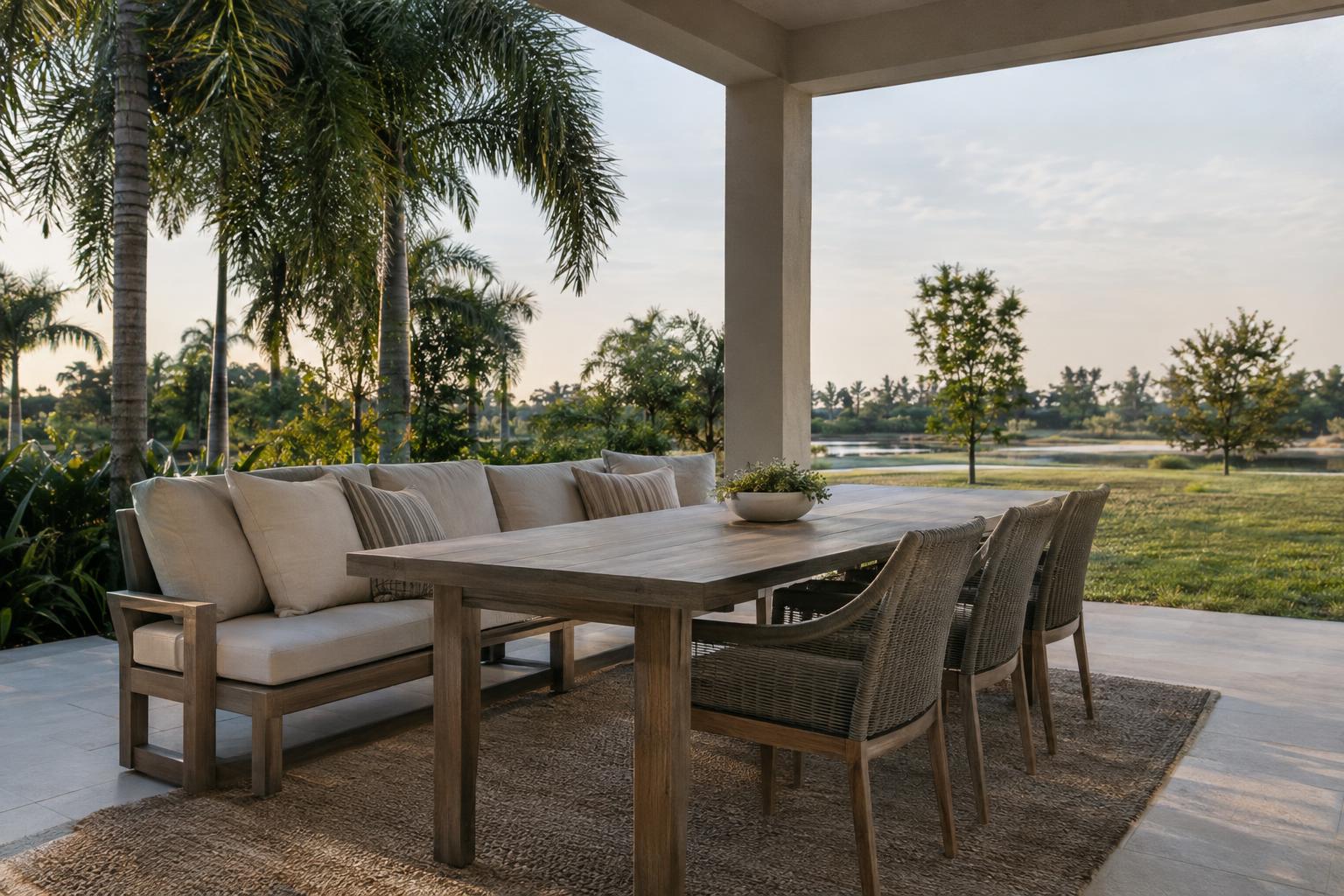
A bench puts several people in a row and removes the gaps that chairs leave between them, which keeps children together where adults across the table can see everyone at once. The trade-off is getting in and out: the person in the middle cannot leave without everyone else moving, so seat the child who gets up often at the end. For arrangements that pair benches with full tables, see outdoor dining bench combos for big Florida families.
Comfort matters too, because a seat that works for a short snack may feel different after dessert. The article on outdoor bench seat depth for dining versus lounging explains what to look for.
Option Two: Extra Standard Chairs
Adding chairs is the simplest answer. Each person can slide in and out independently, chairs can be moved around the table or pulled in from another part of the patio, and everyone sits on the same style of seat. It works best when the table already has room for the extra place settings.
The limit is floor space. Chairs need room behind them to be pulled back, and a patio runs out of that first. If the table sits near a wall or a door, extra chairs can leave no clear path, so count the walking room around the table and not just the seats at it.
Option Three: A Separate Smaller Table Beside the Adults
A smaller table next to the main one gives children their own place without crowding the adult table. It is the option that most changes the shape of the meal, so think it through.
Keeping everyone within reach
Set the smaller table close enough that adults can hand over a plate and hear what is going on without leaving their seats. A table pushed too far away becomes its own party, and adults end up walking back and forth. On a smaller patio, the extra table may not fit at all.
When it makes sense
A separate table suits big gatherings where many children attend, because it moves them out of the adult seating plan. It is less useful for a family of four that only occasionally hosts. For a wider look at furniture for households with children, see kid-friendly outdoor furniture for families.
Combining two options
You do not have to pick only one. Many households pair a bench on one side with standard chairs on the other, which gives children a tidy row and gives adults the freedom to push back and stand. Others keep chairs at the main table and bring out a small table only for big holidays. If your furniture already has a bench, you may only need to add a chair or two. If you have chairs, you may only need to borrow a bench for special days. Look at what you own before buying anything new.
A kids table on a smaller patio
A small patio can still work with a second table if you choose a compact one and place it where it does not cut off the walkway. Set it against a rail or wall instead of in the middle of the floor, and leave room for adults to stand beside it when they serve. If the space is too tight for two tables, a bench along one side of the main table is usually the better use of the footprint. Mark the shapes on the floor with painter’s tape first, and walk around them with a plate in your hands before you decide.
Spills, Cushions and Clean-Up
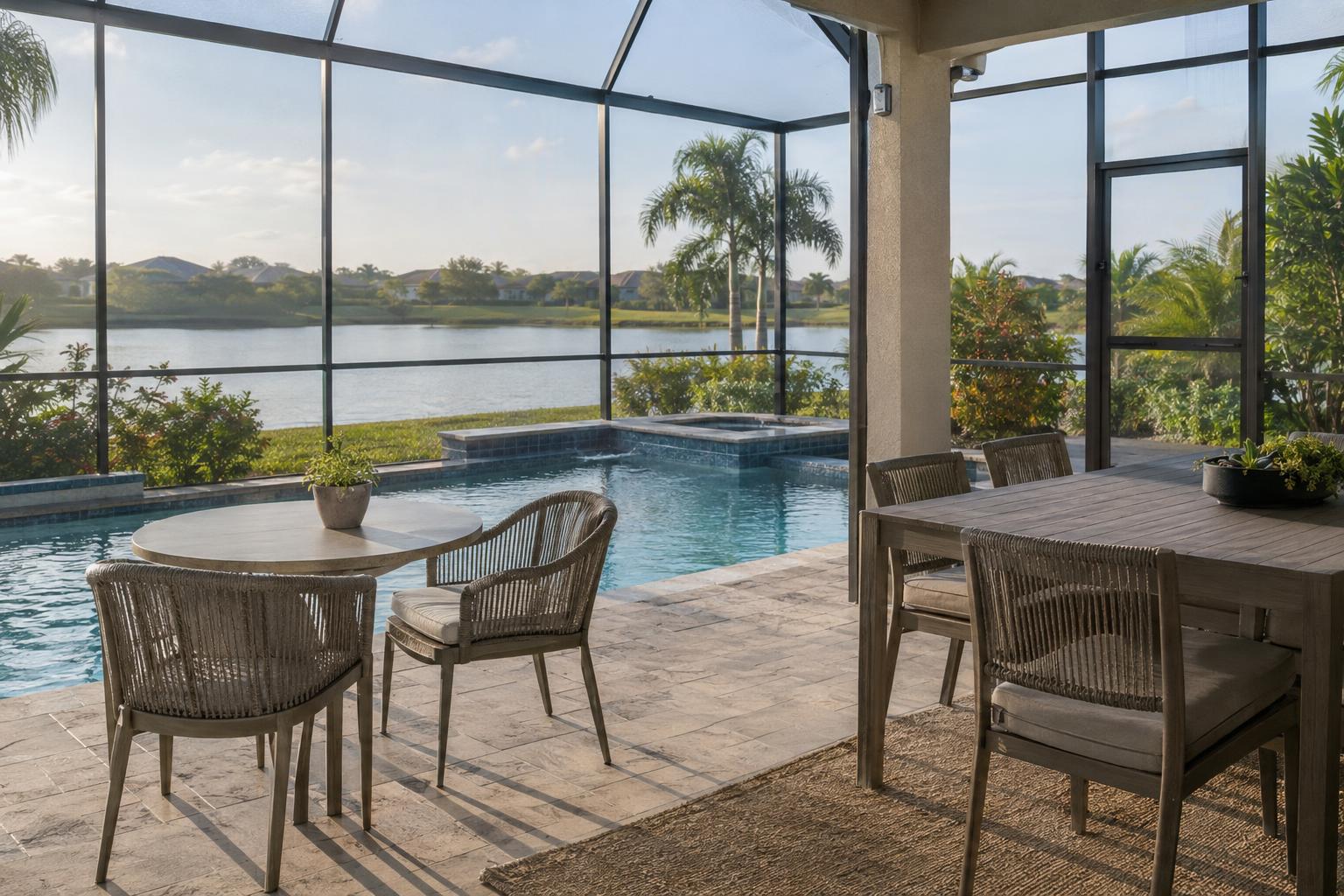
Children and drinks share a table, so plan for spills. Many outdoor cushion fabrics are made to be wiped down, so check the care label, which helps at any table that will see juice, sauce and sticky fingers. Sunbrella publishes a cleaning guide organized by stain, including common spills such as ketchup and mustard. Read the care label for your own cushions before you clean anything, and ask the showroom about the specific cushion you are considering.
Mealtime flow
Think about where plates are set down and where they are cleared. If the table is against a rail, clearing can mean passing dishes over a child’s head. Leave one open side where adults can stand and collect plates without a stretch.
Table edge and chair spacing
Look at the edge of the table where children sit. Leave elbow room along the table edge and a bit of gap between neighbors so nobody feels packed in. A table with a little extra width beyond the seats makes that easier.
Planning for Mixed Ages
Gatherings rarely stay the same size. A child grows, a cousin visits, or a neighbor drops by with an extra guest. Build in a little slack by keeping one or two chairs that can be moved elsewhere on the patio.
A simple way to plan seating kids at the patio dining table
- One big family and a long table: a bench, with an adult at each end.
- Mixed groups that change from week to week: extra standard chairs.
- Large gatherings with many children: a second table beside the first.
- Very tight patio: a bench along one side, since chairs need more room behind them. Check the bench against your table in a showroom.
How Palm Casual can help
Palm Casual has been selling outdoor dining furniture since 1979 and sells factory direct. Bring your guest list and a rough sketch of your patio, and a showroom team member can help you plan seating that suits it.
Frequently Asked Questions
Does a separate kids table work on a small patio?
It can, if the second table is compact and sits against a rail or wall where it does not block the walkway. When there is no room for two tables, a bench along one side of the main table is usually the better use of the space.
Where should adults sit when children use a bench?
Put adults at the ends and across from the bench, where it is easy to stand and serve. Keep the child who gets up most often at the end of the bench.
Can I add a second table to an existing dining set?
Yes, if you have room to place it close enough that adults can reach across and talk. Measure the patio and walking space first, then ask a showroom what pairs well.
What cushion fabric is easiest after spills?
Choose a wipe-clean outdoor fabric and follow its care instructions. Ask your showroom which cushions are best for a table that will see a lot of messy meals.
When you are ready to see the options in person, visit a Palm Casual showroom or call (407) 299-9188 and our team will help you plan seating for the whole family.
Explore Palm Casual
Factory-direct pricing with a risk-free 30-day trial. Visit a showroom or call (407) 299-9188.
Explore Our Buying Guides
Looking for expert advice? Read our Complete Guide to Patio Furniture in Florida or Ultimate Guide to Outdoor Furniture in Florida for tips on materials, maintenance, and choosing the right set for your space.
