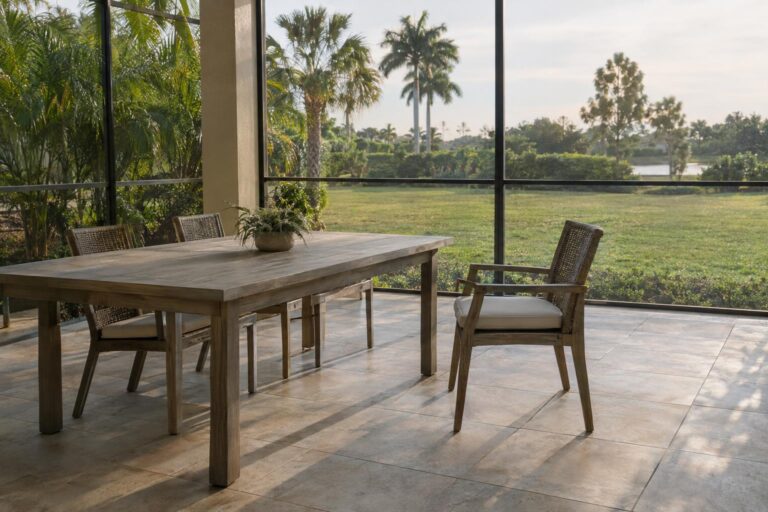


A chair can feel wonderful for the first minute and still be a chore to leave after a long dinner. If your guests include a tall cousin, a shorter neighbor and a parent who likes to sit for hours, choosing an easy to stand up outdoor chair is a real decision, not a detail. The answer comes down to four things you can feel in a few minutes: how high the seat sits, where the arms are, how the cushion compresses and whether the chair stays put when someone pushes off it.
Why Getting Up Matters as Much as Sitting Down
Most people judge a chair by sitting in it, because sitting down is the moment that gets noticed. But a patio chair gets used in a cycle. Someone sits, stays for a meal or a conversation, then rises to refill a glass, answer the door or call it a night. The chair you remember fondly from a quick try-out may feel very different at the end of a two-hour dinner when legs are tired and the cushion has settled.
Rising is mostly leverage. You shift weight forward, plant your feet and push up, often with a hand on the arms. Low hips, soft foam or nothing firm to push from all make that harder. None of this is a flaw, just a trade worth making on purpose.
Seat Height Relative to the Person
Seat height is the first thing to check, and the right answer depends on who is sitting. A seat that suits someone tall can leave a shorter person with their feet dangling, while a low seat that suits a shorter person can leave a taller one folded up with knees above hips.
What a seat that is too low feels like
A low seat puts your knees above your hips and asks you to lift your body a longer way. If you scoot to the front edge before you can stand, the seat is working against you.
What a seat that is too high feels like
A high seat can leave you on your toes or with your feet off the ground. A common check is whether your feet rest flat with your knees roughly level with your hips. Treat that as a quick check rather than a spec, because the chair in front of you matters more than any number. The National Institute for Occupational Safety and Health describes ergonomics as the design of work tasks and job demands to fit the capabilities of the working population. That is a workplace definition, but the plain idea carries over: a chair that suits one person may not suit another, so try it with the people who will use it.
Low lounge seats on purpose
A low, relaxed seat is not a mistake. If you are leaning that way, our look at Adirondack seat height and getting in and out covers how that particular style behaves, so you can choose a low seat knowing what it asks of you.
Arms You Can Actually Push From
Arms do two jobs. They give you a place to rest your forearms, and they give you something to push from when you rise. Those jobs do not necessarily go together, so look at the arms as a lever and not only as a design feature.

Firm, forward and at a natural height
The most helpful arms are firm, they extend far enough forward that your hands land near the front of the seat, and they sit at a height where you can press down without hiking your shoulders. If the arms end well behind the front of the seat, you push from a spot that does not help you move forward. If they sit too high, your shoulders lift as you push.
When arms get in the way
Very wide arms can push your elbows outward and cost you leverage, and soft arm pads can compress as you lean. Armless chairs suit a dining table where you want to slide in close, but they ask more of your legs.
- Your hands land on the arms naturally when you start to rise.
- The arms feel solid when you press instead of flexing.
- The arms leave room to slide the chair back from the table.
How Cushion Softness Changes Rising
A deep, soft cushion feels like a hug when you sit, then compresses further under your weight. That sinking works against you when you stand, because the cushion keeps giving way as you push. Firm cushions tend to release you with less effort.
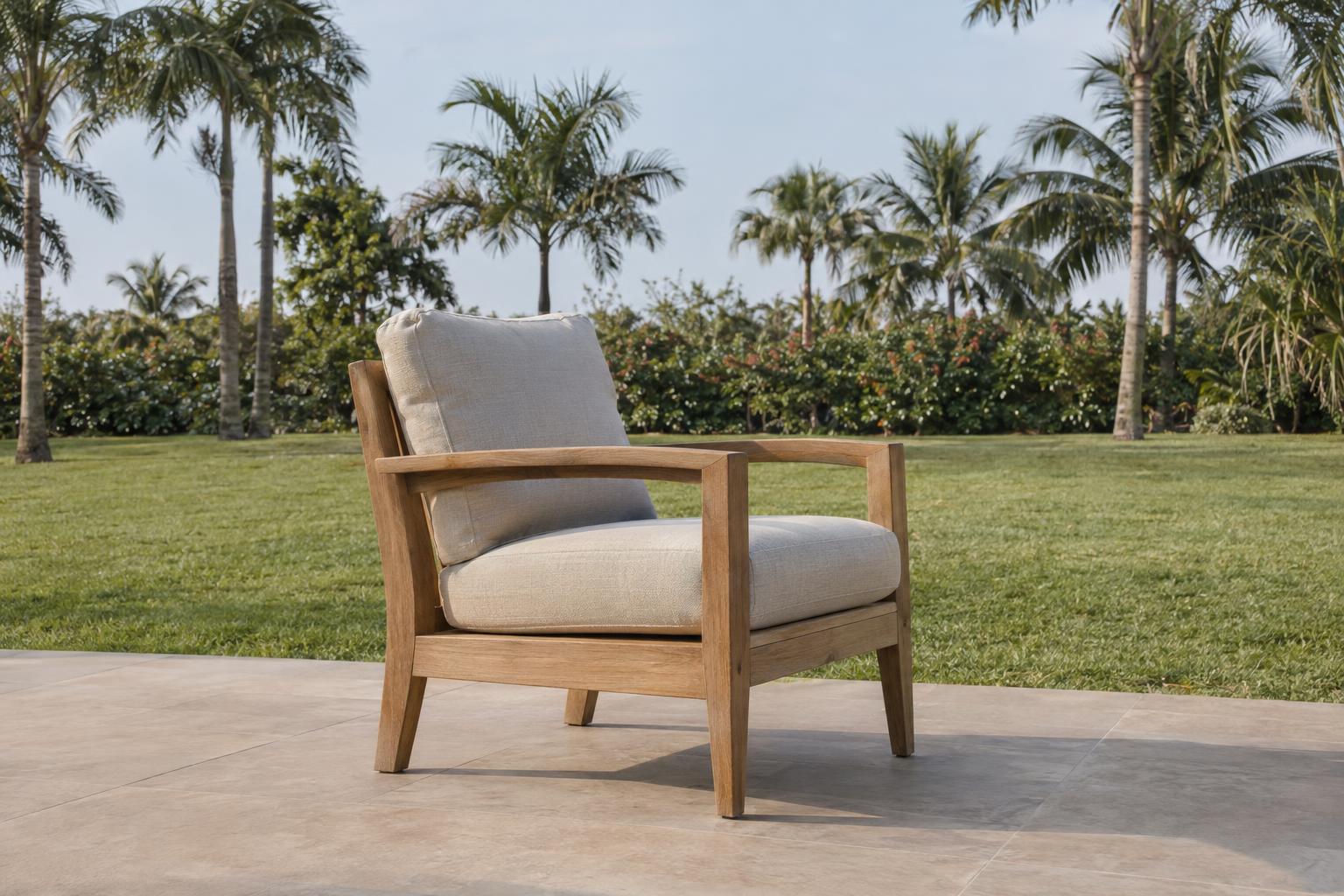
Soft cushions suit chairs made for long, slow lounging, while a firmer one is usually easier to leave at a table. The full comparison is in our guide to firm versus plush outdoor seat cushions.
Sling seats compared with cushioned seats
Sling seats work differently from cushioned seats, so push up from each type and judge for yourself. Cushioned seats range from slim and firm to thick and soft. Neither type wins automatically, so push up from each one and judge for yourself.
Seat Depth, Tilt and Other Quick Checks
A very deep seat can leave shorter people sliding forward to reach the ground, and a seat that tilts back sharply asks you to rock forward first. Seat slope is covered in our post on outdoor dining chair back angle and seat pitch.
Swivel, rocking and glide chairs
Swivel and rocking seats move when you push off, and that movement can feel pleasant while seated and unsteady while standing. If you are drawn to one, push off the way you would at the end of the evening and see how much it moves before you are upright.
The floor under the chair
Glides on the feet help a chair slide on a hard floor but can also let it scoot back when you push off, so think about the surface where the chair will live.
A Three-Step Seat Test
You can learn most of what you need with three short tries on any chair, including ones you already own. Bring the people who will use the chair most, because a tall adult and a shorter guest will not feel it the same way.
- Sit as you normally would. Settle in the way you do at home and stay a minute so the cushion settles.
- Rise without using your hands. This tells you how the seat height and cushion work on their own.
- Rise using the arms. See whether pushing from the arms helps and which try felt natural.
Repeat on a couple of chairs and note which felt natural for each person. If one chair works for one person and awkwardly for another, you may want a second style for that spot. For details on a particular chair, ask your local showroom what is available to view.
Who Benefits Most From Checking
Hosts who entertain guests of mixed ages and heights gain the most, because one chair rarely suits everyone and checking beforehand helps you choose a mix. Owners who sit long at dinner will notice the difference too.
Frequently Asked Questions
What makes an easy to stand up outdoor chair different from a comfortable one?
Comfort is how the chair feels once you are seated, while ease of rising depends on seat height, firm arms and how much the cushion sinks. A chair can score well on one and poorly on the other. Test both in the same visit.
Do armless chairs work for people who like to push off with their hands?
They can, but they ask more of the legs because there is nothing to press against. At a dining table, many people prefer armless chairs for sliding in close. If hand support matters to you, try a chair with firm arms alongside it before deciding.
Can I add a thicker cushion to make a chair more comfortable?
A thicker cushion can change both the seat height and how much the seat sinks. That can make rising easier or harder depending on the foam and the chair. Ask your showroom about cushion options for the frame you are considering.
Should I test the chair with shoes on or off?
Test it the way you will most often use it. Many people sit on a lanai or patio with sandals on, and that small difference in height can change how the seat feels. If you are unsure, try both and see whether your impression changes.
Palm Casual has been selling outdoor furniture since 1976. If you are comparing chairs for your own patio, ask what is available to view at a Palm Casual showroom, or call (407) 299-9188 to talk through what you are looking for.
Explore Palm Casual
Factory-direct pricing with a risk-free 30-day trial. Visit a showroom or call (407) 299-9188.
Explore Our Buying Guides
Looking for expert advice? Read our Complete Guide to Patio Furniture in Florida for tips on materials, maintenance, and choosing the right set for your space.