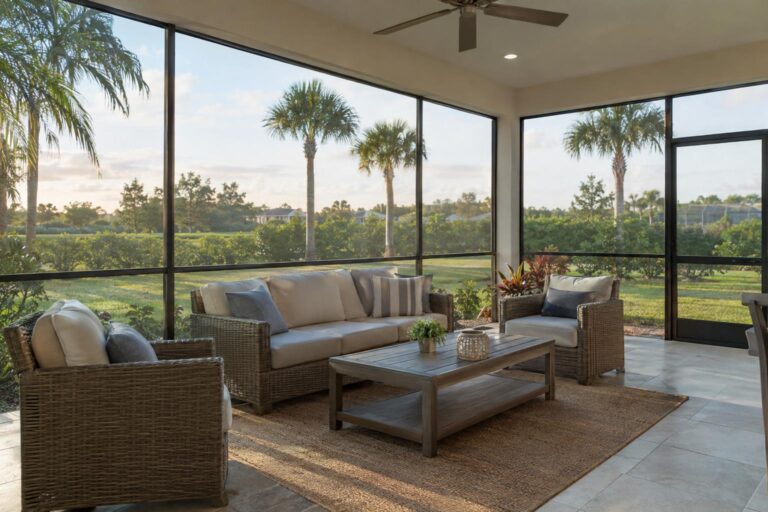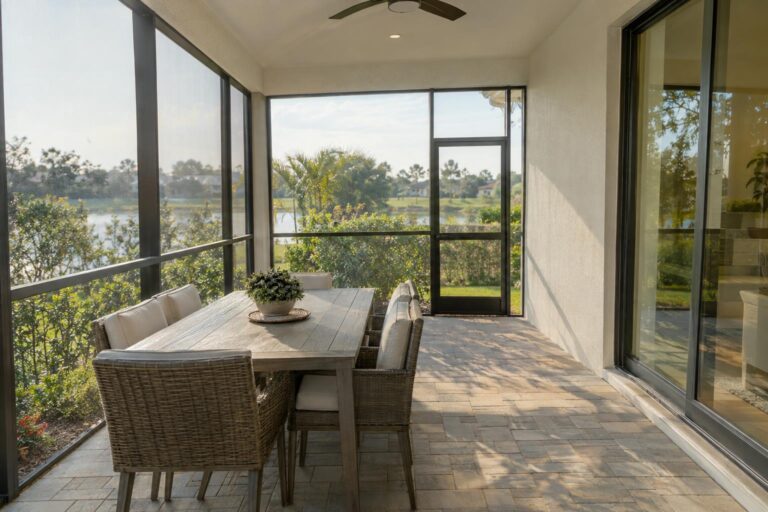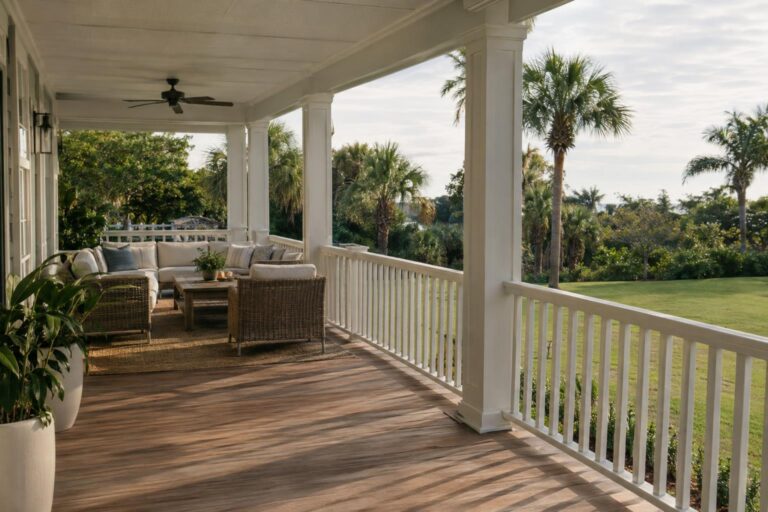

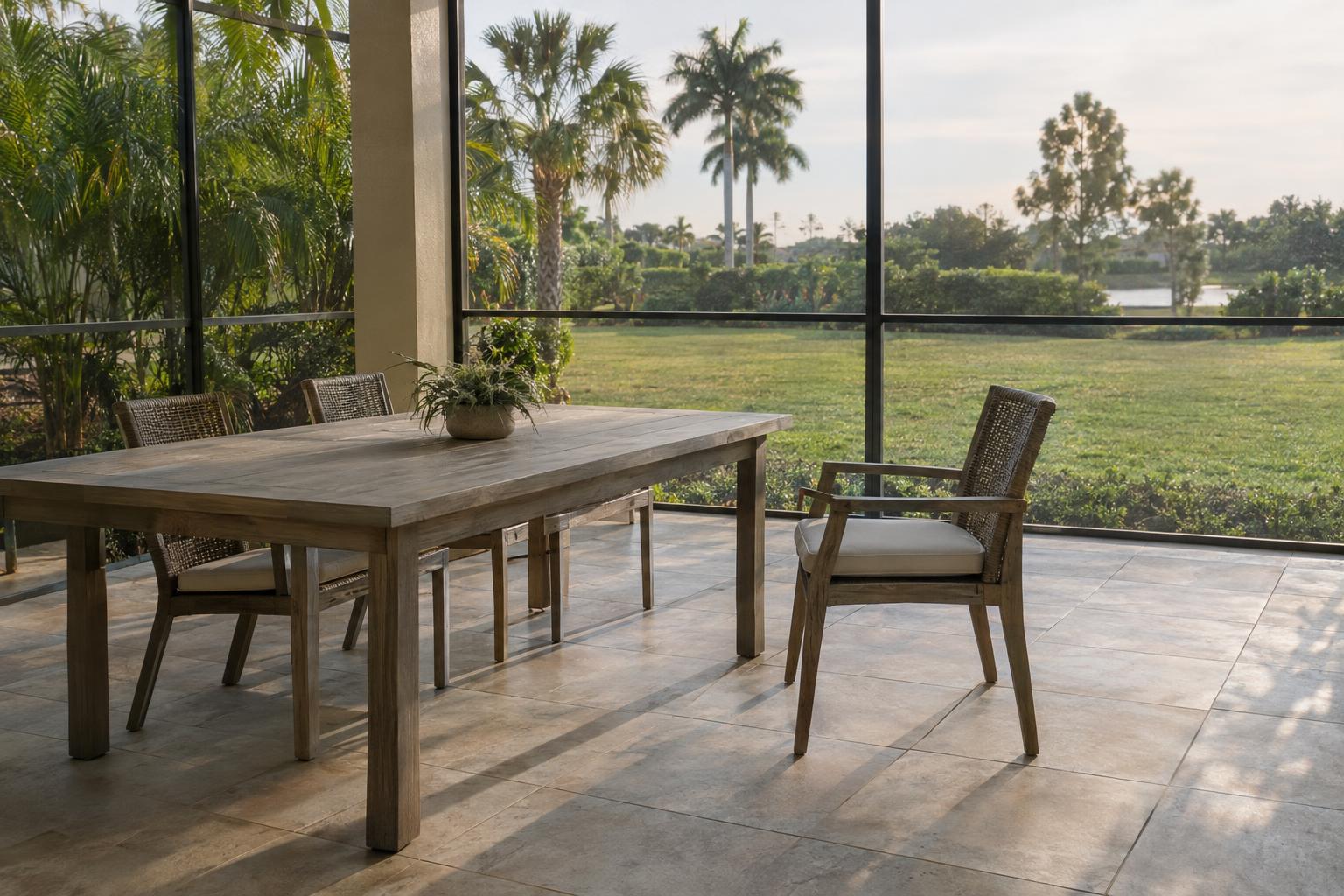
The table is solid, the top still looks good, but the chairs have seen better years. Before you start browsing, it helps to treat this as a fitting exercise rather than a shopping trip, because replacement patio chairs have to work with a table you already own and cannot adjust. This is a step-by-step way to check the table, gather the facts that matter, and make each choice in a sensible order so the new chairs fit the first time you sit down.
Step One: Decide the Table Is Worth Keeping
New chairs around a tired table can look like a half-finished project, so spend ten minutes on the table first. You are not judging style yet. You are checking that it will still be a good partner five or ten years from now.
Test for steadiness
Press down on each corner and push gently from the side. A table that rocks, twists or clicks at the joints may need attention before it carries a full set of diners.
Look over the top and the frame
Glass tops should be free of chips along the edge, and slatted or composite tops should lie flat without lifted ends. On a metal frame, look at the welds, the joints and any spot where the finish has worn through. Cosmetic wear is a style decision. Loose parts or a damaged top are worth weighing honestly before you buy new chairs to go around it.
Step Two: Record the Table Facts
Chairs and tables are matched by a handful of measurements. Writing them down now saves a return trip, because you can only compare chairs against the table properly if you bring its details with you.
The measurements that matter
- Overall height from the floor to the top of the table surface.
- The open height beneath the lowest part of the apron or any cross rail, measured at a seating position.
- Leg positions, and the width of the open space between legs along each side and at each end.
- The top’s length and width, or the diameter if it is round.
- Whether the table has a center hole or umbrella support that limits where a chair can go.
Measure at the place where a chair will actually be, not just at the middle of the table. Some tables have a rail near a corner that sits lower than the rest of the apron. If you want the full picture of how a table frame affects armchairs, our article on apron clearance for patio armchairs walks through how to compare the arm height with the opening beneath the table.
Take photos
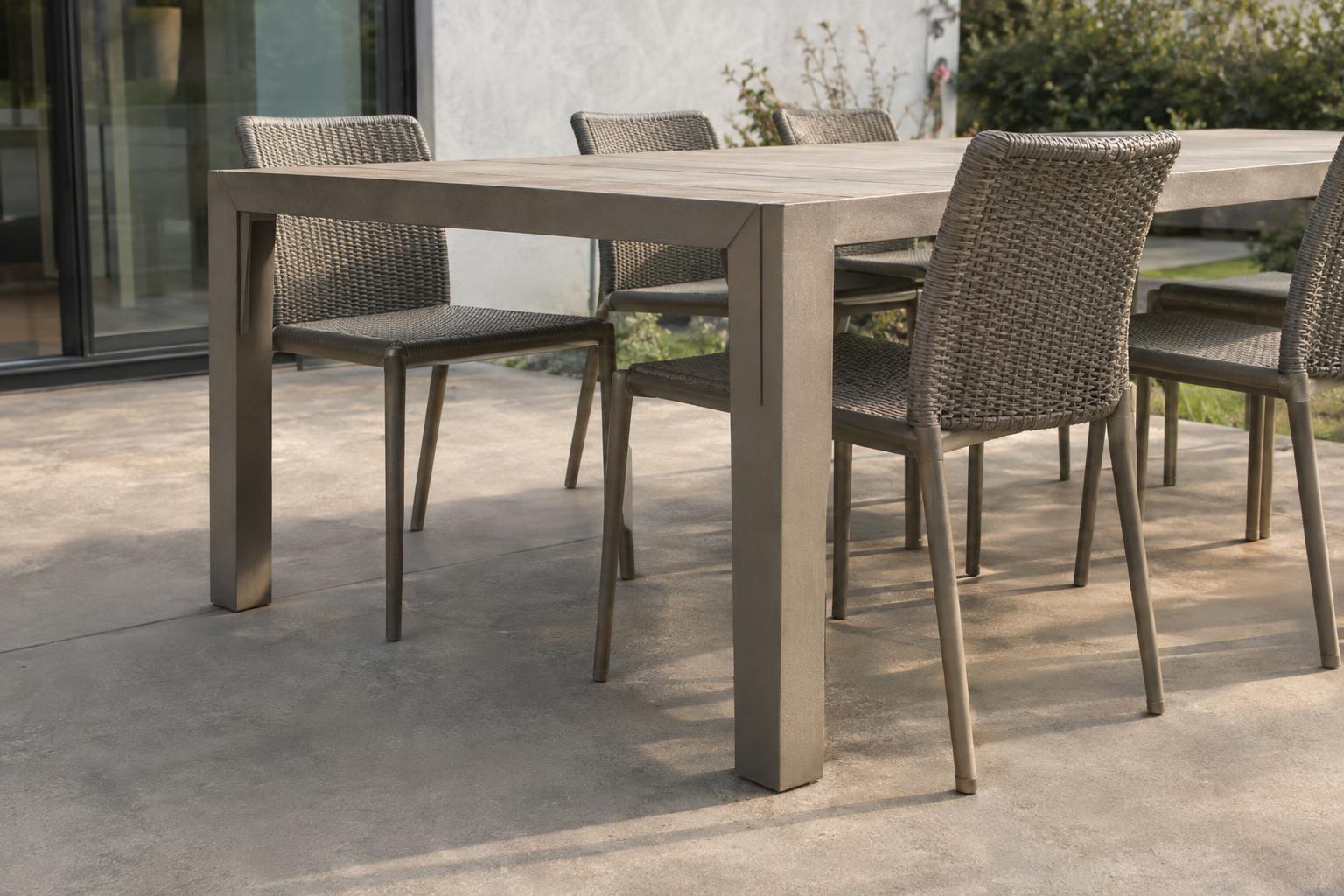
Photograph the whole table from a corner, then close up on the legs, the underside of the apron and the finish. A shot with an old chair pushed in shows how the seat and tabletop related.
Step Three: Count the Seats Honestly
It is tempting to count the number of chairs the old set came with, but the better question is how many people sit at this table on a normal day and on a big one. A general planning rule of thumb is to allow roughly two feet of table edge per diner, though that is only a starting point. The width of the chair you choose, and whether it has arms, changes the answer, so confirm the final count by looking at the actual pieces together.
Think about the ends
Long tables often have a spot at each end where a slightly different chair makes sense, perhaps one with arms. Decide whether you want all the chairs identical or a pair that stands out. If the ends fall between table legs, check how much room is left for a wider chair, because corner legs can block a seat that looked fine on paper.
Step Four: Arms or No Arms
Armless chairs tuck in neatly and give you the most flexibility on a table with a low apron or crowded legs. Armchairs feel more relaxed and give guests something to rest on, but they need room beneath the table, and they take up more width along the edge. Use your recorded measurements to rule options in or out, then sit at a showroom table of similar height to confirm the fit.
Step Five: Sling or Cushioned
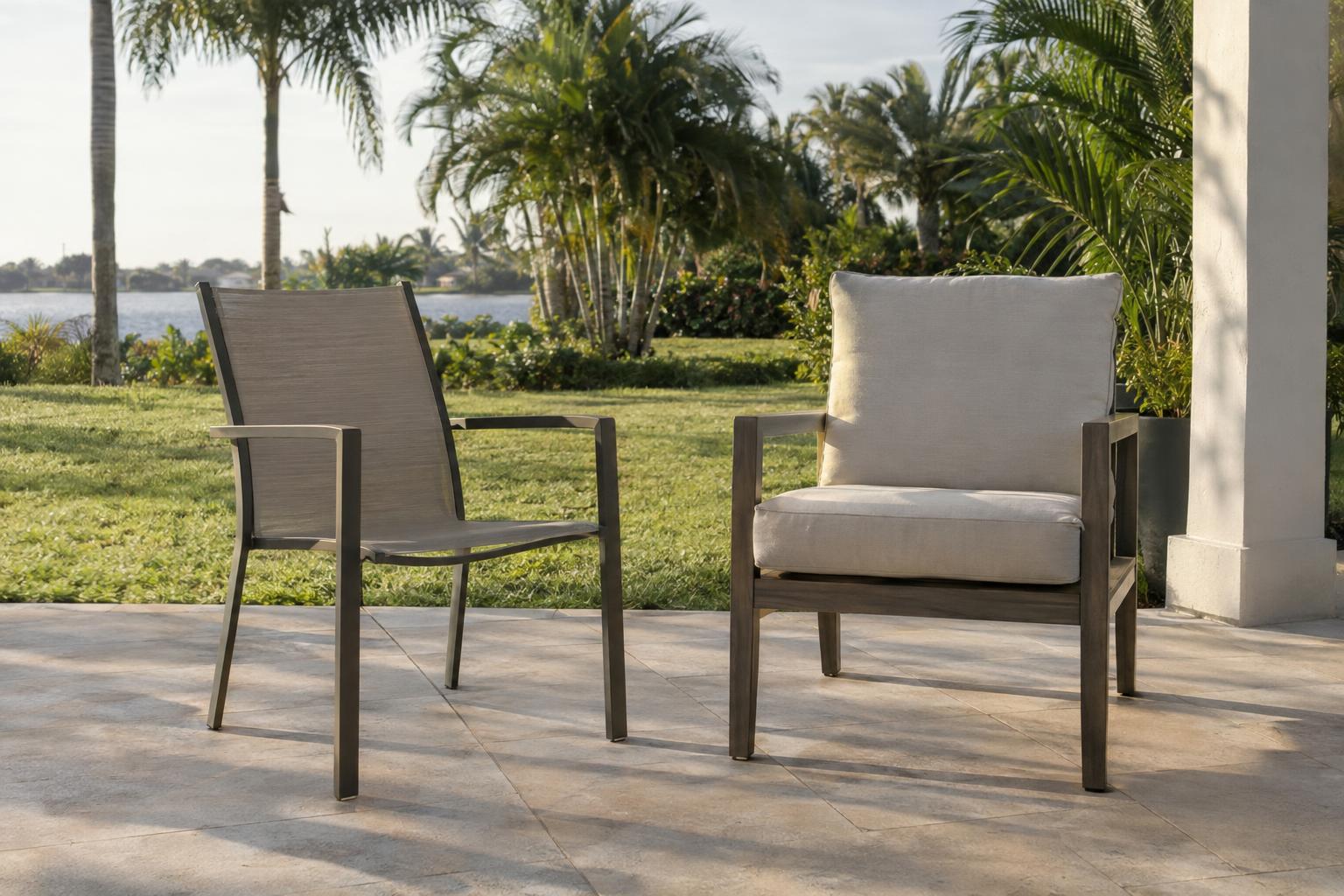
This choice shapes how the table feels at mealtime. Sling chairs use a tensioned fabric seat and back stretched over a frame, so they dry quickly after a Florida shower and feel light to pull in and out. Cushioned chairs feel softer for long dinners, but the cushions need to be lifted or stored when rain is in the forecast.
What the maintenance looks like
Sling fabric is usually the easier of the two to keep up with a hose. For Sunbrella sling fabric specifically, Sunbrella notes that rinsing regularly with clean water helps keep dirt from becoming deeply embedded, as described in its guidance for cleaning Sunbrella Sling fabric. Cushions hold water and dry more slowly, which matters if the table sits under open sky.
If your table is a quick-breakfast spot, sling may be all you want. If guests linger over long dinners, cushioned seats may win. Ask your showroom what is available to view in each style.
Step Six: Match the Finish or Contrast on Purpose
Matching a frame finish exactly is difficult when the table has weathered, so a near-match often looks worse than a clear contrast. A dark table with lighter chairs, or the reverse, reads as a decision rather than a miss. When you go for contrast, repeat one element, such as a cushion color or a metal tone. Our article on mixing furniture materials on one patio covers how to keep a combination looking planned.
Ask the showroom what finishes are available to view rather than assuming any piece can be matched to your existing table, and compare the chair with a daylight photo of your table, since indoor lighting changes how colors read.
Mixing old and new during the change
If you replace the chairs in stages, a few old and a few new chairs will share the table for a while. That works better when the old ones go to the ends or to a side of the table instead of alternating around the edge. It also gives you a chance to live with the new style before replacing the rest.
Step Seven: Sit-Test at a Similar Height
Everything above gets you to a short list. The last step is how it feels. Seat height relative to the tabletop decides whether your elbows rest naturally or your knees hit the apron. Our guide to matching chair seat height to a table explains the idea in more detail for café-style tables.
In the showroom, find a table of similar height to yours and sit in each short-listed chair for a few minutes. Lean back, reach for a plate, then cross your legs. Treat any number you read as a starting point and confirm everything on the actual piece.
Bring This to the Showroom
- Your measurements for the table height, the apron opening, the leg spacing and the top size.
- Photos of the whole table, the legs, the underside and the finish.
- The number of seats you want, and whether the ends should differ.
- A note on arms or no arms, and sling or cushioned.
- A photo of the table in daylight so you can judge finishes.
- The brand or collection of the table, if you know it.
A list like this makes your showroom visit faster. The patio furniture guide is also a helpful read before you go.
Frequently Asked Questions
Can I replace just two chairs and keep the rest?
Yes, many people do this when only a couple of chairs wear out. Put the new chairs at the ends or on one side so the difference looks intentional, and sit in them next to the old ones before you decide. Ask the showroom what is available in a style that sits comfortably beside what you have.
Do replacement patio chairs have to match the table’s frame material?
No. A table and chairs in different materials can look good when the shapes and colors relate. A shared tone or repeated shape ties them together, and a clear contrast usually looks better than a close but imperfect match.
How do I know the new chairs will fit under my table?
Compare the table’s open height under the apron and the space between legs with the chair’s arm height and width. Armless chairs give you the most room to work with. A sit-test at a similar table in the showroom confirms what the numbers suggest.
What if the new chairs sit higher or lower than the old ones?
A small change can feel fine, but a large one shows up in how your arms and knees meet the table. That is the reason to sit-test before you buy. Ask the showroom to point you to a table close to the height of yours.
If you are planning a chair swap for a table you plan to keep, visit a Palm Casual showroom or call (407) 299-9188. We have been selling factory-direct outdoor furniture since 1976, and you can compare styles in person with your measurements in hand.
Explore Palm Casual
Factory-direct pricing with a risk-free 30-day trial. Visit a showroom or call (407) 299-9188.
Explore Our Buying Guides
Looking for expert advice? Read our Complete Guide to Patio Furniture in Florida for tips on materials, maintenance, and choosing the right set for your space.