


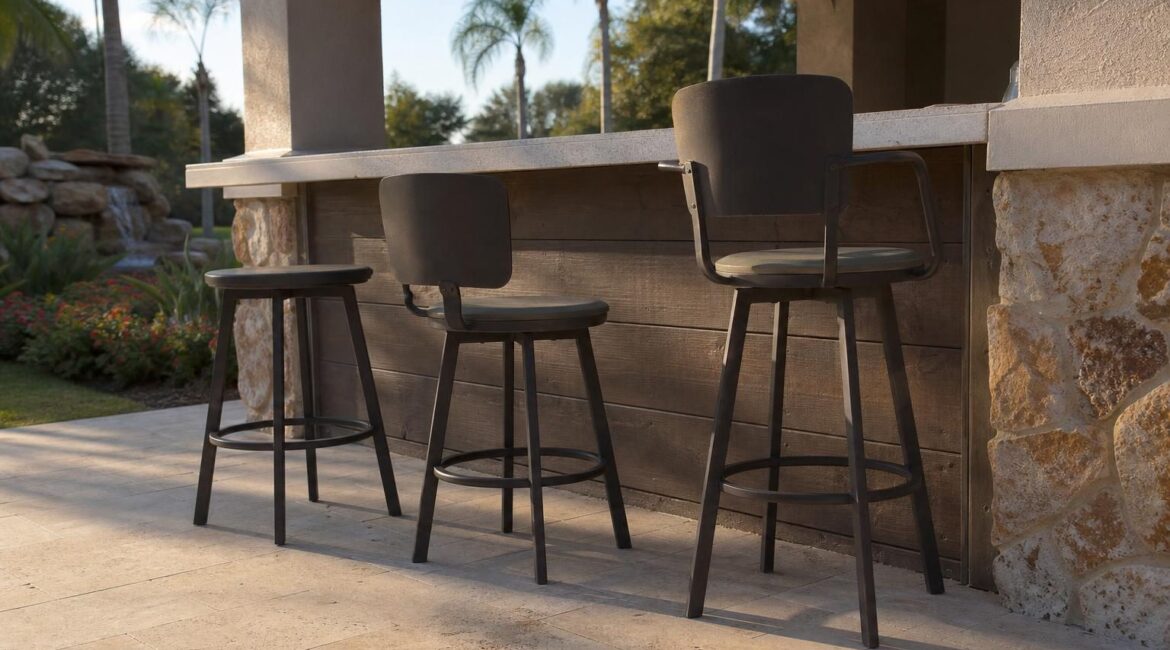
Most shoppers do not think about back height until they are standing at the counter trying three different bar stool samples side by side. The seat height gets all the attention in bar stool shopping, but the back height changes how a stool actually feels once you sit down for more than a few minutes.
Here is how the three back styles differ, who each one suits, and what to check before you settle on one for your outdoor bar or counter.
Backless Stools: Fast, Flexible, and Easy to Tuck Away
A backless stool is exactly what it sounds like: a seat and legs, nothing behind your shoulders. It is the lightest option to move, the easiest to slide under a counter overhang, and it takes up the least visual space on a patio.
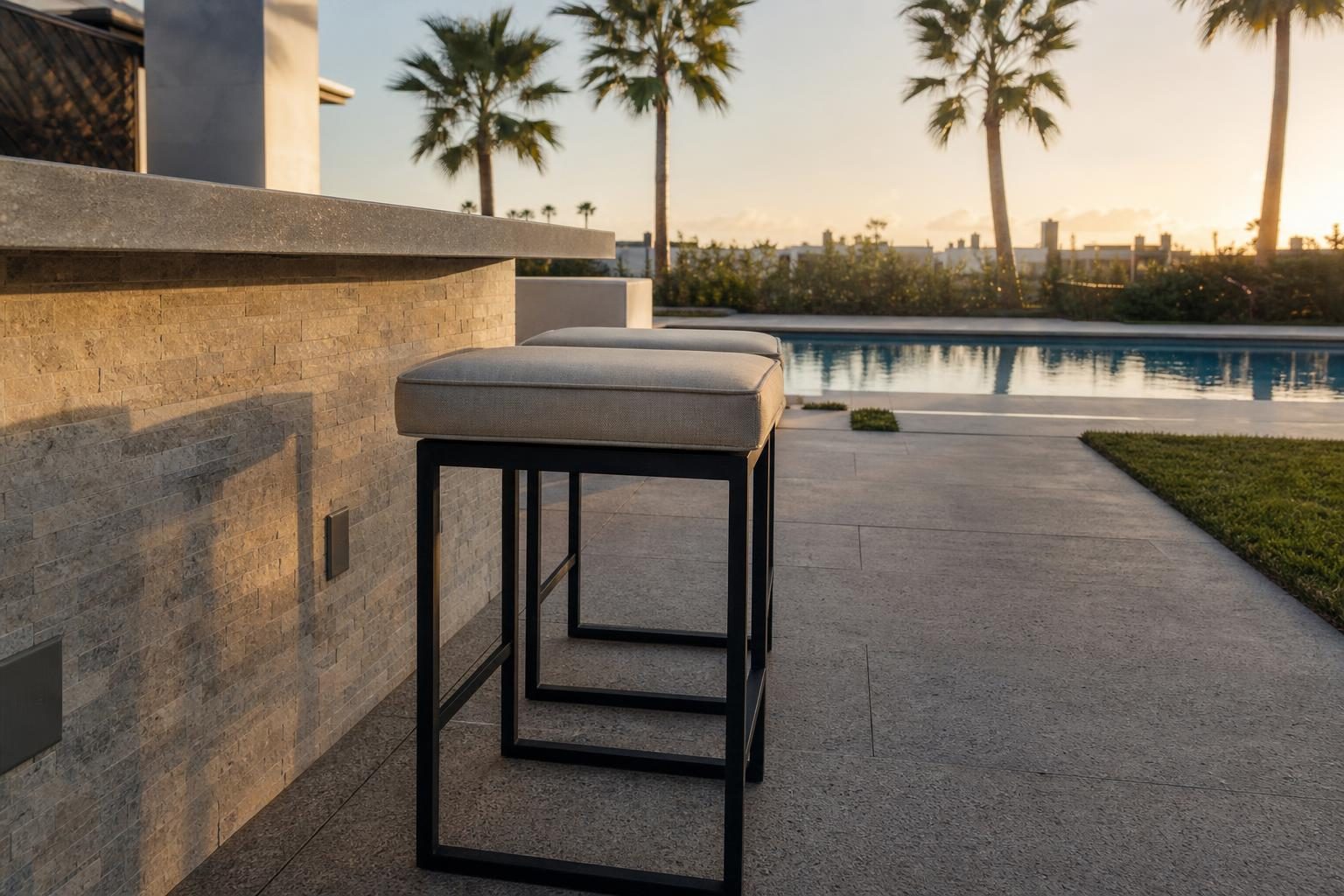
The trade-off is posture support. Without a back, you are relying entirely on your core to stay upright, which is fine for a quick drink or a snack but tiring for a long dinner conversation. Backless stools work best around a grilling station or a quick-service outdoor bar where people are standing and sitting on and off rather than settling in.
Low-Back Stools: A Middle Ground for Most Households
A low-back stool adds support roughly to the middle of your shoulder blades. It is enough to lean into occasionally without turning the stool into a full lounge seat. For most Florida households that use their outdoor bar for casual meals and conversation rather than formal dining, this is the style that gets used the most, because it is comfortable enough to sit in for a while but still light and easy to reposition.
High-Back Stools: Built for Longer Sitting
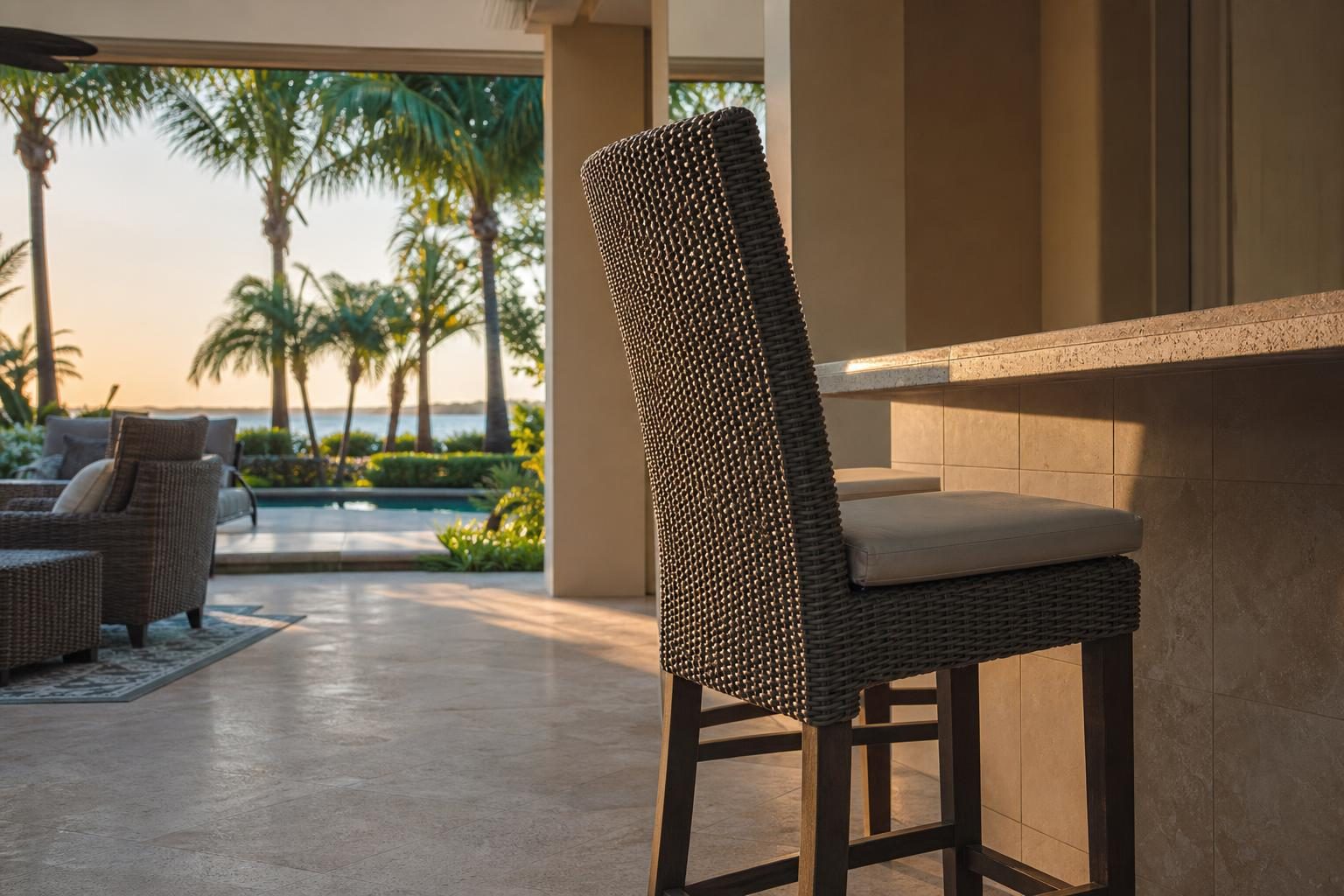
A high-back stool extends support up past the shoulders, sometimes close to head height. This is the style to choose if your outdoor bar doubles as a second dining area or a spot where people linger through a whole evening. The added material does add weight and visual bulk, so a high-back stool suits a larger counter better than a tight galley-style outdoor kitchen.
Arm height matters here too. A high-back stool without arms can still feel unsupported at the sides even with a tall back, so if long sitting is the priority, look at stools that pair back height with at least a partial armrest.
Matching Back Height to How You Actually Use the Bar
Ask yourself how long people typically sit at your outdoor counter. A few minutes at a time favors backless. Casual meals and regular conversation favor low-back. Extended evenings, watching a game, or a bar that functions as a real second dining space favor high-back. Mixing styles is also common, with backless stools at a prep-facing counter and higher-back stools at a seating-facing counter in the same outdoor kitchen.
Material matters alongside back height. Cast aluminum and sling-seat stools stay cooler to the touch in direct Florida sun than fully cushioned frames, which is worth factoring in regardless of which back style you choose. For more on how frame materials compare, see our patio furniture guide. General background on stool and bar-height seating conventions is covered in this overview of bar stools.
For more than 40 years, Palm Casual has built and sold patio furniture factory-direct, and the stool style that gets the fewest complaints is almost never the one that looked best in a showroom photo. It is the one a customer actually sat on for five minutes before deciding.
What to Check Beyond Back Height
Back height is the starting point, but a few other details change how a bar stool actually performs once it has been outside for a season. Swivel bases add convenience at a counter where people turn to talk, but they also add moving parts that need occasional attention in a humid, salty climate. A fixed-base stool has fewer parts to maintain but less flexibility once seated.
Footrest position matters too, and it interacts with back height more than most shoppers expect. A tall-back stool with a footrest set too low can leave your knees higher than your hips, which undercuts the comfort the taller back was meant to provide. Sit in the stool at the actual counter height you plan to use, not just at a display counter in the showroom, since even a couple of inches of counter height difference changes how a given stool feels.
Cushion coverage also varies by back style. Some high-back stools cushion only the lower back, leaving the upper portion of the back rest bare frame; others cushion the full height. If you plan to sit for extended periods, ask specifically how much of the back is padded rather than assuming a taller back means more cushioning throughout.
A Real-World Example: Furnishing a Covered Outdoor Kitchen
Consider a typical Southwest Florida lanai with an outdoor kitchen counter separating it from the seating area. A household that uses this space mainly for quick breakfasts and casual cookout evenings, with people standing and sitting frequently, tends to be happiest with backless or low-back stools that can be pulled out and pushed back in without much thought. A household that treats the same counter as a secondary dining table for full dinners, where people sit for thirty minutes or more at a time, usually ends up happier with high-back stools, even though they take up more visual space and cost a bit more to furnish the same run of counter.
The mistake we see most often in the showroom is choosing based on how a stool photographs rather than how long people will actually sit in it. A backless stool photographs cleanly against an open counter, but if your household lingers outside most evenings, that same stool can start to feel like the wrong choice within the first few weeks of ownership.
Cleaning and Everyday Upkeep by Back Style
Back style also affects how easy a stool is to clean and maintain over a full outdoor season. Backless stools have the least surface area to wipe down and nothing behind the seat to trap pollen or dust, which matters during Florida’s spring pollen season. High-back stools, especially cushioned ones, have more fabric and frame surface exposed to sun and rain, so they benefit from being positioned under some cover when possible and from an occasional check for trapped moisture between the cushion and the frame. None of this should be a deciding factor on its own, but it is worth factoring into the back-height decision alongside comfort and how the stool will actually be used.
Frequently Asked Questions
Which bar stool back height is most comfortable?
There is no single answer. Low-back stools suit the widest range of everyday use, while high-back stools are better for longer sitting and backless stools are best for quick, casual use. Comfort depends on how long people actually sit and whether the stool has arms.
Do backless stools feel unstable?
Not structurally, but they do require more of your own posture to stay upright and comfortable over time. They are sturdy; they just do not support your back the way a low- or high-back stool does.
Can I mix stool back heights at the same counter?
Yes. Many outdoor kitchens use shorter, backless stools at the prep side and taller-backed stools at the seating side, which works well as long as the seat heights themselves still match the counter.
Does a high-back stool need armrests too?
Not necessarily, but pairing a high back with at least partial arm support makes the biggest difference for anyone sitting for an extended period.
Get Started at a Palm Casual Showroom
Sit on a few back-height styles side by side before you decide. Call (407) 299-9188 or learn more about how we build and sell factory-direct on our factory page.
Explore Palm Casual
Factory-direct pricing with a risk-free 30-day trial. Visit a showroom or call (407) 299-9188.
Explore Our Buying Guides
Looking for expert advice? Read our Complete Guide to Patio Furniture in Florida or Ultimate Guide to Outdoor Furniture in Florida for tips on materials, maintenance, and choosing the right set for your space.
