


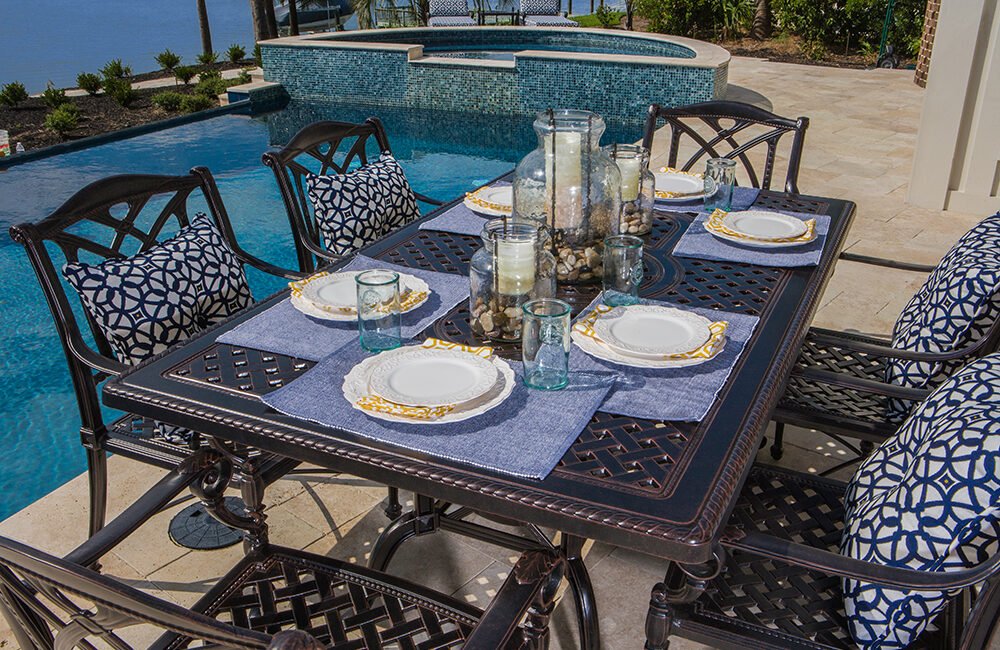
Walk past a set of ornate patio furniture and it is genuinely hard to tell at a glance whether you are looking at classic wrought iron or its modern successor. That resemblance is exactly why the cast aluminum vs wrought iron patio furniture question comes up in our showrooms week after week — homeowners love the traditional lattice-and-scroll look and want to know which metal should deliver it. The short answer for Florida: the style survived, but the metal underneath it changed for good reasons. Here is a straight comparison of how the two materials are made, how they age in our climate, and the few cases where iron still earns its keep.
Two Metals, Two Manufacturing Stories
Wrought iron is exactly what the name says — iron heated and worked into shape, sold today mostly as welded steel scrollwork. It is dense, strong, and heavy: a single iron dining chair can outweigh an entire aluminum bistro set. Cast aluminum takes the opposite route: molten aluminum poured into molds, which is why it can reproduce the same ornate Victorian patterns, lattice tabletops, and detailed arm scrolls that made iron furniture famous, then come out of the mold at roughly a third of the weight. Both get finished with powder coating; the difference is what happens when that coating is eventually scratched.
The Rust Question Settles Most of the Debate in Florida
Iron oxidizes. The moment humidity, sprinkler spray, or salt air reaches bare metal through a chip in the finish, rust starts — first as a stain bleeding onto your pavers, then as scale lifting the surrounding coating. In Florida’s year-round humidity that is not a maintenance possibility, it is a schedule: sanding, priming, and repainting become part of owning iron here, and coastal exposure accelerates all of it. Aluminum cannot rust at all — the reason it heads our roundup of which patio furniture resists rust best in Florida. Scratch a cast aluminum frame and the exposed metal forms a thin, stable oxide layer that seals itself — the self-protecting behavior behind aluminum’s corrosion resistance, which the industry body the Aluminum Association covers in depth; the blemish stays cosmetic. That single chemical fact is why our cast aluminum collection carries the ornate look that used to belong to iron — same silhouettes, none of the rust cycle.

Weight: Iron’s Advantage and Its Tax
Iron’s mass is real stability — in a tropical-storm gust, a 60-pound chair stays put longer than a 20-pound one. But you pay that tax every ordinary day: rearranging for guests, tilting chairs to sweep the lanai, moving the set to pressure-wash pavers, or hauling everything inside when a storm is actually named. Heavier furniture also concentrates load through small ornate feet, which can mark pavers and travertine. Quality cast aluminum splits the difference sensibly: castings are substantially heavier than hollow-tube aluminum imports and sit confidently in typical Gulf breezes, yet one person can still lift any piece. For storm prep — the moment weight matters most — being able to clear the patio quickly beats having furniture too heavy to move.
Comfort, Heat, and Everyday Living
Metal furniture takes on the temperature of its surroundings, and Florida sun is not gentle. Both materials get hot in direct exposure, but iron’s mass holds that heat far longer into the evening. Aluminum sheds it quickly, and the sling seats and quick-dry cushions that pair with our cast frames keep skin contact off the metal entirely. Iron seating is almost always rigid; comfort depends entirely on cushions, which then live outdoors on a material that stains when wet metal meets fabric. Cast aluminum collections are also simply broader today — swivel rockers, counter-height sets, deep seating, fire-table groups — while new iron designs have become far rarer on showroom floors.
Cost Over Ten Years, Not at Checkout
Comparable-quality iron and cast aluminum sets land in similar price territory up front — ornate metalwork is the expensive part either way. The gap opens after purchase. Iron’s decade includes rust remediation, repainting, and often early replacement of pieces that corroded at welds and joints; in coastal zones some owners repaint within the first few years. Cast aluminum’s decade typically includes rinsing off salt film and touching up the odd chip. Factor honest maintenance and the aluminum set is the cheaper way to own the same look — which is why the “iron look” sets sold across Florida today are overwhelmingly aluminum castings.

When Wrought Iron Still Makes Sense
Fairness requires the other side. Genuine antique iron pieces carry heritage value worth preserving and restoring. Furniture that will be literally bolted down or never moved — some commercial courtyards, for instance — can justify iron’s mass. And far from salt water, in drier climates, iron’s maintenance schedule stretches long enough to be livable. But for a Florida lanai, pool deck, or coastal patio that a family actually rearranges and lives on, the practical column adds up on one side. If you love the classic look, buy the casting; if you love a specific inherited iron set, budget for its upkeep and enjoy it under cover.
How to Tell Which Metal You Are Looking At
Because the two materials imitate each other so well, it helps to know the field tests. The lift test is definitive: an aluminum dining chair rises easily with one hand, while genuine iron feels anchored. A pocket magnet settles any doubt — it clings to iron and steel and ignores aluminum entirely, which makes it worth carrying to estate sales and consignment shops where “wrought iron” labels get applied loosely. Look underneath at unfinished spots: aluminum shows silvery-gray metal, iron shows dark gray or, tellingly, orange freckles of early rust at welds and foot glides. Tap the frame and listen — castings give a duller note than ringing hollow steel tube, which is a third category altogether and the weakest of the three for Florida patios. Five seconds of checking protects you from paying iron-restoration prices for mislabeled steel, or passing up a quality casting because it wore an “iron look” description.
Frequently Asked Questions
Does cast aluminum look as high-end as wrought iron?
Side by side, the castings reproduce the same scrollwork and lattice detail — most visitors cannot tell until they lift a chair. Powder-coat finishes in bronze, black, and textured tones complete the traditional look.
Will wrought iron furniture survive near the Florida coast?
Only with vigilant upkeep. Salt air attacks any breach in the coating, so coastal iron typically needs sanding and repainting on a recurring cycle, and rust staining on pavers is common between treatments.
Is cast aluminum sturdy enough for windy Florida weather?
Quality castings have real mass — far more than tubular imports — and handle typical gusts confidently. For named storms, their movable weight is an advantage: you can actually clear the patio in minutes.
How do I maintain cast aluminum patio furniture?
Rinse occasionally (more often near salt water), wash with mild soap when needed, and touch up chips for appearance rather than protection. There is no rust cycle to manage — that is the point.
Palm Casual was established in Orlando in 1979, and our cast aluminum collections carry the traditional ironwork look with factory-direct pricing and a 30-day trial period to prove themselves on your own patio. Visit our Jacksonville showroom to feel the difference between a casting and an iron frame in person, or call (407) 299-9188 and we will help you choose the finish and set that fits your space.
Explore Palm Casual
Factory-direct pricing with a risk-free 30-day trial. Visit a showroom or call (407) 299-9188.
Explore Our Buying Guides
Looking for expert advice? Read our Complete Guide to Patio Furniture in Florida or Ultimate Guide to Outdoor Furniture in Florida for tips on materials, maintenance, and choosing the right set for your space.
