


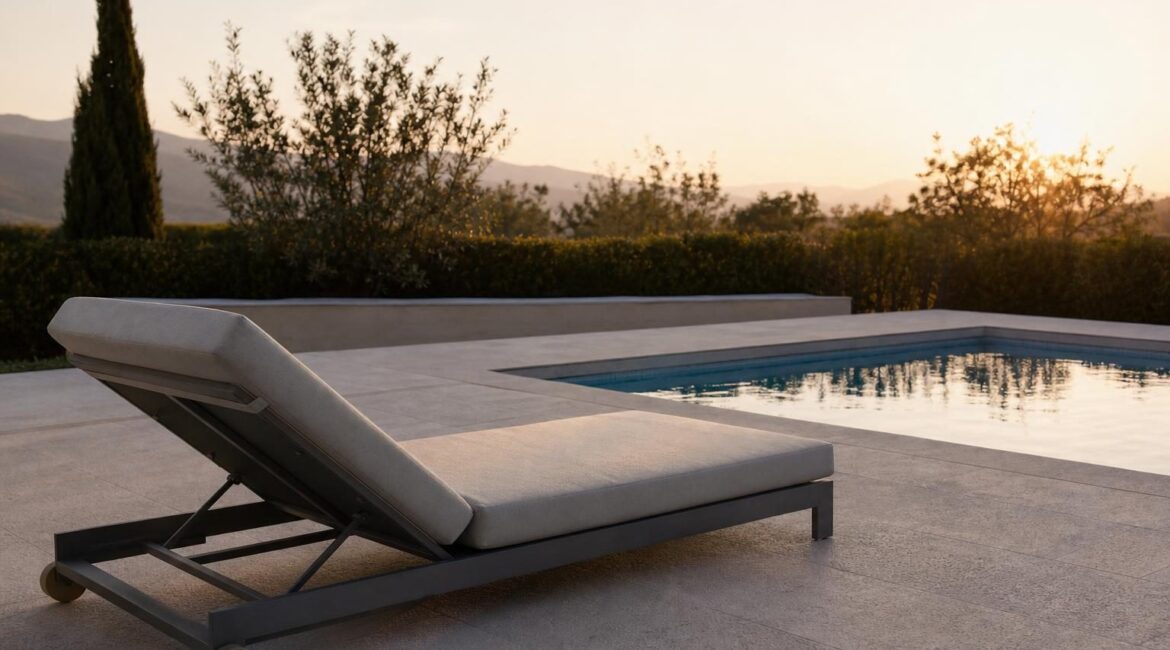
Anyone who has dragged a chaise lounge across a pool deck to chase shade — or away from it — knows the base matters as much as the cushion. Chaise lounge wheels vs. fixed feet is a genuinely practical decision for pool-deck furniture, not a minor spec, because it determines how easily the chair moves and how stable it feels once it’s in place.
What Wheeled Chaise Bases Offer
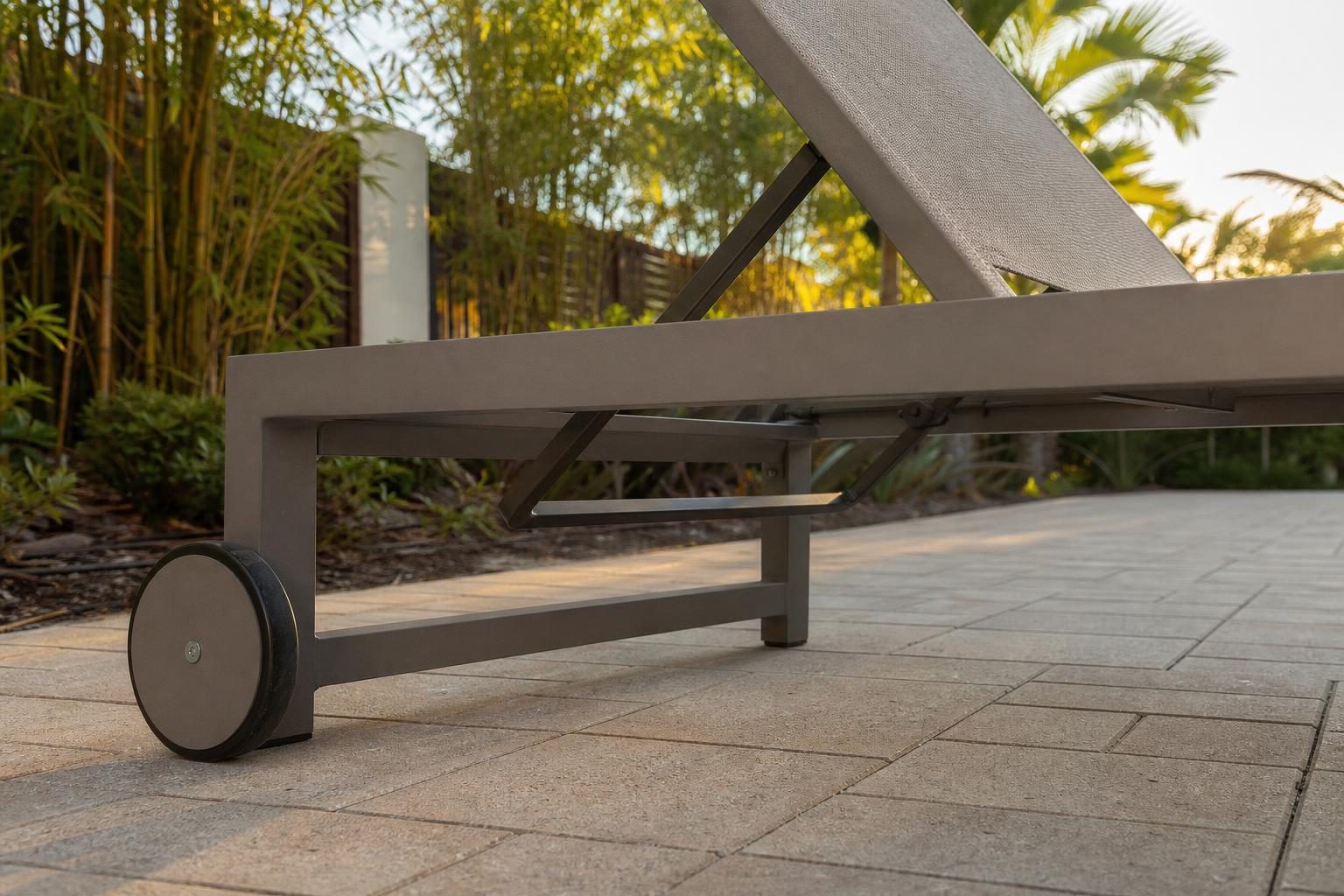
A wheeled chaise typically has two fixed feet at the head and two wheels at the foot, so it can be tilted back slightly and rolled to a new spot without lifting. That makes repositioning around sun and shade throughout the day much easier, especially on a smooth pool-deck surface like pavers or sealed concrete. For anyone furnishing a spot where guests reposition chaises frequently — a family pool deck, a rental property, a community pool area — the convenience is real.
The tradeoff is that wheels add moving parts exposed to pool water, chlorine, and grit, all of which can eventually affect how smoothly they roll if not rinsed periodically. Wheels also perform noticeably worse on rougher or uneven surfaces like textured stone or grass-adjacent pavers, where they can catch or stick.
What Fixed-Foot Chaise Bases Offer
Fixed-foot chaises stay planted once positioned, which some owners actually prefer — there’s no chance of an unexpected roll on a sloped deck section or a gust of wind nudging the chair. Fixed feet also mean fewer moving parts to maintain, which fits a lower-maintenance mindset for furniture that’s rarely repositioned in the first place.
The obvious downside is repositioning effort. Moving a fixed-foot chaise means lifting or dragging it, which is more physical effort and carries more risk of scuffing a paver or pool-deck surface over repeated moves, especially with lighter aluminum frames that can catch an edge if dragged rather than lifted.
Choosing Based on How the Deck Actually Gets Used
The right choice usually comes down to how often chaises move and what the deck surface is like:
- Frequently repositioned loungers on a smooth deck: wheels are worth the tradeoff for everyday convenience.
- A permanent arrangement that rarely changes: fixed feet keep things simple with less to maintain.
- Textured stone, rough pavers, or uneven surfaces: fixed feet generally perform more predictably than wheels, which can catch or stick.
- Windy, open pool decks near the water: fixed feet reduce the chance of an unplanned roll in a strong gust.
Some households simply mix both — wheeled chaises near the pool’s edge where repositioning happens daily, fixed-foot chaises further back where the arrangement rarely changes.

Wheel and Foot Materials Worth Checking
Not all wheels are built the same. Look for wheels with a sealed bearing and a corrosion-resistant housing, ideally rated specifically for poolside or marine-adjacent use, rather than a generic caster designed for indoor furniture. A sealed bearing keeps chlorinated water and fine grit from working into the moving parts, which is the main thing that eventually stiffens or seizes a lower-quality wheel.
Fixed feet deserve the same scrutiny. Rubber or composite foot caps that resist UV cracking hold up far better on a sun-exposed deck than a bare metal foot, which can also scratch pavers or pool decking over repeated placement in the same spot. Some fixed-foot chaises include adjustable levelers in the feet, which is worth checking for if your deck has any slope or uneven pavers — it solves a stability problem wheels can’t address as cleanly.
Either way, ask specifically about the wheel or foot material rather than assuming all bases in a given price range are built the same, since this is one of the areas where lower-cost furniture cuts corners first. Wheel diameter is another detail worth checking beyond just the housing material. Larger-diameter wheels, generally in the 3 to 4 inch range, roll more easily over small surface irregularities like paver seams or slight grade changes than smaller casters designed mainly for smooth, flat flooring. A chaise with small, narrow wheels may work fine on a perfectly level, freshly sealed deck but struggle on a paver surface with visible seams between stones, which is common on many Florida pool decks. It’s also worth asking about the wheel’s rated load capacity relative to the chaise’s total weight plus an average adult, since a wheel undersized for the furniture it’s attached to will wear out or stiffen faster regardless of how well-sealed the bearing is. Higher-quality wheeled bases sometimes use a dual-wheel caster design at each foot rather than a single wheel, which spreads the load across more contact points and generally rolls more smoothly over uneven surfaces. A quick rinse with a garden hose after heavy pool splash exposure, followed by letting the wheels roll freely a few times while still wet, helps flush grit out of the housing before it has a chance to settle and dry in place.
Locking Wheels for Added Stability
Some wheeled chaise designs include a locking mechanism, typically a simple foot-operated brake or a locking caster on one or both wheels, which addresses the biggest concern people have about wheeled bases: unwanted movement once the chair is positioned. A locked wheel holds the chaise firmly in place, combining the convenience of easy repositioning with the stability of a fixed-foot design once you’ve settled into a spot.
Not every wheeled chaise includes this feature, so it’s worth asking about specifically if wind exposure or an active household with kids and pets makes unplanned movement a real concern. For a permanent household setup where a chaise gets positioned once each season and rarely moves after that, a locking wheel largely closes the gap between the two base styles, making the decision more about long-term maintenance preference than a strict stability tradeoff.
If you’re outfitting a larger pool deck with several chaises, mixing locking-wheel models near high-traffic zones with fixed-foot models further back is a practical middle path many households land on after living with the space for a season.
Whichever base you choose, checking the deck surface itself — smooth pavers versus rougher natural stone — before deciding is worth the extra few minutes, since surface texture affects wheel performance more than almost any other single factor in this decision.
For manufacturer guidance on caring for outdoor furniture materials, see Tropitone’s product-care guidance. Check the maker’s instructions for the specific wheel or foot hardware on the chaise you choose.
Frequently Asked Questions
Do chaise lounge wheels rust near a pool?
Quality wheel hardware is built for outdoor and poolside use, but rinsing wheels periodically to clear chlorine residue and debris helps them keep rolling smoothly over time.
Can fixed-foot chaises be moved on their own casters later?
Not typically — the base type is generally fixed at the frame level, so it’s worth deciding at purchase rather than expecting to retrofit later.
Are wheeled chaises less stable to sit in?
No, stability while seated is determined by the frame and how the wheels lock or rest, not by the presence of wheels themselves; a quality wheeled chaise sits just as securely once positioned.
Which base type is better for a rental or vacation property?
Wheeled bases are often preferred there, since guests frequently reposition loungers and easier movement reduces wear on both the furniture and the deck surface.
See Both Base Styles in Person
Our showrooms display chaise lounges with both wheeled and fixed-foot bases so you can compare the feel firsthand. Call (407) 299-9188 or visit our factory-direct showroom to find the right base for your pool deck.
Explore Palm Casual
Factory-direct pricing with a risk-free 30-day trial. Visit a showroom or call (407) 299-9188.
Explore Our Buying Guides
Looking for expert advice? Read our Complete Guide to Patio Furniture in Florida or Ultimate Guide to Outdoor Furniture in Florida for tips on materials, maintenance, and choosing the right set for your space.
