


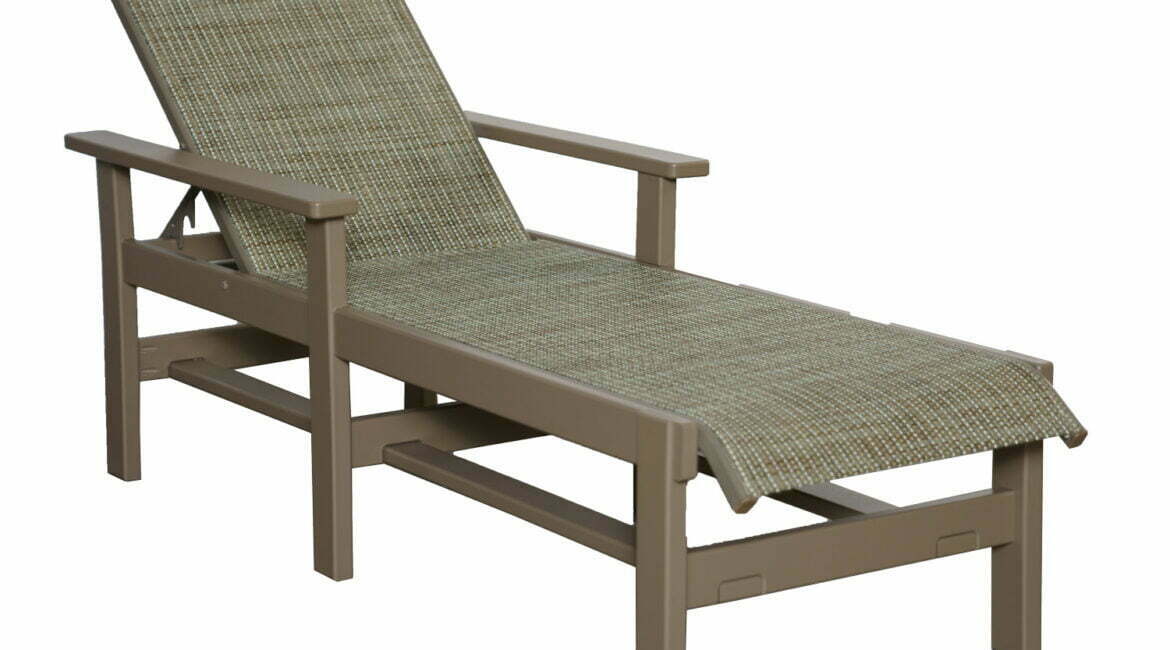
Finding a chaise lounge for Florida pool deck duty is less about looks and more about survival. Few spots punish outdoor furniture like the area around a pool: chlorinated splashes, wet swimsuits, a deck that radiates heat, and the same brutal Florida sun that pushes the UV index past 10 all summer. A chaise that thrives in a covered lanai can corrode, fade, or warp within a season poolside if the materials are wrong. From the Gulf Coast to the Space Coast, the right pool lounger has to take chlorine, salt, and sun in stride. This guide walks through the frames, slings, and finishes that hold up around a Florida pool, plus the sizing and care details that keep them comfortable for years.
Why a Pool Deck Is the Harshest Spot in Your Yard
A chaise lounge for Florida pool deck use faces a combination of stresses no other furniture location piles on at once. Chlorinated water splashes the frame and finish constantly, and as it evaporates in the heat it leaves behind concentrated chemical residue. Saltwater pools, common across Florida, add their own corrosive load. On top of that, the deck surface itself can reach surface temperatures well above the air temperature in direct sun, and the furniture bakes in it all day.
Then there is the moisture cycle. A lounger gets soaked by a swimmer, dries in the sun, gets splashed again, and dries again, over and over, every day. Materials that absorb water or have any iron content simply cannot keep up. Wood swells and grays, steel rusts at any chip in the finish, and cheap foam cushions stay perpetually damp and grow mildew in the humidity.
This is why poolside furniture is where material choice matters most. The frame and the seating surface both have to shrug off chlorine, salt, sun, and an endless wet-dry cycle. Get it right and a quality chaise lasts a decade or more poolside; get it wrong and you are shopping again next spring. Homeowners who bought with the climate in mind often say so in our customer reviews, where poolside durability is a recurring theme.

Frames That Won’t Rust Around Chlorine and Salt
The frame is the foundation, and around a pool there are clear winners. Powder-coated aluminum is the gold standard for a pool chaise: it has no iron to rust, and the baked-on powder-coat finish, applied at our Orlando factory, resists chlorine and salt while standing up to UV. A quality aluminum chaise can serve poolside for 15 years or more in Florida with just routine cleaning.
Marine-grade polymer and PVC pipe frames are two more excellent poolside options. Marine-grade polymer is a dense, solid plastic engineered for boat docks and harsh marine settings, so chlorine and salt are no challenge for it, and it never needs sealing or painting. PVC pipe frames are similarly impervious to water and chemicals, lightweight, and easy to move when you are cleaning the deck. Both shrug off the constant wet-dry cycle that destroys lesser materials.
What to avoid is just as important. Skip steel and iron frames poolside; any nick in the coating becomes a rust point fast in chlorinated, humid air. Be cautious with untreated wood, which swells and grays under repeated soakings. If you love the look of wicker, choose all-weather resin wicker over an aluminum frame rather than natural fiber, since the synthetic strands handle splashes that would rot real rattan. The CDC’s healthy swimming information is a reminder of how much chlorine and chemistry are in play around a pool, and your furniture lives in that environment every day.
Slings vs. Cushions for a Wet Florida Deck
The seating surface is the second big decision, and poolside it often comes down to slings versus cushions. Sling chaises use a single tensioned panel of breathable fabric stretched across the frame, with no thick cushion at all. For a pool deck, slings have a real advantage: they dry fast. A wet swimmer can sit down, get up, and the sling sheds water and air-dries in minutes, so there is no soggy cushion to deal with.
When slings make the most sense
If your chaise sees constant in-and-out swimmer traffic and lives in open sun, a sling is usually the smart pick. Quality sling fabric is woven from PVC-coated polyester that resists chlorine, mildew, and UV, and because there is no foam, there is nothing to stay damp or grow mildew. Slings are also lighter, making the chaise easy to slide around the deck or stack at season’s end.
When cushions are worth it
Cushions deliver more plush comfort for lounging and reading, and they work poolside if you choose Sunbrella performance fabric over quick-dry foam and commit to standing them up to dry after splashes. On a covered or partly shaded deck, cushioned chaises hold up well; in full sun with heavy swimmer traffic, slings are the lower-maintenance choice. Many Florida homeowners run a mix: cushioned loungers in a shaded conversation corner and sling chaises right at the water’s edge.

Sizing and Comfort: Fitting a Chaise Lounge for Florida Pool Deck Living
Beyond materials, the right chaise has to fit the deck and the people using it. A standard single chaise runs about 75 to 80 inches long and 26 to 30 inches wide, enough for most adults to stretch out fully. Measure your deck and plan for at least 18 to 24 inches between loungers so people can get in and out and a towel or side table fits between them.
Adjustability is a feature worth paying for. A multi-position back lets you sit upright to read, recline for a nap, or lie flat to tan, and a smooth, corrosion-resistant adjustment mechanism is essential poolside, since gritty, salty hinges seize up over time. Look for a chaise whose adjustment hardware is aluminum or stainless rather than plain steel. Some loungers add wheels on one end so you can reposition them to chase or avoid the sun without lifting, a genuine convenience on a large deck.
Height and entry matter too. A chaise that is very low can be hard to rise from when you are wet, so a moderate seat height eases getting up. If kids and older family members both use the pool, a mix of heights keeps everyone comfortable. Because Palm Casual is Florida-built and sells factory-direct from our Orlando factory, you can choose frame material, sling or cushion, color, and adjustability to match your deck without big-box markups, and every chaise is backed by our 30-day trial period. Browse styles in our Jacksonville showroom to compare them side by side.
Keeping Pool Loungers Looking Good Year After Year
Poolside furniture rewards a quick, consistent routine. Rinse chaises with fresh water regularly to wash off chlorine and salt residue before it concentrates and etches the finish or fabric, this single habit does more for longevity poolside than anything else. A weekly rinse during heavy-use season is reasonable, and a fresh-water rinse after a salt pool is especially worthwhile.
For deeper cleaning, mild soap and water with a soft brush handle both frames and slings; harsh solvents are unnecessary and can dull a powder-coat finish. Sling fabric usually cleans up easily because chlorine and dirt do not soak in. For cushions, spot-clean covers and stand them up to dry after splashes, and bring them indoors during long absences so they do not stay damp.
During hurricane season, June 1 through November 30, pool decks are wide open to wind, so secure or store loungers when a storm threatens; lightweight aluminum, polymer, and PVC chaises are easy to move into a garage or lanai. Within about five miles of the coast, salt air compounds the pool’s own chemistry, so lean toward more frequent rinses. With this light upkeep, a quality chaise lounge for Florida pool deck use stays comfortable and good-looking for many Florida summers.
It also helps to think about how the deck surface itself plays into longevity. A pool deck of pavers, travertine, or textured concrete can reach surface temperatures of 120 to 140 degrees in direct July sun, hot enough that bare feet hurry across it. That radiant heat works on the underside of any lounger sitting on it, so frame materials that handle heat without warping, aluminum, marine-grade polymer, and PVC, all have an edge here too. Glides or feet that lift the frame slightly off the slab reduce that heat transfer and keep the chaise from scratching a finished deck when you slide it to follow the shade.
Frequently Asked Questions
What is the best material for a pool chaise lounge in Florida?
Powder-coated aluminum, marine-grade polymer, and PVC pipe frames are the top choices because none of them rust and all shrug off chlorine, salt, and the constant wet-dry cycle of a pool deck. Pair the frame with a sling surface or Sunbrella cushions, and avoid steel, iron, and untreated wood, which corrode or warp quickly in chlorinated, humid Florida air.
Are sling chaises or cushioned chaises better by a pool?
Slings are usually better at the water’s edge because they dry in minutes and have no foam to stay damp or grow mildew, making them ideal for heavy swimmer traffic and full sun. Cushioned chaises are more plush and work well in shaded or covered spots if you use Sunbrella fabric and stand the cushions up to dry. Many homeowners use both.
Will chlorine damage my outdoor furniture?
It can if the materials are wrong or the furniture is never rinsed. Chlorine residue concentrates as splashed water evaporates in the heat, attacking weak finishes and corroding metals with iron content. Powder-coated aluminum, marine-grade polymer, and PVC resist it well, and a regular fresh-water rinse to wash off residue before it concentrates keeps any poolside chaise looking good far longer.
How much space should I leave between pool loungers?
Plan for at least 18 to 24 inches between chaises so people can get in and out comfortably and a towel or small side table fits between them. A standard single chaise is about 75 to 80 inches long and 26 to 30 inches wide, so measure your deck first. Loungers with wheels on one end make it easy to space and reposition them through the day.
When you are ready to outfit your pool deck with loungers built for chlorine, salt, and Florida sun, Palm Casual can help you choose the right frame and seating surface. Compare slings and cushions in person and feel the difference factory-direct quality makes. Call (407) 299-9188 or visit the Palm Casual Jacksonville showroom to find a chaise lounge built to survive your pool deck.
Explore Palm Casual
Factory-direct pricing with a risk-free 30-day trial. Visit a showroom or call (407) 299-9188.
Explore Our Buying Guides
Looking for expert advice? Read our Complete Guide to Patio Furniture in Florida or Ultimate Guide to Outdoor Furniture in Florida for tips on materials, maintenance, and choosing the right set for your space.
