


“Club chair” and “armchair” sound like they should mean the same thing, until you start shopping and see both terms used for pieces that look nothing alike. The words get used loosely across the furniture industry, but in practice they describe two genuinely different seats.
Here is what actually separates a club chair from an armchair, and how to tell which one you are looking at even when a listing does not make it obvious.
What Makes a Chair a Club Chair
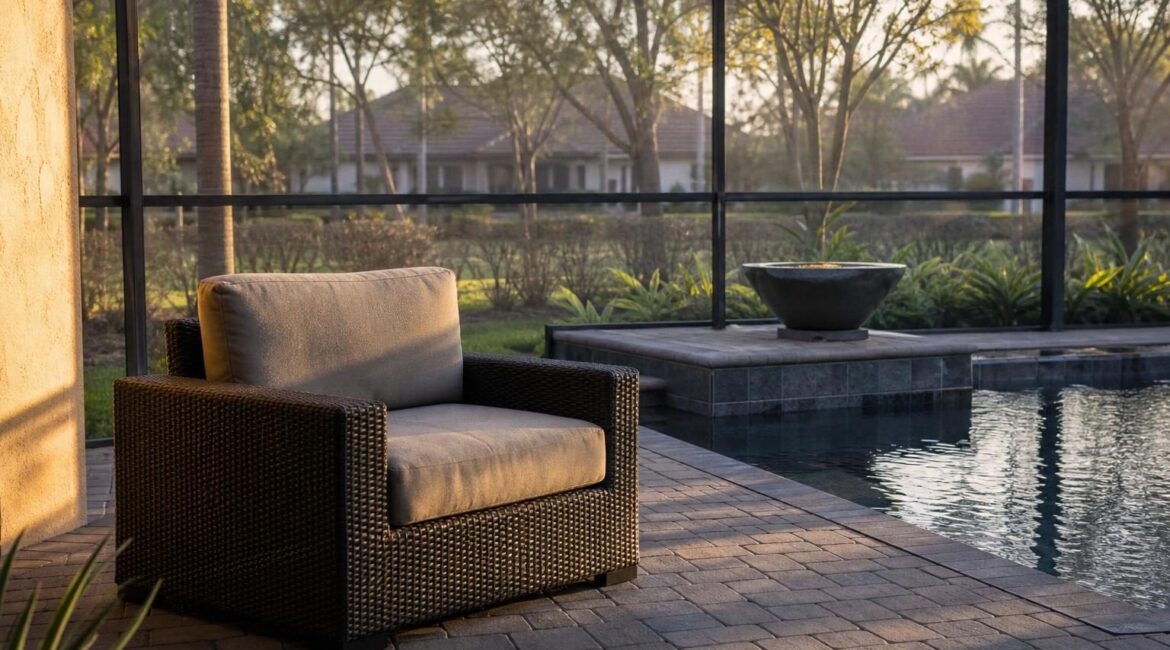
A club chair is built low and deep. The seat sits closer to the ground, the cushions are thick, and the back is usually wide enough to lean into sideways as easily as straight on. It is designed for lounging rather than perching, closer in spirit to an indoor lounge chair than a dining companion piece. You settle into a club chair; you do not sit up straight in it for long.
In outdoor collections, club chairs typically pair with a matching ottoman and sit at the center of a deep-seating conversation group, often alongside a sectional or sofa.
What Makes a Chair an Armchair
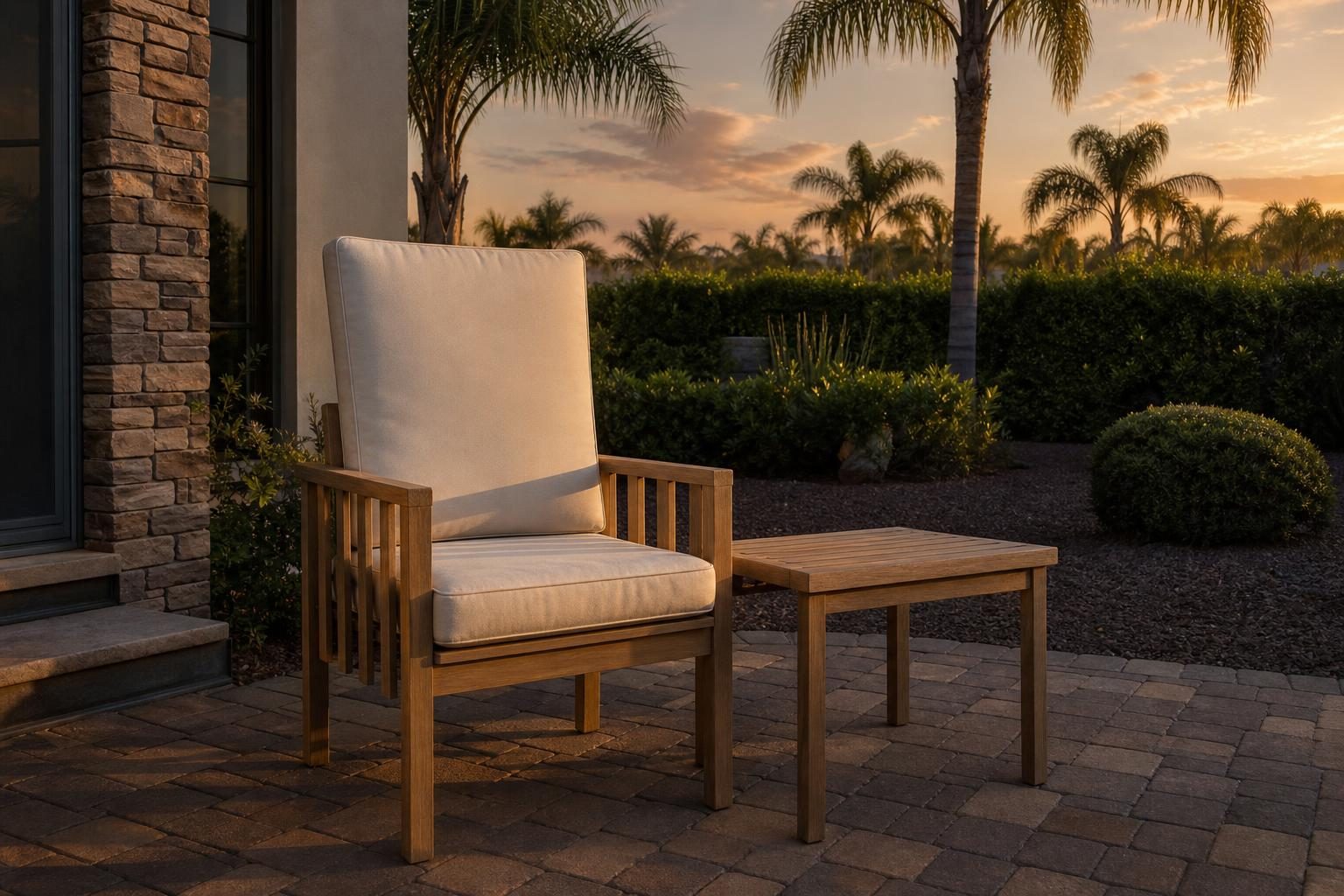
An armchair, in the strict sense, is simply any chair with arms. That is a broad category, but in patio furniture the term usually points to an upright piece with a narrower seat and a higher back than a club chair, sized closer to a dining or accent chair. It works well beside a side table, at a smaller footprint than a club chair, and it suits shorter visits rather than long lounging sessions.
Because “armchair” technically covers almost any chair with armrests, including some club chairs, the confusion between the two terms is understandable. The practical distinction that matters when you are furnishing a patio is depth and posture, not the name on the tag.
How to Tell the Two Apart When You’re Shopping
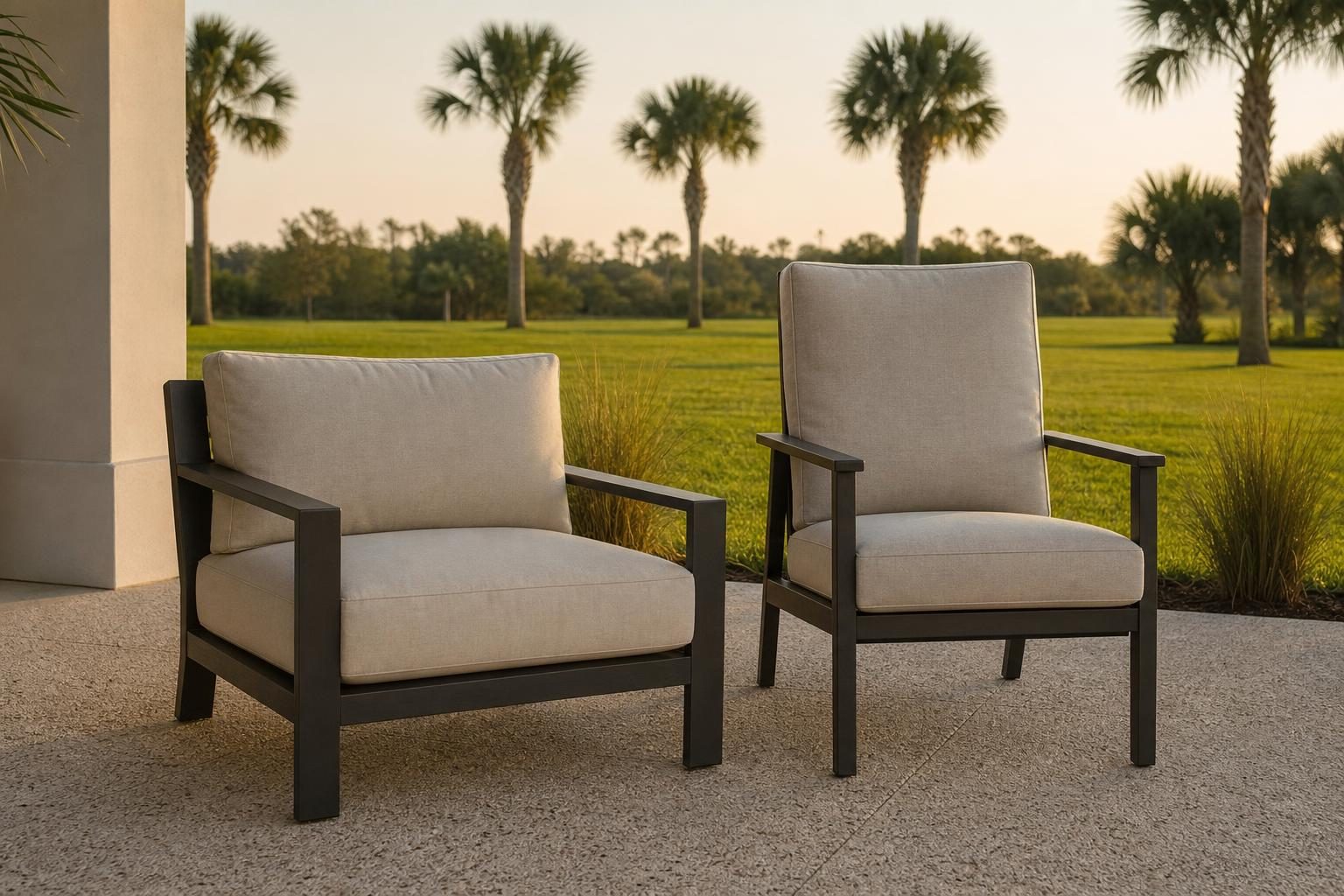
Look at three things: seat depth, seat height, and back width. A club chair will have a seat depth deep enough that your legs do not reach the floor at a right angle unless you sit forward. An armchair’s seat depth is closer to a standard dining chair, letting your feet plant flat with your knees bent normally. Back width tells you the rest: club chairs are built wide enough to curl into, while armchairs are built for an upright posture.
If you are furnishing a lounging area meant for long afternoons, favor club chairs. If you need extra seating around a smaller table or a spot for quick conversation near an entry, an armchair is the better fit.
For more on how deep-seating and accent pieces fit into a full patio layout, see our patio furniture guide. General background on chair terminology is covered in this overview of club chairs.
Palm Casual has sold patio furniture factory-direct out of Orlando for more than 40 years, and our showroom teams are used to walking customers through exactly this kind of naming confusion. If a listing calls something a club chair and it does not match what you pictured, ask to sit in it before you decide either way.
Reading Product Listings Correctly
Online furniture listings are not consistent about these terms, and that inconsistency is exactly why the confusion persists. A retailer might call a deep-seated lounge chair a “club chair” in one collection and an “accent armchair” in another collection from the same manufacturer, simply because of how a specific line was branded. Rather than trusting the product name alone, look at the listed seat depth in inches. A seat depth of roughly 22 inches or more, measured from the front edge of the cushion to the back, usually signals a true club chair built for lounging. A seat depth closer to 18 to 20 inches usually signals a more upright armchair or accent chair, closer to a dining companion piece.
Photos can mislead too, since a wide-angle product photo can make a narrower armchair look deeper than it is, or make a genuinely deep club chair look more compact when it is styled with thin cushions. When in doubt, cross-reference the listed dimensions against a chair you already own or have sat in, so you have a real-world comparison point rather than relying on the photo alone.
How the Two Styles Work Together in One Layout
Many patios do not need to choose exclusively between club chairs and armchairs; they benefit from both in the same space, used for different purposes. A pair of club chairs anchoring a deep-seating group works well for the primary lounging area, while a couple of armchairs positioned near a side table or a smaller conversation nook can absorb overflow seating for guests without crowding the main group. This mixed approach also gives a patio some visual variation instead of every seat looking identical, which can otherwise feel flat in a larger outdoor room.
If you are furnishing in phases, starting with the club chairs for the main lounging area and adding armchairs later for secondary seating is a common, practical approach that lets the core layout settle in before you commit to the smaller pieces around it.
Frame and Cushion Construction Differences
Beyond seat depth, club chairs and armchairs are often built on different frame proportions to support their different postures. A club chair’s frame typically has a lower, wider seat rail to support the deeper cushion without sagging in the middle, while an armchair’s frame is generally taller and narrower, closer to a dining chair’s proportions. This is part of why a club chair rarely comes without at least a moderate cushion, while some armchair styles are available with thinner cushions or even sling-style seats, since the upright frame does more of the structural work on its own.
How Each Style Pairs With Cushion Thickness
Cushion thickness tends to track with which style you are looking at, and it is a useful secondary clue alongside seat depth. Club chairs are rarely paired with thin cushions, since the deep, low frame is specifically built to support a substantial cushion that fills out the lounging posture. Armchairs are more flexible, appearing with anything from a thin accent cushion to a moderately thick seat pad, since the upright frame does not depend on cushion volume the same way. If you see a deep-looking chair paired with an unusually thin cushion, look closely at the frame proportions rather than assuming the cushion alone tells you which category it belongs to.
Frequently Asked Questions
Is a club chair the same as an armchair?
Not exactly. All club chairs typically have arms, so they could be called armchairs, but not all armchairs are club chairs. The real difference is seat depth, seat height, and back width, which determine whether the chair is built for lounging or upright sitting.
Which style is better for a small patio?
An armchair generally has a smaller footprint and suits tighter spaces or a spot beside a table better than a deep club chair.
Do club chairs come with matching ottomans?
Often, yes, especially in deep-seating collections designed around a conversation set. An ottoman is optional but common with club chairs specifically.
Can an armchair be part of a deep-seating set too?
Yes, some collections use armchairs alongside a sofa or sectional for shoppers who want a slightly more upright seat mixed into an otherwise deep-seating group.
Get Started at a Palm Casual Showroom
Sit in both styles before you decide which one fits how you actually relax outdoors. Call (407) 299-9188 or learn more about how we build and sell factory-direct on our factory page.
Explore Palm Casual
Factory-direct pricing with a risk-free 30-day trial. Visit a showroom or call (407) 299-9188.
Explore Our Buying Guides
Looking for expert advice? Read our Complete Guide to Patio Furniture in Florida or Ultimate Guide to Outdoor Furniture in Florida for tips on materials, maintenance, and choosing the right set for your space.
