


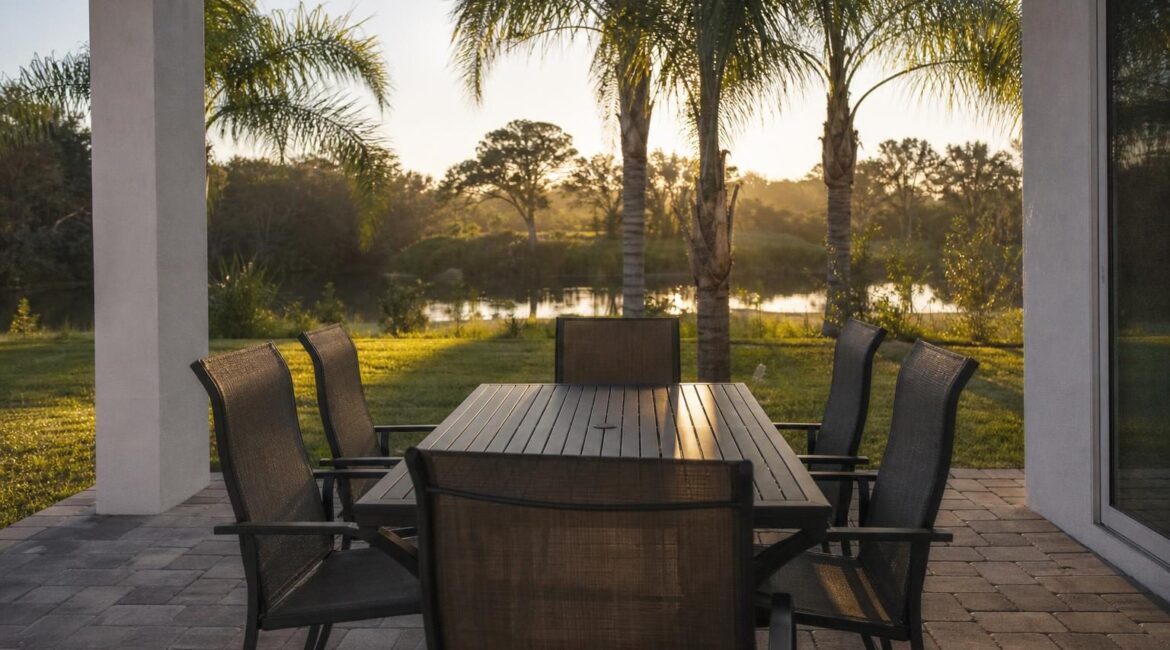
Which way your patio faces changes the day-to-day experience of sitting on it more than almost any other factor. The same dining set can be a pleasure at breakfast on one patio and too hot to touch by late afternoon on another, and that is why east facing vs west facing patio furniture decisions deserve a little planning before you buy.
Direction affects when you use the space, how hot the surfaces get, how fast dew and rain dry, and how quickly fabrics and finishes take on sun. Reading your patio’s light first makes every later choice easier.
East-Facing vs West-Facing Patio Furniture: How Direction Changes Your Space
Start by watching your patio for one full day. Note when direct sun arrives, when it leaves and when the space feels comfortable enough to sit. Those hours tell you more than any catalog description.

An east-facing patio catches the sun early. Morning light is bright but gentler, and by early afternoon the house usually casts shade over the seating area. That makes it a natural spot for breakfast, coffee and evening gatherings, since the space cools off just when most people want to be outside.
A west-facing patio works the other way. It may feel pleasant in the morning, then take the full force of the afternoon sun during the hottest part of the day. In Florida, that late sun can be intense from spring through early fall, and it tends to arrive right around cocktail hour and dinner. Surfaces that soaked up hours of sun stay warm long after the light has moved on.
Season matters too. In summer the sun rides high in the sky, so overhang or a roofline can shade more of a patio. In winter it travels lower across the southern sky and reaches deeper under covered areas. If you want a sense of how that path shifts through the year, this overview of the sun’s path across the sky explains the basics. A patio that faces south can behave like a mix of both, with strong light much of the day and the sharpest angles in winter.
Choosing Furniture for East-Facing Patios
East-facing patios are gentler on furniture in one way and tougher in another. The direct sun is milder, but morning is also when Florida humidity, dew and overnight moisture are at their highest.
What tends to matter most on an east-facing patio:
- Drying: surfaces stay damp longer in shade, so seats and slats that drain water and dry quickly are worth looking for. Ask a showroom team member how the specific pieces you like handle drainage.
- Mildew resistance: shaded, humid corners can encourage mildew on cushions that never fully dry. Wiping down and airing out cushions helps, and open seat constructions give moisture a way to escape.
- Morning comfort: if you will sit early, check whether metal frames feel cool and whether seats are comfortable before the day warms up.
- Lighter overall exposure: because the harshest sun is short, you have more freedom with fabric and finish color, including deeper tones that would suffer more on a brighter patio.
An umbrella is still useful on an east-facing patio, mainly for the early hours when the low sun shines straight into your eyes. Angle matters more than size here, so choose a spot where you can tilt or shift the shade as the sun climbs.
If you are also deciding on frame materials, our patio furniture guide is a helpful place to weigh how common frame materials hold up in your conditions.
Choosing Furniture for West-Facing Patios
A west-facing patio asks more of your furniture. The heat, glare and ultraviolet exposure are concentrated into the afternoon, and everything on the patio receives that dose day after day.
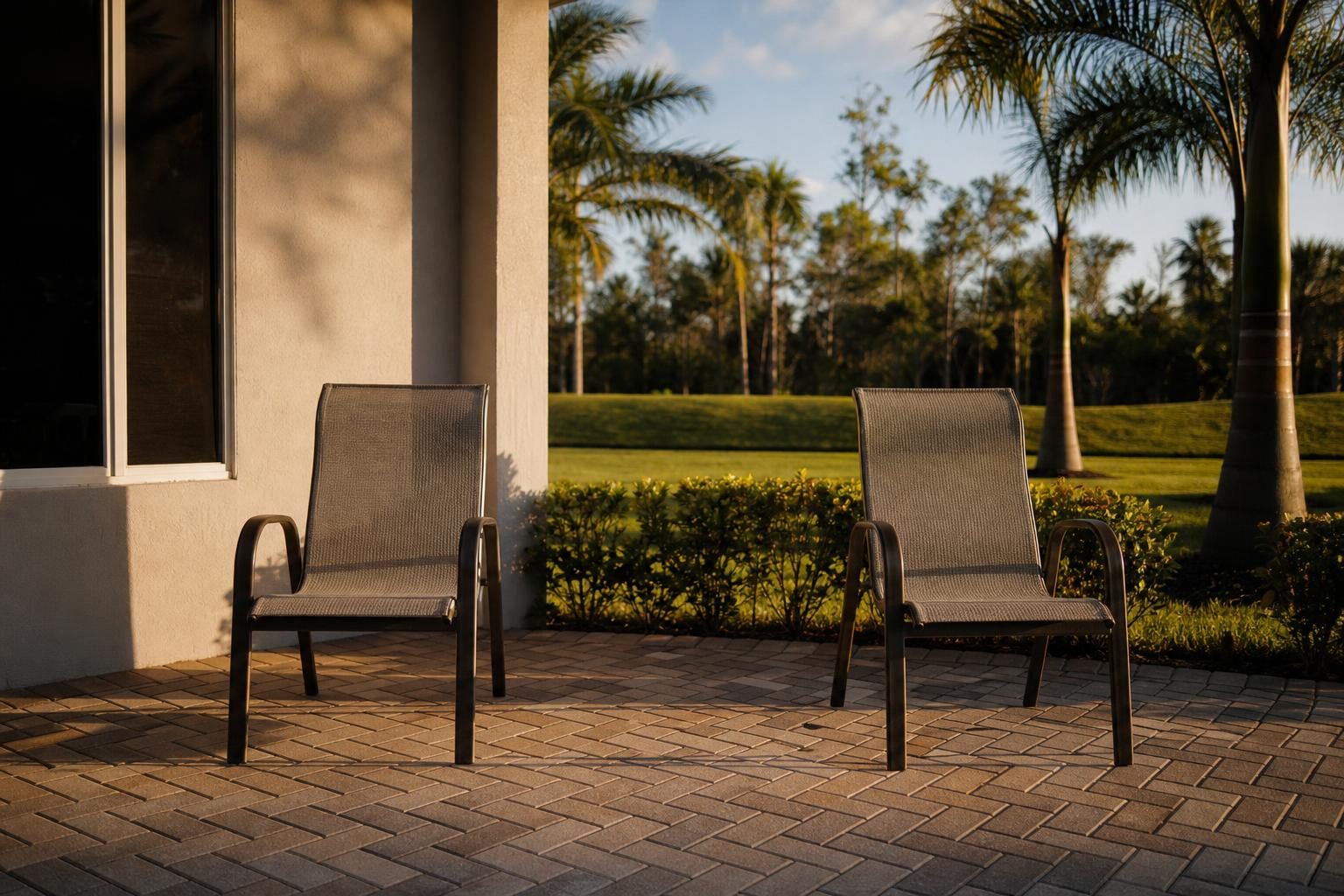
Here is what to think about before you commit to a set:
- Surface temperature: metal frames and dark finishes can become very warm in direct afternoon sun. Lighter finishes generally absorb less heat than darker ones, and it is worth touching a sample in real light rather than under showroom lamps.
- Fabric fade: strong, prolonged sun is what fades color. Performance fabrics such as Sunbrella are made for outdoor exposure, and solid, lighter or mid-tone colors often show less visible change over the years than very dark ones. Ask what the specific cushion fabric on your chosen set is made of.
- Glare: a glass tabletop or a light, shiny finish can reflect sun straight at your eyes. A matte or textured surface is usually easier to live with on a west-facing patio.
- Shade you can move: a large market umbrella gives you shade exactly where and when the sun hits, and it can be tilted or repositioned as the light drops. Position seating so the umbrella covers where people actually sit, not just the table.
- Plastic and resin exposure: ultraviolet light is what breaks down many materials over time, so ask about the material’s outdoor performance rather than assuming every finish reacts the same way. For background, the ultraviolet radiation overview explains why sunlight is so hard on surfaces.
Covered and screened lanais add another layer. A screen filters some sunlight and a roof blocks the high summer sun, but low late-day light can still slip in from the side on a west-facing lanai. Test the space at the hour you plan to use it instead of assuming the cover solves everything, and remember that a screened room can hold humidity, so airflow and quick-drying seats still count.
Layout helps as much as materials. Place the most-used seats where the building or an umbrella shades them first, and keep sun-facing spots for pieces that tolerate exposure. Leave a little room around each seat so hot surfaces are not pressed against legs or arms.
A Simple Way to Plan Around Your Own Sun
You do not need to guess. A quick check on a few different days will show you how your patio behaves, and then you can shop with real information.
- Take photos at three times: mid-morning, mid-afternoon and early evening. Bring them to the showroom so a team member can see the light your furniture will face.
- Touch test: on a sunny afternoon, place your hand on a chair or table already outside. If it is uncomfortably warm to the touch, that surface will be too warm for bare legs.
- Note the shade line: mark where shade falls at 2 p.m. and 5 p.m. That line shows where seating belongs and where an umbrella earns its place.
- Think about use: if the family gathers at dinnertime, the hours after 4 p.m. matter most. If breakfast is the main event, morning conditions rule.
Once you know the pattern, the choice gets simple. An east-facing patio usually leans toward moisture-friendly, quick-drying seating you will enjoy through the morning. A west-facing patio usually leans toward lighter finishes, sun-tolerant fabrics and a good umbrella. Either way, describing your patio to a team member gives them the information they need to point you to the right pieces, and it makes east facing vs west facing patio furniture a much clearer decision. Our guide to positioning a market umbrella for Florida afternoon sun is a helpful place to start before you visit.
Frequently Asked Questions
Which patio direction is best for outdoor furniture?
East-facing patios are generally easier on furniture because the strongest sun arrives when the house shades the space. West-facing patios can work well too when you choose lighter finishes, sun-tolerant fabrics and good shade.
Will my patio furniture fade faster on a west-facing patio?
Prolonged direct afternoon sun is what drives fading, so a west-facing patio typically exposes fabrics and finishes to more of it. Choosing performance fabrics and moving shade with the sun can help slow the change.
Do I still need an umbrella on an east-facing patio?
Often yes, because low morning sun can shine straight into your eyes at breakfast. A tilting umbrella lets you block the angle without covering the whole seating area.
What if my patio faces north or south?
A north-facing patio usually gets the least direct sun, so drying and mildew are the main concerns. A south-facing patio often gets strong light through much of the day, so it benefits from many of the same choices as a west-facing one.
Get Started at a Palm Casual Showroom
Bring photos of your patio and a note about when you use it most, and a team member can help you compare options in person. Call (407) 299-9188 to talk with a showroom, or read more about how we work on our factory page.
Explore Palm Casual
Factory-direct pricing with a risk-free 30-day trial. Visit a showroom or call (407) 299-9188.
Explore Our Buying Guides
Looking for expert advice? Read our Complete Guide to Patio Furniture in Florida or Ultimate Guide to Outdoor Furniture in Florida for tips on materials, maintenance, and choosing the right set for your space.
