


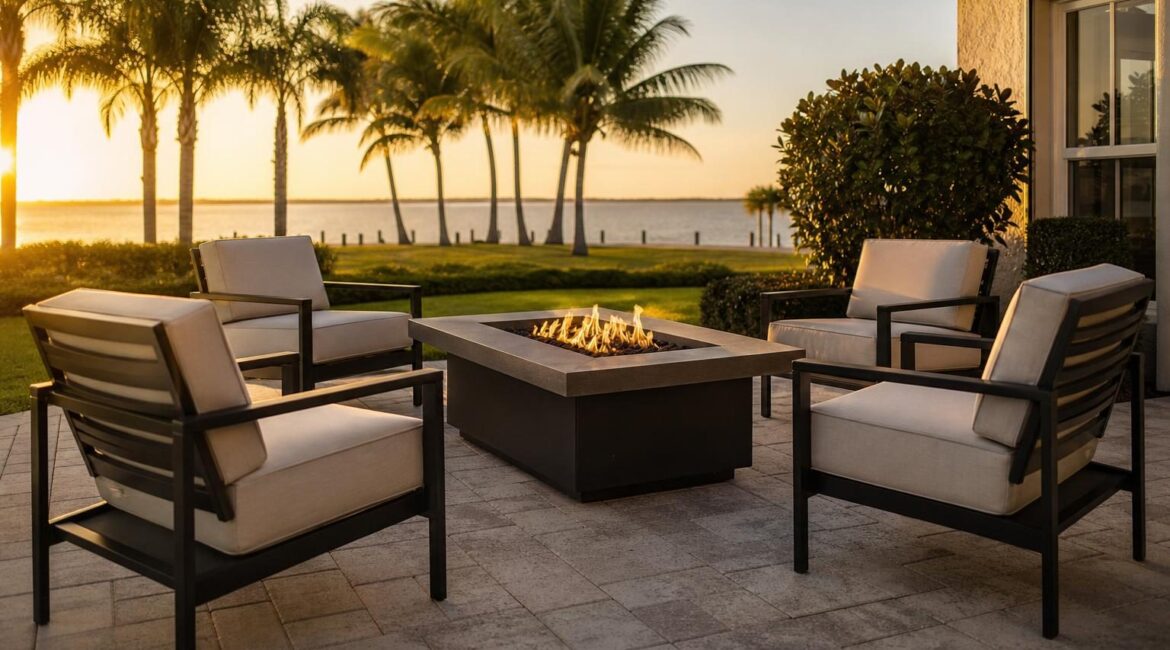
A fire table only feels right when the heat lands where guests are actually sitting. Buy one sized for a small balcony and a big backyard crowd shivers a few feet out. Buy one built for a large patio and a small huddle around a bistro table gets uncomfortably warm. Fire table heat output, measured in BTUs, is the number that decides comfortable seating distance — and it is the spec most shoppers skip past on their way to finish and fuel type.
What BTU Output Actually Tells You
British Thermal Units (BTUs) measure how much heat a burner produces per hour. Compact fire tables built for two or three chairs typically run in the 30,000 to 40,000 BTU range. Larger conversation-set fire tables, built to seat six or more around the perimeter, often run 50,000 to 65,000 BTUs. A higher number is not automatically better — it just means the table is designed to project usable warmth over a wider seating radius.
The practical test is simpler than the spec sheet: stand where a chair will go, and ask whether that spot should feel like near a fire or next to a fire. A table with too few BTUs for its footprint leaves the outer seats cold on a cool Florida evening; one with too many for a tight lanai can push guests back off their cushions. Palm Casual’s patio furniture guide breaks down sizing by seating count if you’re starting from the number of chairs rather than the BTU rating.
Matching Heat Output to Seating Distance
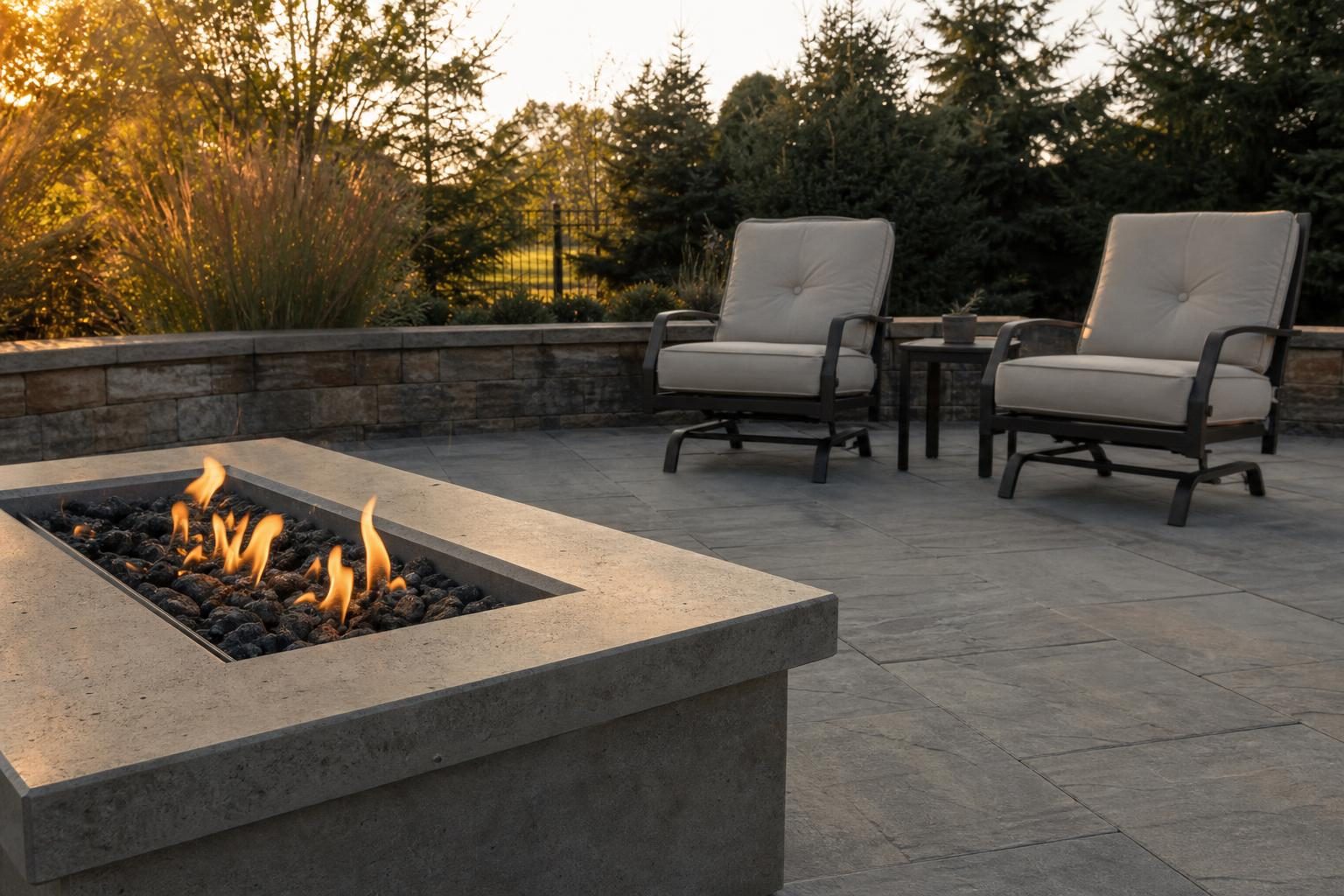
As a rough guide, most manufacturers design comfortable radiant warmth to reach 3 to 5 feet from the flame area at moderate output, tapering off past that. That means chair placement matters as much as the BTU number itself:
- Tight courtyards or balconies: a lower-BTU table with seating pulled to 2–3 feet keeps warmth close without crowding the flame.
- Standard lanai conversation sets: mid-range BTU tables pair well with chairs set 3–4 feet from the table edge, which also keeps the seating out of direct wind gusts that can pull flame sideways.
- Open pool decks or large patios: higher-BTU round or rectangular tables need a full seating ring, since open air disperses heat faster than a covered lanai.
Florida’s evening breezes matter here more than in a calmer climate. A screened lanai holds heat close to the table; an open deck near the water lets it drift, so seating may need to sit slightly closer than the table’s rated radius suggests.
Safety Distance Isn’t Just About Comfort
Manufacturers also publish a minimum clearance — typically 24 to 36 inches from the flame to any combustible material, including cushions, umbrellas, and railings, not just seated guests. That clearance exists independently of how warm a chair feels; it is a safety spec, not a comfort one. The National Fire Protection Association’s guidance on portable outdoor appliances is a useful baseline reference when planning clearance around any open-flame patio feature (nfpa.org).
Check that clearance against your actual furniture layout before buying, not after. A sectional pulled in close for conversation can sit inside the minimum clearance even when the chairs “look” far enough away, especially with a fire table sized for a bigger space than the one it’s going into.
Fuel Type Also Affects Practical Placement
Propane fire tables run off a refillable tank, usually hidden inside the table’s base, which makes them fully portable — useful if you rent, move seasonally between a primary home and a Florida property, or simply want the option to reposition the table for a party layout. The tradeoff is remembering to check and swap the tank, and a slightly bulkier base to conceal it.
Natural gas fire tables connect to a fixed line, which means unlimited run time without tank changes, but the table’s location is effectively permanent once installed, and running a gas line typically requires a licensed professional. For a Florida lanai or pool deck that’s part of a long-term outdoor living plan, natural gas is often worth the upfront installation; for a table that might move with you, propane keeps things flexible.
Either fuel type produces comparable heat output for a given BTU rating, so the fuel choice is really about installation and mobility, not warmth. Factor it in alongside seating distance when deciding on a fire table, since a permanent natural gas line locks in your layout in a way a propane table doesn’t. A standard 20-pound propane tank, the same size used for a gas grill, typically powers a mid-range fire table for roughly 8 to 10 hours of continuous use at moderate flame height, though a table running at its highest BTU output will draw through that tank noticeably faster. Many propane fire tables include a small viewing window or gauge on the tank compartment so you can check remaining fuel without opening the access panel, which is worth checking for if you host often and don’t want a table to run dry mid-gathering. Natural gas installation typically requires a permitted line run from the home’s existing gas supply, and depending on local code, that may mean a licensed plumber rather than a general contractor, so it’s worth budgeting installation time and cost into the decision well before the table itself arrives. Some homeowners planning a full outdoor kitchen or a permanent lanai upgrade choose natural gas specifically because they’re already running a gas line for a grill or cooktop nearby, which makes extending that line to a fire table a comparatively small additional step rather than a standalone project.
Table Material Affects Perceived Heat Too
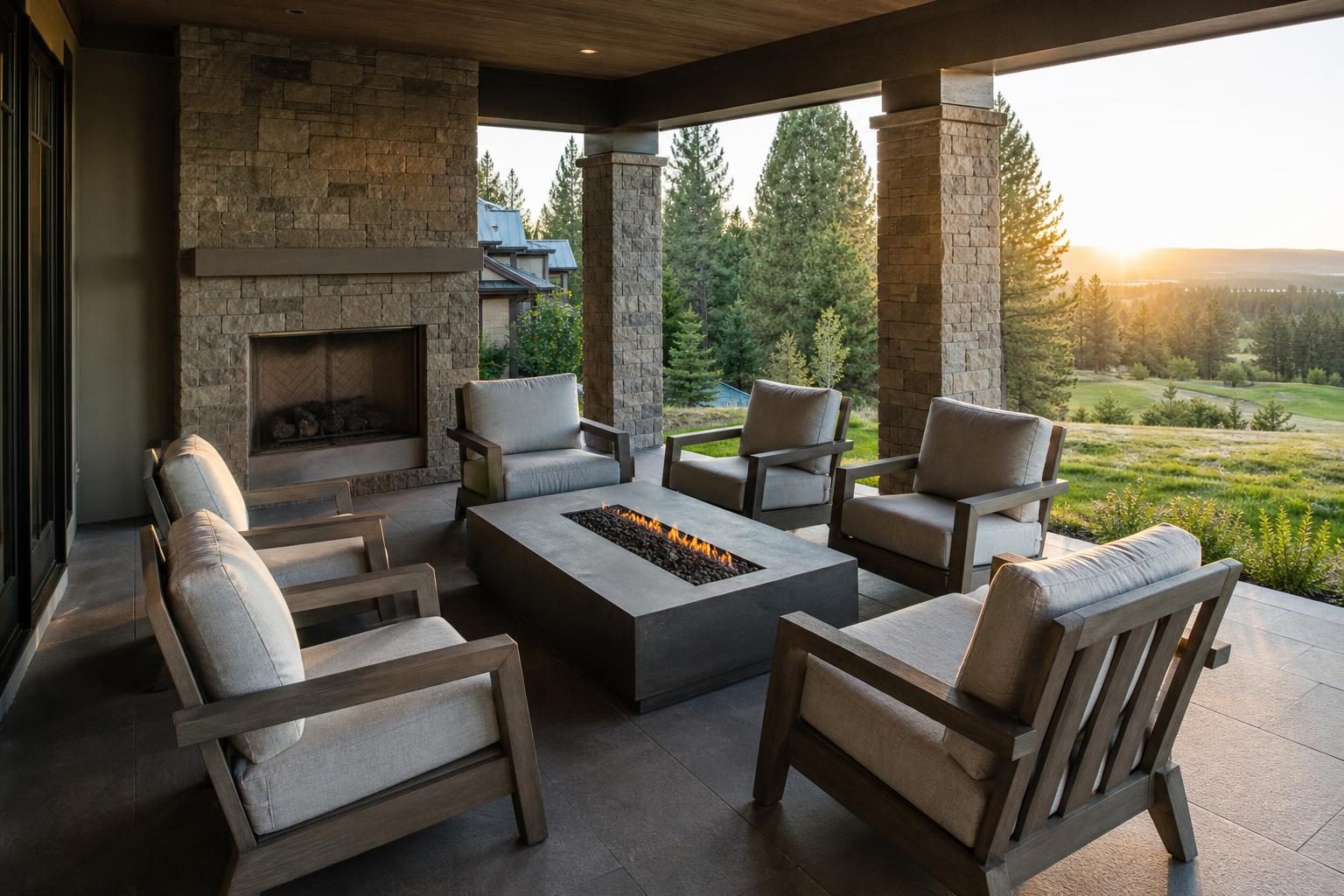
The material surrounding the burner changes how heat feels even at the same BTU rating. Stone-look concrete and ceramic-tile tabletops absorb and slowly radiate some heat themselves, which can make the seating area feel a touch warmer than the burner output alone would suggest, especially once the table has been running for a while. Metal-frame tables with a glass wind guard around the flame concentrate visible warmth more directly at the flame itself, with less ambient radiating from the table surface.
Neither approach is better outright, but it’s another variable worth factoring in alongside BTU output and seating distance, particularly if you’ve compared two tables with similar BTU ratings and found one feels noticeably warmer in person. Testing tables running in a showroom, rather than relying on spec sheets alone, is the most reliable way to judge how a specific table’s construction affects the heat you’ll actually feel from your seat.
Frequently Asked Questions
How many BTUs does a fire table need for four chairs?
Most four-chair conversation setups are comfortable with a table in the 40,000 to 50,000 BTU range, assuming chairs sit roughly 3 to 4 feet from the flame area.
Does wind change how close seating should be?
Yes. Open decks and waterfront patios disperse heat faster, so seating may need to sit slightly closer to stay warm, while still respecting the manufacturer’s minimum safety clearance.
Is a higher BTU rating always more comfortable?
Not for a small space. A high-BTU table on a tight balcony can push guests back off the flame’s radius entirely, which defeats the point of a fire table in the first place.
Where can I see fire table sizing in person?
Our showrooms display multiple fire table sizes with seating already arranged, which makes the heat-and-distance relationship much easier to judge than reading a spec sheet alone.
See Fire Tables Sized for Your Space
Our team can walk you through BTU output and seating distance for the exact footprint you’re working with, whether that’s a covered lanai or an open pool deck. Call (407) 299-9188 or visit our factory-direct showroom to see fire tables and seating paired together in person.
Explore Palm Casual
Factory-direct pricing with a risk-free 30-day trial. Visit a showroom or call (407) 299-9188.
Explore Our Buying Guides
Looking for expert advice? Read our Complete Guide to Patio Furniture in Florida or Ultimate Guide to Outdoor Furniture in Florida for tips on materials, maintenance, and choosing the right set for your space.
