


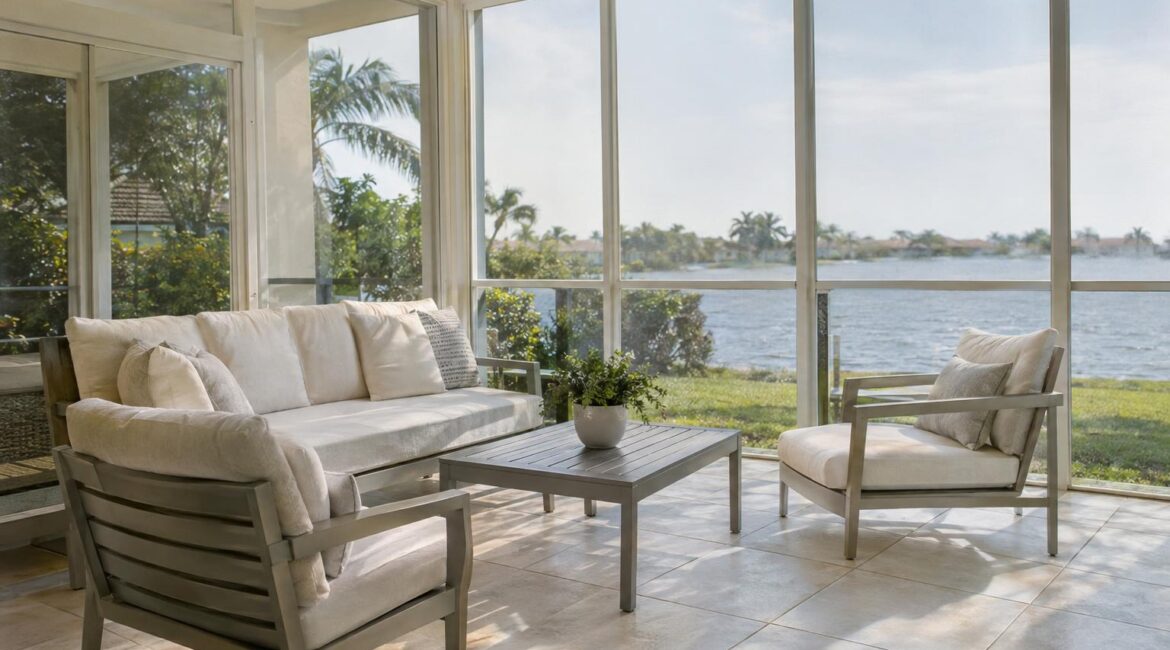
A glass-enclosed sunroom looks like the easiest room in the house to furnish, because it sits halfway between the living room and the patio. In practice it is neither. The decision that matters is which pieces can handle a space with no rain but plenty of sun through glass, heat that builds up, and humid air that has little breeze to move it. This page walks through how to choose Florida sunroom furniture by frame, cushion fabric, layout and daily habits, so you can walk into a showroom with a clear list.
How a Florida Sunroom Differs From a Patio
On an open patio, wind carries heat and moisture away, and rain periodically rinses everything off. A sunroom removes both. Nothing washes the furniture, and the air can sit still for hours. Sunlight also arrives through glass instead of open sky, which means it falls on the same spot of floor and the same cushion for much of the day.
Sun through glass
Glass does not make sunlight disappear. A chair near a west-facing window can spend every afternoon in a bright, warm patch, and the side of a cushion facing the glass will see far more light than the side facing the room. Plan on that exposure being steady rather than occasional.
Heat that stays
Enclosed rooms hold warmth after the sun moves on. Surfaces that feel fine in the morning can be noticeably hot to the touch by mid-afternoon, so material and color choices matter for comfort as well as appearance.
Moist air with nowhere to go
Florida air carries a lot of moisture, and a closed room with little airflow lets it settle into cushions and onto frames. The EPA’s guide to mold, moisture and your home puts it simply: the key to mold control is moisture control. That idea shapes several choices below.
Frame Materials and What “Indoor-Outdoor” Really Means
Sunroom pieces are usually sold as outdoor furniture because a sunroom is closer to outdoors than to a living room. That label tells you the piece was built to handle sun and moisture, but each material behaves a little differently once you place it behind glass.
- Aluminum and cast aluminum: a common choice for humid rooms. Ask a showroom how a specific finish is meant to be cared for, and have any chip looked at promptly. Lighter finishes tend to feel cooler to the touch than dark ones.
- Teak: a dense hardwood that handles moisture well and tends to settle into a silver-gray tone when left natural. Ask the showroom about care if you prefer to keep the warmer tone.
- Wicker (all-weather resin): a woven look over a structural frame. It is comfortable in a sunroom, but the weave can collect dust because rain never rinses it.
- Poly lumber: a molded material. It suits a casual look and is easy to wipe.
- PVC: a lightweight option often used for a cottage style. Ask how a particular finish is meant to be cleaned.
Color and surface comfort
In a room that traps heat, a light frame is often more pleasant to sit against than a very dark one. Our article on why powder-coated white patio sets stay cooler explains why light finishes are easier on bare arms and legs. Dark finishes can look sharp indoors, but touch one in the showroom after it has been under a bright light.
Cushion Fabric Behind Glass
Cushions take the most punishment in a sunroom, because they face the glass and also hold humidity. Two fabric families are common: solution-dyed acrylic such as Sunbrella, and PVC-coated sling mesh used in sling seats.
Solution-dyed acrylic
Sunbrella fabric is made from yarn that is colored all the way through, which is why it is a standard choice for outdoor cushions. No fabric is immune to constant sun, so rotate and flip cushions on a regular schedule to spread the exposure.
Sling seating
Sling seats generally use less cushioning that can hold moisture, which is useful when air does not move much. They can feel warm if the material is dark and sits in direct light, so sit on a sling in the showroom and consider a lighter color for a window spot.
Cushion care habits
Brush off dust, wipe up spills quickly, and let cushions dry fully if they get damp. Read the care label for your particular fabric before you clean anything.
Layout, Distance From Glass, and Traffic
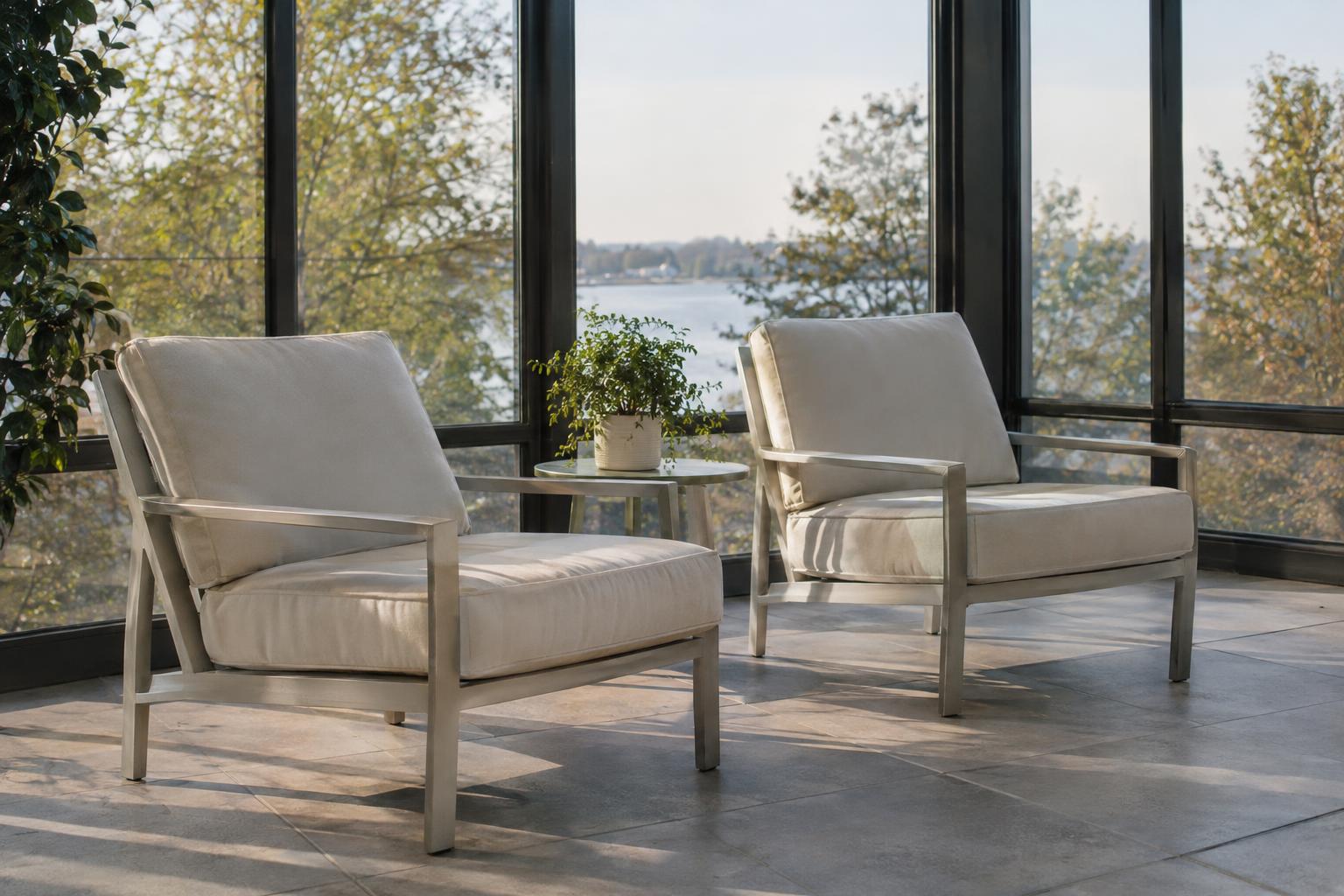
Where you place furniture in the room is a free way to reduce wear. A seating group pulled a little away from the windows sees less direct sun than one pushed against the glass, and it also feels more comfortable in the afternoon.
Create a sun-lit zone and a shaded zone
Put the pieces you want to last longest, such as the main sofa or lounge chairs, out of the strongest light. Use a small table or a pair of lighter chairs near the windows, where a bit of fading would matter least.
Leave air space behind pieces
Pushing a sofa flat against an exterior wall can trap moisture behind it. Leave a gap so air can move behind the back and under the arms.
Think about doors and walkways
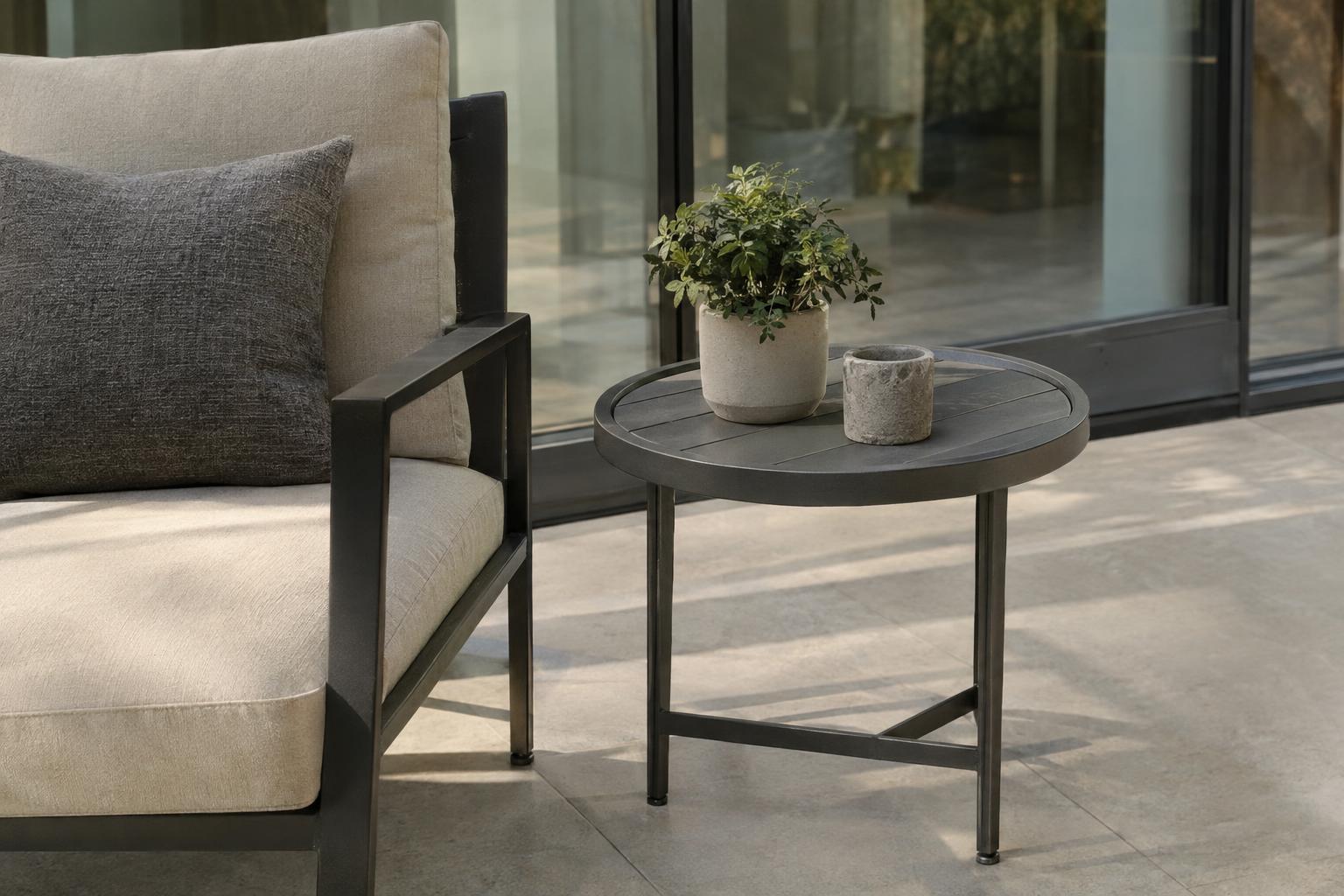
Sunrooms often have a door to the house and another to the yard. Keep a clear route between them so people are not squeezing past chair arms. For a different set of layout choices in an open-air space, see laying out furniture for a Florida screened lanai.
Sunroom or lanai: how the answer changes
A screened lanai has airflow and some exposure to rain, while a sunroom does not. For a space with screens and airflow, see our Florida lanai furniture ideas. The key difference is that a lanai gets rinsed and ventilated, while a sunroom relies on you.
Ventilation and Moisture Habits
The best furniture still depends on the room being managed well. A few habits make a real difference in a closed space.
- Run a ceiling fan or open a window or door when the weather allows, so the air changes occasionally.
- Wipe condensation from windows and sills so it does not drip onto cushions or frames.
- After a rainy week, check the undersides of cushions and the floor beneath furniture.
- Lift and air out cushions now and then rather than leaving them in one position for months.
Frames benefit from the same routine: wipe them with a damp cloth, then dry them. If anything on a frame is chipped or worn, Palm Casual offers in-house repair services and replacement-parts availability, so bring the question to a showroom.
Showroom Checklist and the Monterey Sunroom Set
Palm Casual’s Monterey aluminum collection includes a set named Monterey Sunroom. Ask a showroom team member about it if you want to see how an aluminum frame and cushioned seating look together in person. Ask a showroom team member which fabric options are available to view. Palm Casual has been building and selling outdoor furniture since 1979 and sells factory direct.
Your checklist
- Which direction do your windows face, and where does the afternoon sun land?
- Do you want a light or dark frame, and have you touched both?
- Have you sat on the cushion or sling you are considering?
- Is there room to leave air space behind each piece?
- Can you open a door or run a fan for airflow?
- Do you know who will rotate and wipe down cushions?
Frequently Asked Questions
Can outdoor furniture work as Florida sunroom furniture?
Yes, and many owners prefer it because it is built for sun and moisture. Choose frames and fabrics for a room that holds heat and air, and ask a showroom how a specific set is meant to be cared for.
Which frame material suits a hot, closed sunroom?
Aluminum and cast aluminum are common choices for humid rooms, and lighter finishes tend to be more comfortable to touch. Teak, resin wicker and poly lumber also work, so choose by look, comfort and how much upkeep you want.
Will cushions fade in a sunroom?
Any fabric that sits in strong light will change over time, even behind glass. Rotating cushions and pulling seating a little way from the windows helps spread the exposure.
How do I keep a sunroom from feeling damp?
Move air with a fan or an open door, wipe condensation, and let damp cushions dry fully. The EPA’s moisture guide is a good starting point for the broader habit.
If you are planning a sunroom, visit a Palm Casual showroom and sit on the options in person, or call (407) 299-9188 and our team will help you narrow the choices for your room.
Explore Palm Casual
Factory-direct pricing with a risk-free 30-day trial. Visit a showroom or call (407) 299-9188.
Explore Our Buying Guides
Looking for expert advice? Read our Complete Guide to Patio Furniture in Florida or Ultimate Guide to Outdoor Furniture in Florida for tips on materials, maintenance, and choosing the right set for your space.
