
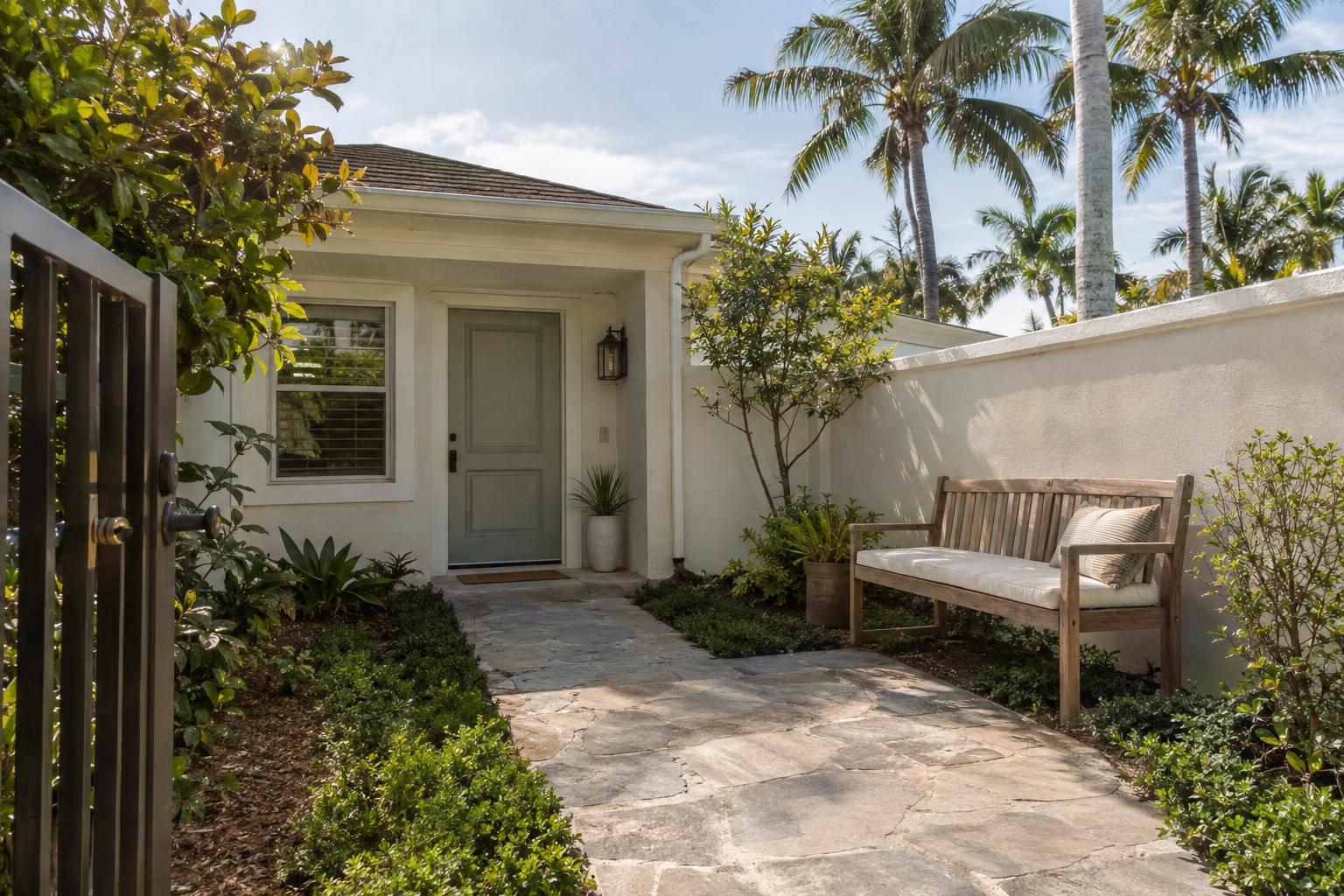
Many Florida homes have a small walled or gated entry courtyard between the street and the front door, and it can look like the ideal spot for a place to sit. It is also a space where a single wrong piece blocks the way in. The decision is what to put there, and the best approach is to choose furniture for a front courtyard around the walk from the gate to the door first, then fit one simple seating idea beside that path.
This is a furniture-only question. You are not redesigning the courtyard, only choosing between a bench, a pair of chairs or a bistro set, and deciding where it can sit without getting in anyone’s way.
Trace the Path Before You Choose Anything
Start with the walk, because it is the one thing in a courtyard that cannot move. Stand at the gate and walk to the front door the way a guest would, then walk it again carrying bags, a tray or an armload of mail. Whatever line you follow is the line that has to stay open.
Mark three things
- The route from the gate to the door, including any wide turn you make around a corner or step.
- The arc of the front door when it opens, since this is the spot people forget.
- Where you stop to find keys or wait for the door to open, because people linger there longer than they walk.
Use painter’s tape or chalk on the ground to outline the route and the door swing. If the door opens outward, the arc lands in the courtyard and takes up real floor space. Our article on patio door swing clearance walks through how to mark an arc and plan around it, and the same method works at a front door.
Leave generous walking room
As a planning rule of thumb, leave a clear strip along the path that is wider than you think you need, and confirm it by walking through with something in your hands. Courtyard walls tend to make a space feel narrower than it measures, so a path that looks comfortable on paper can feel tight with a chair pulled out. Check the actual dimensions of any piece you are considering, and sit in it before you decide.
Choose One Seating Idea, Not Several
A small courtyard rarely has room for a collection. One clear idea reads as intentional from the street, and it leaves the rest of the floor available. Three options tend to work in a space of this size.
A bench against the wall
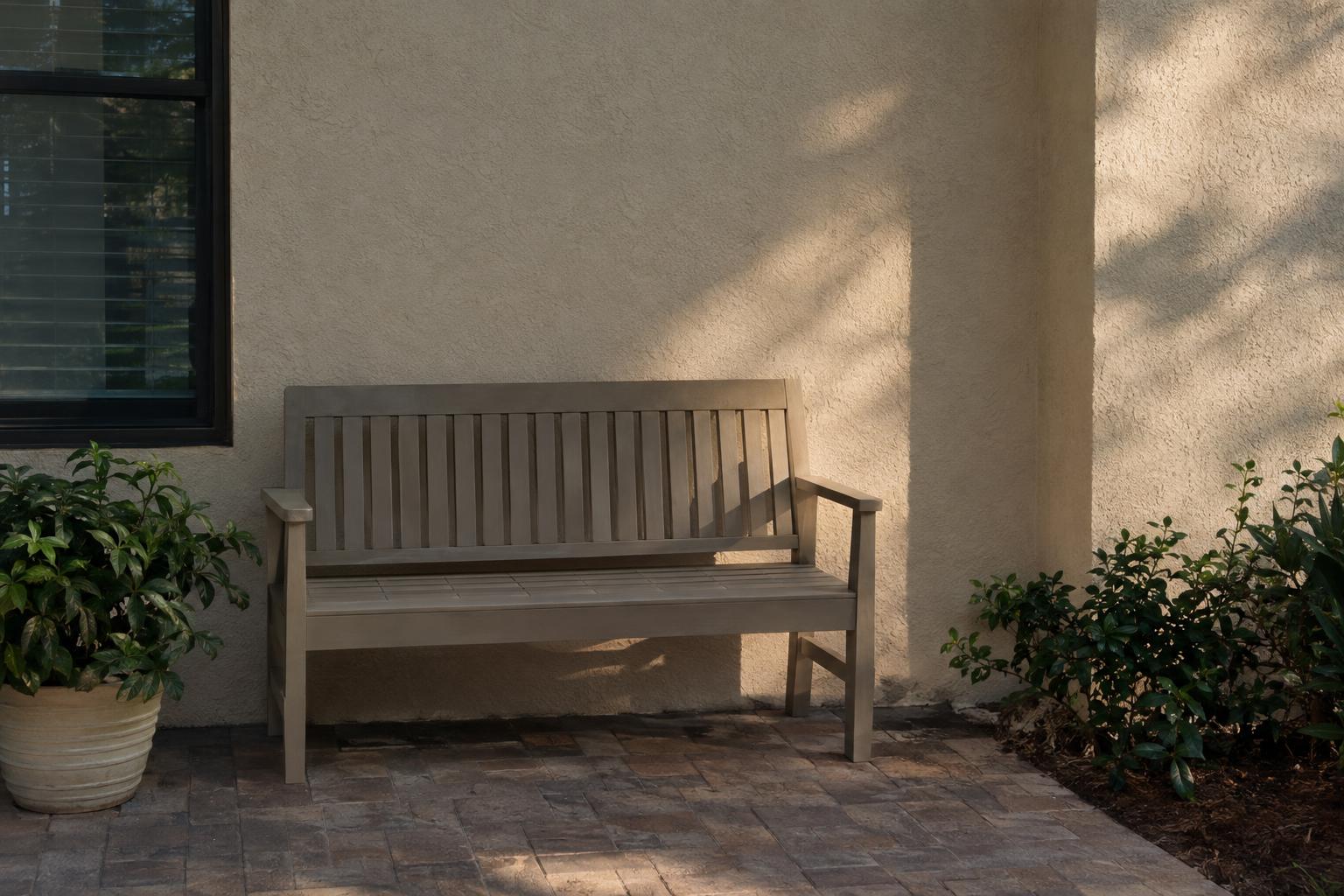
A bench takes the least floor space and keeps the middle open. It suits a courtyard where the main use is a quick place to sit down, wait for someone or take off shoes. It tends to look tidy from the street and from the doorway because it sits flat to a wall and does not ask for much around it. The trade-off is that a bench has no table, so there is nowhere to set a drink.
A pair of chairs with a small table
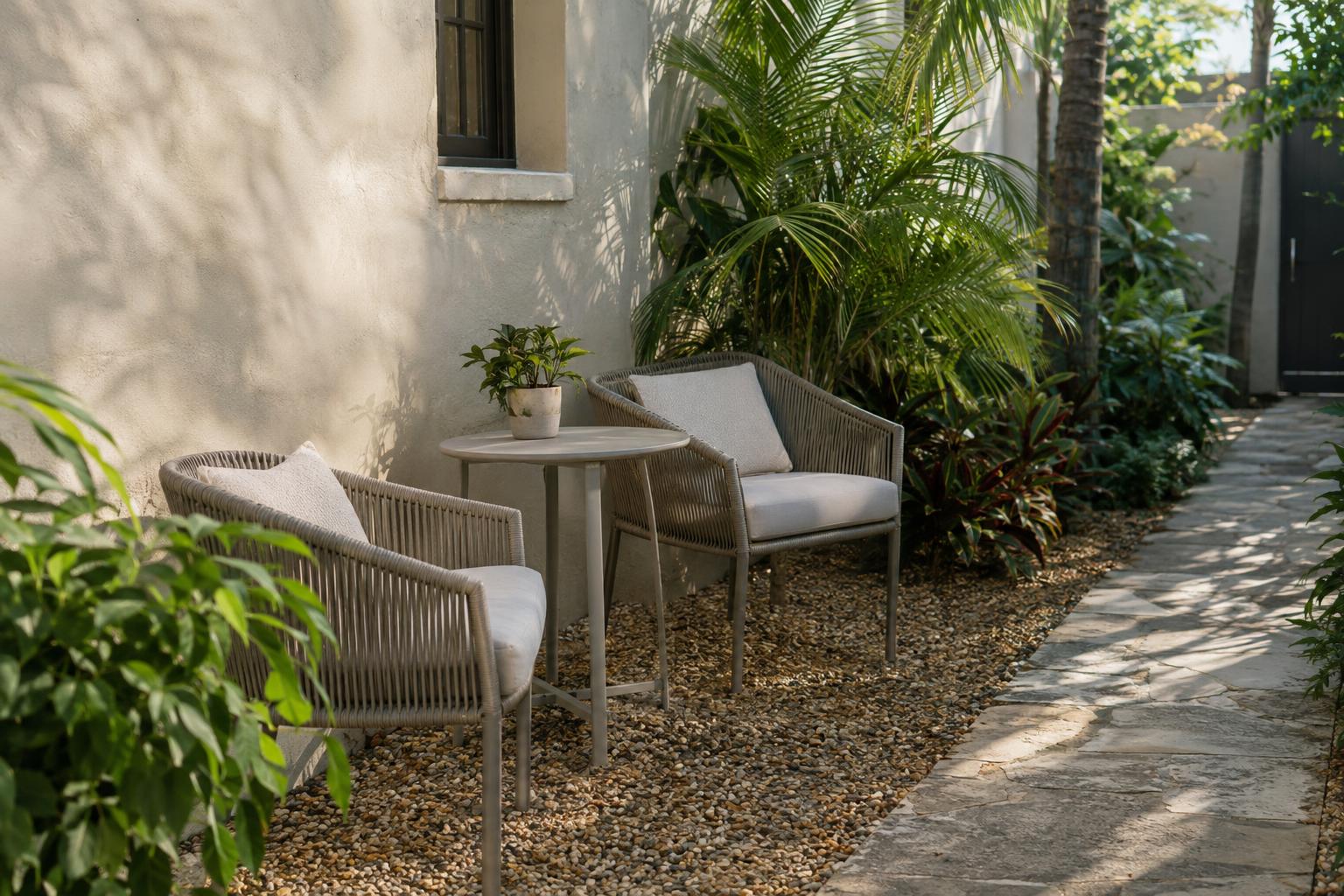
Two chairs angled toward each other with a small table between them make a conversation spot rather than a place to wait. This works best when one side of the courtyard has a stretch of wall or a corner that the path does not touch. Keep the chairs on that side and the walk stays clear. A small round table is easier to move around than a square one, because there are no corners to catch.
A bistro set
A bistro set is the most complete answer because it includes both a table and seats, but it needs more room than a bench or a pair of chairs. When you pull a chair out, it takes up space, and in a courtyard that space often overlaps the walk. If this is the idea you like, read bistro sets for Florida front porches under 6 feet for how the sizing works in a tight entry, then measure your own courtyard against the idea.
Keep Everything to One Side
The simplest rule for a courtyard is also the most useful: pick one side and keep the furniture there. A single side leaves a straight, uninterrupted line from the gate to the door, and it gives visitors a clear view of the door as they arrive. A UF/IFAS Extension guide on outdoor living spaces makes a similar point, advising that you place seating where it will not be in the way of other landscape uses. In a courtyard, the use to protect is walking to the door.
Think about the doorway view
Stand in the doorway and look out. What you see from there is what you see every time you come home. A low bench or a small table and two chairs leaves the view open. A bulky set placed in the middle fills the frame. Pieces with an open back, such as a slatted bench or a chair with a see-through frame, tend to feel lighter than solid pieces of the same size.
Think about the street view
From outside the wall, passers-by see the courtyard through the gate or over the wall. Matching the furniture to the character of the house helps it look like part of the entry rather than an afterthought. If you like the look of wicker, styling wicker patio furniture for a Florida front porch covers how to keep it looking tidy at a front entry.
Match the Material to the Sun and Shade
A courtyard often gets strong sun at one end and shade at the other. That uneven light affects which materials and fabrics will feel right to sit on. A metal frame left in direct sun can feel warm to the touch, and a seat in deep shade can stay damp longer after rain. The same UF/IFAS guide suggests that you will probably want some shade if you spend daytime hours in an outdoor space, so think about where the sun falls at the times you would actually sit.
Questions worth asking at the showroom
- How does this frame feel after sitting in the sun, and how does it look after rain.
- Which of the fabrics are made for outdoor use and how do they dry.
- Whether the pieces are light enough to move if you change the arrangement.
Palm Casual has been selling factory-direct outdoor furniture since 1976, so a showroom visit is a good chance to compare how different materials might suit a spot that gets sun at one end. Ask what is available to view so you can compare frames and fabrics side by side.
Check Scale With a Tape Test
The easiest way to avoid a mistake is to test the footprint before you buy. Ask a Palm Casual showroom for the dimensions of the piece you like, then tape that outline on the courtyard ground. For a chair, add the space needed to pull it out and sit down. For a bistro set, outline the table and mark where each chair would sit when someone is in it.
Walk it three times
- Walk from the gate to the door with empty hands.
- Walk it again carrying something wide, such as a tray or a stack of boxes.
- Open the front door fully and make sure nothing in the taped outline sits inside the arc.
Look at it against the walls
Courtyard walls change how big a piece looks. A set that feels modest in a showroom can feel large when it sits close to a wall. Stand in the doorway and in the gate and see how much of the wall remains visible above and around the taped outline. If the shape dominates, choose something smaller or switch to a bench.
Frequently Asked Questions
What is the best furniture for a front courtyard that is small?
A bench against one wall takes the least room, and a pair of chairs with a small table is the next step up. A bistro set needs the most space. Pick the option that leaves the walk from the gate to the door open.
How much room should I leave for the walkway?
As a planning rule of thumb, leave more than you expect to need, and test it by walking through while carrying something. Check the piece’s actual footprint and remember that a pulled-out chair takes extra space. A showroom visit helps you see real sizes.
Should the furniture go on one side of the courtyard?
Usually, yes. Keeping furniture on one side leaves a straight path and a clear view of the door. If the courtyard is very narrow, a bench against the wall is often the easiest fit.
Can I use the same furniture in sun and shade?
You can, but the two spots can feel different. A frame in direct sun may warm up, and a seat in shade may stay damp longer. Ask your local showroom about materials that suit the light where you plan to sit.
If you would like to see a few seating options side by side, visit a Palm Casual showroom or call (407) 299-9188 to see what is available to view.
Explore Palm Casual
Factory-direct pricing with a risk-free 30-day trial. Visit a showroom or call (407) 299-9188.
Explore Our Buying Guides
Looking for expert advice? Read our Complete Guide to Patio Furniture in Florida or Ultimate Guide to Outdoor Furniture in Florida for tips on materials, maintenance, and choosing the right set for your space.