


The frame of a patio dining table gets most of the attention, but the surface is what you actually live with. Every meal, spill, rain shower and pollen season lands on the top, so the glass vs slatted patio table top decision affects your daily routine more than most shoppers expect.
Both styles can look great and last for years, and each handles Florida weather in its own way. One wipes clean in seconds but shows every smudge and watermark. The other sheds rain effortlessly but asks a little more of your table settings. Here is how the two compare so you can choose the one that fits how you eat outdoors.
How Glass and Slatted Table Tops Differ
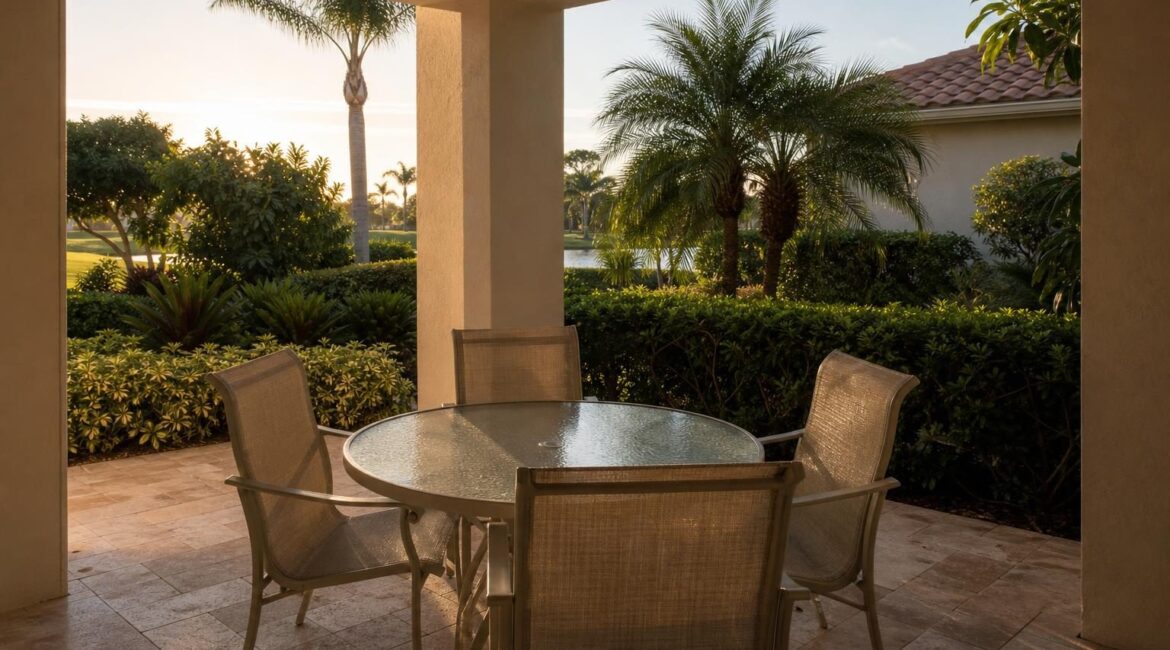
A glass top is a smooth, solid sheet, usually set into a frame. Outdoor tables generally use tempered glass, a type that is heat-treated to be stronger than ordinary glass and that tends to break into small pieces rather than sharp shards if it does fail. The surface is continuous, so plates, glasses and elbows all sit on a perfectly flat plane.
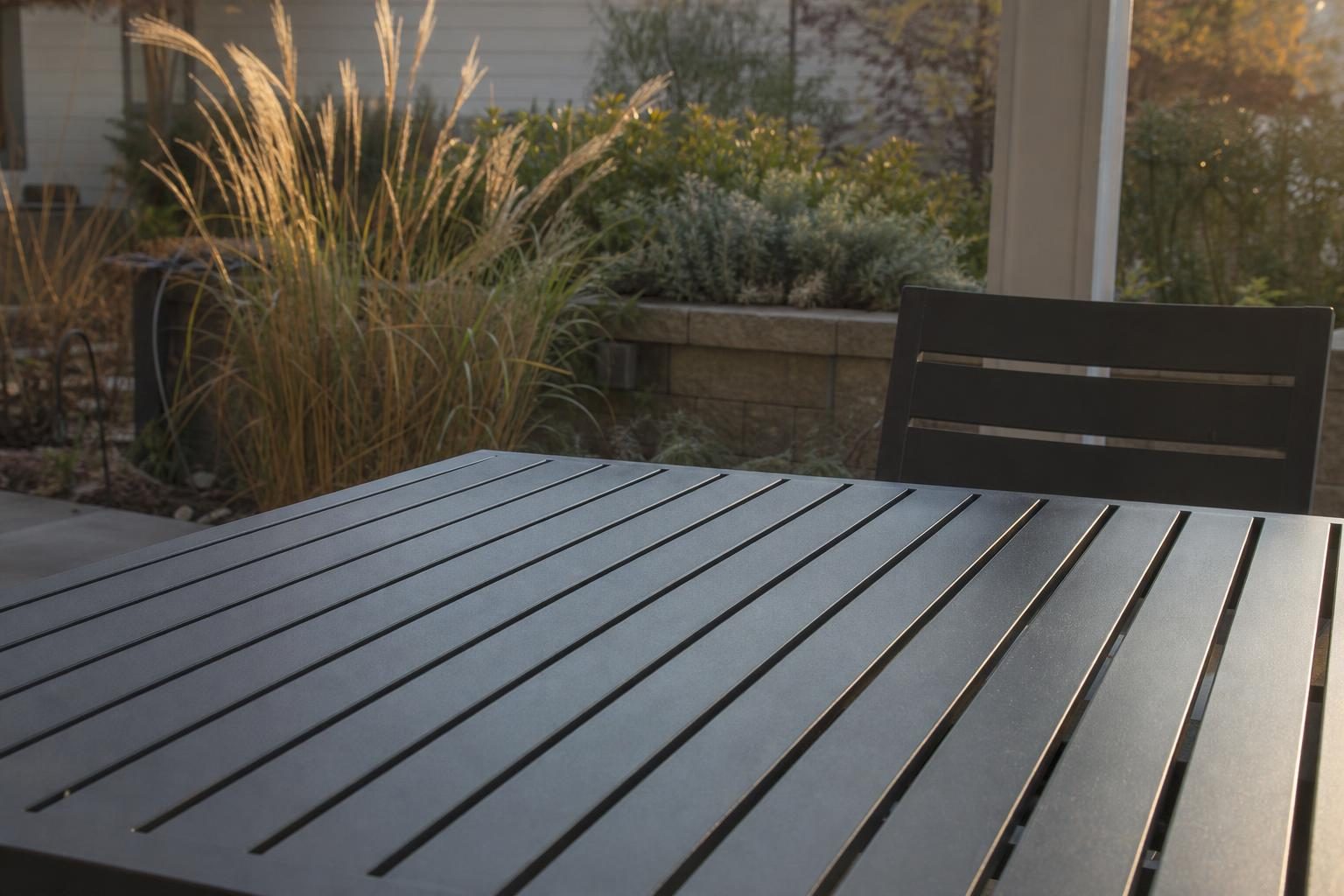
A slatted top is built from narrow parallel strips, commonly aluminum in outdoor dining sets, with small gaps between them. It looks lighter and more architectural, and the gaps do practical work: water, crumbs and debris fall straight through instead of collecting on the surface.
Both approaches are available across patio dining sets, and exact options depend on the collection, so ask a Palm Casual showroom team member which tops are offered with a set you like. In general, the trade-offs look like this:
- Glass: a smooth, level surface that suits stemware and place settings; easy to wipe; shows water spots, dust and film readily.
- Slatted: excellent drainage and airflow; a more casual, textured look; needs a little thought about small items and settings.
Neither is better in the abstract. The question is which one matches your patio, your climate exposure and your dining habits.
Glass vs. Slatted Patio Table Top: Which Handles Florida Weather Better
Outdoor dining tables spend their lives in changing weather, and this is where the two styles diverge most clearly.
Rain is the simplest comparison. Water runs off a slatted top through the gaps within moments, so you can sit down shortly after a downpour with little more than a quick wipe for the edges. Glass does not drain. Water can bead or pool on the surface, particularly if the table sits slightly out of level, and it leaves spots as it dries. Florida afternoon storms make this a real consideration, and tables with a slight slope or an umbrella hole can shed water differently, so it is worth checking.
Sun and glare are the next factor. A glass top reflects light, which can be dazzling at midday or late afternoon and may make it harder to read or use a phone at the table. Glass can also become quite warm in direct sun. Slats tend to break up reflection, so glare is usually softer, though the metal can still warm up under strong light. In either case, an umbrella or shaded placement makes dining more comfortable.
Salt air and humidity affect the frame and hardware more than the surface itself, but they do change how the surface looks. Glass shows a fine film from humid, salty air and pollen, so it often needs more frequent wiping to look its best. Slatted metal hides light dust well and rinses clean with a hose. For coastal patios, pay particular attention to the frame material and finish as well; our overview of cast aluminum patio furniture explains why aluminum is a common pick for humid, salty conditions.
Everyday Dining, Cleaning and Care
Weather is only part of it. The way each top behaves at dinner matters just as much, and it is the part you will notice most often.
Start with place settings. On a glass top, plates and glasses sit steadily with no wobble, and a sudden gust that grabs a napkin has nowhere to hide it. A slatted top can make lightweight items feel less stable, because a stemware base may rest across a gap, and small objects such as a ring, an earring or a utensil can slip between slats. Many households simply use placemats or a tablecloth, which is easy to do but worth knowing ahead of time.
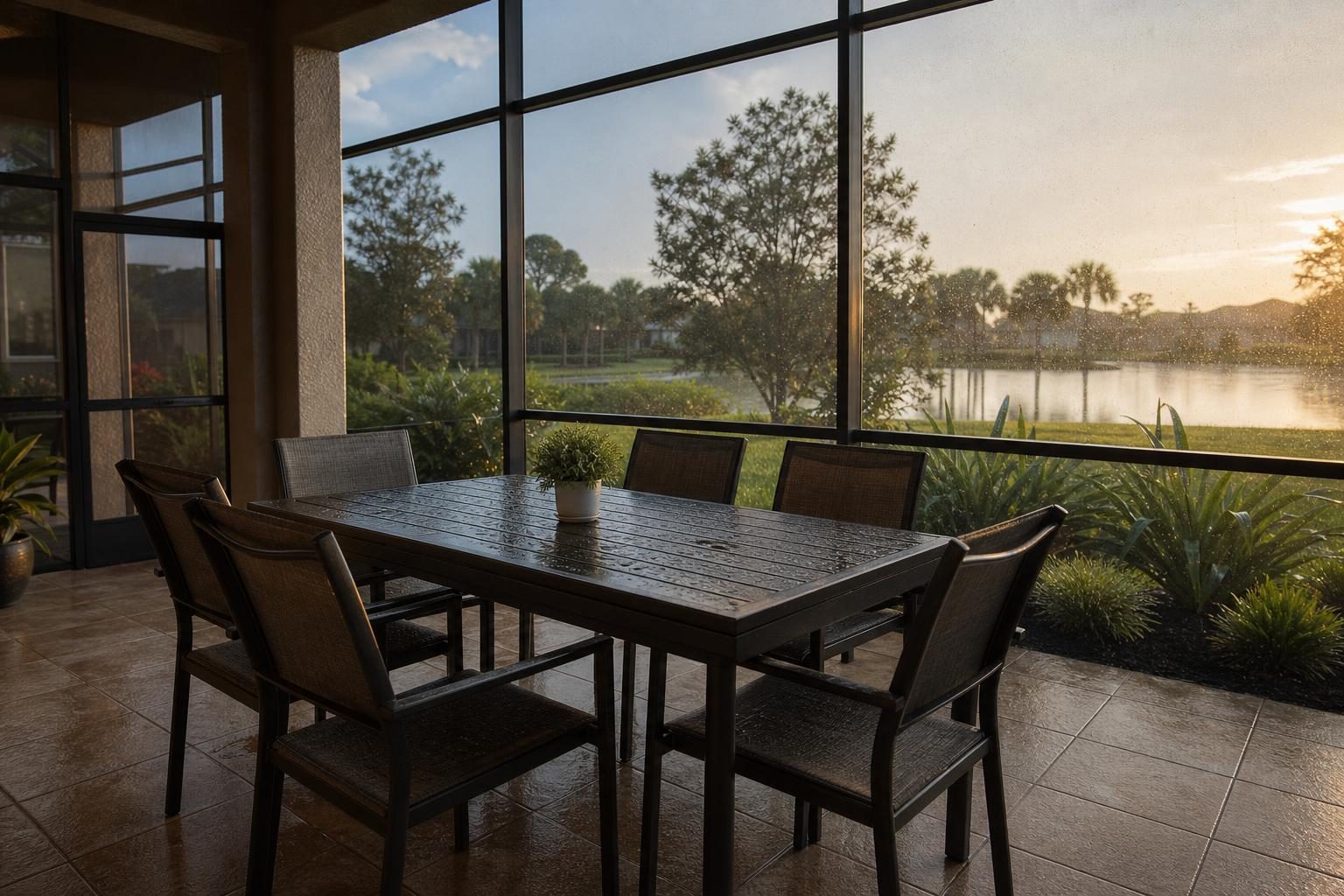
Cleaning splits the same way. Glass wipes down with a cloth and cleaner in a couple of minutes, and a squeegee after rain saves you from water spots. It also shows fingerprints, tree residue and the fine grit that blows across a patio. Slatted tops are quicker to rinse, but crumbs, leaves and sticky spills can settle along the edges of the gaps, where a cloth reaches less easily. A brush or a narrow tool solves that with a little effort.
Think about feel and sound as well. Glass has a cool, formal look and a slightly clinking sound when dishes are set down. Slats feel more casual and quieter. If you sit at the table for long conversations, notice how your forearms rest on the edges. A rounded, comfortable edge matters more than you might think.
Use this short checklist when comparing tables in the showroom:
- Set something down and see how steady it feels.
- Press the top gently to check how solidly it is held in the frame.
- Look at the edge finish and how the top meets the frame.
- Check the umbrella hole, if there is one, and how it is finished.
- Imagine wiping it clean after breakfast and after a storm.
Making the Right Call for Your Patio
Choose by living pattern, not by looks alone. If you dine outdoors often, host guests with full place settings and like a formal, uncluttered surface, glass has real appeal, provided you are comfortable with regular wiping. If your table is fully exposed to rain, sun and pollen, or you prefer a casual patio that you can rinse and forget, slats may fit better.
Placement counts too. A covered lanai protects glass from most rain and glare, so the drawbacks shrink there. An open patio near pool water or salt air rewards a surface that drains and rinses easily. If you are unsure, consider the shape and size of the table together with its top: a larger table with a big glass panel is heavier and harder to move, while slatted tops tend to feel lighter.
Whatever style you like, look at the whole picture, including chairs and frame finish. Our patio furniture guide covers how to pair table and seating, and the showroom team can walk you through the options for each set. Palm Casual has been in business for more than 40 years and sells factory-direct, so you can compare tops side by side before you decide. Once you have seen how each one handles a plate and a wipe-down, the glass vs slatted patio table top choice usually becomes clear.
Frequently Asked Questions
Is a glass patio table top safe outdoors?
Outdoor tables typically use tempered glass, which is strengthened and tends to break into small pieces instead of large shards. Still, no glass is unbreakable, so avoid striking the edge and keep it supported by a solid frame. Ask a showroom team member about the specific top on a table you like.
Do slatted table tops let small items fall through?
They can. The gaps are usually narrow, but earrings, small utensils and bits of food can slip between slats. Placemats or a tablecloth solve this for most households.
Which top is easier to keep clean in Florida?
It depends on the mess. Glass is fast to wipe but shows water spots, pollen and salt film. Slatted tops rinse easily and shed rain, though crumbs can collect along the gaps.
Will a glass top get too hot in the sun?
Glass and metal can both warm up in direct sun, and glass adds glare. Placing the table under an umbrella or in partial shade helps with either style.
Get Started at a Palm Casual Showroom
See the different table tops in person, compare how each one feels, and ask about the dining sets available. Call (407) 299-9188 or learn more about our factory-direct approach on our factory page.
Explore Palm Casual
Factory-direct pricing with a risk-free 30-day trial. Visit a showroom or call (407) 299-9188.
Explore Our Buying Guides
Looking for expert advice? Read our Complete Guide to Patio Furniture in Florida or Ultimate Guide to Outdoor Furniture in Florida for tips on materials, maintenance, and choosing the right set for your space.
