


Lava rock vs fire glass vs ceramic media for a patio fire table changes both the look of the flame and the feel of the heat, and it is one of the easier upgrades to get wrong if you pick it purely on appearance. Here is how the three most common fill options actually differ once the table is lit.
Lava Rock: The Traditional, Budget-Friendly Choice
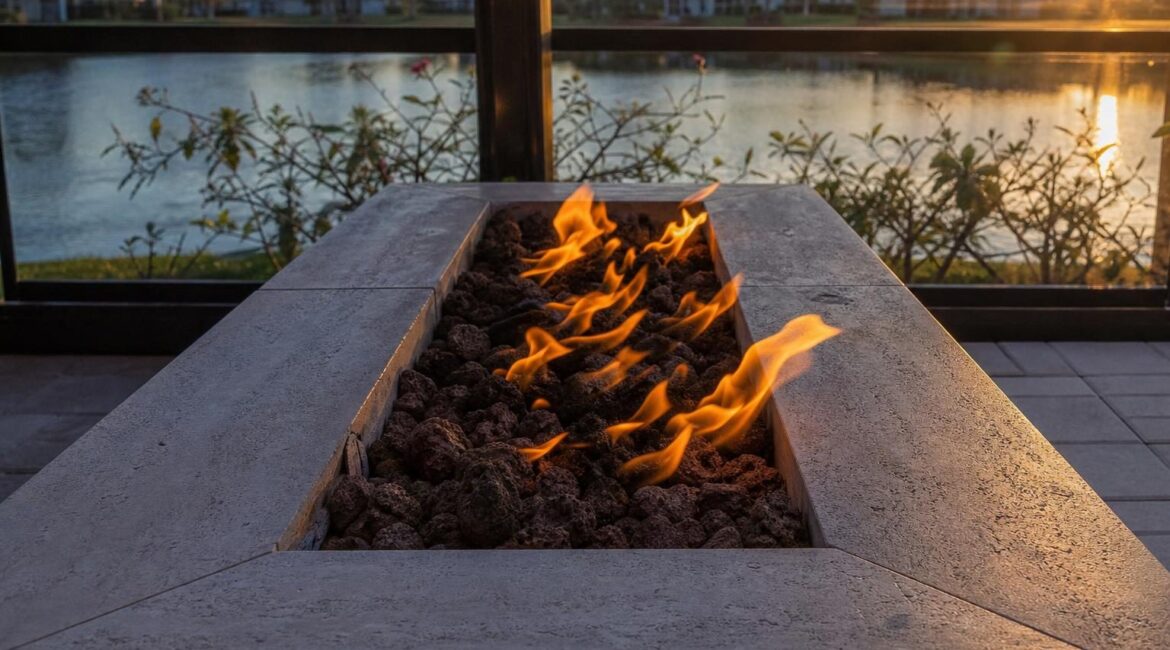
Lava rock is lightweight, porous volcanic stone that has been used in fire features for decades. It distributes flame across its surface in an irregular, natural-looking pattern and holds heat reasonably well after the burner shuts off. Because it is porous, it can trap moisture and debris over time, so it benefits from an occasional rinse and inspection.
Lava rock gives a fire table a more rustic, natural look compared to the other two options, which suits a casual backyard setting well.
Fire Glass: A Clean, Modern Look
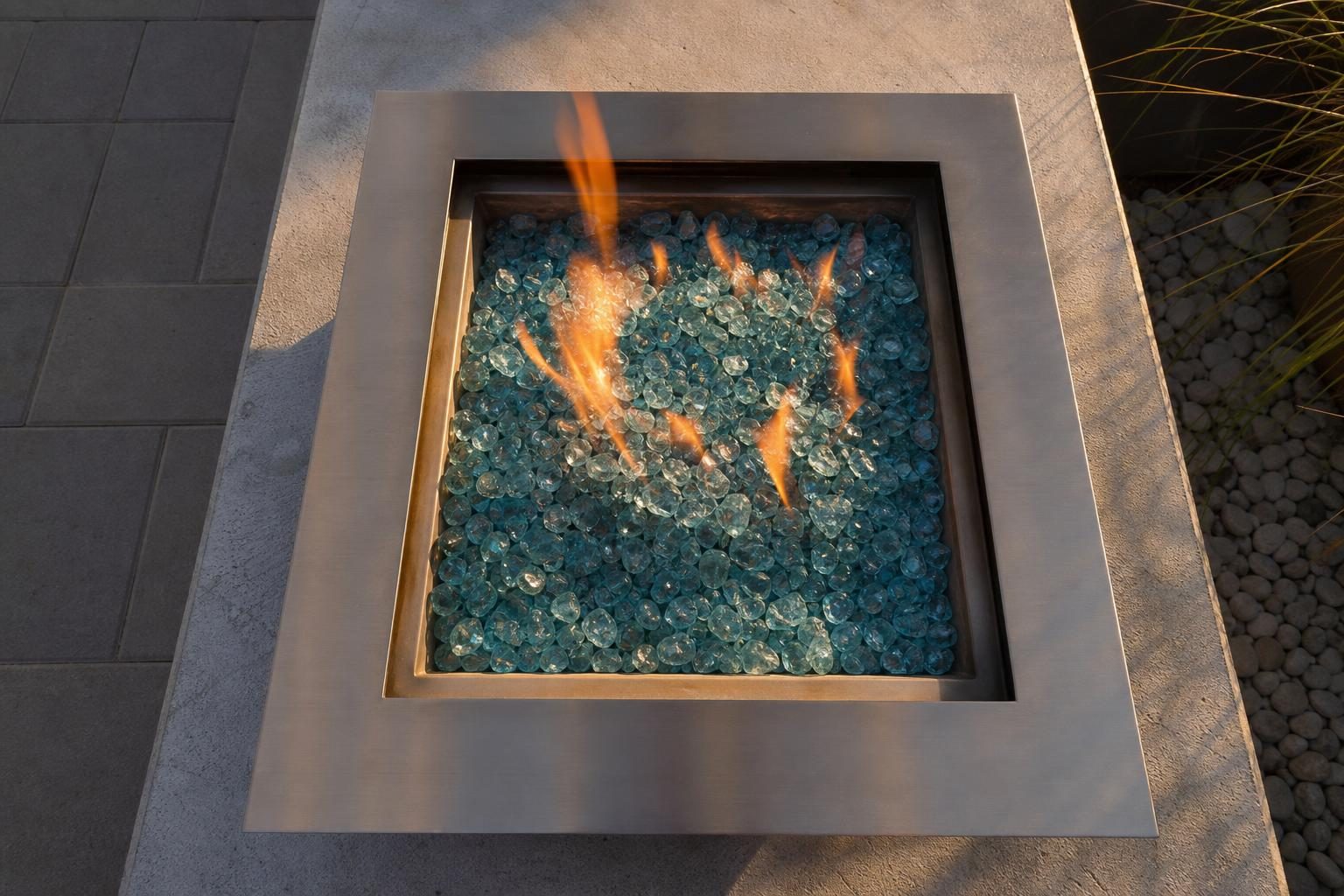
Fire glass is tempered glass, tumbled smooth so it has no sharp edges, and it comes in a range of colors. It reflects and refracts light around the flame in a way lava rock does not, giving a fire table a brighter, more contemporary appearance. Fire glass does not degrade or absorb moisture the way porous lava rock can, so it tends to need less maintenance over time, though it should still be kept clean of debris.
Ceramic Fire Media: Between the Two in Looks, Built for Even Heat
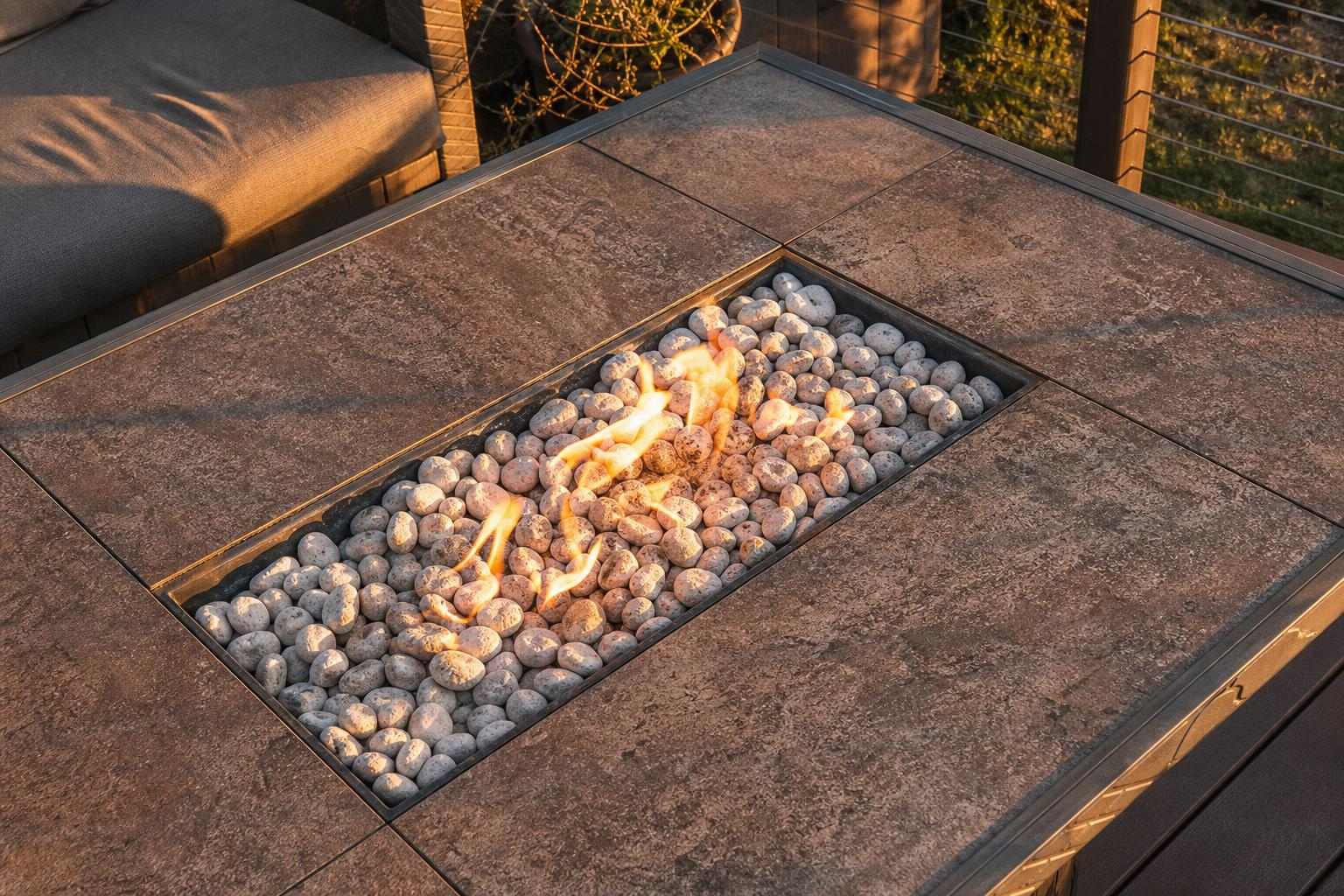
Ceramic media, sometimes shaped like small logs, stones, or briquettes, sits between lava rock and fire glass in appearance and is often chosen specifically for how evenly it distributes heat and flame across a wider burner area. It is manufactured rather than natural, so pieces are more uniform in size and shape than lava rock, and it generally holds up well to repeated heating and cooling cycles.
Choosing Fill Media for Your Fire Table
Think about how you want the flame to look and how much upkeep you want to take on. Lava rock is the lowest-cost, most traditional option but needs occasional rinsing. Fire glass gives the cleanest, most modern look with the least ongoing maintenance. Ceramic media is a strong middle option, particularly for tables with a wider burner where even heat distribution matters.
Whichever media you choose, check the manufacturer’s fill depth recommendation for your specific fire table before adding media, since too much or too little can affect how evenly the burner performs. For more on fire table features like control placement and seating distance, see our patio furniture guide. General background on fire glass and fire pit media is covered in this overview of fire glass.
Palm Casual has sold patio furniture factory-direct for more than 40 years, and our showroom team can walk you through which fill media pairs best with a specific fire table model.
Fill Depth and Coverage Affect Performance Too
Media choice is only part of the picture; how much of it you use matters just as much. Underfilling a burner pan can leave visible gaps where the flame does not spread evenly, while overfilling can smother smaller flames or make the burner harder to ignite reliably. Most manufacturers specify a fill depth in inches for a given burner pan, and it is worth following that guidance closely rather than estimating, since the right depth is what actually produces the even, attractive flame pattern that fill media is chosen for in the first place.
Coverage across the whole burner area matters too. It is a common mistake to pile media in the center of a pan and leave the outer edges thin, which produces an uneven flame that looks weaker at the perimeter than in the middle. Spread media evenly across the entire pan, checking the corners and edges specifically, before lighting the table for the first time with new fill.
Cleaning and Upkeep by Media Type
All three media types benefit from occasional cleaning, but the process differs slightly. Lava rock, being porous, should be rinsed with water and allowed to fully dry before being placed back in the burner, since trapped moisture can affect how the burner ignites. Fire glass can typically be rinsed and wiped clean more easily due to its non-porous surface. Ceramic media generally holds up well to rinsing as well, though it is worth checking manufacturer guidance for any specific media, since coatings and finishes can vary by brand.
Matching Media to Your Fire Table’s Style
Fill media also plays a real role in how a fire table reads visually against the rest of your patio’s material palette. Lava rock’s dark, textured look tends to pair naturally with cast aluminum frames finished in matte or bronze tones, reinforcing a more traditional outdoor aesthetic. Fire glass, especially in blue, clear, or amber tones, tends to stand out more against lighter finishes and modern furniture lines. There is no single correct pairing, but walking through a showroom with your existing furniture finish in mind can make the choice feel less arbitrary than picking media in isolation.
Safety Considerations That Apply to Any Media Choice
Regardless of which media you choose, a few safety basics apply across the board. Keep the fill media within the manufacturer’s recommended depth so the burner ports are not blocked, which can affect how cleanly the flame burns. Never add rock, gravel, or glass that is not specifically rated for use in a gas fire feature, since ordinary decorative stone can trap moisture and potentially crack or pop when heated. If you are ever unsure whether a specific media is rated for your fire table, check with the manufacturer or ask a showroom team member before filling the burner pan.
Replacing or Topping Off Media Over Time
All three media types can settle, chip, or lose some of their visual crispness after repeated use, and most fire tables do not need a full media replacement often, just an occasional top-off as levels drop slightly from handling and cleaning. Fire glass tends to hold its color and clarity the longest of the three, lava rock can pick up soot discoloration over time that rinsing does not fully remove, and ceramic media generally sits in between. Keeping a small amount of extra media on hand for touch-ups saves a special trip once you notice the fill starting to look thin in spots.
Frequently Asked Questions
Can I mix lava rock and fire glass in the same fire table?
Some homeowners do layer lava rock as a base with fire glass on top for a hybrid look, though it is worth checking your specific fire table’s fill guidance first.
Does fire glass get too hot to be near?
Fire glass heats similarly to other fire table media. Standard safe-seating-distance guidance for any fire table still applies regardless of which fill media is used.
How often does lava rock need to be replaced?
It varies with use, but lava rock can typically be rinsed and reused for a long time before replacement is needed, unless it becomes heavily discolored or breaks down.
Is ceramic fire media more expensive than lava rock or fire glass?
Pricing varies by brand and style, so it is worth comparing options directly rather than assuming one category is always the most affordable.
Get Started at a Palm Casual Showroom
See our fire tables in person, and ask the showroom team which fill media suits each model, before you choose. Call (407) 299-9188 or learn more about how we build and sell factory-direct on our factory page.
Explore Palm Casual
Factory-direct pricing with a risk-free 30-day trial. Visit a showroom or call (407) 299-9188.
Explore Our Buying Guides
Looking for expert advice? Read our Complete Guide to Patio Furniture in Florida or Ultimate Guide to Outdoor Furniture in Florida for tips on materials, maintenance, and choosing the right set for your space.
