


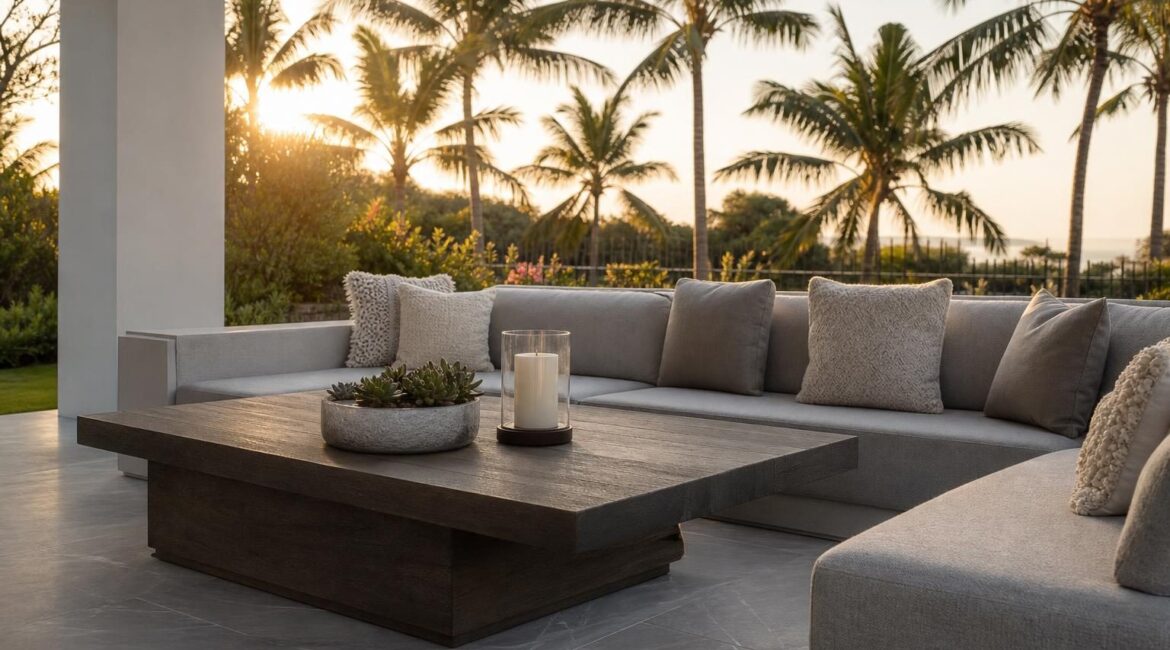
Matching coffee table height to deep seating arm height is an easy detail to overlook when you are shopping for a sectional or sofa and a coffee table separately. A table that sits too far below the arm of your seating can feel awkward to use, even when it looks fine in a showroom photo next to different furniture.
Why Arm Height Is the Reference Point, Not Seat Height
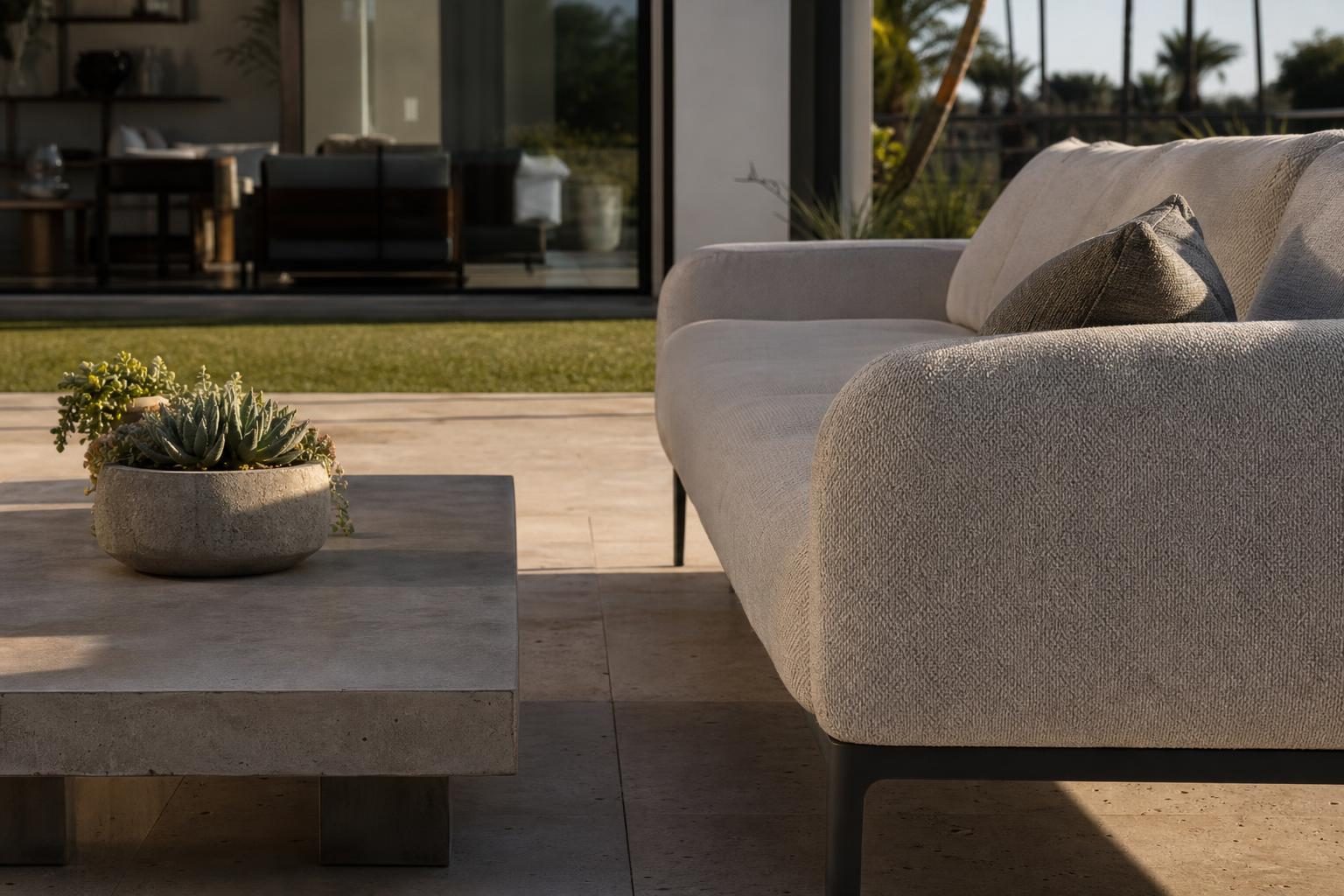
It is tempting to compare a coffee table’s height to the seat cushion, but the arm height is the more useful reference point for everyday use. When you are seated and reaching for a drink or setting something down, your arm is usually resting near the sofa or sectional’s armrest, not down at seat level. A table that sits close to that arm height feels natural to reach; one that sits several inches lower requires you to lean down every time.
What “Matching” Actually Means
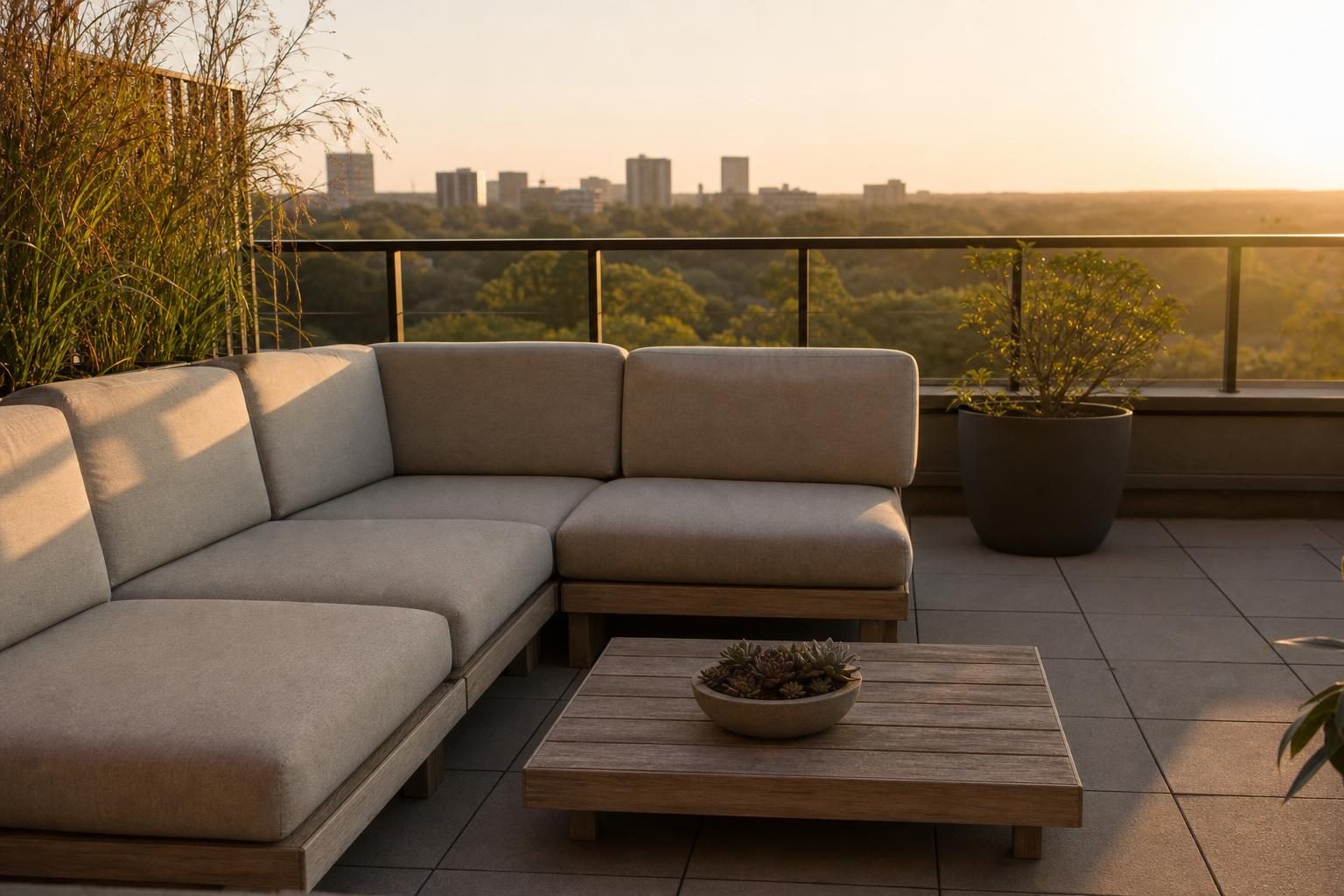
Matching does not mean identical height. A widely used guideline is keeping the coffee table within about one to two inches of the sofa or sectional arm height, either slightly below or roughly level. A table noticeably taller than the arm can look and feel out of proportion, while a table more than a few inches shorter starts to feel like a step down rather than a natural reach.
Deep-seating collections vary more in arm height than standard dining chairs do, so a coffee table that worked well with one sectional may not work as well with another. It is worth measuring the specific pieces you are combining rather than assuming a standard coffee table height will fit.
Accounting for Cushion Compression
Thick outdoor cushions compress slightly once someone sits down, which can lower the effective arm height by a small amount compared to the unloaded measurement. If your coffee table height is already right at the edge of the recommended range, it is worth sitting in the actual seating with the cushions in place before finalizing the table choice.
For more on furnishing a full outdoor living space with proportional pieces, see our patio furniture guide. General background on coffee table conventions is covered in this overview of coffee tables.
Palm Casual has built and sold patio furniture factory-direct for more than 40 years, and our showroom pairs deep-seating collections with matching or complementary tables, which takes the guesswork out of this kind of measurement.
Measuring Your Existing Furniture Before You Shop
If you already own the sectional or sofa and are shopping for a table to pair with it, measure the arm height directly rather than relying on the manufacturer’s listed specification, since seat cushions and any zip-on cushion covers can add or subtract a small amount from the published number. Measure from the ground to the top of the arm with the cushions in their normal resting position, and bring that number with you when comparing coffee tables, either in a showroom or against an online listing’s dimensions.
If you are buying both pieces together and have not committed to either yet, it is easier to start with the seating and let the table height follow from it, rather than the reverse, since sectional and sofa arm heights vary more across collections than coffee table heights do.
When a Slight Mismatch Is Fine
Not every use case calls for a precisely matched table. If the coffee table’s main job is holding drinks and the occasional snack rather than serving as a footrest or a surface people lean on, a mismatch of a few inches is far less noticeable in daily use than it might seem when comparing spec sheets. The closer matching matters most in households that genuinely use the coffee table as an extension of the seating itself, resting feet on it or leaning across it regularly, where the height relationship becomes part of the physical comfort of the space rather than just a visual proportion.
Shape and Reach Matter Alongside Height
Height is the main factor, but table shape affects perceived reach too. A large square or rectangular coffee table centered in front of a sectional can put its far edge out of comfortable reach even when the height is correctly matched, particularly for anyone seated at the far end of an L-shaped layout. A round or oval table, or a pair of smaller tables positioned closer to each seating zone, often solves this better than a single large table sized to match the whole sectional run.
Nesting or Side Tables as a Flexible Alternative
If you are not fully satisfied with any single coffee table height, a set of nesting tables at slightly different heights can offer more flexibility than one fixed piece, letting you pull the appropriate height closer to whichever seat is in use. This approach trades some of the visual anchor a single large coffee table provides for more adaptable, per-seat convenience, which can be especially useful in a mixed-height deep-seating layout that combines a sofa with a couple of taller armchairs.
Material and Top Surface Considerations
Once height and shape are settled, the tabletop material affects everyday use almost as much as the dimensions do. A tempered glass top shows water rings and dust more readily than a slatted aluminum or teak-look top, which matters if the table sees daily use for drinks and snacks. A porous natural-stone top needs periodic sealing to resist staining outdoors, while a powder-coated aluminum or all-weather wicker top generally needs only routine wiping. None of these materials is the objectively right choice; the better fit depends on how much upkeep you are willing to do relative to the look you want next to your seating.
Bringing Measurements to the Showroom
The most reliable way to get a correct match is to bring your own numbers rather than relying on memory or a rough guess. Measure the arm height of your existing seating, note it down, and bring that measurement with you, or photograph the tag on a sectional you are considering so a showroom team member can pull matching or complementary tables on the spot. This small bit of preparation turns a potentially frustrating guessing game into a quick, confident decision.
Frequently Asked Questions
Should a coffee table be shorter or taller than the sofa arm?
Slightly below or roughly level with the arm height generally feels most natural for everyday use. A table noticeably taller than the arm tends to look and feel out of place.
Does coffee table height matter as much as coffee table size?
Both matter, but height is the detail most often overlooked, since size differences are usually obvious in a showroom while height mismatches are easier to miss until the furniture is in place.
What if my coffee table is already too low for my sectional?
Some coffee tables can be paired with a low bench or ottoman used as an in-between surface, though the more reliable fix is choosing a table sized for the specific seating from the start.
Do all deep-seating collections use the same arm height?
No, arm height varies by collection and style, which is why it is worth measuring the specific pieces you are combining rather than assuming a standard measurement applies.
Get Started at a Palm Casual Showroom
Sit at the actual pairing of sectional and table before you commit. Call (407) 299-9188 or learn more about how we build and sell factory-direct on our factory page.
Explore Palm Casual
Factory-direct pricing with a risk-free 30-day trial. Visit a showroom or call (407) 299-9188.
Explore Our Buying Guides
Looking for expert advice? Read our Complete Guide to Patio Furniture in Florida or Ultimate Guide to Outdoor Furniture in Florida for tips on materials, maintenance, and choosing the right set for your space.
