


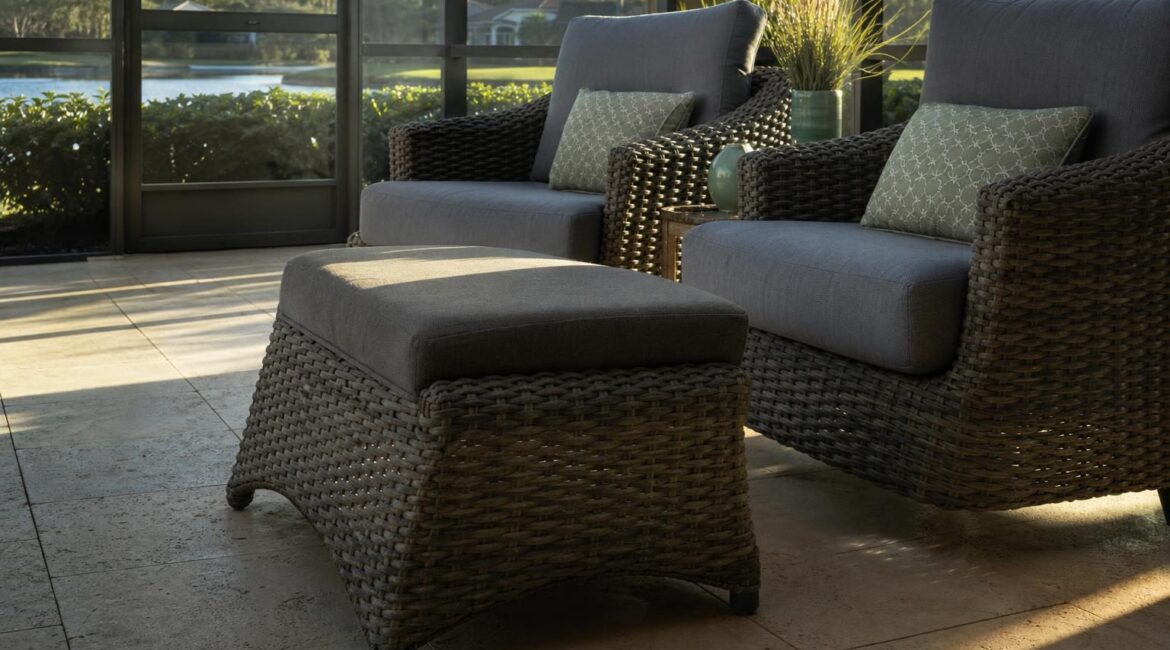
An outdoor ottoman rarely stays a footrest for long. Guests pull it up as extra seating the moment the regular chairs fill, and that’s exactly when outdoor ottoman weight capacity actually matters — not as a footrest, where the load is modest, but as a stool bearing a seated adult’s full weight, often off-center near the edge.
It’s an easy detail to overlook while shopping, since most ottomans are marketed around their look and cushion comfort rather than their structural rating. But for anyone who regularly hosts, or simply has more people over than chairs on hand, that structural rating ends up mattering just as much as it would for any other piece of seating furniture in the room.
How Ottoman Weight Capacity Is Built
Weight capacity comes from two things working together: the internal frame and the cushion support underneath the upholstery. A well-built outdoor ottoman uses a solid aluminum, wicker-wrapped aluminum, or poly-lumber frame with a reinforced internal structure, not just a foam block dressed up in fabric. The cushion sits on that frame, and it’s the frame — not the cushion foam — that actually bears seated weight.
Manufacturers typically rate ottomans anywhere from 250 to 350+ pounds for single-person seated use, though the number varies by frame material and construction. A frame built as a genuine seating piece, matched to the rest of a patio furniture collection, will generally publish this rating; a purely decorative accent ottoman may not, which is itself a signal about its intended use.
Why Edge Loading Matters More Than Center Loading
Most weight-capacity numbers assume a centered, evenly distributed seated load. In practice, someone sitting on an ottoman as extra seating often perches near one edge, especially in a group setting where the ottoman gets pulled between two chairs. That off-center load puts more stress on one side of the frame than a manufacturer’s centered rating accounts for.
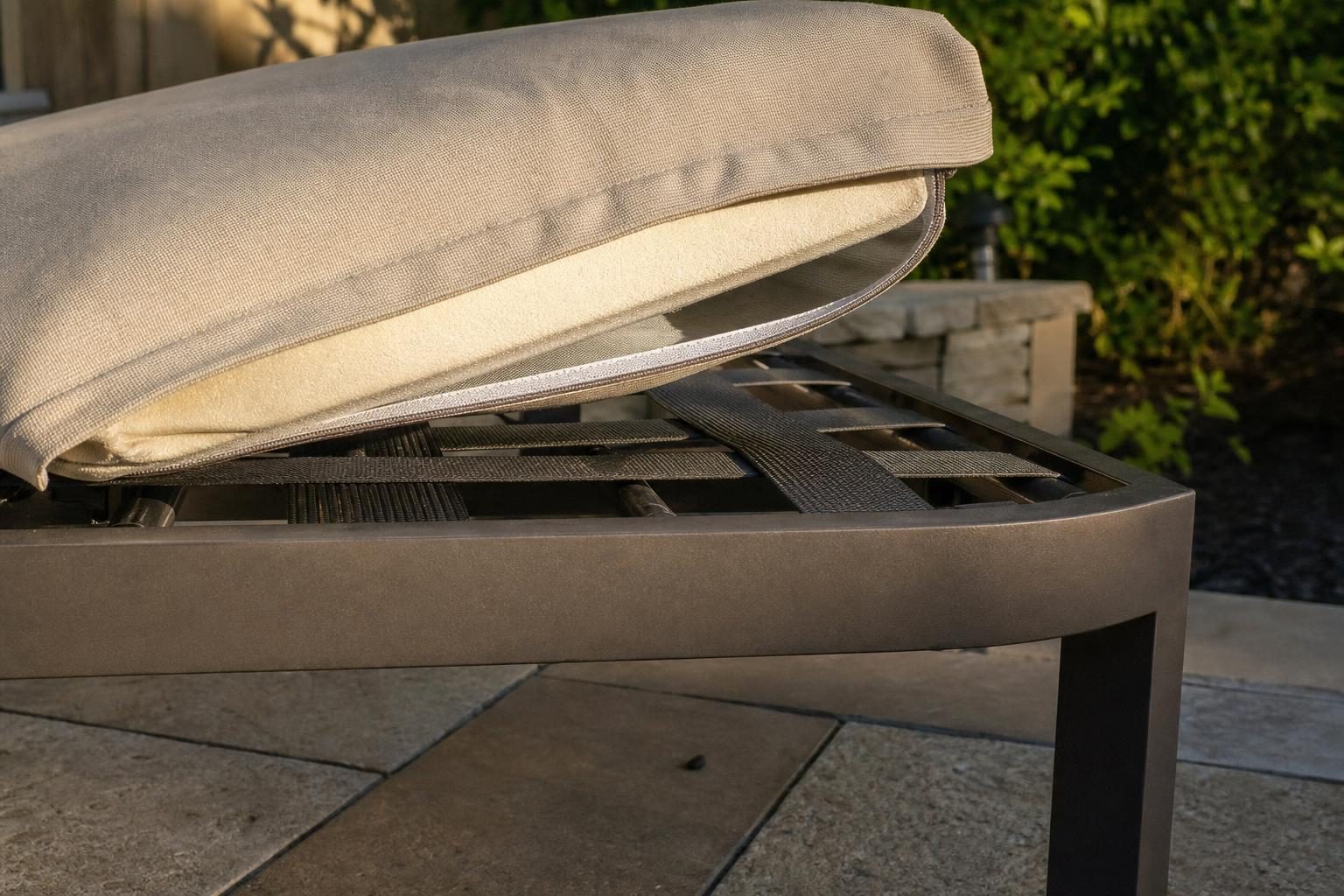
This is why a genuinely seating-rated ottoman — one built with a continuous frame rather than four independent legs with a lighter internal brace — holds up better to real party-and-guest use than a purely decorative piece that happens to look similar.
Choosing an Ottoman That Doubles as Seating
If extra seating is part of the plan from the start, a few things are worth checking before buying:
- Ask for the seated weight rating, not just a general product description — a genuine seating-rated ottoman will have one.
- Match the ottoman’s frame material to the rest of the set so it isn’t the weak link structurally or visually.
- Consider two smaller ottomans instead of one large one for groups, since it spreads guests (and load) across more support points.
- Check cushion height against your chairs so the ottoman functions comfortably as a stool, not just as a footrest that happens to hold weight.
Everyday Wear Signs Worth Watching For
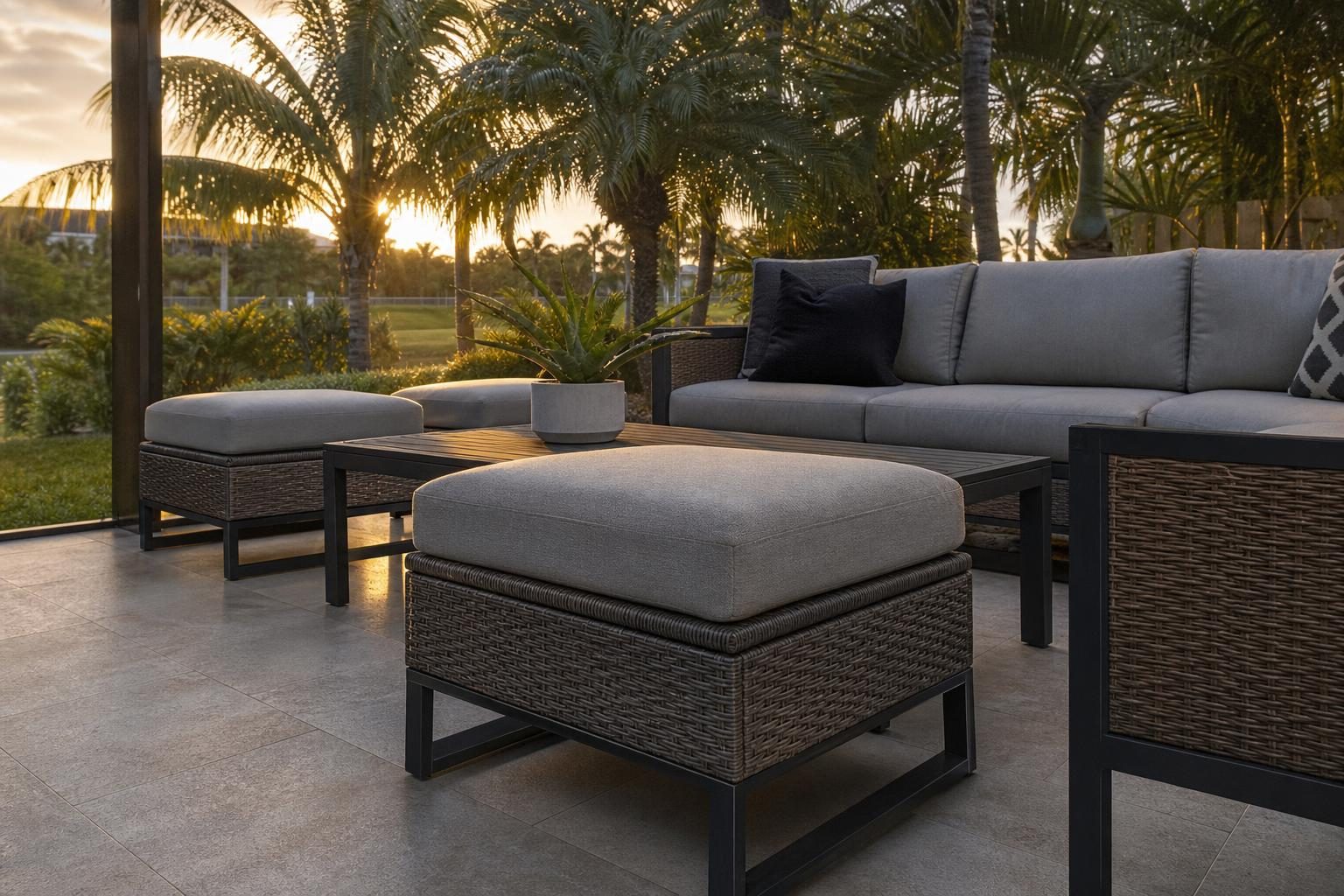
An ottoman that’s regularly pressed into seating duty shows wear differently than one used only as a footrest, so it helps to know what to check periodically. Look at the frame joints first — any new give, wobble, or creak under weight that wasn’t there when the piece was new is worth investigating before it becomes a real structural issue rather than a cosmetic one.
Cushion compression is the other common sign. A cushion that’s flattened noticeably faster than the matching chairs in the set is a clue that it’s absorbing more seated weight than it was originally speced for, which is common when an ottoman becomes the default extra seat for larger gatherings. At that point, either a firmer replacement cushion or a second ottoman to spread the load is worth considering.
Checking these signs once or twice a season, alongside normal outdoor furniture upkeep, catches problems early enough to address with a simple fix rather than a full replacement. A simple seasonal check takes only a few minutes. Sit on the ottoman near one edge, since that’s the loading pattern most likely to reveal an early issue, and pay attention to any flex or sound that feels different from when the piece was new. For aluminum and wicker-wrapped aluminum frames, a quick visual check of any visible screws or bolts at the joints can catch early loosening before it turns into a wobble you can feel while seated. For poly-lumber ottomans, the joints are typically fewer and more heavily built, so wear tends to show up more in the frame’s overall rigidity than in individual fasteners. It’s also worth rotating which side of the ottoman gets used for seating if it’s regularly pulled up as extra seating in the same spot, since concentrating load on one edge over months can accelerate wear on that side specifically compared to the rest of the frame. This small habit spreads wear evenly across the piece instead of letting one edge absorb most of the repeated off-center seating, which helps the ottoman hold up as genuine seating furniture rather than just an occasional footrest.
Pairing Ottomans With Different Seating Layouts
How an ottoman gets used as seating often depends on the layout it’s placed in. In a sectional arrangement, a rated ottoman placed at the open end effectively becomes another seat in the group, so it’s worth choosing a size and height that lines up with the sectional’s own seat height rather than treating it as an afterthought accessory.
In a looser conversation-chair arrangement, ottomans are more likely to get pulled to wherever an extra seat is needed, which means portability matters alongside weight capacity — a heavier, sturdier ottoman is more stable but harder to reposition on the fly. Some households keep one heavier, sectional-matched ottoman as a primary seat and one lighter accent ottoman for occasional footrest use, which covers both roles without asking a single piece to do everything.
Either approach works well as long as the piece being used for seating is actually rated for it. The distinction matters most in the moment it’s tested — a full patio of guests at the end of a long gathering — which is exactly when you want to already know the answer rather than find out the hard way.
Our showroom staff can show you the frame construction on any ottoman you’re considering, side by side with the seating it’s meant to complement, so you can judge the build quality directly rather than relying on a product description alone.
For manufacturer guidance on outdoor furniture material care, see Tropitone’s product-care guidance. For a particular ottoman, rely on that product’s stated seating rating and instructions.
Frequently Asked Questions
Can any outdoor ottoman be used as extra seating?
Not safely on a regular basis. A purely decorative ottoman without a rated seating frame may not be built for repeated seated use, even if it can technically support brief weight.
Does cushion thickness affect weight capacity?
Cushion thickness affects comfort, but the frame underneath — not the cushion foam — is what actually determines how much weight the ottoman safely supports.
Are wicker ottomans as strong as aluminum-frame ottomans?
A wicker-wrapped ottoman is typically built around an aluminum frame underneath, so its strength comes from that internal frame rather than the wicker itself.
How many people can sit on one large ottoman at once?
This depends entirely on the specific rated capacity and ottoman size; check the manufacturer’s seated-weight rating rather than estimating from size alone.
Find an Ottoman Built for Real Seating
Our team can point you to ottomans specifically rated for seated use, not just footrest duty. Call (407) 299-9188 or visit our factory-direct showroom to see frame construction firsthand.
Explore Palm Casual
Factory-direct pricing with a risk-free 30-day trial. Visit a showroom or call (407) 299-9188.
Explore Our Buying Guides
Looking for expert advice? Read our Complete Guide to Patio Furniture in Florida or Ultimate Guide to Outdoor Furniture in Florida for tips on materials, maintenance, and choosing the right set for your space.
