


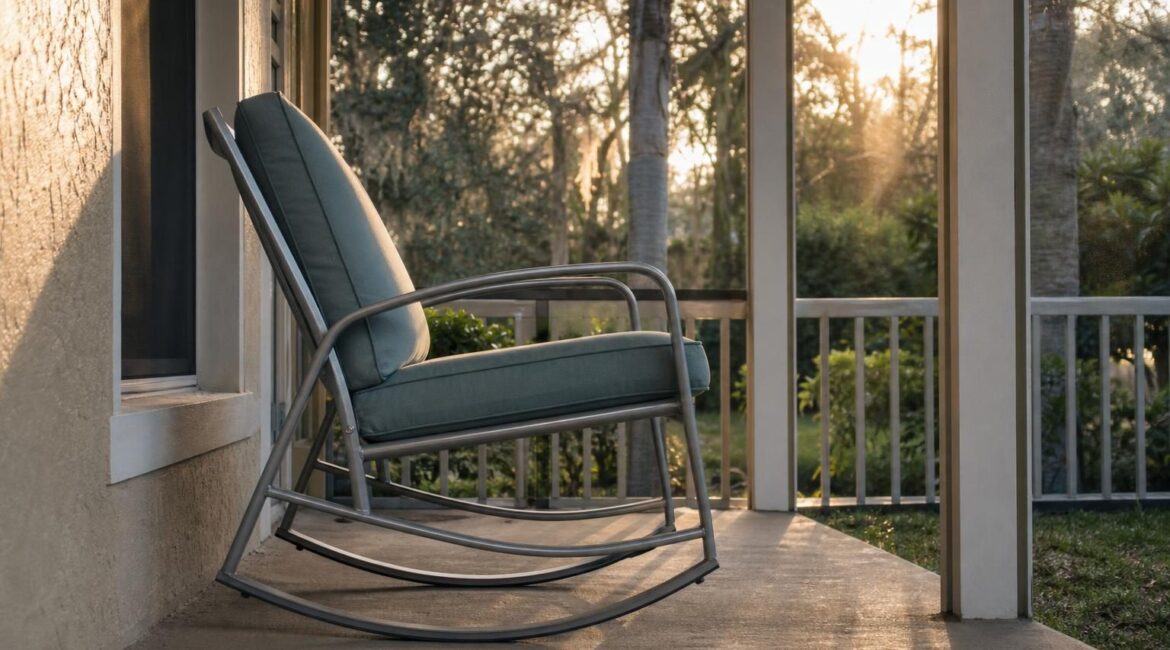
An outdoor rocking chair lives or dies by its motion. Two chairs can look nearly identical — same curved runners, same porch-ready silhouette — and still feel completely different to sit in, because the mechanism underneath is doing different work. Spring-action and bearing-hinge rocking mechanisms are the two common approaches, and the outdoor rocking chair motion each one produces is worth understanding before you buy.
Shoppers often compare rocking chairs the same way they’d compare any patio chair — frame material, cushion, finish — and skip past the mechanism entirely, since it isn’t always called out clearly in a product listing. That’s a missed detail worth catching before purchase, because the mechanism is what you’ll actually feel every single time you sit down, far more consistently than a subtle finish difference.
Find a nearby Palm Casual showroom and ask about current rocking-chair availability before visiting.
How a Spring-Action Rocker Moves
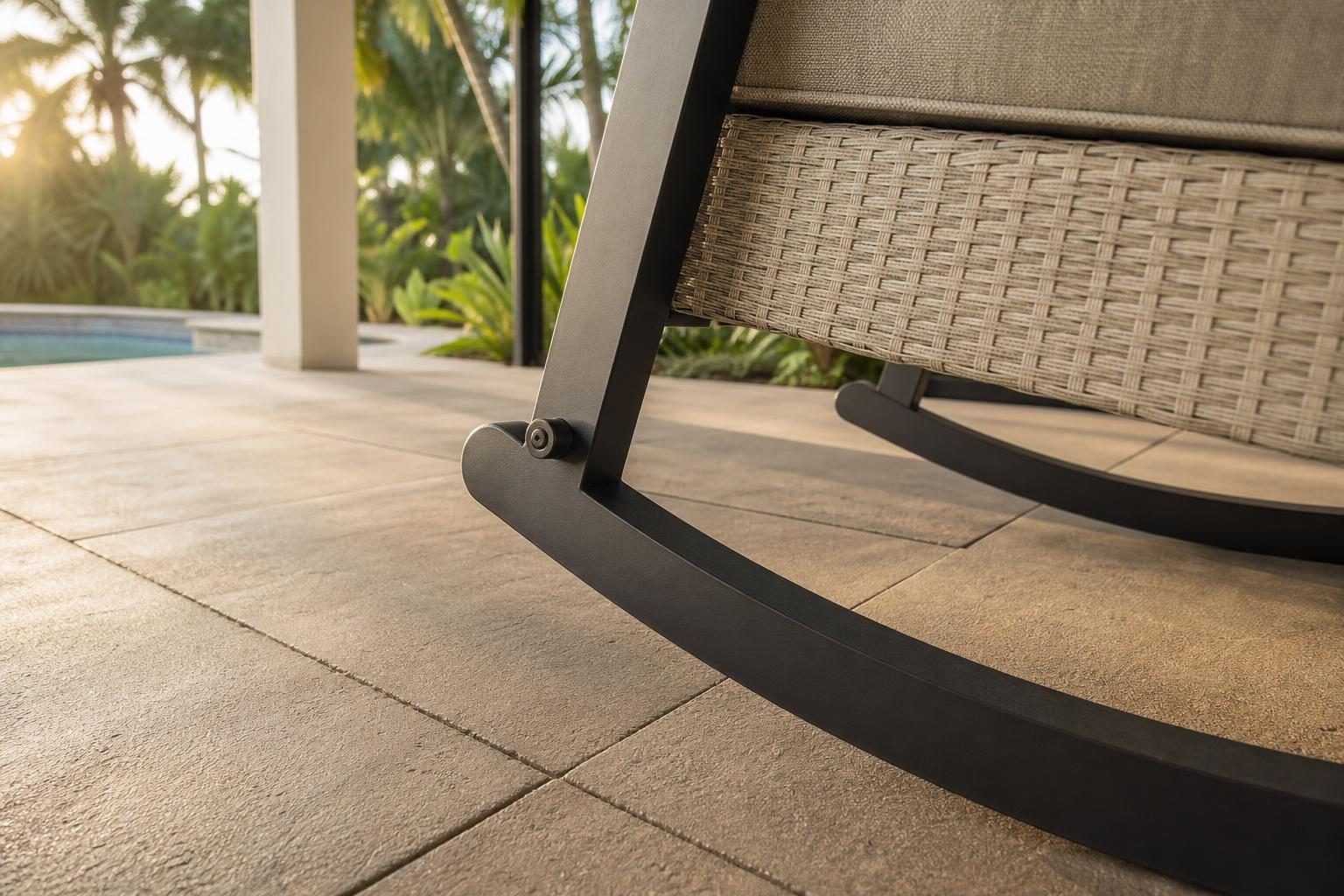
Spring-action rockers use a tensioned spring mechanism, usually built into a glider-style base or a sprung runner assembly, to create a smooth, slightly assisted back-and-forth motion. Push off gently and the spring returns the chair to center, which gives the motion a light, almost self-propelling feel. This mechanism is common on cushioned aluminum and wicker rocking chairs designed for long porch sessions.
The tradeoff is mechanical complexity. A spring mechanism has more moving parts exposed to Florida humidity and salt air than a simple curved runner, so it benefits from periodic inspection — the same way you’d check any hinge or fastener on outdoor furniture through general outdoor furniture care habits.
How a Bearing-Hinge Rocker Moves
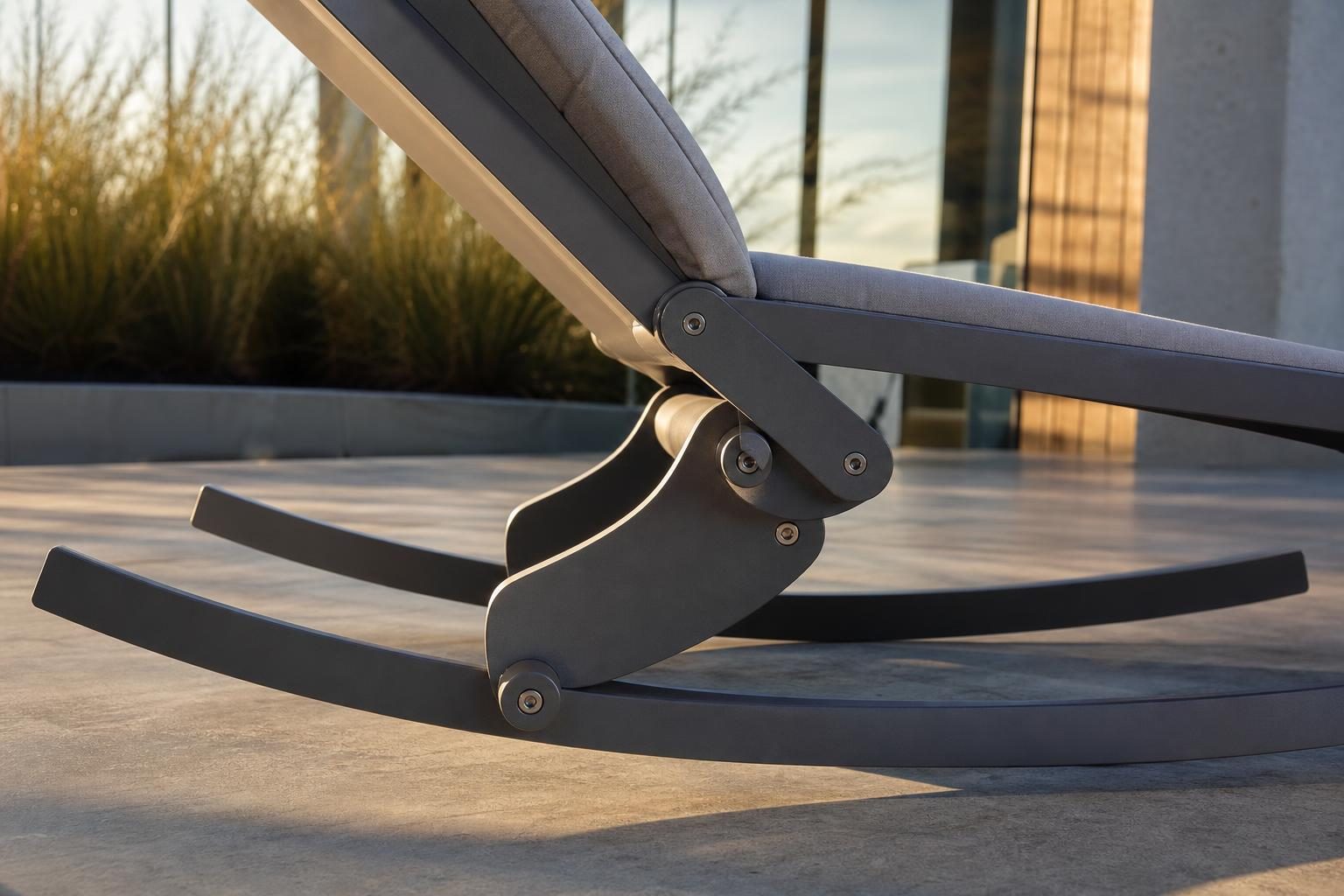
Bearing-hinge rockers pivot on a fixed axle or sealed bearing point rather than rocking along a curved runner touching the floor. The motion feels more contained and controlled — less of a full sweeping rock, more of a gentle tilt-and-return. Because the bearing point is usually sealed, this mechanism tends to hold up well with minimal maintenance, which matters for a chair that lives outside year-round.
Bearing-hinge designs are common on modern aluminum rockers with a cleaner, lower-profile look, since they don’t need the curved runner extending below the seat. That makes them a practical fit for smaller porches or balconies where a traditional runner’s swing radius would eat into walking space.
Which Motion Fits Which Use
Neither mechanism is objectively better; they suit different habits and spaces:
- Long reading or coffee sessions: the smoother, self-assisting feel of a spring-action rocker tends to be more restful over long stretches.
- Tight porches or balconies: a bearing-hinge rocker’s contained motion and smaller footprint make it easier to fit without extra clearance.
- Low-maintenance priorities: a sealed bearing point generally needs less periodic attention than an exposed spring assembly in a humid climate.
If you can, test both in person. The difference is subtle to describe but obvious the moment you sit down — one rocks, the other pivots, and most people have a clear preference within a minute.
Frame Material Also Shapes the Motion
The mechanism isn’t the only thing determining feel — frame material changes how that motion translates to the body. Aluminum-frame rockers, whether spring-action or bearing-hinge, tend to move with a lighter, quicker response because the frame itself weighs less, which some people find energizing and others find slightly less settled than a heavier chair.
All-weather wicker rockers, typically built around an aluminum inner frame, add a bit more visual mass and a slightly slower, more deliberate rocking feel, even with the same underlying mechanism. Poly-lumber rockers sit heavier still, which can further smooth out the motion but adds real weight if you plan to move the chair around the porch seasonally.
None of these material differences override the fundamental spring-versus-bearing distinction, but they do shift the feel enough that it’s worth testing your actual preferred frame material and mechanism combination together, rather than judging mechanism alone on one material and assuming it will feel identical in another. A quick seasonal check can extend either mechanism’s smooth feel considerably. For a spring-action base, a light application of a silicone-based lubricant, not a petroleum-based product, which can attract dust and grit, on the visible pivot points once or twice a year keeps the motion from developing a faint catch or squeak. For a bearing-hinge design, the sealed unit itself rarely needs lubrication, but it’s still worth checking that the mounting bolts connecting the hinge to the frame haven’t loosened slightly from repeated motion, since a loose mounting bolt can introduce a wobble that feels like a mechanism problem even when the bearing itself is fine. Salt air accelerates wear on any exposed metal fastener, so rocking chairs kept within a few blocks of the coast benefit from this seasonal check more than one set further inland. Rinsing visible metal components with fresh water after a chair has been exposed to salt spray, then drying before the next use, is a simple habit that meaningfully extends the working life of either mechanism.
Cushions and Long-Term Comfort
Whichever mechanism you choose, the cushion you pair with it plays a real role in how the chair feels over a long sitting session, separate from the rocking motion itself. A cushion with a contoured seat and lumbar shape supports the body through the full range of a rocking motion, while a flat, uniform cushion can shift or bunch slightly as the chair moves, especially with a spring mechanism’s wider range of motion.
Quick-dry outdoor foam is worth prioritizing for any rocking chair cushion left outside, since Florida’s afternoon storms are frequent enough that a cushion needs to shed water fast rather than staying damp between uses. Ties or a fitted back panel that keep the cushion anchored to the frame also matter more on a rocking chair than a stationary one, since the cushion has to stay in place through repeated motion rather than just resisting wind.
A cushion that shifts noticeably during normal rocking is worth replacing or re-securing before it becomes a bigger annoyance, since a loose cushion tends to work itself further out of place with every session rather than settling back into place on its own.
Our team can point out which cushion styles are built specifically for rocking chairs versus stationary seating when you’re comparing options, since the two aren’t always interchangeable even when the sizing looks similar on paper.
For manufacturer guidance on cleaning and maintaining outdoor furniture materials, see Tropitone’s product-care guidance. The exact moving parts and maintenance intervals still depend on the chair manufacturer.
Frequently Asked Questions
Do bearing-hinge rockers rock as far as spring rockers?
Generally not as far. The motion is more of a controlled tilt than a full sweeping rock, which some shoppers prefer for smaller spaces.
Which mechanism needs more upkeep in Florida’s climate?
Spring-action mechanisms have more exposed moving parts and typically benefit from more frequent inspection than a sealed bearing hinge.
Can I add a cushion to either type of rocking chair?
Yes, both mechanisms accommodate standard outdoor rocking chair cushions without affecting the motion, as long as the cushion is sized correctly for the frame.
Is one mechanism louder than the other over time?
An unmaintained spring mechanism can develop a faint squeak before a bearing hinge typically does, which is one more reason to check moving parts periodically.
Try Both Mechanisms in Person
Rocking motion is hard to judge from a photo. Visit one of our showrooms to sit in both spring-action and bearing-hinge rockers side by side, or call (407) 299-9188 and our team can point you to the styles available closest to you.
Explore Palm Casual
Factory-direct pricing with a risk-free 30-day trial. Visit a showroom or call (407) 299-9188.
Explore Our Buying Guides
Looking for expert advice? Read our Complete Guide to Patio Furniture in Florida or Ultimate Guide to Outdoor Furniture in Florida for tips on materials, maintenance, and choosing the right set for your space.
