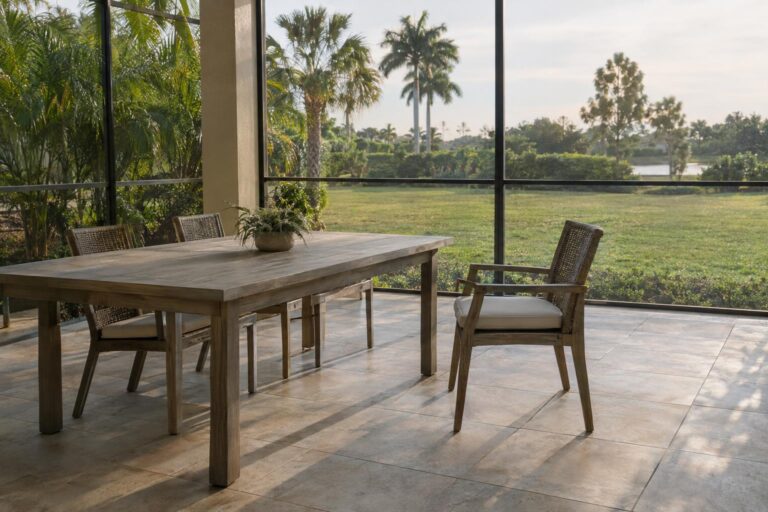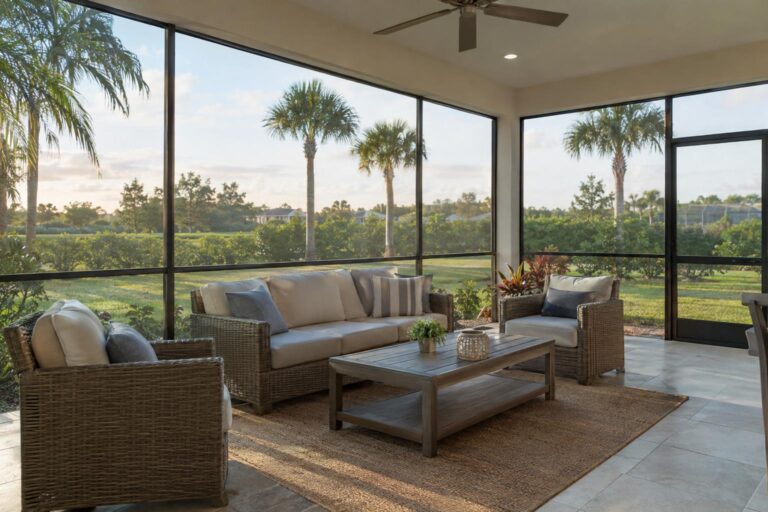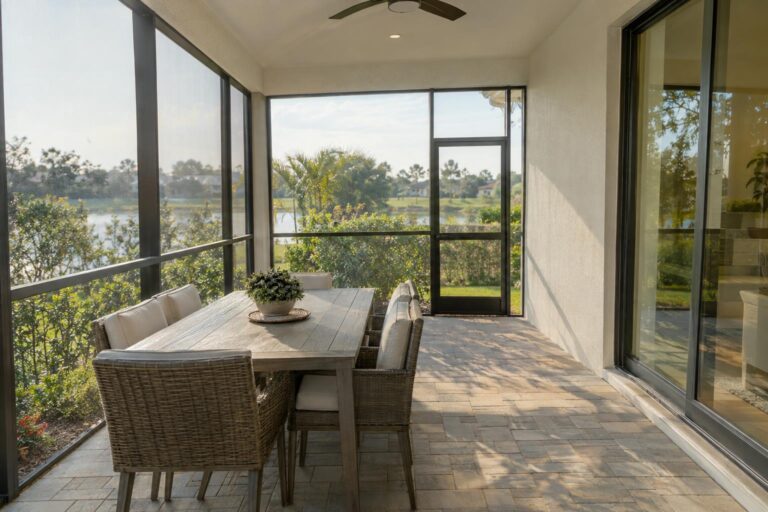


Patio furniture ideas for small decks and balconies in Bonita Springs work best when they start with a floor plan. A chair can look compact in a photograph yet leave little room for its occupant to stand up. A dining table can fit between two walls while its chairs block the doorway. Plan for people using the furniture, rather than fitting as many pieces as possible into the available area.
Begin with one purpose: coffee for two, a quiet reading spot, or a place for everyday meals. Then compare the dimensions and comfort of furniture that serves that purpose. Palm Casual’s Bonita Springs showroom gives you a local starting point for trying pieces and asking about the exact configurations you are considering.
Measure the usable space before choosing a set
Sketch your deck or balcony from above. Record its length and width, then mark the door, the direction it swings, fixed posts and any other obstruction. Measure the route from the entrance to the outdoor space as well. Furniture must reach the balcony before it can become part of the layout, so a narrow interior doorway or turn deserves attention during shopping.
Next, mark the space that must remain open for everyday movement. Include the route to the door and any part of the area you need to reach regularly. For a balcony in a shared building, check the property rules before buying furniture. Ask the property manager about permitted items and any restrictions that affect your arrangement; a furniture measurement does not establish a balcony’s structural suitability.
Use removable tape or paper shapes to mark possible furniture footprints on the floor. Walk through the arrangement and open the door fully. For chairs, test the space with someone sitting down and standing up. Avoid treating the unoccupied chair footprint as the whole seating area. The same exercise helps reveal whether an appealing table shape leaves an awkward pinch point.
Choose one main activity for a compact layout
A small deck does not have to accommodate dining, lounging and a large gathering at the same time. Choose the activity you expect to repeat most often. If you usually step outside with a drink and a book, compare a comfortable chair and a small table first. If you share breakfast outside, start with a dining arrangement and check how it works with both seats occupied.
For a reading corner, position the chair so its usable space faces into the balcony rather than into the walking route. Test whether the table is reachable without leaning across an armrest. If two people use the space, try two separate chairs before assuming that a loveseat is the better fit. Compare the actual combined footprint, including the table and movement around it.
Let the first arrangement do its job before adding more furniture. An empty corner can be useful maneuvering space. It can also make the layout easier to adjust after you have used it for a few days. Additional seating is only useful when people can reach it and sit comfortably without moving the rest of the setup.
Compare bistro dining with individual seating
A bistro-style arrangement is one option for a small dining area, but the word “bistro” does not establish a standard size. Compare the exact table and chair dimensions. Ask how far the chairs project when tucked in, where their arms meet the tabletop, and how the bases affect foot placement. A square tabletop and a round one can use the same area differently near doors and corners.
Palm Casual lists a Grand Terrace bistro set with arm cafe chairs. Use a catalog example like this to start a dimension comparison, rather than assuming a named set will fit every balcony. Confirm current availability, exact measurements and which pieces are included with the showroom before ordering.

For a conversation layout, separate seats may give you more placement options. Arrange them at an angle or along adjacent sides of the space, then test the route between them. A matching collection can simplify the visual choices, while separate pieces let you compare different seat sizes. In either case, prioritize the layout you can use over the number of pieces shown in a catalog photograph.
Test chair comfort and movement together
When you try a chair, sit as you would at home. Notice whether your feet rest comfortably and whether the back supports your preferred position. Test the armrests and stand up again. A chair that fits the floor plan still needs to suit the person who will use it, especially if it will be your main outdoor seat.
Bring the measurements of your table or the model you are considering. Check that the chair and table work together at the intended height. Compare the chair’s widest points, including arms or a curved back, rather than relying only on seat width. If a chair moves, reclines or swivels, ask for the space it requires while in use.
The Georgetown bistro chair listing is another catalog reference to discuss during a visit. Check the current specification for the exact chair and cushion combination. If stacking matters to your plan, ask how that model is handled and where the stack would be stored; do not assume every outdoor chair has that feature.

Make fabric and upkeep part of the space plan
Think about where removable cushions will go when you are not using them and how you will carry them through the doorway. Ask which cushions are included and whether they are removable. A small outdoor space can feel much more manageable when the furniture’s everyday care fits the storage you actually have.
Ask for care instructions for the exact frame, finish and fabric before choosing cleaning products. Palm Casual’s fabric category provides a starting point for discussing options. If your selected upholstery is Sunbrella, use the manufacturer’s upholstery cleaning instructions for that fabric, and check any additional instructions supplied with the finished cushion. Instructions for one textile should not be applied automatically to a different material.
Consider how you will reach the floor and the furniture’s less accessible surfaces during routine cleaning. A layout that requires shifting several large pieces for every small task may become inconvenient. Before buying, ask how to move the exact furniture safely and whether any parts need particular handling. Let the product instructions guide care rather than assuming all outdoor furniture is maintained the same way.
Bring a short comparison sheet to the showroom
Take your sketch, doorway measurements and photographs of the space. Record the dimensions of each candidate, its seating capacity as specified by the manufacturer, and the pieces included in the quoted arrangement. Ask about current stock, delivery access and any assembly that applies to the items you choose. Keep those answers attached to the exact model so similar-looking pieces do not become confused.
Palm Casual’s About Us page describes its factory-direct approach and 30-day trial period. Ask the Bonita Springs showroom how the trial period and any return or exchange specifics apply to your purchase. Finish with the same question you started with: does this arrangement support the way you want to use your small deck or balcony, with enough room to move comfortably around it?
Explore Palm Casual
Factory-direct pricing with a risk-free 30-day trial. Visit a showroom or call (407) 299-9188.
Explore Our Buying Guides
Looking for expert advice? Read our Complete Guide to Patio Furniture in Florida for tips on materials, maintenance, and choosing the right set for your space.