


Patio furniture maintenance in Bonita Springs starts with knowing what you own. The frame, woven surface, sling, fabric and cushion filling may need different care. Before reaching for a cleaner, identify the exact furniture and read its instructions. A routine based on the actual materials is more useful than applying one cleaning method to the entire patio set.
Use this guide to organize inspection, cleaning, drying and service questions. For help identifying a Palm Casual item, contact the Bonita Springs showroom with the product name, order details and photographs of the relevant area. A picture can help explain the question, but the correct care method still depends on the construction and instructions for that piece.
Make a short care record for each furniture type
List the pieces in your arrangement and note the material of each component. A woven chair may have a different frame beneath the weave. A cushion has an outer fabric and an interior that may not share the same care requirements. A table top can need a different treatment from the table base.
Keep purchase details, product names and care documents together. Add the fabric name if it is known. If you cannot identify a component, ask before treating it. Do not assume that two chairs with a similar appearance use the same finish or fabric, especially when they were purchased at different times.
Separate ordinary cleaning from repairs. Loose dirt and a fresh spill call for care instructions; a torn sling, unstable joint or damaged moving mechanism calls for an assessment of that problem. Cleaning harder will not establish whether a damaged part is suitable for continued use. Stop using an affected piece when its condition raises a concern and seek guidance for that item.
Inspect before deciding how much cleaning is needed
Begin with a visual check while the furniture is dry. Look for dirt on horizontal surfaces, debris in crevices and stains on the fabric. Check the underside where it is accessible without unsafe lifting. Note any rough area, damaged weave or loose component before moving on to cleaning.
Inspect moving furniture with particular care. If a swivel, recliner or folding part behaves differently from normal, follow the manufacturer’s instructions and ask for service guidance. Avoid improvising an adjustment or adding lubricant without knowing whether that product is appropriate for the mechanism and surrounding materials.
Take a clear photograph of a change you want to ask about. Record when you noticed it and which part of the furniture is affected. That gives the showroom a more useful starting point than a general description that the chair needs maintenance. Keep identifying labels and order information available as well.
Choose a cleaning method for the exact frame and finish
Read the furniture’s instructions before selecting a detergent, brush or cloth. Check both the cleaner label and the material guidance. When the instructions call for a hidden-area test, complete that test before cleaning a visible surface. Avoid assuming that a household product is suitable simply because it is already on hand.
Ask whether the frame, weave, hardware and table surface require separate methods. A brush suitable for one surface may scratch another, and a cleaning solution intended for fabric is not automatically suitable for a finish. Work on the identified component rather than spraying a mixed-material chair indiscriminately.
Follow the specified rinsing and drying directions. If the instructions do not address your situation, ask for clarification. Do not turn an uncertain cleaning step into an experiment with concentrated chemicals, aggressive abrasion or pressure washing. The goal is to follow a documented care method, not to find the strongest treatment available.
Clean Sunbrella upholstery according to Sunbrella’s instructions
First confirm that the fabric is Sunbrella. The manufacturer’s upholstery cleaning guide describes routine care that begins with brushing off loose dirt and using an appropriate mild-soap-and-water cleaning approach, followed by thorough rinsing and air drying. Read the complete instructions for the fabric and the type of stain before starting.
The same guide distinguishes routine care from stain-specific treatment. Do not apply a stronger recipe to every mark just because it appears somewhere in the document. Use the relevant procedure and check the furniture manufacturer’s directions too. Fabric instructions do not describe the care of every cushion filling, frame or attachment.
Check whether a cover is removable before trying to take it off. A zipper alone does not establish that machine washing is permitted. Confirm the instructions for the exact cover and cushion, including how it should dry and be refitted. Avoid putting components back into regular use while they still hold moisture.
Plan drying as part of the cleaning job
Choose a time and place where you can complete the cleaning and the prescribed drying process. Have somewhere appropriate to put removable components without obstructing doors or walkways. Keep the parts organized so you can return each cushion or attachment to the correct piece after completing the prescribed drying process.
Check cushions carefully after rain or cleaning rather than judging only the outer fabric. Ask the manufacturer how the complete cushion should be dried. Do not assume that a dry-feeling surface proves the interior is dry, or that every cushion can be opened, stood upright or placed in direct heat.
Follow the product’s storage instructions when the furniture will be unused. Clean and dry components as directed before putting them away. Choose a permitted location and avoid packing damp items together. For a shared property, check the building’s rules about where furniture may be kept and who is responsible for moving it.
Use current products to identify the care questions
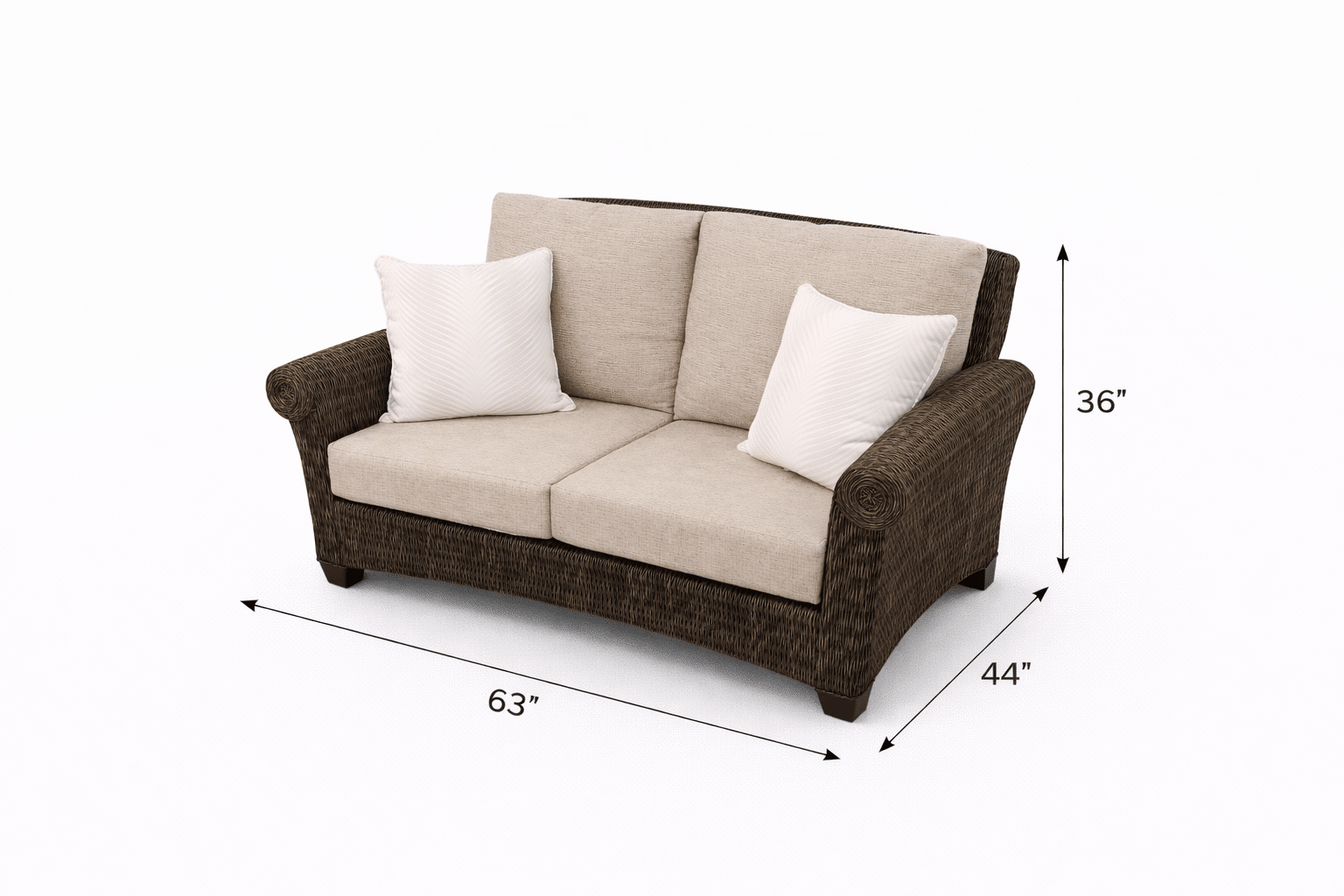
The Relax Loveseat is a current catalog example of cushioned outdoor seating. If you own that piece, verify the exact version and fabric before using its appearance to infer a care routine. Ask for instructions that cover the weave, frame and cushion components of your order.
The Relax Coffee Table offers a separate example of why seating and tables need their own care notes. Confirm the actual top and base materials and the instructions for each. A collection name can help identify furniture, but it does not mean every component should be cleaned with the same product.

If your furniture differs from these examples, use the correct product information instead. Current catalog photographs can help frame a question, but they do not identify an older item conclusively. Photograph your furniture as well as any labels so the showroom can distinguish it from a similar-looking current piece.
Ask about repair options without assuming a result
Palm Casual’s patio furniture repair page describes in-house repair services and replacement options. Its sling guidance explains that a sagging or torn sling seat or back can often be replaced, with suitability depending on the frame. Ask about your particular furniture before arranging work.
Explain the issue and ask what information is needed for an assessment. Confirm whether the relevant service or replacement component is available for the exact item, along with current pricing and timing. Do not assume that a replacement part will fit because its color, overall shape or collection name looks familiar.
Keep the routine simple enough to repeat
Build your maintenance routine around inspection, the correct cleaning instructions and complete drying. Record the date when you clean the furniture or ask a service question, and keep the answer with the product details. Review the furniture after a change in use or an extended period away. Consistent, product-specific care makes it easier to notice a developing issue and ask a precise question before choosing the next step.
Explore Palm Casual
Factory-direct pricing with a risk-free 30-day trial. Visit a showroom or call (407) 299-9188.
Explore Our Buying Guides
Looking for expert advice? Read our Complete Guide to Patio Furniture in Florida for tips on materials, maintenance, and choosing the right set for your space.