


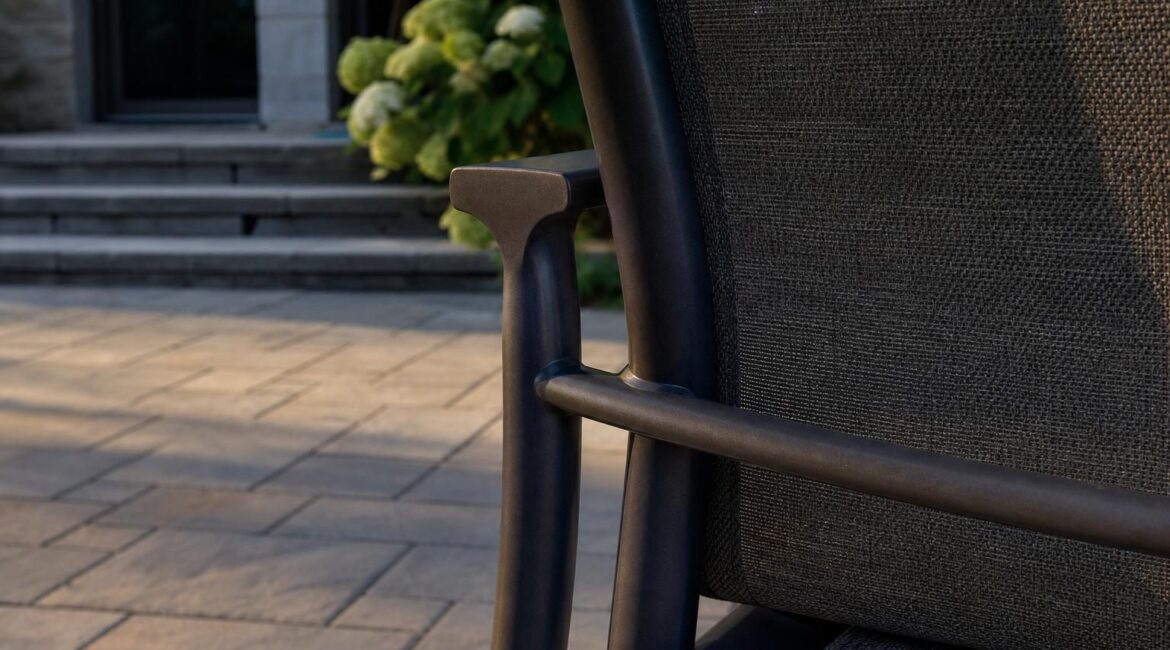
Two aluminum patio chairs can look nearly identical in a photo and behave very differently after a few seasons of daily use. The reason is often invisible from across the room: how the frame pieces are joined. Comparing welded vs bolted aluminum patio chair frames tells you a lot about how a chair will feel today and how it will age.
Neither method is automatically the better one. Each brings real strengths and a few things to watch. The good news is that you can learn to spot the difference in a couple of minutes, using only your eyes, your hands and a bit of patience in the showroom.
How Welded and Bolted Frames Are Built
A welded frame is joined by melting the metal at each connection so the pieces fuse into one continuous structure. Welding is one of the most common ways to permanently join metals, and on a chair it means the legs, seat rails and back supports are effectively a single piece of aluminum once the work is finished.
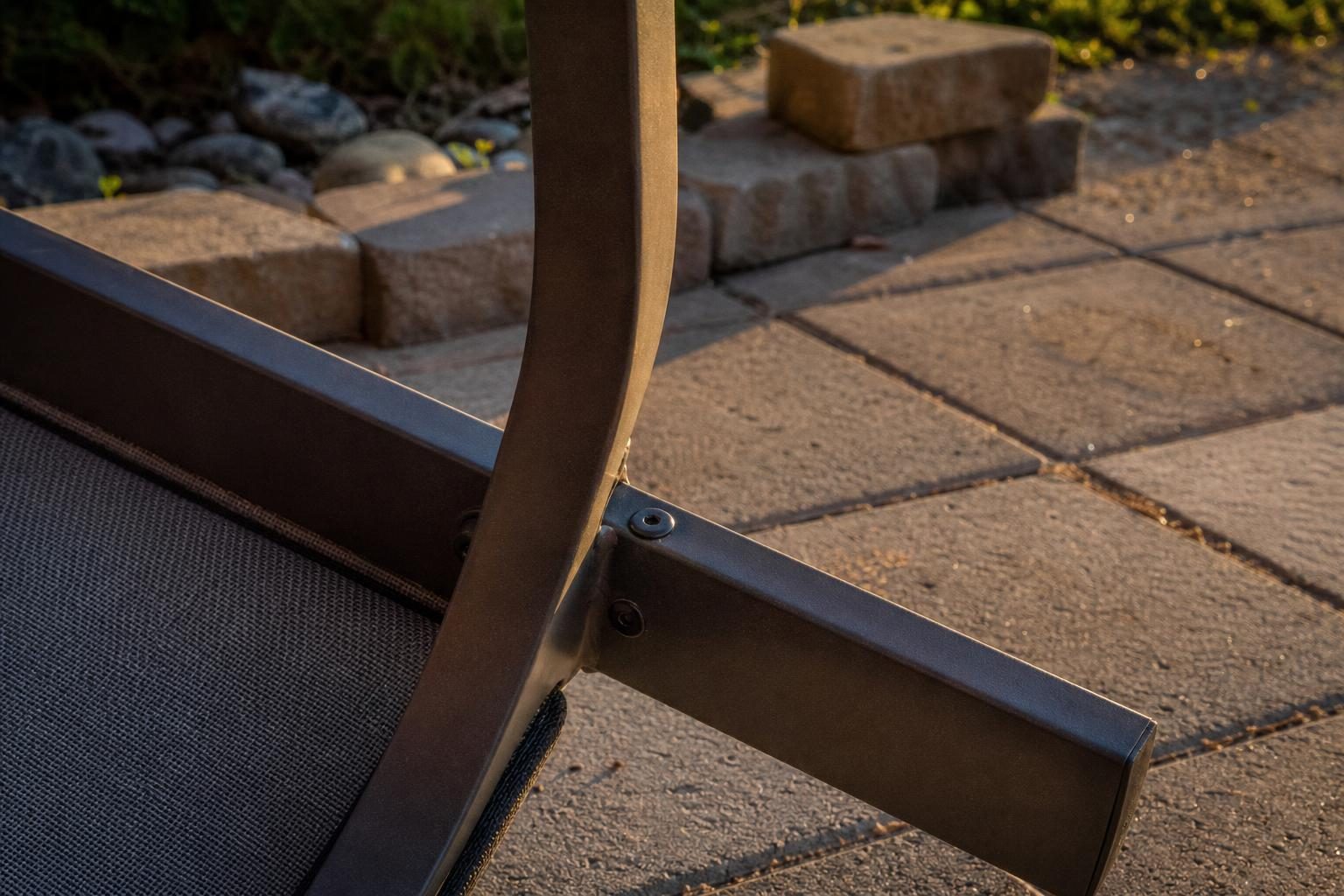
A bolted frame is assembled from separate parts held together by fasteners: bolts, screws, brackets or similar hardware. Sections can be tightened, loosened or swapped without cutting anything apart. This approach is common where chairs need to ship flat or come apart for storage.
Plenty of chairs combine both. A chair may have welded sub-assemblies, such as a leg set or a back frame, joined to each other with bolts. Specific construction depends on the model, so ask a Palm Casual showroom team member how a particular chair is put together rather than assuming from the look.
In plain terms, here is what each approach typically offers:
- Welded: a rigid, one-piece feel; no hardware at the joint to loosen; a clean, uninterrupted look when finished well.
- Bolted: easier to assemble, disassemble and service; individual parts can often be replaced; joints depend on fasteners staying snug.
Rigidity, Repairs and What Each Joint Asks of You
Rigidity is the first thing you will notice when you sit down. A well-made welded frame tends to feel solid and quiet, because the joints do not move against each other. That is a real comfort advantage for people who lean, twist or shift a lot while they sit, and it suits chairs that see heavy daily use around a dining table.
Bolted frames can also feel very sturdy, and many are. The difference is that their strength relies on hardware staying tight. Over time, repeated sitting, vibration and temperature swings can loosen fasteners slightly. Owners who tighten them occasionally often keep chairs feeling like new, while those who never check may notice a faint creak or wobble develop. Neither result is a mystery, just routine upkeep.
Repairs are where the two diverge most. A bolted chair can often have a worn or damaged part swapped out, so a single problem does not mean replacing the whole chair. A welded chair, by contrast, has fewer parts to fail but is less flexible if something needs adjusting; a damaged weld generally needs proper metalwork and a refinished coating. Palm Casual offers in-house repair services and replacement parts availability, so ask what is realistic for the specific chair you are considering.
Comfort factors in as well. Because a welded frame does not flex at its joints, the chair can feel a little more fixed, which some people love and others find less forgiving. A bolted frame may have a touch more give, depending on how tightly it is assembled and how the parts are shaped. Sit for a few minutes in each style and let your body decide, rather than relying on a description.
Finally, think about weight and portability. Bolted chairs can sometimes ship in more compact packaging, while welded chairs are often ready to use as they are. If you rearrange your patio often or store chairs during hurricane season, factor that in.
Welded vs. Bolted Aluminum Patio Chair Frames: What to Check in Person
Any chair looks good under showroom lights. Ten focused minutes of inspection will tell you far more. Use this routine on each chair you like.
Begin with the joints. Look closely at every place where two tubes or castings meet. On a welded chair, the bead should look smooth and continuous, with no gaps, pits or rough spots. The coating around it should be even, with no thin patches or bare edges. On a bolted chair, look at the fasteners: are they tidy, flush and evenly finished, and do they sit snugly against the frame?

Then test how the chair behaves:
- Rock the chair gently side to side and front to back while it sits on a flat floor. It should feel unified, not loose.
- Sit and shift your weight from one hip to the other. Listen for creaks or ticks.
- Push down on the arms and back as if you were standing up. Watch for flex at the joints.
- Tip the chair on its side, if the staff allows, and examine the underside where the seat rails join the legs.
- Run your fingertips along the joints to feel for sharp edges or coating that has pooled.
Look at the finish, too. Most aluminum patio furniture is protected by a powder-coated finish, and joints are the places where coating quality is tested. A clean, uniform finish at the joint is a good sign. If you plan to place the chairs near the coast, our guide on how to inspect aluminum furniture joints before buying and our notes on salt-air maintenance for aluminum patio furniture joints cover what to look for at the joints. You can also browse cast aluminum patio furniture in our collection.
Florida Conditions and Choosing With Confidence
Humidity, rain and salt air all reach the joints first. Water can collect wherever pieces meet, and a joint that cannot drain or dry may hold moisture longer than the open surface around it. That is why it is worth checking whether hollow tubes have drain holes or protected ends, and whether the hardware on a bolted chair is finished to resist corrosion. Ask a showroom team member about the materials used on a given model; specifics differ from piece to piece.
Keep the upkeep realistic, since the best frame in the world still depends on some basic care. A welded chair mostly needs a rinse and an occasional look at the coating. A bolted chair adds one small task: check and snug the hardware every few months, especially after moving furniture or after a storm. That takes minutes, but skipping it for years is how small wobbles turn into bigger ones.
Match the construction to your habits. If you value a solid, quiet feel and rarely rearrange, welded frames are appealing. If you like the flexibility of swapping parts, moving chairs or making adjustments, bolted frames offer it. Many households end up with a mix, and that is perfectly fine. Palm Casual sells factory-direct and has been in business for more than 40 years, so the team is glad to talk through construction with you. Take the time to compare welded vs bolted aluminum patio chair frames on the floor, and you will pick a chair that stays steady well beyond the first summer.
Frequently Asked Questions
Are welded aluminum chair frames stronger than bolted ones?
Not automatically. A good weld creates a very rigid joint, and a well-designed bolted frame can be just as sturdy when the hardware is snug. Quality of construction matters more than the joining method alone.
Do bolted patio chairs come loose over time?
Fasteners can loosen slightly with regular use, so it is wise to check them every few months and tighten as needed. A quick check keeps the chair feeling solid.
Can a welded aluminum chair be repaired?
Often it can, but it takes proper metalwork and a refinished coating at the repair. Ask a Palm Casual showroom team member about repair services for the specific chair you are considering.
How can I tell if a weld is well made?
Look for a smooth, continuous bead with no gaps or pits, and an even finish around it. The chair should feel unified when you rock it, with no creaks at the joints.
Get Started at a Palm Casual Showroom
Come try the chairs, look at the joints yourself, and ask our team how each frame is built. Call (407) 299-9188 or read more about how we work on our factory page.
Explore Palm Casual
Factory-direct pricing with a risk-free 30-day trial. Visit a showroom or call (407) 299-9188.
Explore Our Buying Guides
Looking for expert advice? Read our Complete Guide to Patio Furniture in Florida or Ultimate Guide to Outdoor Furniture in Florida for tips on materials, maintenance, and choosing the right set for your space.
