


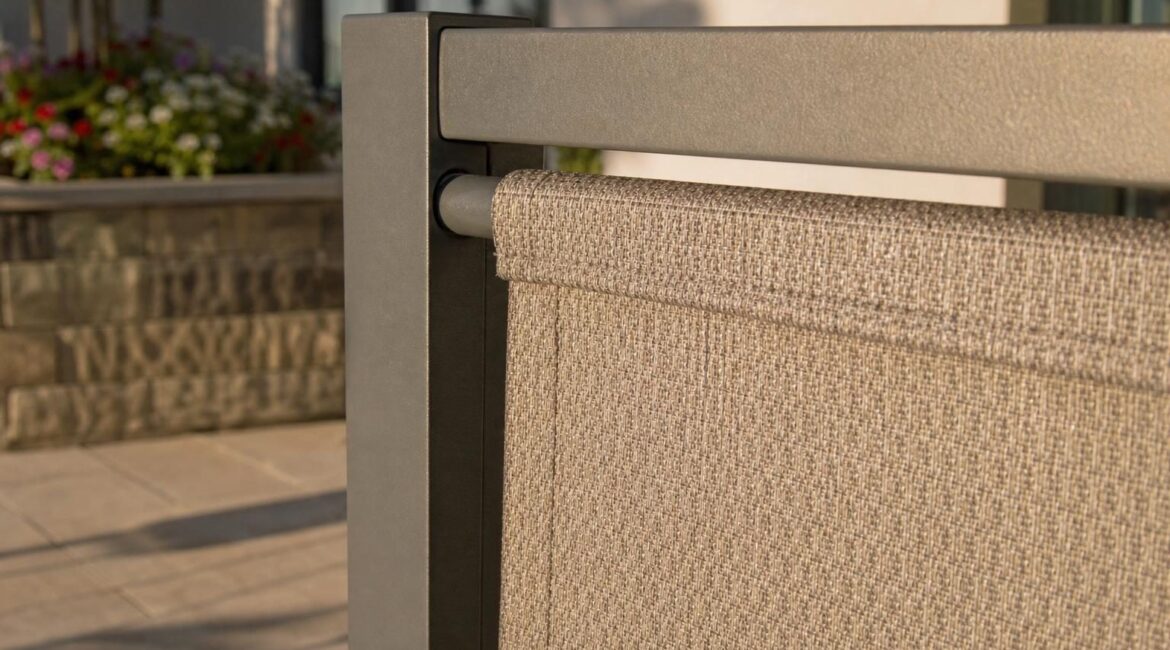
Sewn hem vs clip-on rail sling fabric attachment is not something most shoppers think to ask about, but it is the detail that decides how easy a sling chair is to re-tension or replace years down the road. Sling fabric tension itself gets discussed often; how the fabric actually attaches to the frame gets skipped.
Sewn Hem Over a Spline: The Traditional Method
In a sewn-hem attachment, the fabric is stitched into a tube along each edge, and a spline rod is threaded through that hem and pressed into a channel running along the chair frame. It is a proven, simple method that has been used in outdoor furniture for decades. Tension comes largely from how tightly the fabric was cut and sewn at the factory, so once it is installed, there is limited ability to adjust it yourself.
When a sewn-hem sling loosens with age and use, the usual fix is a full replacement panel rather than a simple re-tightening.
Clip-On Rail Systems: Easier to Adjust and Replace
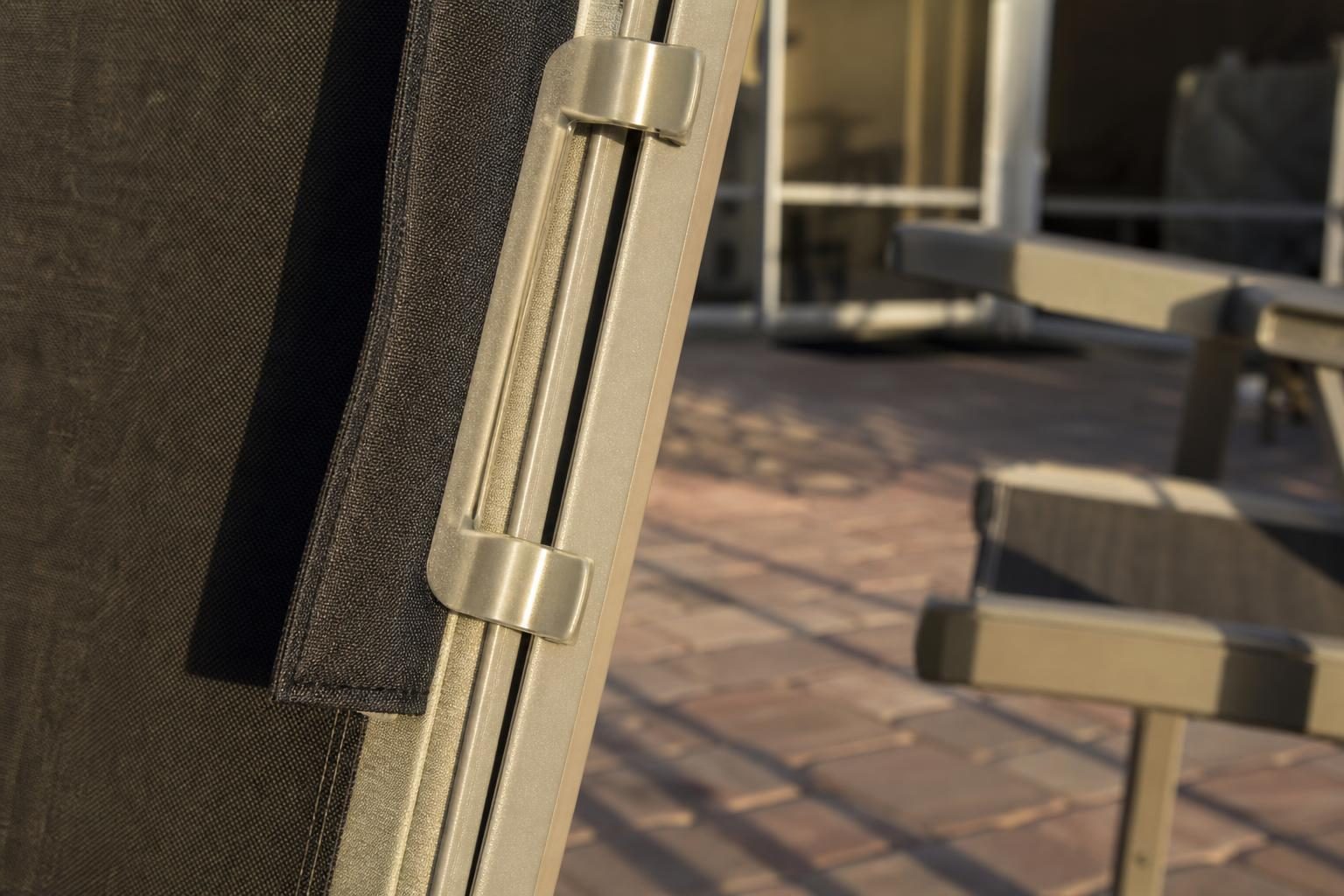
A clip-on rail system uses a rigid edge, often a plastic or reinforced strip, sewn or molded into the fabric edge, which then snaps into a channel along the frame. Some designs allow you to unclip and re-tension the fabric by pulling it slightly tighter before re-securing it, which is not possible with a sewn hem over a spline. Replacement is also generally more straightforward, since you are working with a snap-in edge rather than pulling stitched fabric through a channel.
Which Method to Look For
If you expect to want to re-tension or swap sling fabric yourself down the road, a clip-on rail system gives you more flexibility. If you are comfortable having a professional handle occasional replacement, a sewn-hem construction is a well-tested, reliable choice that has held up in outdoor furniture for a long time.
Either way, ask what attachment method a specific piece uses before you buy, since it is rarely obvious from a product photo alone. For more on sling fabric tension and when sagging means it is time for attention, see our patio furniture guide. General background on sling-seat furniture construction is covered in this overview of sling seating.
Factory-direct for more than 40 years, Palm Casual’s in-house repair services include sling fabric replacement, so a loosened sling does not have to mean replacing the whole chair.
Signs Your Sling Attachment Needs Attention
Regardless of which attachment method a chair uses, a few warning signs tell you it is time for a closer look. Visible sagging in the seat or back is the most obvious sign, but check the edges too, since a fabric edge pulling slightly away from the frame channel, even before the middle of the panel sags noticeably, often means the attachment itself is starting to fail rather than just the fabric stretching. A clicking or popping sound when you sit down can indicate a clip-on rail that has partially released from its channel, which is usually a quick fix rather than a full replacement.
Sun exposure affects both attachment methods over time, since UV exposure degrades the fabric itself independent of how it is attached to the frame. A sling that has faded significantly is often nearing the point where the fabric will fail before the attachment method does, regardless of whether it uses a sewn hem or a clip-on rail.
What to Ask Before Buying Sling Seating
If sling seating is new to you, ask a showroom team member to demonstrate how a specific chair’s fabric attaches and, if possible, how it would be replaced down the road. Some manufacturers use proprietary rail systems that require matching replacement parts, while others use more universal spline-and-channel construction that a wider range of repair services can work with. Knowing this upfront, before a problem develops years down the road, makes any future maintenance far more straightforward.
Comfort Differences Beyond Tension
Aside from how each method holds tension, the two attachment styles can feel subtly different where the fabric meets the frame. A sewn hem over a rounded spline tends to have a smoother, more rolled edge against the back of your legs. A clip-on rail system, depending on the specific channel design, can have a slightly more defined edge where the fabric meets the frame. Neither is uncomfortable in a well-made chair, but if you are sensitive to edge pressure behind your knees, it is worth sitting in both styles for a few minutes before deciding, the same way you would compare cushion firmness.
Replacement Timelines Worth Knowing in Advance
Sling fabric, regardless of attachment method, typically has a shorter practical lifespan than the aluminum frame it is mounted on, since the fabric faces direct UV and moisture exposure that the frame is built to withstand far longer. Knowing roughly when to expect a first replacement, often somewhere in the range of several years of regular outdoor use depending on sun exposure and fabric quality, helps you plan for it rather than being surprised when a sling starts to sag or fade. Asking about expected fabric lifespan alongside attachment method when you buy gives you a fuller picture of long-term upkeep.
Matching Fabric Weight to Attachment Method
Heavier, tightly woven sling fabrics generally hold tension longer regardless of attachment method, but the way that tension is delivered still matters. A sewn hem distributes tension evenly along the full length of the spline channel, which suits heavier fabrics well since the load is spread out. A clip-on rail concentrates more of the holding force at the snap points along the edge, which works fine for most fabrics but is worth asking about specifically if you are considering an unusually heavy or thick sling material, since not every rail system is rated the same way for heavier loads.
A Quick Checklist Before You Buy Sling Seating
Before choosing a sling chair, it helps to run through a short mental checklist: ask which attachment method is used, ask how tension is adjusted or restored if the fabric loosens, ask whether replacement fabric panels are available and from where, and sit in the chair for a few minutes to judge comfort at the edges. Covering these four points takes only a couple of minutes in the showroom and avoids most of the surprises that come up years later when a sling needs attention.
Frequently Asked Questions
Can I re-tension a sewn-hem sling myself?
Generally not without professional help, since the tension is set by the factory stitching. Re-tensioning usually means installing a new panel rather than adjusting the existing one.
Is a clip-on rail sling less durable than a sewn hem?
Not necessarily. Both methods are used across quality outdoor furniture; the difference is mainly in how easy the fabric is to adjust or replace, not in overall strength.
How do I know which attachment method my chair uses?
Look along the frame edge where the fabric meets the metal. A visible seam feeding into a rounded channel usually indicates a sewn hem and spline; a snap-in strip along a flatter channel usually indicates a clip-on rail.
Does the attachment method affect how the fabric feels to sit on?
Not much directly, though a properly tensioned sling of either type will feel firmer and more supportive than one that has loosened over time.
Get Started at a Palm Casual Showroom
Ask our team to show you both attachment styles in person before you decide. Call (407) 299-9188 or learn more about how we build and sell factory-direct on our factory page.
Explore Palm Casual
Factory-direct pricing with a risk-free 30-day trial. Visit a showroom or call (407) 299-9188.
Explore Our Buying Guides
Looking for expert advice? Read our Complete Guide to Patio Furniture in Florida or Ultimate Guide to Outdoor Furniture in Florida for tips on materials, maintenance, and choosing the right set for your space.
