


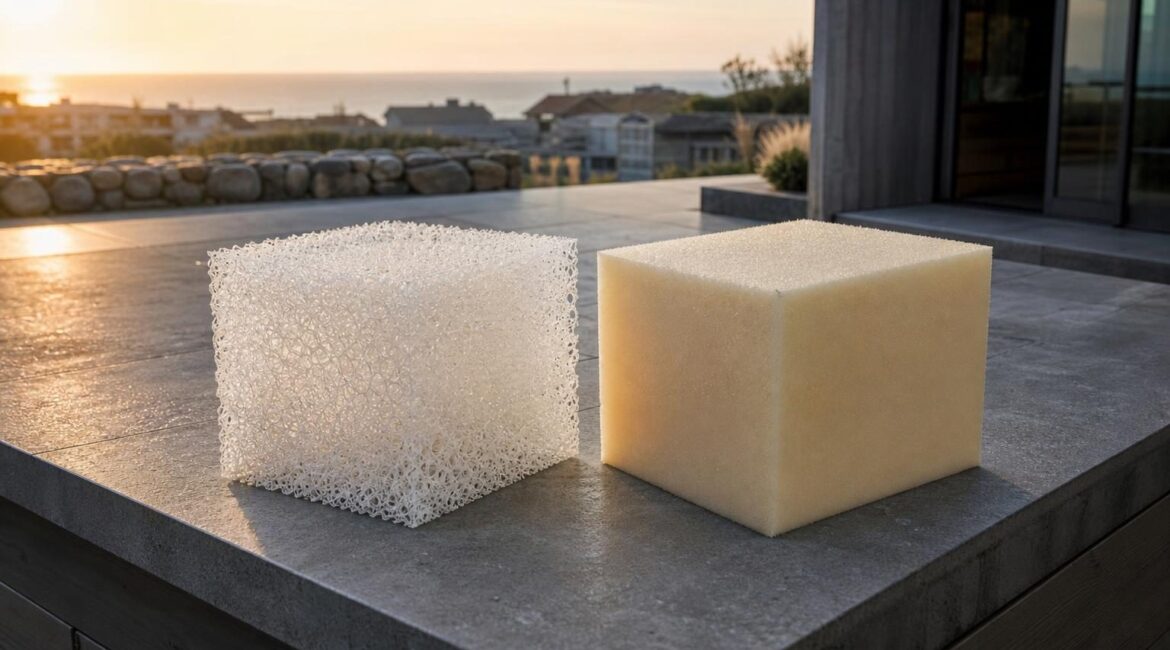
Most shoppers never hear the term “closed-cell” or “open-cell” foam until a cushion stays soggy for two days after a Florida afternoon storm. The fabric on top gets most of the attention, but the foam underneath is what actually determines how a cushion handles rain.
What Closed-Cell Foam Does
Closed-cell foam is made of tiny sealed bubbles that do not absorb water. It sheds moisture on the surface rather than soaking it in, which sounds ideal, but the trade-off is that closed-cell foam is generally firmer and less plush underneath you than open-cell foam. It also tends to be heavier for a given thickness.
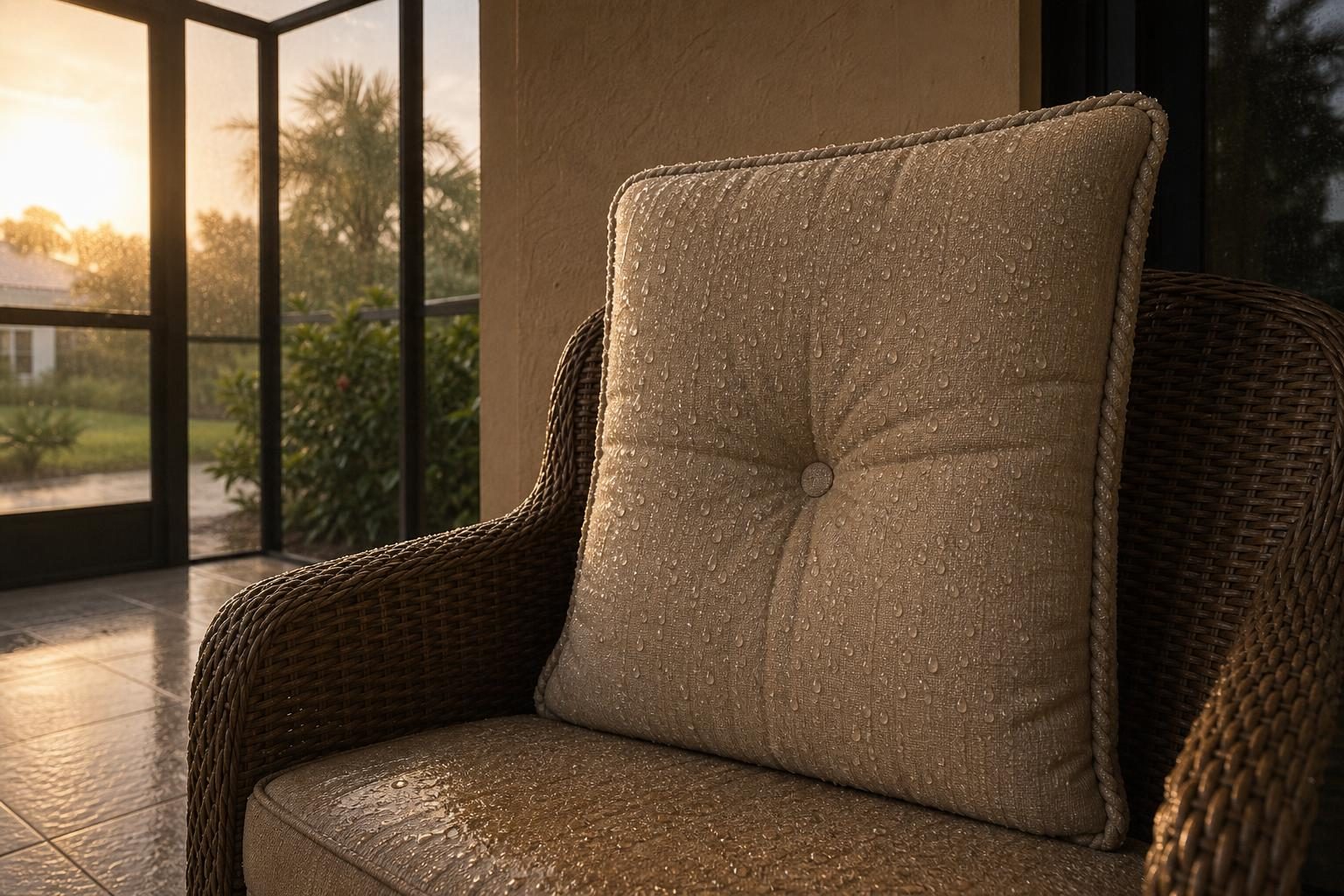
Closed-cell foam works well in pieces that get rained on directly and cannot be moved under cover quickly, such as fixed outdoor seating near a pool.
What Open-Cell (Quick-Dry) Foam Does
Open-cell foam, often marketed as quick-dry foam, has an interconnected structure with tiny channels running through it. Water passes through the foam instead of pooling on top, so a soaked open-cell cushion drains and dries noticeably faster than a comparable closed-cell one, even though it does get wet inside. The feel is generally softer and closer to an indoor cushion, which is why it shows up often in higher-comfort deep-seating collections.
Drainage Design Matters as Much as the Foam Itself
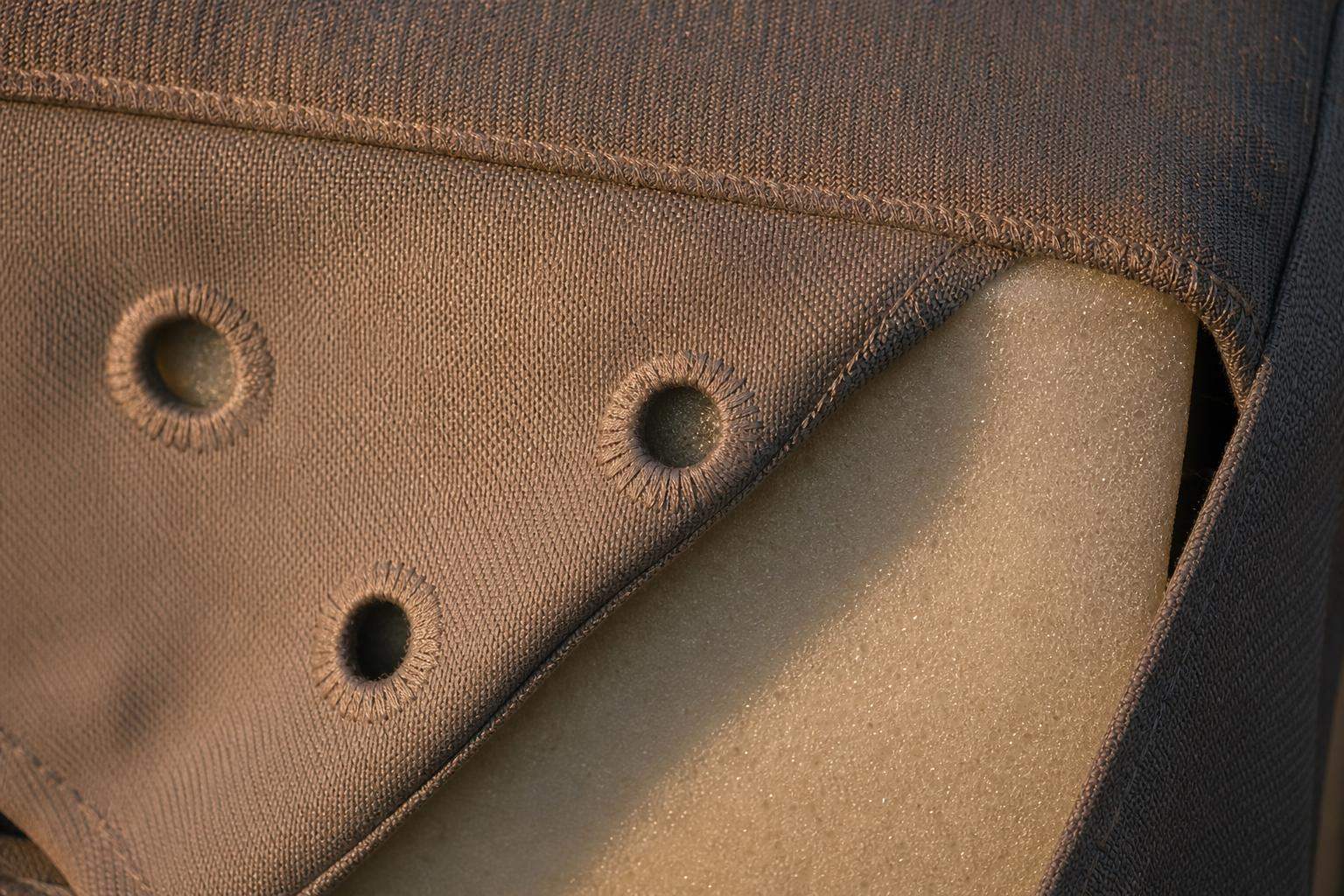
Foam type is only half of the equation. A quick-dry foam cushion still needs a cover with drain holes or channels sewn into the underside so water actually has somewhere to go. A well-drained open-cell cushion can be more comfortable to sit on within an hour of a storm than a closed-cell cushion with no drainage built into the cover at all.
When you are comparing cushions in a showroom, ask specifically how the foam is described and whether the cover includes drainage. Two cushions that look identical on the outside can behave very differently after the first rain.
For more on cushion covers, zippers, and how fabric choice affects everyday care, see our patio furniture guide. General background on foam types is covered in this overview of foam materials.
We have been building and selling patio furniture factory-direct for more than 40 years at Palm Casual, and our in-house repair services can also replace worn cushion covers or foam inserts down the road, so you are not locked into buying an entirely new piece if only the cushion needs attention.
How to Tell What Foam a Cushion Uses Before Buying
Product listings do not always spell out foam type in plain language, so it helps to know what to look for. Terms like “quick-dry,” “fast-dry,” or “marine-grade” foam almost always indicate open-cell construction. Terms like “solid core” or simply no mention of drainage at all more often indicate closed-cell or standard foam without the channel structure. When a listing is unclear, ask directly, since the difference genuinely affects how the cushion performs after the first real Florida downpour rather than being a minor spec detail.
Weight is a rough but useful clue in person. A cushion of a given size that feels noticeably lighter in hand than a comparable one is more likely to use an open-cell structure, since the interconnected channels reduce overall foam density compared to a solid closed-cell block of the same dimensions.
Placement Matters as Much as Foam Choice
Even the best-draining cushion benefits from thoughtful placement. Cushions under a covered lanai or wide overhang see far less direct rain than cushions on an open pool deck, so the foam and drainage decision matters most for furniture that genuinely gets rained on without cover. If your seating is fully protected, a firmer closed-cell foam without drainage concerns can be a perfectly reasonable, comfortable choice, since it will rarely face standing water in the first place.
For furniture that does sit exposed, propping cushions on edge after a storm, rather than leaving them flat, speeds up drying regardless of foam type, since it lets air move underneath and around the cushion instead of just across the top surface.
Fabric Choice Interacts With Foam Performance
The outer fabric matters alongside the foam core. A tightly woven, solution-dyed acrylic fabric like Sunbrella sheds surface water quickly and dries fast on its own, which pairs especially well with open-cell foam underneath, since both the cover and the core are working toward the same quick-dry result. Pairing a slower-drying fabric with fast-drying foam, or the reverse, still works, but you get the best overall drying performance when both layers of the cushion are chosen with moisture in mind rather than just one or the other.
How Each Foam Type Holds Up Over Years of Use
Drying speed is the headline difference, but long-term compression resistance is worth asking about too. Lower-quality foam of either type can lose loft and start to pack down permanently after repeated sitting and sun exposure, while higher-density foam in both the open-cell and closed-cell categories tends to spring back and hold its shape longer. Density, not just cell structure, is the bigger factor in how a cushion feels after a few seasons outdoors, so it is worth asking specifically about foam density rather than assuming open-cell or closed-cell alone predicts long-term durability.
Testing a Cushion Before You Commit
If a showroom has floor samples, press down firmly on a cushion and release, watching how quickly it returns to its original shape. A slow, sluggish rebound on a brand-new cushion is a sign of lower-density foam that may compress faster than expected once it goes home. It is also worth asking whether the specific cushion has been on the floor for a while, since even a well-made cushion softens somewhat with repeated sitting, and a heavily used showroom sample may feel different from a brand-new one. Comparing a fresher sample alongside an older one, when both are available, gives a more realistic sense of how the cushion will feel a year or two into ownership.
Questions Worth Asking Before You Buy
A short list of questions can save a lot of guesswork: does the cushion use open-cell or closed-cell foam, is there a fill density spec available, does the cover include drainage channels or holes, and is the foam replaceable separately from the cover down the road. A knowledgeable showroom team should be able to answer all four without hesitation, and if they cannot, that alone is useful information about how well the product is documented by its manufacturer.
Frequently Asked Questions
Does open-cell foam get moldy faster than closed-cell foam?
Not inherently, as long as it is allowed to fully dry between wet periods. The bigger factor for mold is whether the cushion cover and foam can actually drain and air out, not just which foam type is used.
Is quick-dry foam always more comfortable?
Generally, yes, most people find open-cell quick-dry foam softer and closer to an indoor cushion feel. Firmness preference is still personal, so it is worth sitting on both types before deciding.
Can I replace the foam in an existing outdoor cushion?
Often, yes. Foam inserts and covers can typically be replaced separately from the furniture frame itself, which is worth asking about before replacing an entire piece.
Do closed-cell cushions ever need drainage holes too?
They can still benefit from surface drainage, since water that lands on top needs somewhere to run off even if it is not soaking into the foam.
Get Started at a Palm Casual Showroom
Ask to feel both foam types side by side before you choose. Call (407) 299-9188 or learn more about how we build and sell factory-direct on our factory page.
Explore Palm Casual
Factory-direct pricing with a risk-free 30-day trial. Visit a showroom or call (407) 299-9188.
Explore Our Buying Guides
Looking for expert advice? Read our Complete Guide to Patio Furniture in Florida or Ultimate Guide to Outdoor Furniture in Florida for tips on materials, maintenance, and choosing the right set for your space.
