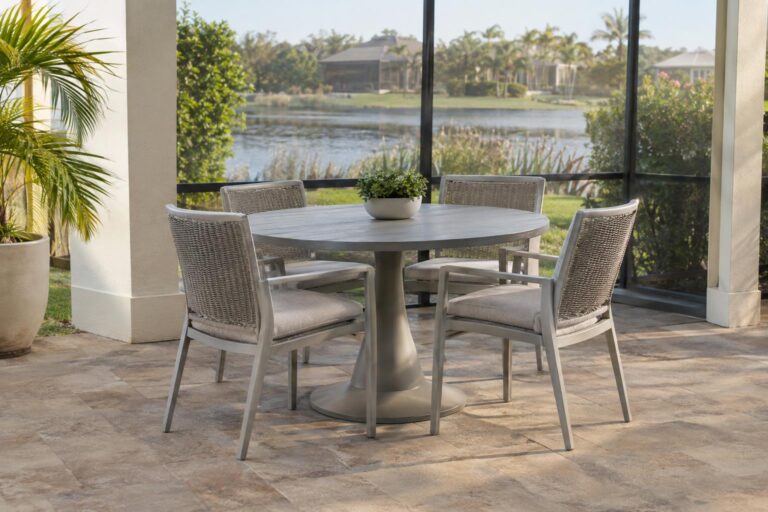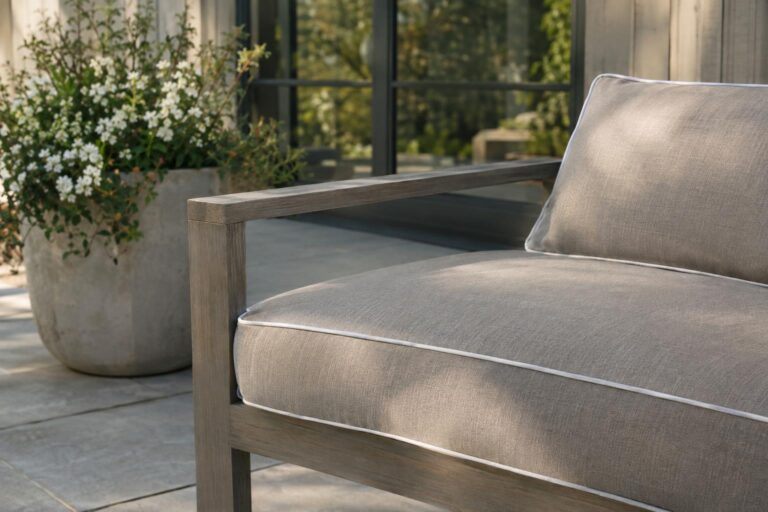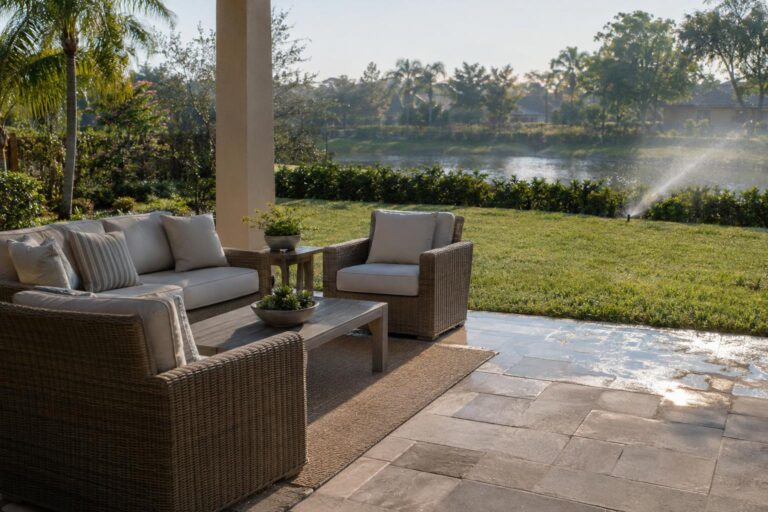

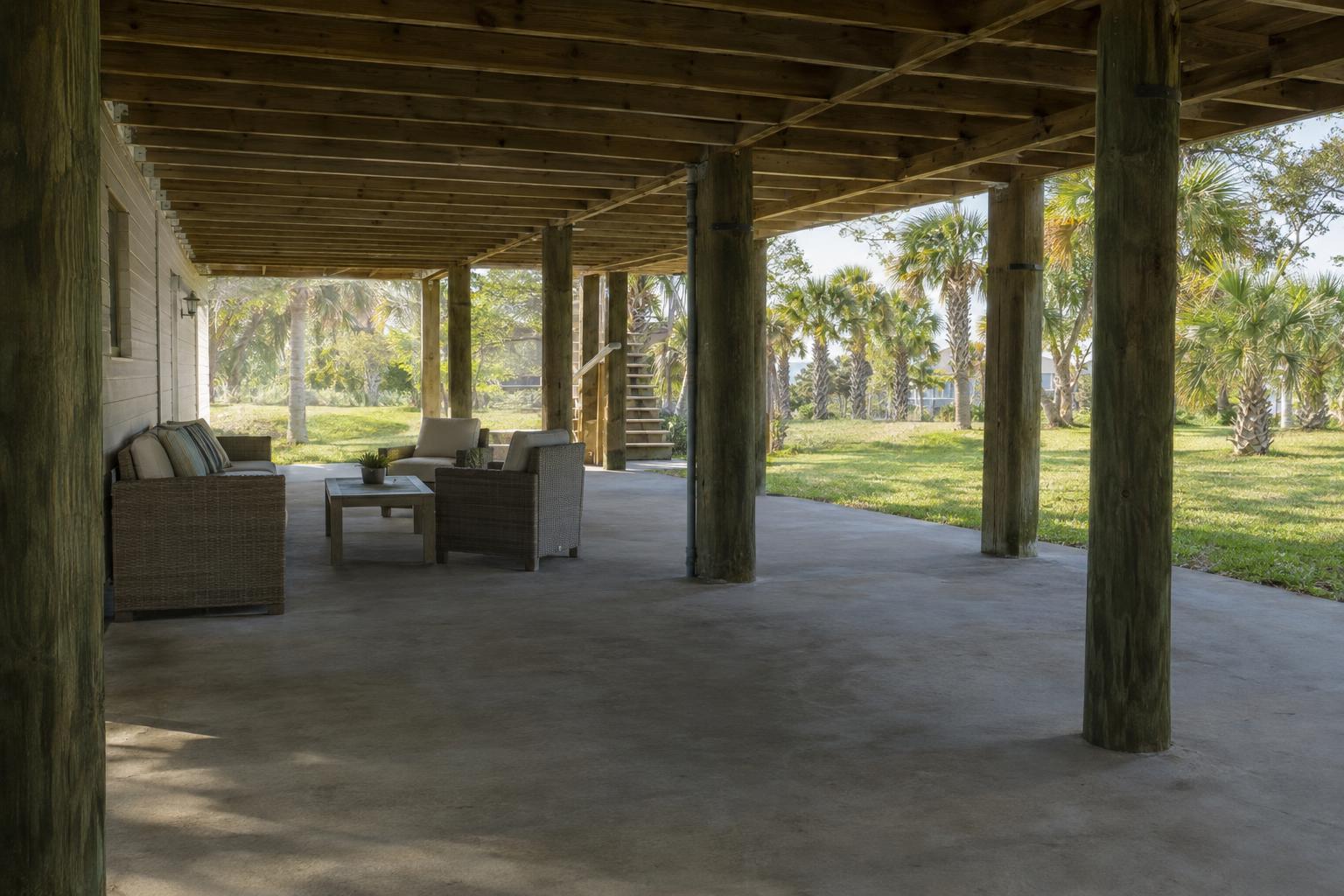
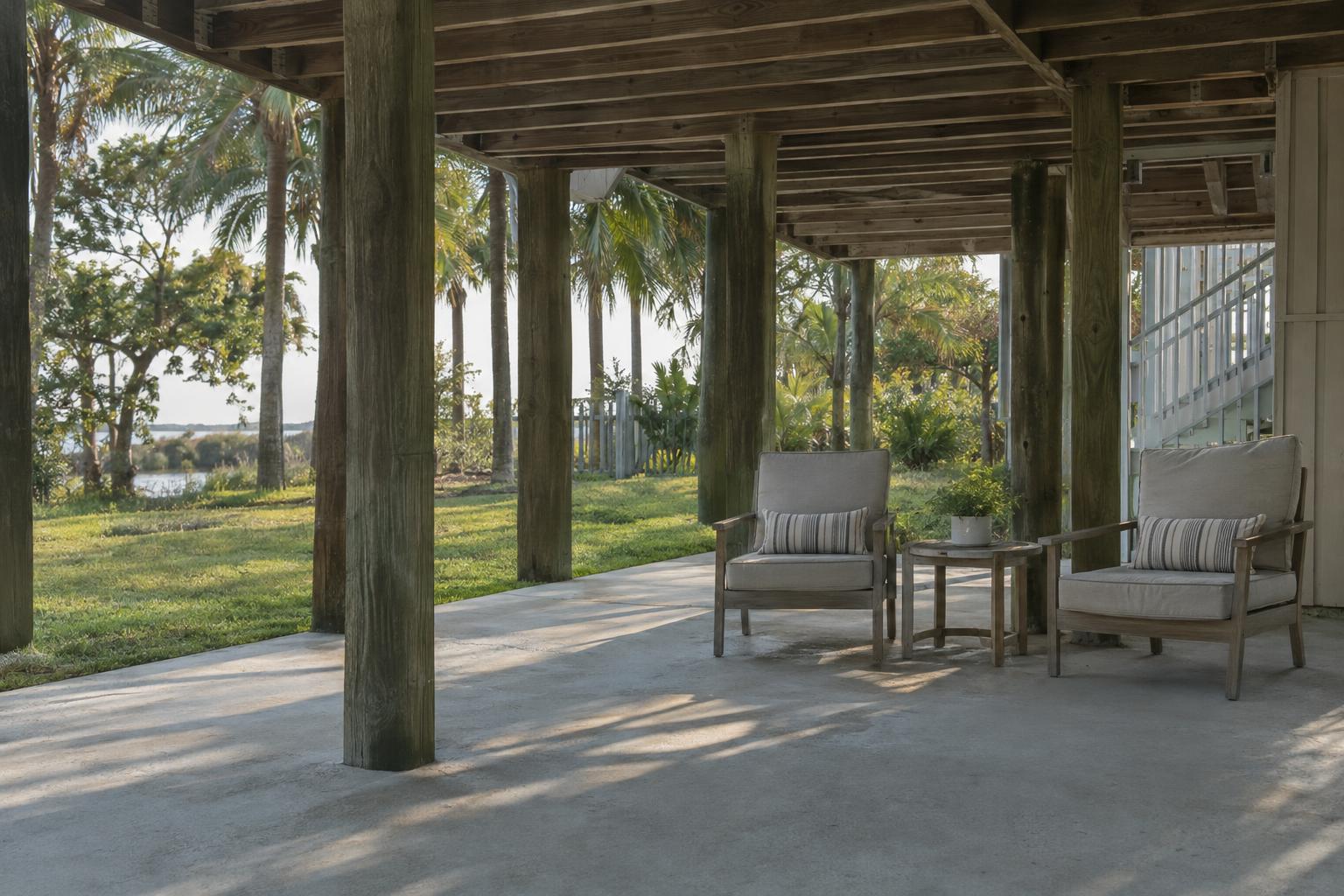
Many Florida coastal homes are built up on pilings, which leaves a covered, ground-level slab underneath that is cool, shaded and tempting to furnish. The decision is how to choose elevated home patio furniture for that space, because the slab is not like a sunny deck or a screened lanai. It stays shaded most of the day, it can stay damp, the air moves between the pilings, and the same floor often doubles as parking or storage. Furniture that works there tends to dry quickly, sit steadily on concrete and move out of the way when the space is needed for something else.
What Is Different About the Space Under the House
Walk the slab at a few times of day before you shop. What you notice will shape every choice that follows.
Shade, damp and slow drying
With a house overhead, the slab may get little direct sun. That is comfortable in summer, but it also means wet surfaces dry slowly after rain or a washdown. University of Florida Extension notes that mildew grows best in moist, warm air, such as in Florida, which describes a shaded, humid slab fairly well. Cushions and thick fabric are the pieces most affected, since they hold water the longest.
Breeze between the pilings
Air often funnels between pilings and through open sides, so a light chair or a loose cushion can shift when the wind picks up. Notice which side of the slab gets the most air, and whether it comes through in gusts or a steady push.
A floor with several jobs
The slab may also be a place to park a car, store kayaks or coolers, or run equipment. Your seating group may have to share that floor, so how easily it moves can matter as much as how it looks.
Frame Materials That Suit Damp Shade
Material descriptions here are general traits, not claims about any one piece. Ask your local Palm Casual showroom about the specific finish and construction on anything you consider.
Aluminum and cast aluminum
Aluminum frames typically resist rust because aluminum lacks the iron that rusts in steel, and a protective finish on the frame can add another layer against moisture. Cast aluminum is heavier and steadier, which can help on a breezy slab but makes it harder to rearrange. Lighter extruded or tubular aluminum is easier to move.
Poly lumber
Poly lumber is a plastic lumber that is often made from recycled plastics, and it is often chosen where moisture is constant. It typically resists soaking up water and often needs less upkeep than painted or oiled wood. It can be heavy, so think about whether you plan to shift it around.
PVC pipe frames
PVC pipe frames are light and are sometimes used where easy movement and wet conditions matter. Ask how a particular frame is built and how it feels when you sit in it.
Sling or Quick-Drying Seating Versus Thick Cushions
On a slab that stays damp, seating that sheds water has a head start. Sling seats are a stretched fabric panel with air on both sides, so they typically dry faster than a thick foam cushion. A cushion can still work, but it needs a plan.
- Sling seats and open-weave panels tend to dry faster after rain or a humid night.
- Thick cushions hold moisture longer in shade, so lift them off the seat on damp days.
- Look for fabrics made for outdoor use, such as Sunbrella, and ask your showroom about the options for quick drying.
- Keep cushions you are not using indoors or somewhere dry rather than on the slab.
No fabric is mildew-proof, so airflow and a dry place to store cushions matter more than any label. Sitting for a few minutes on a sling chair and a cushioned chair is the fastest way to see which one you prefer for everyday use.
Chair Feet on Concrete
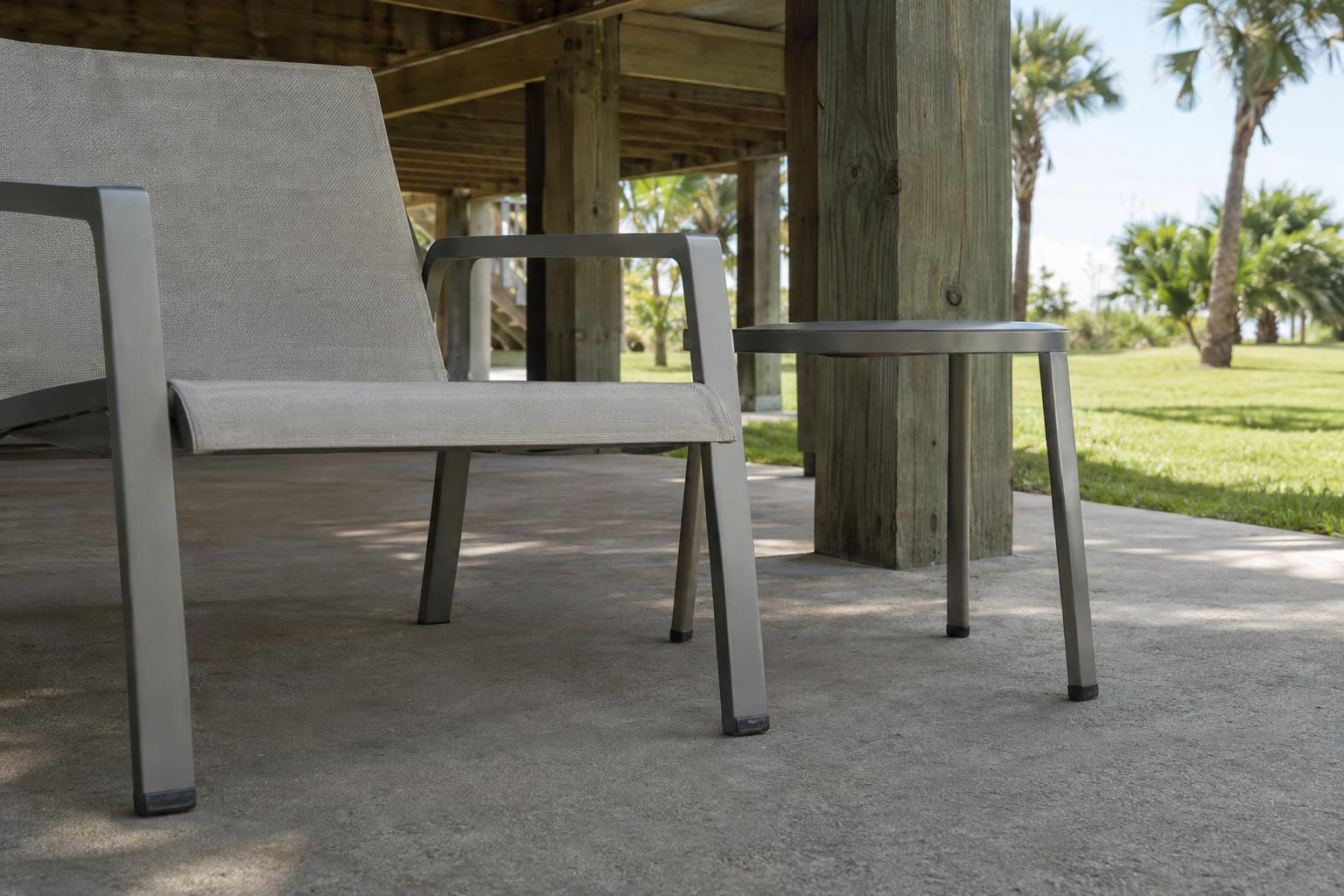
A slab is hard, a little rough and sometimes uneven. Check the feet of any chair or table before you buy. Smooth, flat feet or glides slide more easily on concrete, which helps when you pull a chair in but can let a light chair drift. Narrow feet on a damp slab can leave marks, and rough concrete can wear exposed edges over time. Sit-test the piece on a hard floor in the showroom, and ask what options exist for the feet. If the slab slopes slightly toward a drain, notice whether a table rocks and where it sits most steadily.
Keep It Light When the Space Has Other Jobs
If the slab sometimes becomes a parking spot or storage area, lighter furniture earns its place. Pieces that stack or fold clear the floor quickly and tuck against a wall or piling when you need the room.
Stacking and folding
Our guide to stackable patio chairs and their storage footprint explains how to measure a stack before you commit. If you prefer folding pieces, whether folding patio chairs are worth it in Florida covers the trade-offs of lighter frames. Either one can suit this space as long as the frame material suits damp conditions.
Think about weight honestly
A chair that feels fine in a showroom can feel heavy when you lift it on a daily basis. As a general planning rule of thumb, if you will move a chair every time a car comes in, choose something you can lift with one hand, and confirm that on the actual piece.
Place the Group Where Cars and Equipment Do Not Go
Choose a spot for the seating that stays clear of the path a car or a trailer follows. The side near a stair or the back wall is often calmer than the middle of the slab. Keep a little room around the group so someone can walk past without bumping a chair, and avoid placing pieces beside a spot where car doors swing open. If you use the slab for equipment, leave a clear route so you are not shifting the whole group each time.
If you also want advice on dealing with sand and salt air, our post on Florida beach house patio furniture and sand covers that side of coastal living, so here the focus stays on the slab.
A Short Checklist Before You Buy
- Visit the slab at a few times of day and note where it stays damp.
- Choose frames that suit damp shade, such as aluminum, poly lumber or PVC pipe.
- Favor sling or quick-drying seating, and plan where cushions will be stored.
- Check the feet of each piece on a hard floor.
- Decide how often the group has to move, and favor stacking or folding if the answer is often.
- Mark the area cars and equipment use, and place the group outside it.
Frequently Asked Questions
What is the best frame for elevated home patio furniture?
There is no single best frame, but aluminum, poly lumber and PVC pipe are common choices for damp shade because they typically resist moisture. Pick based on how much you plan to move the pieces and how they feel when you sit. Your local showroom can show you what is available to view.
Can I leave cushions on the slab?
You can, but thick cushions dry slowly in shade and may hold moisture. Many people lift them off or store them somewhere dry between uses. Sling seating avoids the issue.
Will chairs scratch the concrete or get scuffed by it?
They can, because concrete is rough and metal or plastic feet can scrape it. Check the feet in the showroom and sit-test the chair on a hard floor. Ask what options exist for the feet of the pieces you like.
Is stackable or folding furniture better for a shared slab?
Either can work, and the better choice depends on how much room you have to store the pieces. Stacking chairs take less time to put away, while folding chairs can slide flat against a wall. Look at the frame material first, since both need to suit a damp space.
If you would like to sit in a few chairs and compare frames before you furnish the slab, visit a Palm Casual showroom or call (407) 299-9188. Palm Casual has offered factory-direct outdoor furniture since 1976, and you can see what is available to view for a shaded, shared space.
Explore Palm Casual
Factory-direct pricing with a risk-free 30-day trial. Visit a showroom or call (407) 299-9188.
Explore Our Buying Guides
Looking for expert advice? Read our Complete Guide to Patio Furniture in Florida for tips on materials, maintenance, and choosing the right set for your space.