
Every frame color shows something. White frames show one kind of mark, black frames show another, and bronze sits somewhere in between. When you weigh light vs dark patio furniture frame color, the practical question is not which one stays clean, because none of them do. It is which marks you will see from your kitchen window and how often you will want to wipe them away. This comparison looks only at that: what each tends to show between cleanings, and what that means for your routine.
What Each Frame Color Tends to Show
These are general visual tendencies, not rules. Finish texture, lighting and the way your patio is situated change the picture, so treat the list below as a starting point for your own observation.
Light frames: white and sand
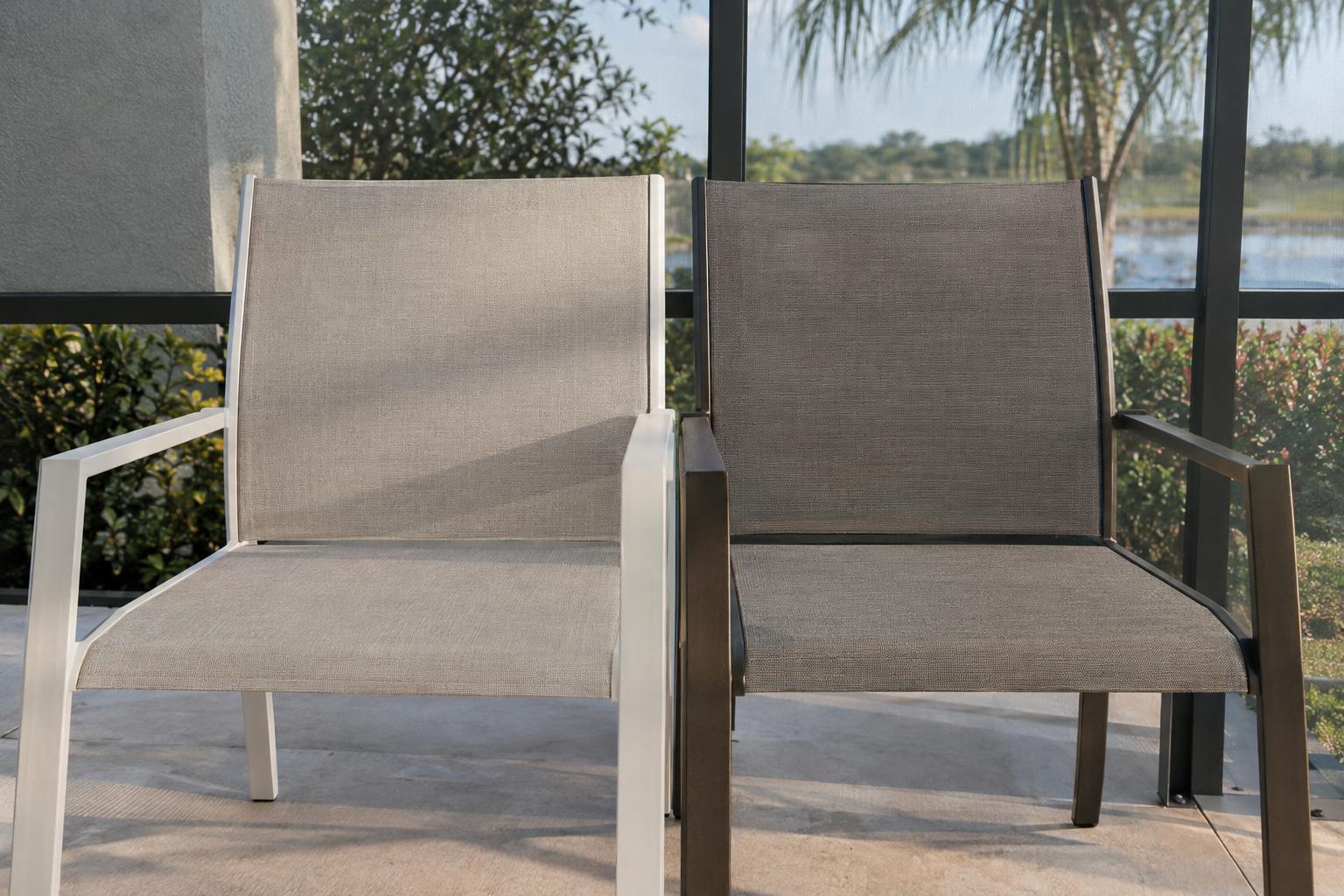
White and sand frames tend to hide dust, dry water spots and mineral film very well, because a pale haze is close to the color of the frame itself. What they tend to show is anything darker than the surface: mildew specks, leaf tannin stains, soil splashed up from the ground, bird marks and the dark edge of a chip where the finish has been knocked away.
Pollen is the interesting case. Yellow-green pollen shows up on white as a slight tint, and it is easiest to see when the frame is wet or in low, angled light. On sand it blends in more.
Dark frames: black, bronze and charcoal
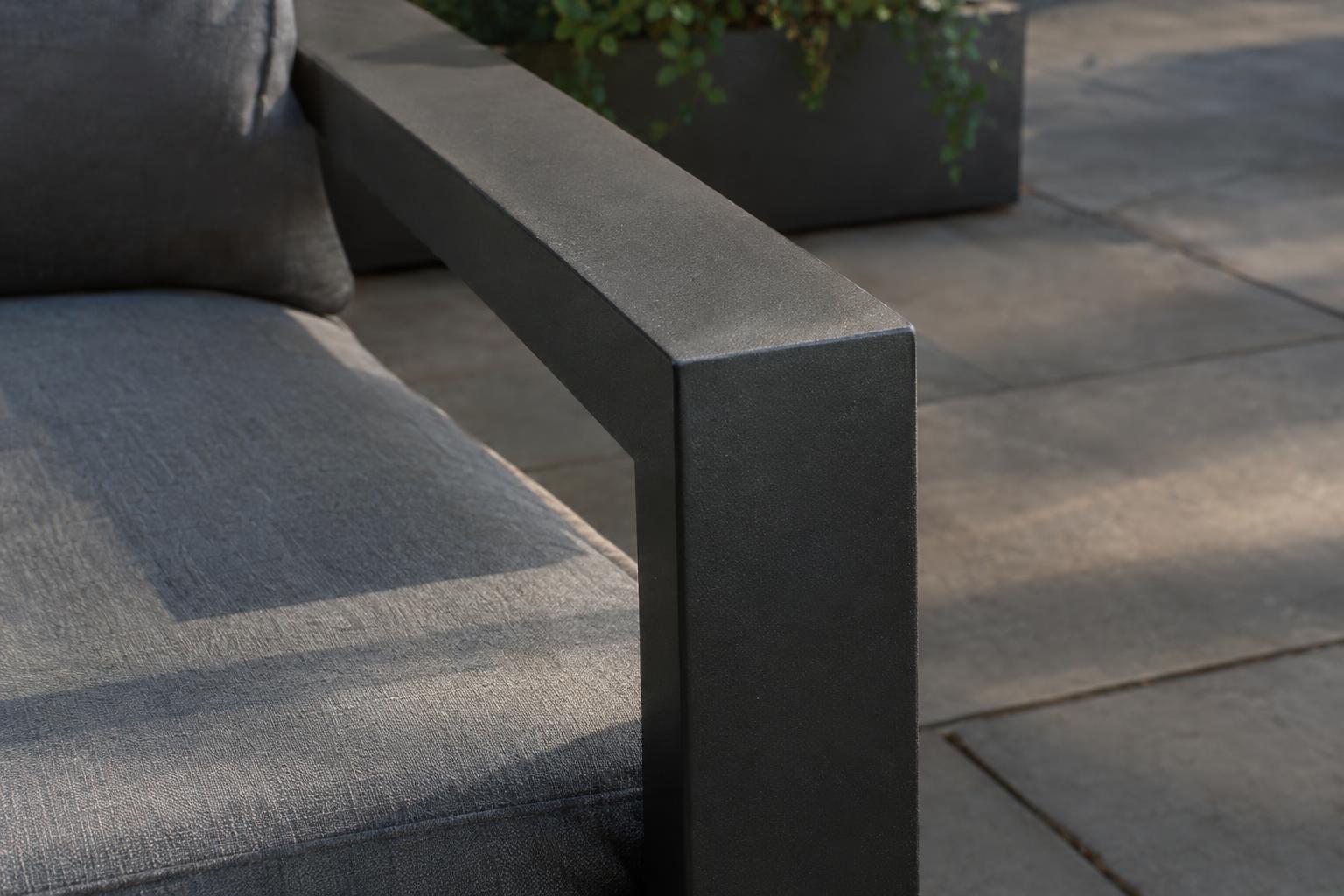
Dark frames flip the situation. Dust, dried rain spots, hard water film, pollen and the pale residue left by a sprinkler tend to stand out clearly, because anything light on a dark surface is easy to spot. Mildew specks and soil are usually less obvious. Chips behave differently too: if the finish is chipped and the bare metal underneath is pale, the mark can catch the eye, while a dark primer or dark metal edge on a dark frame may barely register.
Bronze and charcoal sit in the middle. They show light dust and water marks less starkly than true black, and they hide dark soil better than white does.
How Light Changes What You See
The same frame can look spotless in the morning and streaky at four in the afternoon. Light direction matters as much as color.
Direct sun versus shade
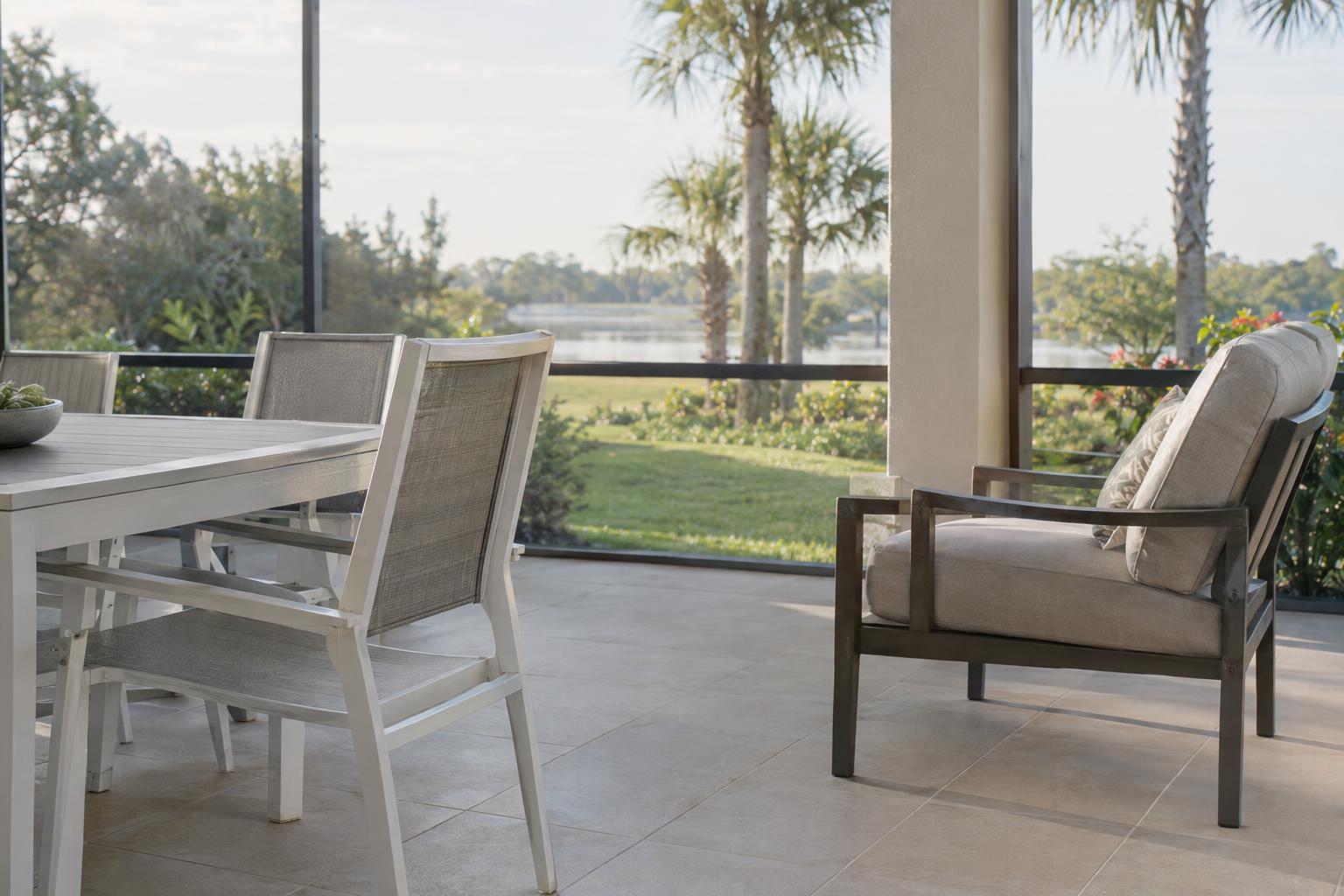
In full overhead sun, a glossy dark frame throws back glare that exaggerates every smudge and fingerprint. A pale frame in the same sun can look washed out and hide almost everything. Under a screen enclosure, a covered lanai or a tree canopy, the light is softer and flatter, so marks on any color are less dramatic.
Low, angled light
Early morning and late afternoon sun rakes across the surface and picks out texture. That is when water spots, fine dust and wiping streaks are most visible on any frame. Check a finish in that kind of light as well as at noon.
Pollen, Dust and Water Spots in Florida
Florida adds its own mix of marks. In Florida, UF/IFAS Extension notes in its publication on urban trees and allergies that trees often release pollen from about January to June, and that pines and oaks produce large amounts of wind-carried pollen. Under or near those trees, you may notice a fine yellow film on horizontal surfaces during those months.
Beyond pollen, there are three other regulars.
- Dust and salt haze: more visible on dark frames, especially after a dry week.
- Water spots: mineral residue from sprinklers shows as pale dots on dark frames and is close to invisible on white.
- Mildew specks: small dark dots in shaded, damp corners show up on white and sand, and are harder to spot on black.
If pollen is your main concern, our guide to cleaning a wicker patio set after pollen season walks through a pollen routine for wicker that is a useful reference for the same season.
How Texture and Speckled Finishes Help
Color is only half of it. A flat, smooth, glossy finish acts like a mirror for whatever lands on it. A matte, fine-textured or lightly speckled finish scatters light, so a thin layer of dust or a few water spots break up and become much less noticeable.
That is why two frames in the same color can behave differently. A smooth black can show dust sooner than a textured charcoal. If your patio gets heavy pollen or hard sprinkler water, a finish with some texture can be more forgiving than a smooth one in the same shade. For general background on that type of finish, see our page on the benefits of a powder-coated patio finish.
Photographs flatten texture, so the only reliable way to judge a surface is to see the actual frame in person.
Wiping Routines That Match the Color
Your cleaning rhythm should follow what your color shows, not a calendar.
For dark frames
Plan on a quick dry or damp wipe of the horizontal surfaces, the arms and the top of the table, when you notice a haze. If you use water, dry the surface afterward so it does not dry into spots of its own.
For light frames
Look for the dark specks. A periodic wash with mild soap and water, a soft cloth and a rinse usually keeps mildew from building in shaded joints. Pay attention to the undersides of arms and the places where frame parts meet, where moisture lingers.
For every color
- Wipe the same spots each time: arm tops, table surfaces and the seat edges you touch most.
- Rinse with fresh water after wiping with soap, then dry with a clean cloth.
- Use soft cloths rather than abrasive pads, which can dull a finish and make marks more visible.
Chips, scratches and touch-up expectations
Over time, almost any outdoor frame will pick up a nick from a chair dragged across stone, a dropped tool or a patio umbrella base. How visible that nick is depends on the contrast between the frame color and what shows underneath.
A light chip on a dark frame, or a dark chip on a light frame, shows up from a distance. A chip where the underlying color is close to the surface color is much easier to live with. As a general expectation, small marks on any frame are normal over years of outdoor use, and a hairline nick is usually more noticeable to the owner than to guests.
If a mark bothers you, ask the showroom what repair options exist for your specific piece. Palm Casual offers in-house repair services and replacement-parts availability, so a conversation about a particular frame is a good first step before you try anything on your own.
A Short Showroom Check
Finishes and colors vary by collection, so a few minutes of looking at the actual frame will tell you more than any description.
- Look at the finish in daylight, not only under showroom lighting. Step outside with the frame or view it near a window.
- View the actual frame rather than a small sample chip, and look at it from several angles.
- Run a hand over the surface to feel whether it is smooth or textured, and notice how much glare it throws.
- Look at the edges, the joints and the underside, where marks collect first.
Temperature is a separate question from visibility, and we cover it in our look at why powder-coated white patio sets stay cooler. If you are still working out which color you like in the first place, our guide to outdoor furniture colors is the place to start.
Frequently Asked Questions
Which frame color shows the least dirt overall?
There is no single answer to light vs dark patio furniture frame color, because light frames tend to hide dust and water spots while dark frames tend to hide soil and mildew specks. The better choice depends on which marks you are more likely to see on your patio, so look at the frame in the light where it will sit.
Does pollen show more on white or black frames?
Yellow-green pollen tends to be more visible on dark frames, where it reads as a pale film. On white it shows as a faint tint, mostly when the frame is wet or lit from the side.
Do textured finishes really hide dust better?
In general, a matte or textured surface scatters light and makes a thin dust layer less obvious than a smooth, glossy surface of the same color. Compare the actual finish in person, because the effect varies from piece to piece.
How often should I wipe down my patio frames?
Wipe when you see what your color shows, such as a hazy film on dark frames or specks on light ones, rather than on a fixed schedule. During heavy pollen months you may notice the need more often.
If you would like to compare finishes side by side in real daylight, stop by a Palm Casual showroom, or call (407) 299-9188 and ask to look closely at the frames that interest you. Palm Casual has been selling factory-direct outdoor furniture from Orlando since 1976.
Explore Palm Casual
Factory-direct pricing with a risk-free 30-day trial. Visit a showroom or call (407) 299-9188.
Explore Our Buying Guides
Looking for expert advice? Read our Complete Guide to Patio Furniture in Florida or Ultimate Guide to Outdoor Furniture in Florida for tips on materials, maintenance, and choosing the right set for your space.