


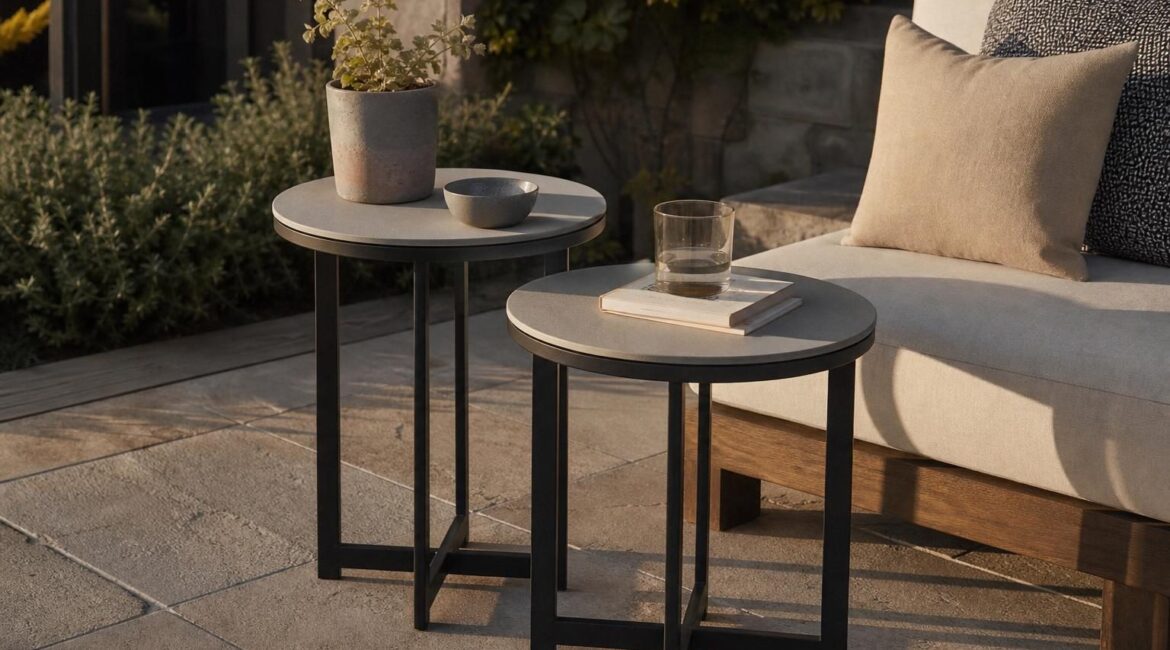
A seating group without a place to set a drink is only half finished. Most people reach for a single coffee table in the middle, but a pair of small tables that slide together and apart is a flexible alternative worth considering, especially if your patio hosts different crowds on different days.
Whether nesting side tables or a single coffee table suits your patio seating depends on how you entertain, how much space you have and how the wind and weather behave where you live. The right answer is usually clearer once you picture a real evening on your patio.
Nesting Side Tables for Patio Seating vs a Single Coffee Table
Nesting tables are small tables of graduated size designed so the smaller ones tuck into or beside the larger one. On a patio, that idea often shows up as two or three compact tables of different heights that can be stacked close together or pulled apart to different corners of a seating area.
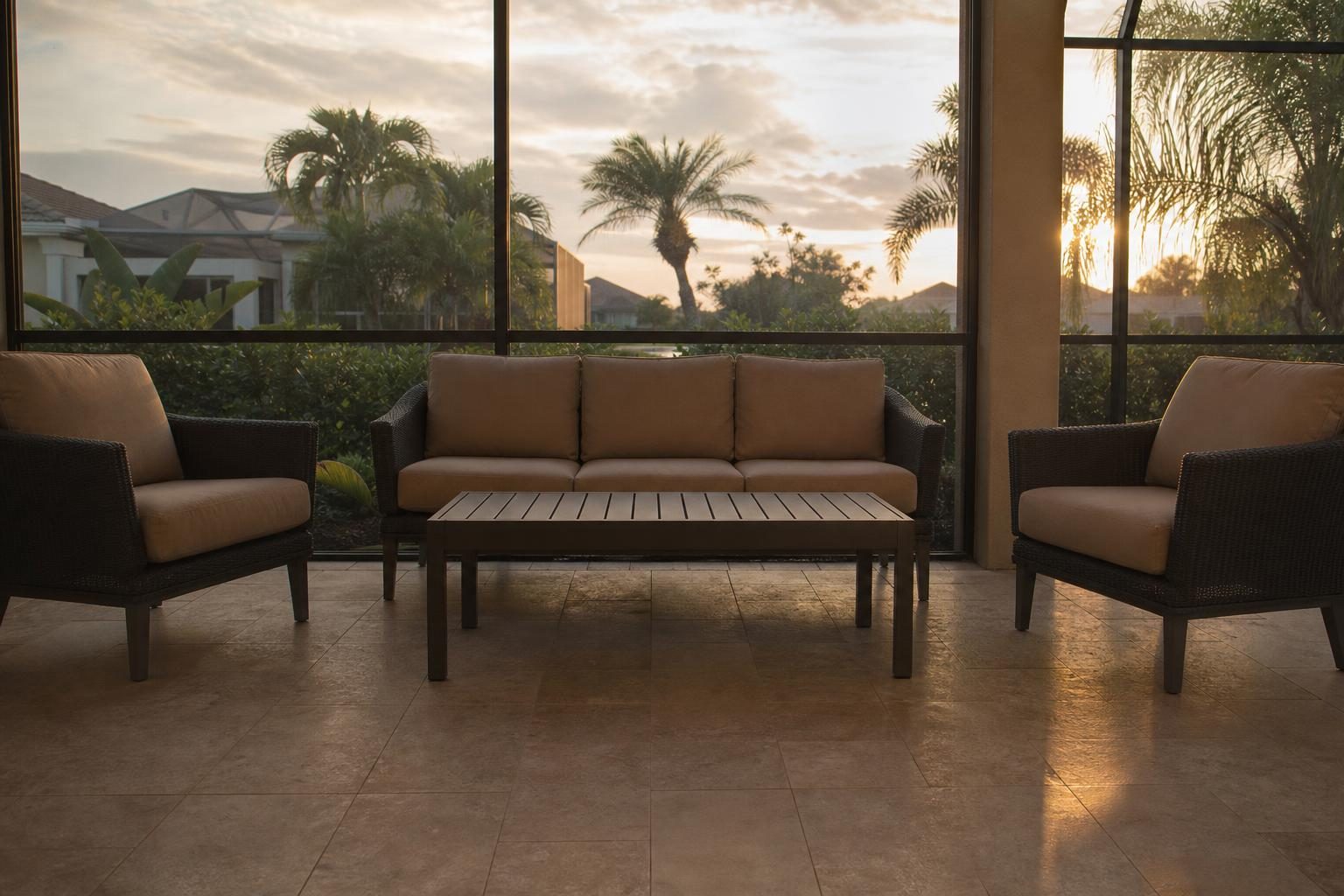
A coffee table is one larger surface, usually placed in the middle of a seating group so everyone can reach it. It anchors the layout, gives the group a center and offers room for shared items like a tray of snacks or a game.
The trade-off comes down to flexibility versus anchoring:
- Nesting tables: adaptable. You can gather them beside one sofa for a quiet evening or spread them around a group so each person has a spot within reach.
- A single coffee table: stable. One larger surface stays put, defines the space and holds more at once.
Neither is right for everyone, and the choice often depends on the size of your gatherings. Two people relaxing after dinner rarely need much surface. Eight people sharing appetizers do. For a broader look at how tables fit into a whole seating plan, see our patio furniture guide. The traditional role of the central table is also explained in this general reference on the history of the central table.
Palm Casual’s collection includes coffee tables and end tables in its outdoor furniture categories. If nesting styles interest you, ask a showroom team member what is available in the design and material you have in mind, since selection changes and varies by location.
Which Layout Suits the Way You Entertain
Think about your last three gatherings on the patio and what people did with their hands. That memory is a better guide than a floor plan.
When nesting tables shine
They work especially well for households with changing needs. A pair beside an outdoor sofa can serve a couple on a quiet night, then be pulled apart to cover both ends of a longer seating row when guests arrive. They are also handy where a large table would block traffic, such as a narrow lanai or a walkway between a door and a pool deck. Because each table is small, you can shift one out of the way and still keep the other in reach.
When a single coffee table is the better anchor
If your group sits around a fire table or shares food regularly, one central surface pulls everyone together. Nothing has to be rearranged when guests arrive, and a large tabletop handles platters, games and drink trays at once. A single table also feels more permanent, which many people like for a patio that is styled and photographed as a room.
Mixing the two
Some patios do both: a coffee table in the center of a sectional and a small side table at the end of each chair. That gives you both a shared surface and individual reach. If the room allows it, that combination often ends up being the most practical.
Spacing and height
Whatever you choose, leave enough room to walk and to reach. A table roughly a foot and a half from the front of the seat is usually comfortable for reaching without bumping shins, though comfort varies by person. In terms of height, a table at or slightly below seat height is the easiest to reach from a low seat, while a side table beside a chair often works best near arm height. Sit in the seat and check with the table in place. Our outdoor coffee table and side table height guide includes more ideas on spacing seating groups.
Florida Weather, Wind and Everyday Practicality
Outdoor tables face conditions indoor ones never do, and small tables show those effects first.
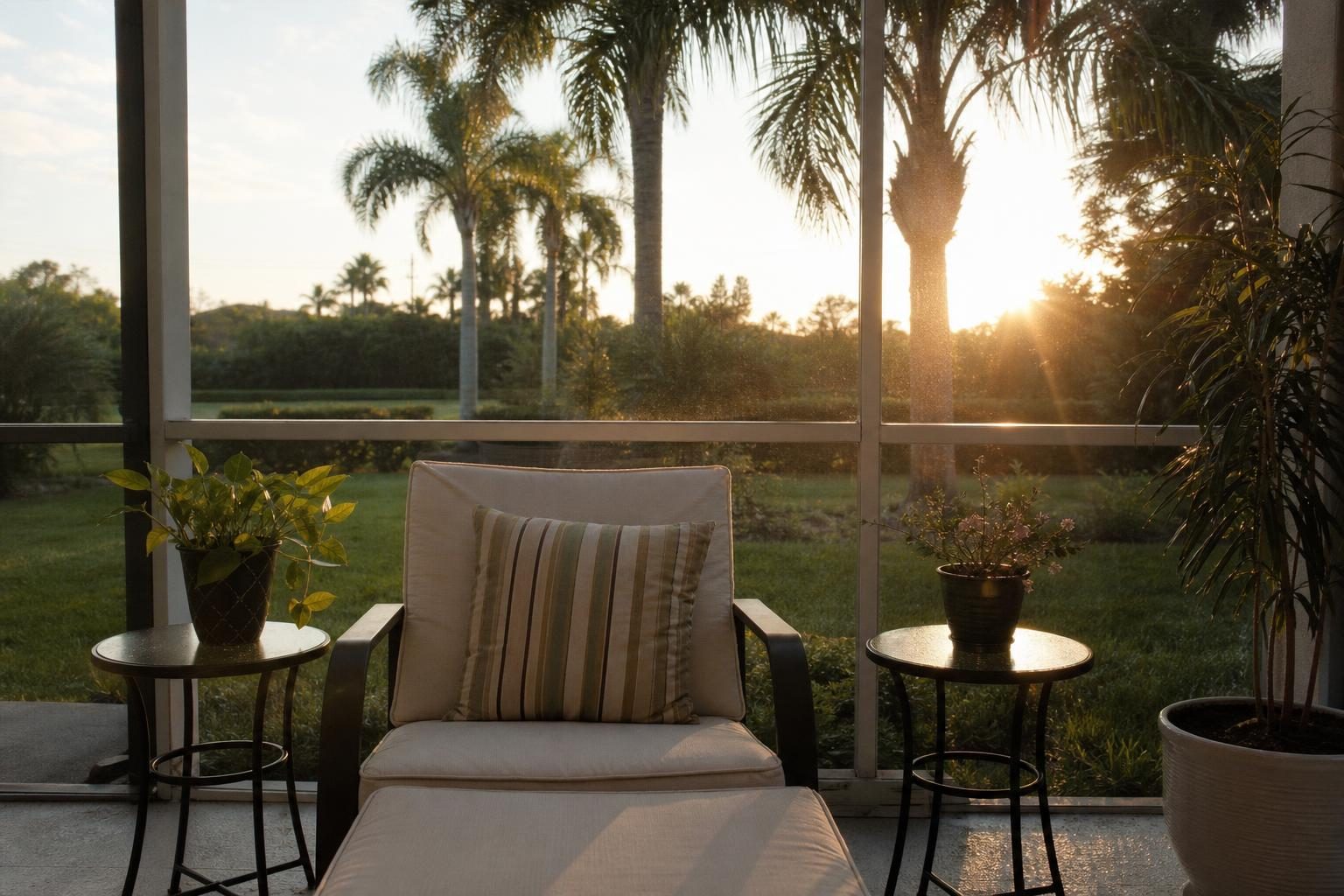
Stability in wind is the first concern. Light, compact tables can tip or slide during a gust or a passing storm, and a small nesting table with a slim base is easier to knock over than a large coffee table with more weight and a wider stance. Look for a wide, flat base rather than a narrow post, and lift a table with one hand in the showroom to sense how light it feels. Heavier pieces such as cast aluminum or thick-framed designs usually stay put better, but weight and design vary by product.
The top surface matters just as much. After a rain shower, a solid or glass top can hold puddles, while a slatted top lets water drain through. Tempered glass looks clean but shows spots and glare, and a textured or slatted surface hides them. Small tables often hold drinks that spill and glasses that leave rings, so easy wiping counts.
Here is how to weigh the practical points:
- Stability: compare base width and weight, and give each table a gentle push.
- Drainage: check whether the top sheds or holds water.
- Cleaning: smooth surfaces wipe quickly, while textured or woven ones need more effort.
- Salt and humidity: near the coast, rinse tabletops and frames regularly, and ask about the finish and hardware on any piece.
- Storage: nesting styles can tuck together when not in use, which frees floor space and makes them easier to move indoors ahead of a storm.
Questions to Ask and How to Choose
Before you decide, sit down and imagine a real evening. Where will each person put their drink? Who has to lean or stretch? What has to move if guests arrive?
A short checklist keeps the decision grounded:
- How many people usually sit in the group?
- Will the group share food from the table, or does everyone mostly hold a drink?
- Is the space narrow, or is there room for a large center table?
- Does the patio see strong breezes that could move light pieces?
- Do you like to rearrange the space often, or set it once?
If your answers point to a small space, shifting crowds and easy rearranging, nesting tables are worth serious consideration. If they point to shared food, steady groups and a defined seating area, a single coffee table will usually serve better. Bring photos and measurements of your patio to the showroom so a team member can help you test both ideas against your seating. Palm Casual has been in business for more than 40 years, and matching tables to real patios is a familiar conversation. In the end, choosing nesting side tables or one central surface for your patio seating is about how you gather, and testing it in person makes the choice easy.
Frequently Asked Questions
Are nesting tables sturdy enough for outdoor use?
It depends on the design and material. Look for a wide base and reasonable weight, and give the table a gentle push in the showroom to see how it responds.
How high should a side table be next to a patio chair?
Many people find a table near arm height or just below the seat feels comfortable to reach. Sit in the chair with the table beside it to confirm, since seat heights vary.
Can I use nesting tables and a coffee table together?
Yes. A central coffee table with small tables at the ends of seating gives you a shared surface and personal reach. Just leave enough room to walk between pieces.
What tabletop is best in Florida rain?
Slatted or open-pattern tops typically drain the fastest, while solid or glass tops can hold water until wiped. Choose based on how you use the table and how much wiping you are willing to do.
Get Started at a Palm Casual Showroom
Come see how different table sizes work beside real seating, and bring your measurements. Call (407) 299-9188 to speak with a team member, or explore how we build furniture at our factory page.
Explore Palm Casual
Factory-direct pricing with a risk-free 30-day trial. Visit a showroom or call (407) 299-9188.
Explore Our Buying Guides
Looking for expert advice? Read our Complete Guide to Patio Furniture in Florida or Ultimate Guide to Outdoor Furniture in Florida for tips on materials, maintenance, and choosing the right set for your space.
