


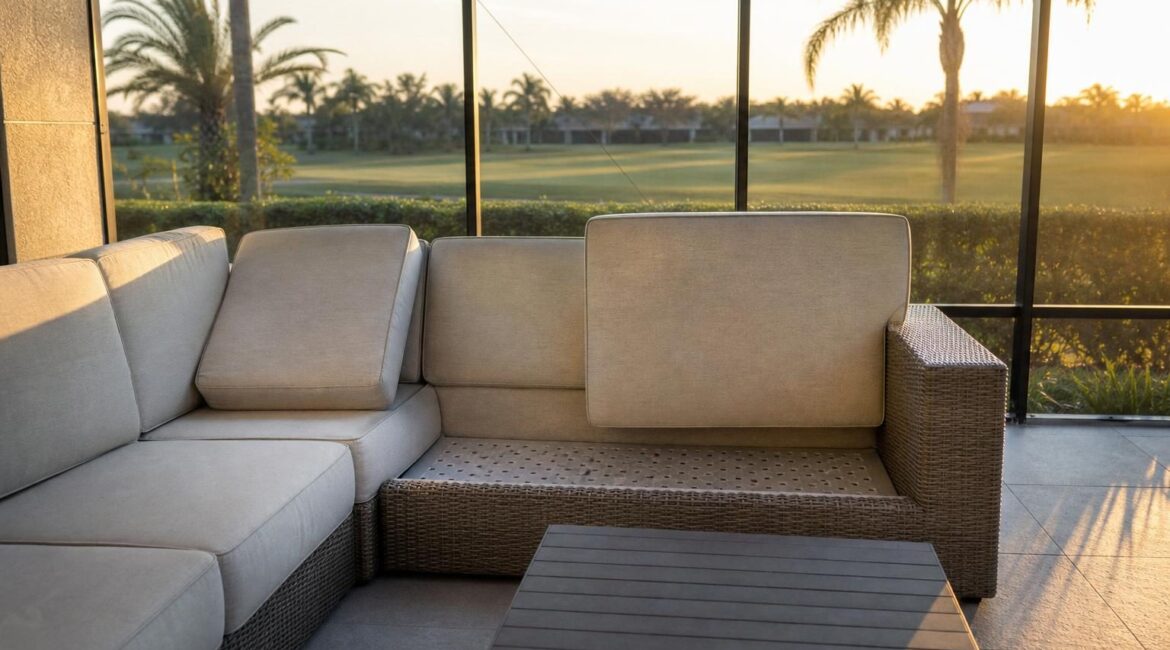
Ask anyone who has bought a big patio sofa what they wish they had checked, and the answer is rarely the color. It is what sits beneath the cushion. The outdoor sectional seat support webbing vs foam question decides how the seat feels on day one, how it drains after a summer storm, and how it behaves after a few seasons of use.
Both approaches can produce a comfortable sectional, and neither is automatically better. They simply feel and behave differently, so the best choice depends on how you sit and what your patio looks like. Here is what each system does, how to test it in a showroom, and what Florida weather adds to the picture.
Outdoor Sectional Seat Support, Webbing vs. Foam: What Holds You Up
A sectional cushion is only half of the seat. The other half is the surface it rests on, and manufacturers generally solve that in a few ways. You will most often see either a network of straps stretched across the frame or a firmer base that supports the cushion more like a shelf. Construction varies from piece to piece, so treat what follows as general background and ask about the exact model you like.
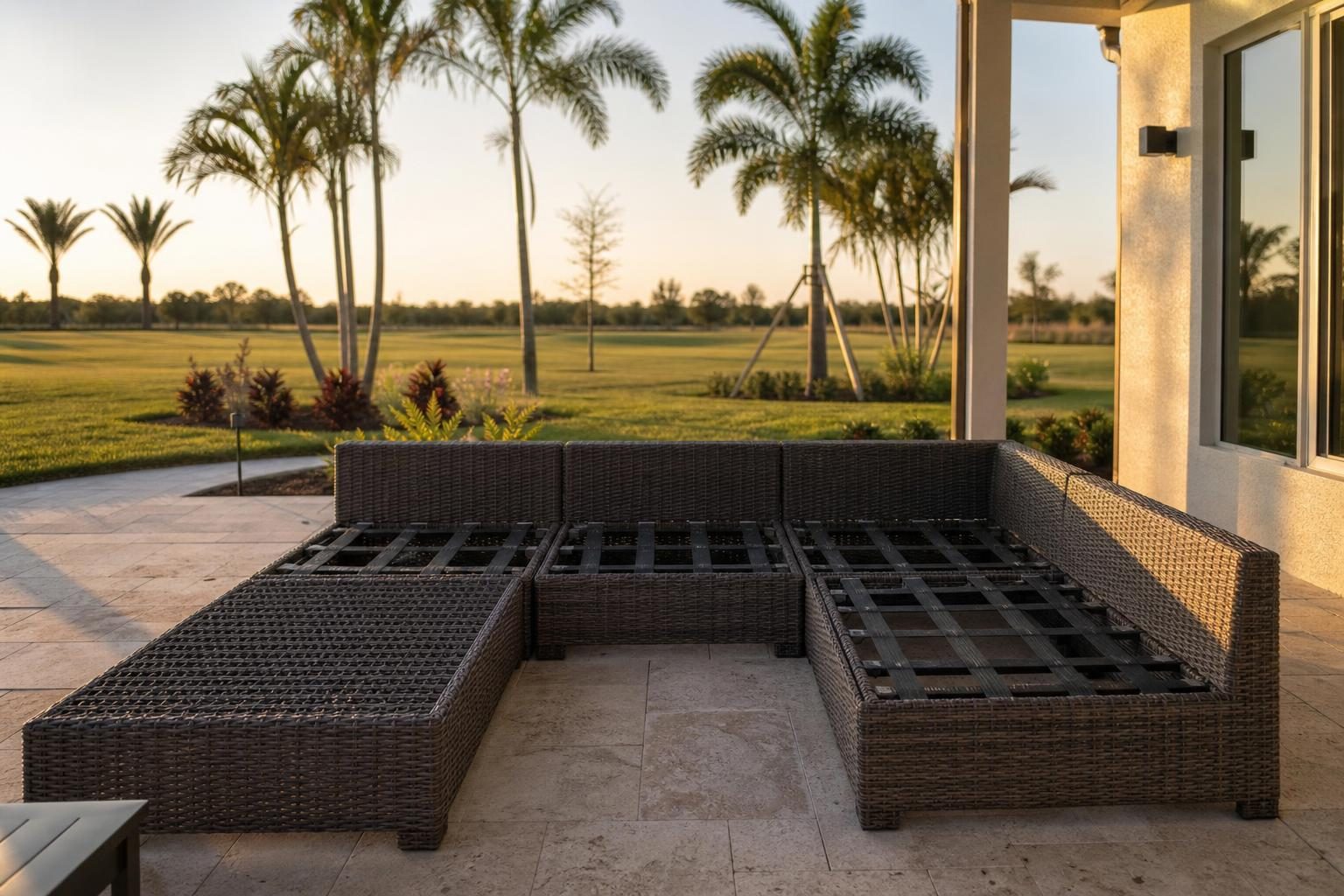
Webbing straps are bands of woven material pulled tight across the seat opening, sometimes with a slight elastic stretch. They create a gently flexible platform. Because there are gaps between the straps, air and water pass through easily, which is a real advantage outdoors.
Foam-wrapped or solid-base seats use a more continuous surface under the cushion, often with padding built into or over the frame. This gives a steadier, more uniform feel because the support does not stretch or flex between straps.
The cushion on top matters too. Modern outdoor cushions commonly use foam cores, and the material behind that is polyurethane foam, one of the most widely used cushioning materials in furniture. But a very good cushion on a poor base still feels wrong, and a modest cushion on an excellent base can feel great. That is why the base deserves your attention first.
When you shop, keep this simple comparison in mind:
- Webbing: a little bounce, good airflow, quick drying, more flex under weight.
- Foam or solid base: a steadier feel, consistent support edge to edge, more attention needed for drainage.
How Each Feels When You Sit, Shift and Stay
The first sit tells you the least. Real differences appear when you move around and stay a while, so test like you would on a lazy Sunday.
Webbing tends to feel a little like a hammock under the cushion. Your weight sinks slightly and the seat gives back a small spring. Many people love that lively, cradling feel, and it can be forgiving when you are sitting for hours. The trade-off is that a flexible seat can feel less firm near the front edge, and lighter and heavier sitters may experience quite different levels of support.
A foam-wrapped or solid base usually feels steadier. It holds a consistent shape from the back of the seat to the front, so sitting down feels predictable and rising feels easy, because the surface does not flex beneath you. Some people find it firmer, while others appreciate that it does not move when someone else sits down beside them.
To compare fairly in person, try these checks:
- Sit at the center, then at an end and at a corner. A sectional can feel different at each point because the support changes near frame joints.
- Lift the cushion and press the base with your palm. Notice whether it is springy, firm or uneven.
- Perch on the front edge to see whether the support holds, then slide back into the corner.
- Have someone sit next to you and watch how much your seat moves.
Ask a Palm Casual showroom team member how a particular sectional is built. The right answer for your household may be different from a neighbor’s, especially if you often host groups or one person tends to lie down full-length.
Drainage, Drying and Florida Humidity
Outdoors, comfort is only half the question. Your seat also has to handle rain, sprinklers, humidity and hot sun, and this is where the two systems differ most.
Webbing has a natural edge for drainage. Water that reaches the cushion can pass down and away through the open gaps, and air can move beneath the cushion to help it dry. In a climate where afternoon showers are routine, that ventilation is a meaningful advantage for keeping cushions fresh.
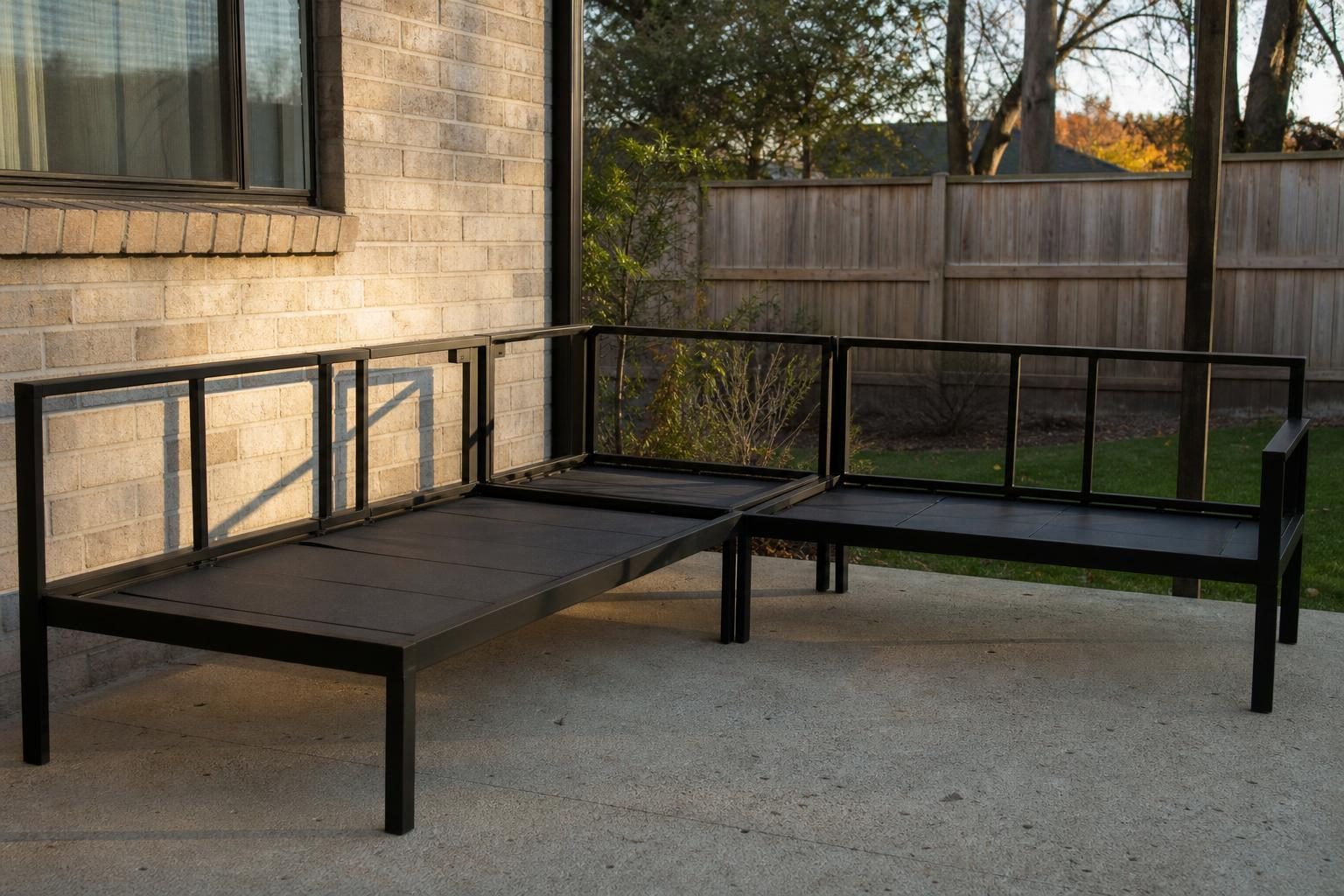
A solid or foam-wrapped base can also work well, but pay closer attention to how moisture escapes. Ask whether the base is open or vented and how water is meant to leave the seat. A base that holds moisture beneath the cushion can leave a damp, musty feel, and in humid weather that is the last thing you want. Quick-drying cushion foam and fabrics such as Sunbrella help, but they cannot fully overcome a base that traps water.
Sun and heat play a role, too. Strong sun warms whatever is under the cushion, and a cushion that lets heat escape sits more comfortably against bare legs. Airflow through a webbed seat can help, though a thick cushion on any base can hold warmth.
Consider how you live with the sectional as well:
- If the sofa sits on an open patio that catches rain, drainage and airflow should rank high.
- If it lives on a covered lanai, the steadier feel of a solid base may be the deciding factor.
- If you tend to leave cushions in place after storms, favor whatever dries fastest.
Longevity, Repairs and Choosing With Confidence
Over years of use, the two systems age differently. Straps can loosen or stretch, and a seat that once felt lively may begin to feel a bit slack. On the other hand, a foam-based support can compress in high-use spots, so the cushion may feel worn even though the frame is fine. Neither result is a surprise; both are normal ways that any seating relaxes with regular use.
What matters is whether the seat can be refreshed. Palm Casual offers in-house repair services and replacement parts availability, so ask about what is possible for the sectional you are considering instead of guessing. Details differ by product, and a showroom team member can walk you through what applies to a specific piece.
To decide, start with your patio and your habits, then use the guidance in our patio furniture guide to narrow your frame and fabric choices. Sit, shift and press the base yourself. If your patio takes regular rain, lean toward whatever drains and dries quickly. If steady, even support is the priority, lean toward a firmer base. Either way, take a moment to weigh outdoor sectional seat support webbing vs foam in person, because a base you like on day one is a base you will still like next summer.
Frequently Asked Questions
Is webbing or foam better for an outdoor sectional?
Neither wins in every case. Webbing usually offers a bouncier feel and better airflow, while a foam-wrapped or solid base feels steadier. Choose based on how you sit and how much rain your patio sees.
Will webbing sag over time?
Straps can slacken gradually with regular use, and how quickly depends on the construction and how often the sectional is used. If you are concerned, ask a showroom team member about how the seat is built and what repair options exist.
How can I tell what is under an outdoor sectional cushion?
Lift or unzip a cushion where it is easy to do so and look at the seat base. You will usually see straps, a panel, or padded framing. If you are unsure what you are looking at, ask a team member to explain it.
Does seat support affect how fast cushions dry?
Yes. Open, ventilated support lets water drain and air circulate, which usually helps cushions dry sooner. A base that traps moisture under the cushion can slow drying, especially in humid weather.
Get Started at a Palm Casual Showroom
Come sit on a few sectionals, lift the cushions and ask how each one is built. Call (407) 299-9188 or find out more about our factory-direct approach on our factory page.
Explore Palm Casual
Factory-direct pricing with a risk-free 30-day trial. Visit a showroom or call (407) 299-9188.
Explore Our Buying Guides
Looking for expert advice? Read our Complete Guide to Patio Furniture in Florida or Ultimate Guide to Outdoor Furniture in Florida for tips on materials, maintenance, and choosing the right set for your space.
