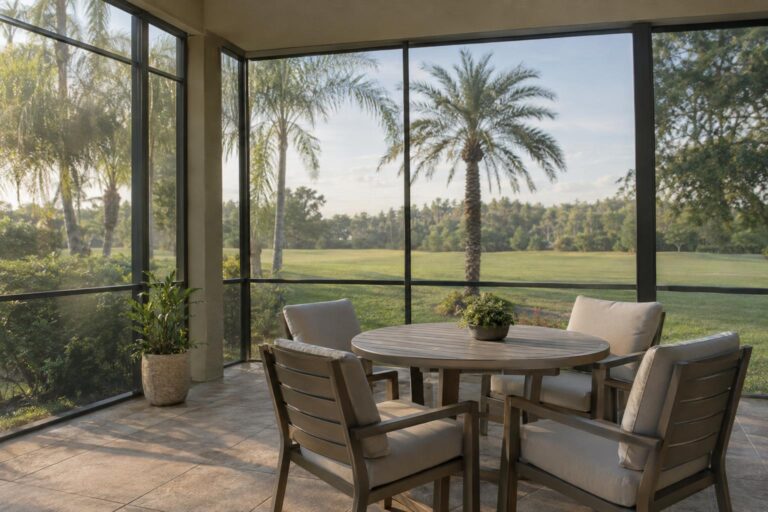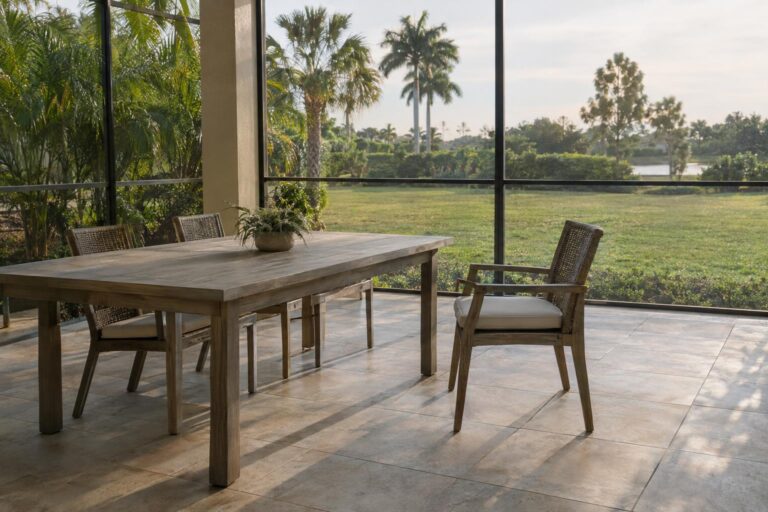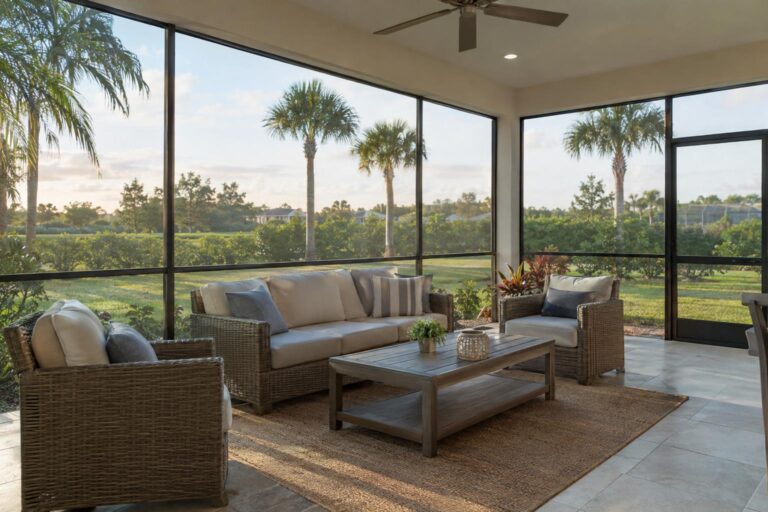

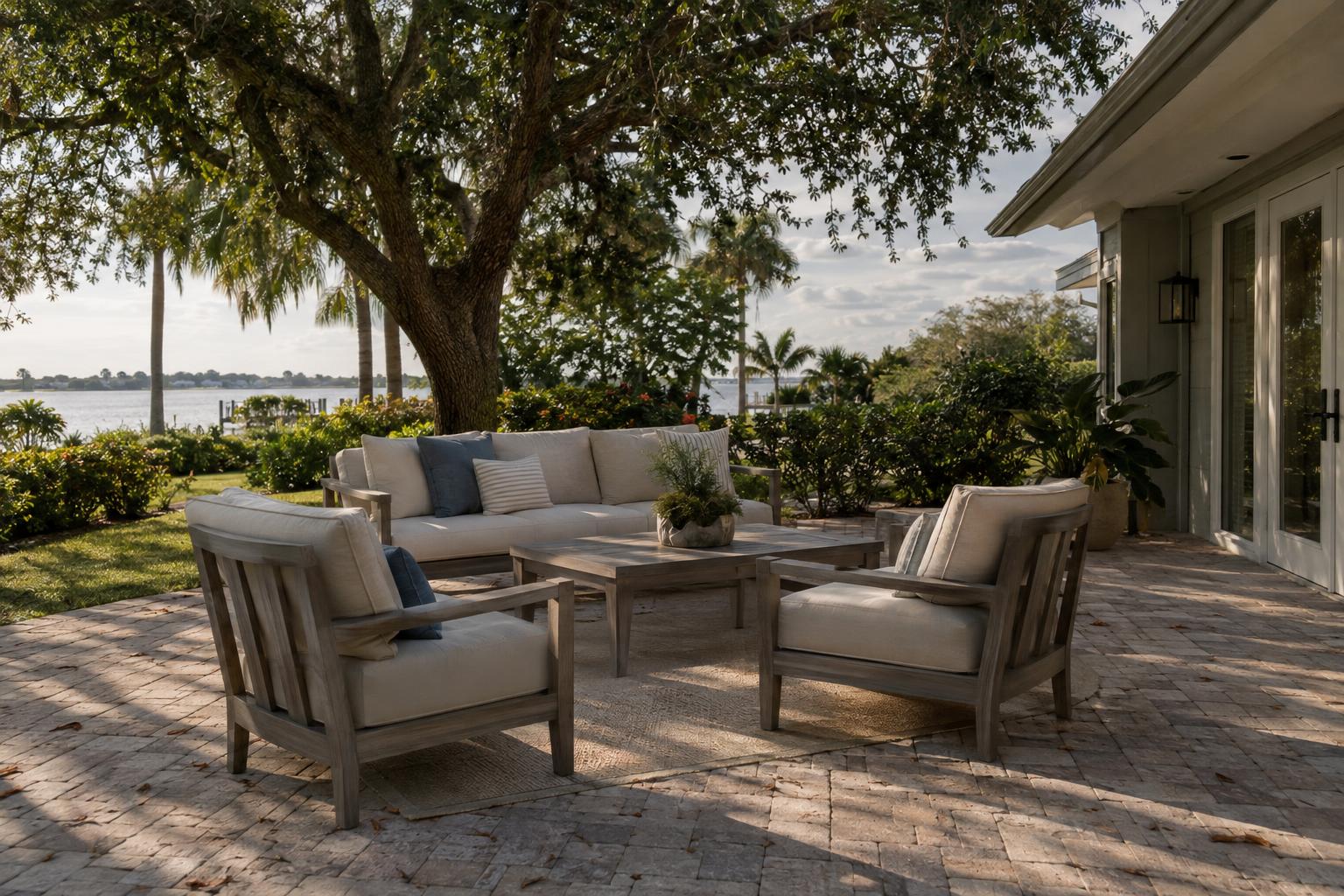
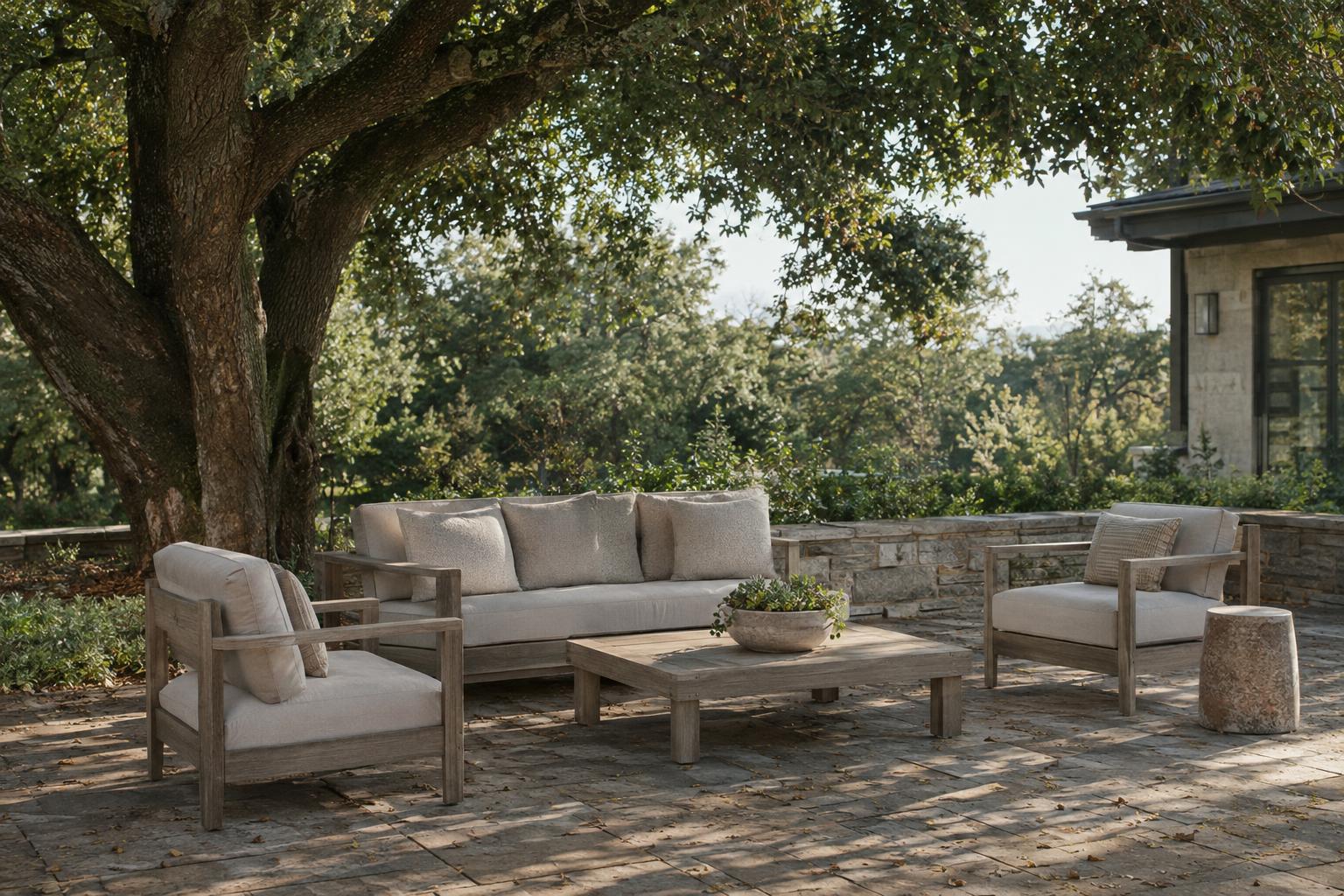
A mature tree is the best shade a Florida patio can have, and it is also the fastest way to cover a seating group in leaves, blossoms and seed pods. The decision is where under or beside the canopy to set your furniture, and how often you will need to tend it. When you set patio furniture under trees, a little planning on placement and a short weekly routine can keep the space comfortable without turning it into a chore.
Where to Set the Seating Group
The trunk, the branches overhead and the edge of the canopy create several different zones, and each one behaves differently. Spend a week watching the spot you are considering before you commit, because what falls, when it falls and how long the shade stays damp all vary from one place to the next.
Dense shade versus dappled shade
Under a thick canopy the ground stays cool, but it can also stay damp for much of the day. Surfaces dry slowly, cushions hold moisture and leaf litter sticks to wet fabric. Dappled shade, where sun filters through gaps and moves during the day, dries faster and is usually easier to keep tidy. If you have a choice, a spot with some morning or afternoon sun tends to be easier on furniture than one that is shaded all day.
The drip line and what it means
The drip line is the ground beneath the outer edge of the canopy, where rain collects on the leaves and falls in heavier drops. Setting furniture right on the drip line means it takes the full load of water and debris after every storm. Moving the group a few feet inside or outside that edge often changes how much falls on it. Many homeowners find that a position near the canopy’s edge gives pleasant shade without the heaviest drop.
Near the trunk or farther away
Close to the trunk the ground is often uneven because of roots, and the area can be darker and moister. Roots can also make a table wobble. A spot a little farther out generally gives you a flatter, brighter surface and a clearer view of what hangs overhead.
What Falls and When It Falls in Florida
Florida trees do not follow a single autumn leaf drop. Many drop leaves, flowers or fruit at different times, and some seem to drop something every month. Learning your tree’s pattern lets you plan around it instead of reacting to it.
- Many Florida oaks tend to shed old leaves in late winter and spring as new growth comes in, and they also drop flowers in spring.
- Palms drop old fronds, flower stalks and small fruit, which can be heavy and sharp-edged.
- Pines drop needles and cones, and the needles can collect in cushion seams.
- Flowering and fruit trees drop blossoms, berries and fruit that stick to damp surfaces.
Keep a simple note on your phone for a season recording when you notice the heaviest drop. You will probably find two or three predictable periods, and those are the weeks when cushion storage and extra sweeping matter most. The dates vary with the species and the year, so treat your own observations as the guide.
Damp Shade and Slower Drying
Moisture is the quiet partner of debris. A wet leaf on a dry seat brushes off. A wet leaf on a damp cushion in cool shade can sit for days. Under a canopy, dew, rain and humidity all linger longer than in open sun, so surfaces take more time to dry and the debris stays in contact with them.
Help your cushions dry
After rain, stand cushions on edge or lean them against the table so air reaches both sides. Wipe off standing water from seat surfaces and slings before you sit. If cushions are damp from a humid night, give them a few hours in a brighter spot. Cushions that stay wet repeatedly are a setup for mildew, and our guide on how to remove mildew from outdoor cushions covers what to do if it appears.
Keep air moving around the frame
Pull the furniture a short distance from walls, hedges and low branches so air can move around it. Stacked leaves under a chair or in a corner keep a frame damp as well, so a quick sweep underneath is part of the routine.
A Quick Weekly Routine That Actually Gets Done
The most useful habit is also the smallest one. A short check once a week keeps debris from building into something harder to deal with. Do it at the same time each week, such as Saturday morning before you sit down, so it becomes automatic.
The quick version
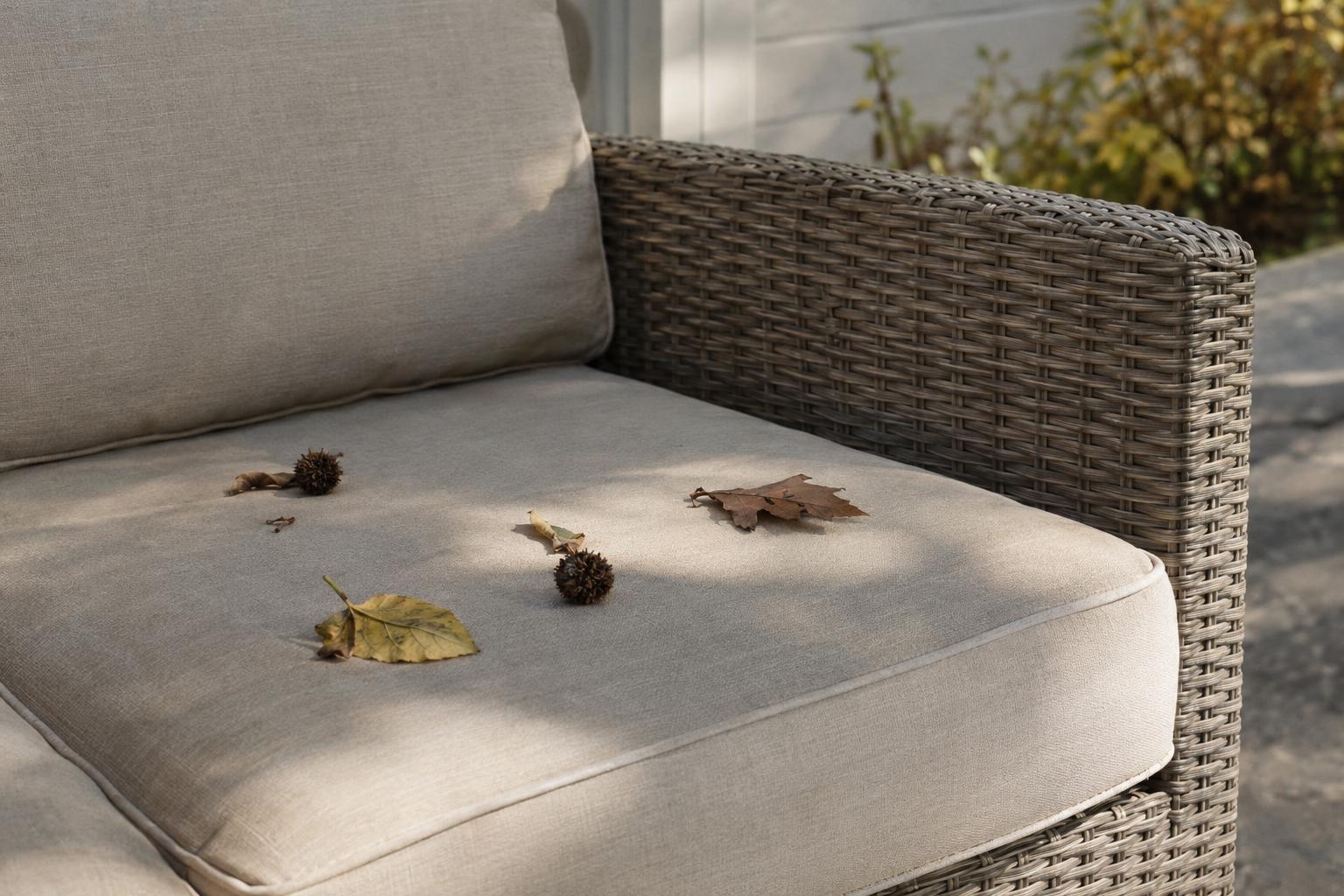
- Brush or sweep seat surfaces, table tops and arms with a soft brush.
- Run your hand along cushion seams and crevices to catch needles and seeds.
- Lift the cushions and look underneath for leaves and standing water.
- Sweep the floor around the legs so debris does not pile against the frame.
- Look up for loose branches, heavy fruit or fronds ready to drop.
The heavier-drop version
During your heavy-drop weeks, check more often and consider lifting the cushions and putting them in a deck box or indoors when you are not sitting out. Use a soft brush on woven pieces, since fibers and seams catch small items. Our article on cleaning a wicker patio set after pollen season is a helpful companion for the spring weeks when blossoms and pollen arrive together.
Birds and other extras
Trees attract birds, and a spot beneath a favorite branch tends to collect droppings more often than one a few feet away. If one section of the patio is hit repeatedly, move the group out from under that branch.
Check the Branches Overhead
Shade is lovely until a limb comes down. Make a habit of looking at the branches above your seating group, particularly after storms. Dead branches, cracks or limbs that seem to hang lower than before are worth noticing. UF/IFAS Extension’s guide to wind and trees and lessons learned from hurricanes notes that decay and large dead branches make a tree more vulnerable in strong wind.
When to call a professional
If you see a dead limb, a large crack or anything that worries you, keep furniture and people out from under it and ask a qualified arborist to assess the tree. This is not something to judge from the patio chair, and no furniture placement replaces a professional opinion. Moving the seating group away from a questionable limb in the meantime is an easy first step.
A Short Setup Checklist Before You Settle In
- Watch the spot for a week to see what falls and how fast it dries.
- Choose dappled light over all-day dense shade where you can.
- Stay a few feet inside or outside the drip line.
- Keep the group off exposed roots and clear of low branches.
- Plan a weekly sweep and a cushion-storage plan for heavy-drop weeks.
- Have a tree professional look at any limb that concerns you.
If you are still deciding on a set to live under the shade, our patio furniture guide helps you compare frame styles and cushion options, and the team at Palm Casual can walk you through what each material asks for in care.
Frequently Asked Questions
How close to the trunk should patio furniture be?
There is no single distance that suits every tree, but a spot a little away from the trunk is usually flatter and brighter than one right beside it. Roots, shade density and overhead branches all matter, so watch the location for a week first. If you have doubts about the tree, ask a qualified arborist.
Is it better to keep patio furniture under trees or in the open?
It depends on what you want from the space. Tree shade is comfortable but adds debris and slower drying, while open sun is cleaner but hotter. Many people choose dappled shade near the canopy edge as a middle ground.
How often should I clean off furniture under trees?
A quick weekly brush of seat surfaces and cushion seams works for most patios. Check more often during the weeks when your tree drops the most. Lifting cushions off the seats when you are not using them also helps.
Should I store cushions during heavy leaf or fruit drop?
Storing them during the heaviest weeks is a good habit because it keeps debris and moisture away from the fabric. A deck box or an indoor closet works well. Put them back when you are ready to sit, after a quick shake.
If you would like help picking a set that suits a shaded, tree-lined patio, visit a Palm Casual showroom or call (407) 299-9188. Our team has been in the outdoor furniture business since 1976 and can also talk through in-house repair services and replacement-parts availability for pieces you already own.
Explore Palm Casual
Factory-direct pricing with a risk-free 30-day trial. Visit a showroom or call (407) 299-9188.
Explore Our Buying Guides
Looking for expert advice? Read our Complete Guide to Patio Furniture in Florida for tips on materials, maintenance, and choosing the right set for your space.