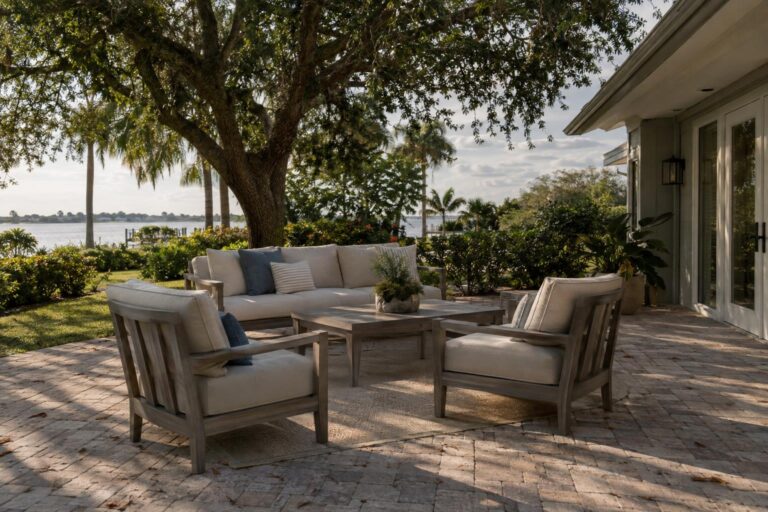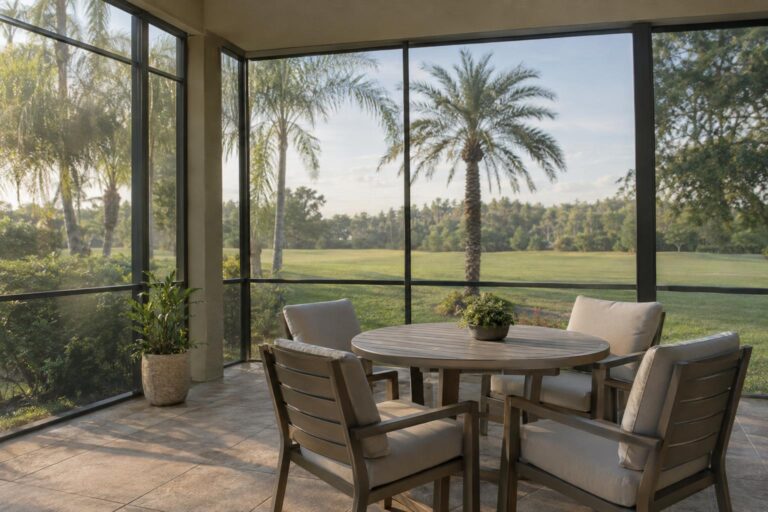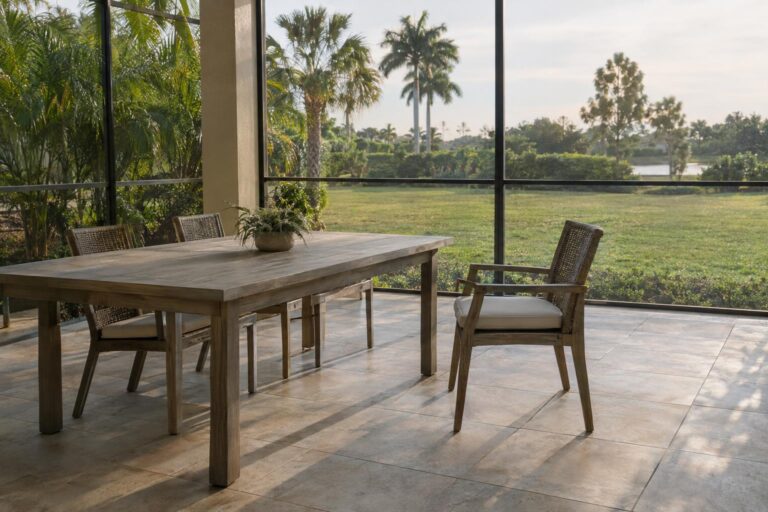


Shopping for uv-protected furniture in Florida starts with realistic expectations about how intense year-round sunshine interacts with outdoor frames, weaves, and fabrics. South- and west-facing pool decks, uncovered docks, and bright paver patios receive far more cumulative sun exposure than seasonal northern yards, which quickly exposes surface-dyed bargain textiles and thin painted finishes. Understanding how pigment, fiber dyeing, powder coating, and smart shade placement work together helps you choose outdoor sets that stay inviting season after season.
At Palm Casual, homeowners can compare solution-dyed upholstery swatches alongside poly lumber, marine-grade polymer, extruded aluminum, cast aluminum, all-weather resin wicker, PVC pipe, and teak in person. Use the practical checks below to match materials, colors, and sun-care habits to your patio.
How solution-dyed fabrics and through-colored materials differ from surface coatings
Not all outdoor color is built the same way. On entry-level patio cushions, yarn is woven white first and dipped in dye afterward—much like the outer ring of a radish, color sits primarily on the outside of each strand, where bright sunlight and routine cleaning wear it down noticeably faster. Painted softwood chairs face a similar limitation when sun and rain expand and contract the wood beneath a brittle surface coat.
Solution-dyed outdoor fabrics take the opposite approach by adding UV-stabilized pigment directly into the liquid polymer before the yarn is extruded, carrying color all the way through the fiber core. In its published overview of Sunbrella textiles, the manufacturer explains how solution-dyed acrylic construction supports fade resistance and cleanability in sunny indoor and outdoor settings. When comparing cushioned pieces at the showroom, always ask which exact fabric grade applies to your chosen set and inspect physical swatches outdoors in natural daylight.
Solid HDPE poly lumber, marine-grade polymer, and synthetic resin wicker apply a similar color-through principle to rigid components: pigment is compounded into the resin during manufacturing rather than brushed on as house paint, helping everyday scuffs blend in rather than flaking off.
Compare uv-protected furniture options across sunny patio zones
Matching each material to how many hours of direct overhead sun that spot receives keeps both appearance and seated comfort balanced across your backyard:
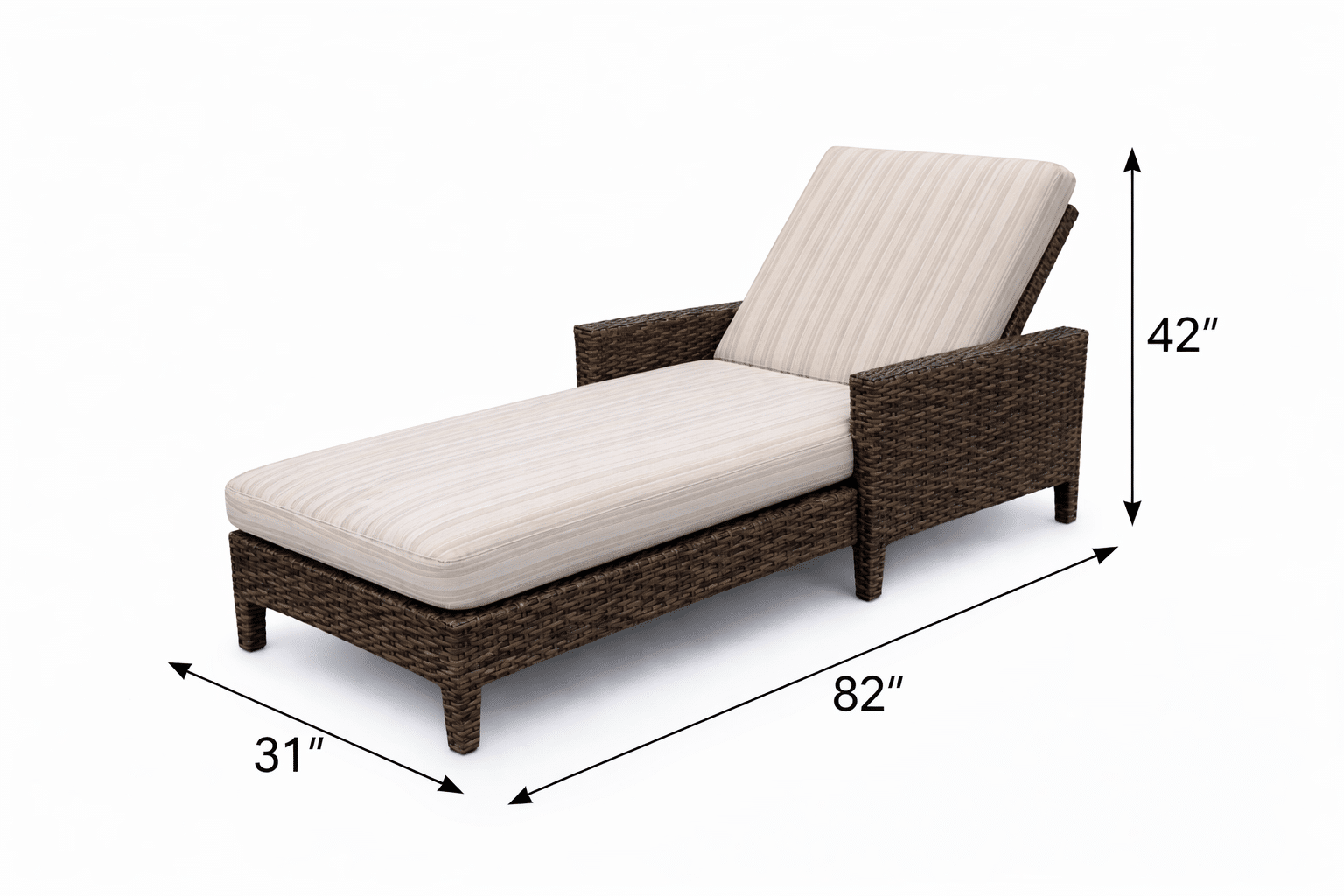
Poolside loungers and sun-deck seating: Chaise lounges spend the longest stretches in unshaded midday sun. Testing pieces such as the Grand Palm Chase Lounge alongside sling chaises in extruded aluminum, PVC pipe, or marine-grade polymer lets you compare cushioned comfort against breathable open-weave mesh. Keep surface warmth in mind as well: lighter frame and fabric colors—white, sand, linen, silver, or pale coastal blues—reflect more sunlight and feel cooler against bare legs than espresso, charcoal, or black finishes placed on the same unshaded deck.

Uncovered tables and conversation corners: On open patios, pairing powder-coated aluminum or through-colored polymer tables—such as the MGP Collection Round Chat Table—with UV-stabilized sling or solution-dyed cushioned chairs eliminates painted wood surfaces that peel in intense sun. If you enjoy natural wood character, remember that teak furniture naturally mellows to a silvery-gray patina in sunlight unless maintained for its honey-brown tone per collection care instructions.
Shaded lanais and umbrella dining sets: Even durable materials benefit from thoughtful shade. Positioning a dining or conversation set beneath a roofed lanai overhang—or pairing an outdoor dining table with a properly sized patio market umbrella—reduces peak midday UV load on cushions while making afternoon meals far more comfortable for guests. Always close umbrellas when not in use and remove them completely before strong winds or storms.
Simple cleaning and rotation habits that help colors stay bright
Sun exposure rarely acts alone in Florida; sunscreen lotions, pool water, tree pollen, and dust settle onto warm frames and cushions, dulling colors if left unwashed. Building three low-effort habits into your routine helps uv-protected furniture keep a clean, even look across the patio:
First, rinse and wash residue promptly. Wipe sunscreen, food oils, and spilled drinks off polymer, PVC, and powder-coated aluminum frames with mild dish soap, lukewarm water, and a soft cloth, then rinse thoroughly with clean water so soap film does not bake in the sun. For cushions, follow Sunbrella’s upholstery cleaning directions: brush off loose dirt, clean with mild soap and lukewarm water using a soft-bristle brush, rinse completely, and air dry.
Second, rotate cushions and movable chairs periodically. On a partially shaded lanai where two dining chairs catch afternoon western sun every day while two sit in shade, swapping chair positions and flipping reversible cushions occasionally evens out sun exposure and everyday wear.
Third, store cushions and umbrellas sensibly when away for extended stretches or ahead of severe storms—ensuring every fabric piece is 100% dry before placing it in ventilated indoor storage.
Tracking where afternoon shadows move across your yard between winter and summer also helps you plan smarter layouts. A patio corner that sits in cool shade at 10:00 a.m. in January may receive four hours of direct western glare in July. Sketching those sunny and shaded zones before visiting a showroom lets you pair open-weave slings or light-toned polymer frames with unshaded sun decks while placing darker accent fabrics under solid overhead shelter.
Evaluate swatches, quotes, and showroom support at Palm Casual
Computer screens cannot show how a weave or cushion shade looks under bright Florida skies. Before ordering, snap daytime photos of your patio pavers, pool waterline tile, and house trim, measure your usable floor space and delivery path, and step outside the showroom door with full fabric and finish samples to check undertones in real sunlight.
Palm Casual was founded in Orlando in 1976—learn more on our About Us page—and offers factory-direct pricing, a 30-day trial period (confirm return or exchange details with your individual showroom), 3–5 business day delivery on in-stock items, custom fabric and finish options (custom orders typically add 15–25% to base prices), and in-house repair services and replacement parts for eligible pieces.
When you are ready to compare uv-protected furniture materials, lighter heat-friendly finishes, and solution-dyed fabrics side by side, find your closest store in our Palm Casual showroom directory or call our Orlando headquarters showroom at (407) 299-9188 to ask about current floor displays.
Frequently asked questions about sun-ready outdoor furniture in Florida
Does lighter-colored outdoor furniture stay cooler in direct Florida sun?
Yes. Any solid outdoor frame or fabric sitting in full midday sun absorbs solar warmth, and lighter tones—such as white, sand, linen, dove, or seafoam—reflect more visible sunlight and generally feel cooler to the touch than dark espresso, navy, or black finishes.
What is the difference between solution-dyed and piece-dyed outdoor cushion fabric?
Solution-dyed acrylic fabrics add pigment before the yarn is formed so color runs through the entire fiber rather than sitting only on the outer surface, supporting better color retention under sunny exposure and routine cleaning when cared for per manufacturer instructions.
Should I keep a patio umbrella open all day to shade my dining set?
Open a patio umbrella while you are actively using the table for shade, then close and secure it whenever you leave the patio—and lift it indoors ahead of strong gusts or storms—so sudden afternoon wind squalls cannot tip or strain the frame.
Explore Palm Casual
Factory-direct pricing with a risk-free 30-day trial. Visit a showroom or call (407) 299-9188.
Explore Our Buying Guides
Looking for expert advice? Read our Complete Guide to Patio Furniture in Florida for tips on materials, maintenance, and choosing the right set for your space.