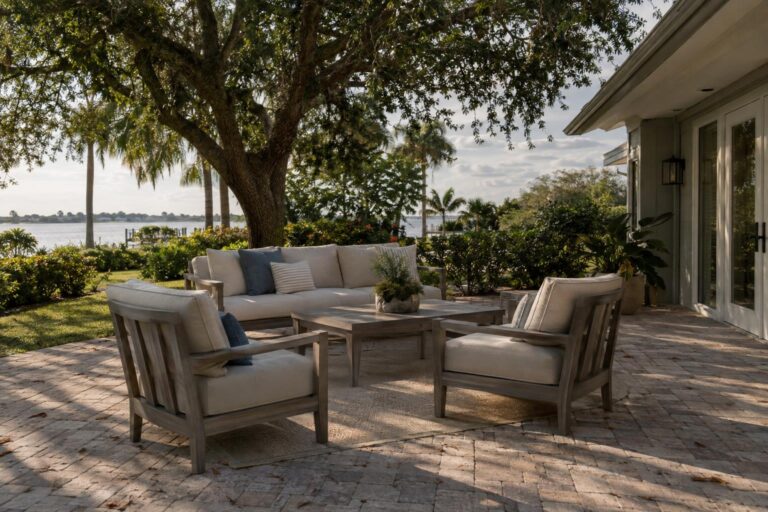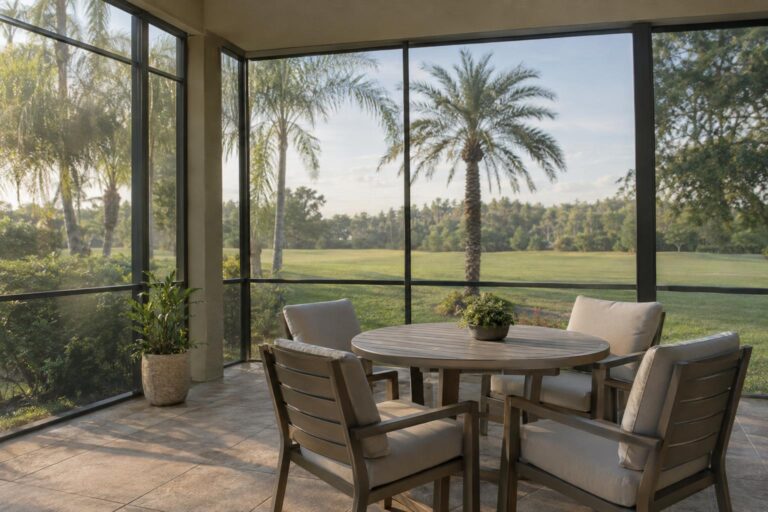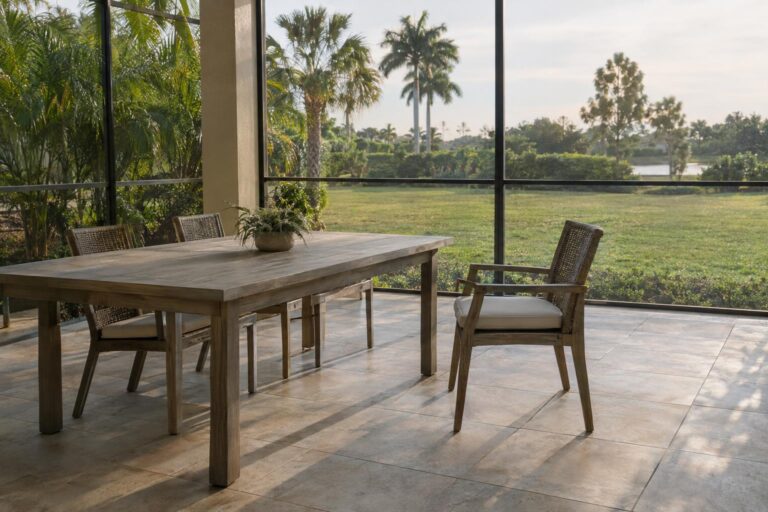


Understanding why polywood is a favorite for Florida coastal homes starts with clarifying what shoppers mean by the word. Homeowners along the Atlantic and Gulf coasts frequently use “polywood” as everyday shorthand for solid high-density polyethylene (HDPE) poly lumber outdoor furniture—note that POLYWOOD is a separate third-party brand name, while Palm Casual carries its own poly lumber and marine-grade polymer collections. What draws coastal buyers to HDPE lumber and polymer seating is a practical mix of moisture resistance, substantial frame weight, through-colored planks, and simple soap-and-water upkeep.
At Palm Casual, you can compare slatted poly lumber, sleek marine-grade polymer, cast aluminum, extruded aluminum, PVC pipe, resin wicker, and teak side by side across Florida showrooms. Below is a clear look at how HDPE lumber works in salt-air environments, where it fits best on a coastal patio, and what to check before ordering.
How recycled HDPE poly lumber handles salt air and coastal humidity
Traditional painted softwood furniture faces constant stress near the coast: humid air, afternoon downpours, pool splash, and salt spray work into end grain and surface coatings, leading to peeling paint, soft spots, and recurring sanding or repainting projects. Unprotected carbon steel frames face a different headache as salt mist accelerates rust around joints and feet.
Poly lumber takes a fundamentally different material approach. Most poly lumber boards are extruded from high-density polyethylene (HDPE), a dense thermoplastic commonly recovered from post-consumer containers such as milk and detergent jugs. In its plastics material-specific data overview, the U.S. Environmental Protection Agency notes that HDPE (resin #2) is among the most widely recycled plastics in municipal collection programs. Once cleaned and compounded into solid furniture lumber, HDPE does not absorb water like porous wood fibers, so boards avoid wood rot and wood splinters around bare feet on pool decks, docks, and balconies.
Pigment is blended throughout the polymer stock during extrusion rather than brushed onto the outside as a thin paint film. Minor surface scuffs from everyday patio traffic therefore do not expose raw, contrasting wood underneath, and homeowners can cross wood staining and repainting off their seasonal chore list.
Why polywood is a favorite for Florida coastal homes on breezy decks
Weight and stability are major reasons a polywood favorite Florida coastal homes checklist often starts with solid HDPE seating. Thin, hollow molded-resin chairs can slide across pavers during routine afternoon sea breezes on an open Intracoastal terrace, elevated beach deck, or unscreened dockside patio. Solid poly lumber and marine-grade polymer pieces carry noticeably more heft, giving Adirondack chairs, rockers, dining chairs, and side tables a grounded, substantial feel during normal everyday breezes.

At the same time, every coastal homeowner needs a realistic severe-weather plan. Everyday breeze stability is not hurricane protection: when a tropical storm or hurricane watch approaches, official guidance from Ready.gov’s hurricane preparedness page recommends bringing loose outdoor furniture, cushions, and umbrellas inside an enclosed building well before high winds arrive. When testing poly pieces in a showroom, lift the actual dining chair or end table—such as the Hampton Square End Table in Weatherwood—so you know whether two people in your household can move it comfortably into a garage or interior room when storms threaten.
Hardware deserves a close look during your showroom visit too. Even when polymer boards contain no iron, chairs and tables rely on fasteners, swivels, or gliders at structural joints. Inspect exposed screws and brackets underneath floor samples, ask the showroom team what hardware is used on the exact collection you are considering, and rinse salt spray off both frames and fasteners regularly with clean fresh water.
Compare slatted poly lumber, marine-grade polymer, and other coastal materials
Shoppers exploring poly furniture at Palm Casual can compare two related polymer styles depending on their home’s architecture. Traditional plank-built poly lumber—featured across Adirondack chairs, porch rockers, and casual side tables—mirrors the classic coastal board-and-batten silhouette many beach cottages and waterfront porches favor.

Marine-grade polymer uses dense polymer sheets and profiles that can be contoured into smoother, more contemporary silhouettes, including sling dining chairs and deep-seating club chairs such as the Abaco Swivel Club. Sitting in both styles side by side helps you compare upright vs. relaxed back angles, seat width, and arm comfort.
Keep surface temperature and placement in mind for uncovered south- or west-facing decks. Like any solid outdoor surface sitting in direct Florida sun, darker polymer shades warm up faster than white, sand, dove, or seafoam finishes. Holding physical color samples outdoors in natural daylight—and deciding whether you want bare polymer slats, breathable sling mesh, or removable cushions—lets you match each piece to how shaded or sunny that corner of your patio is.
You can also mix materials across one coastal property. Many Florida homeowners place poly lumber Adirondack chairs or side tables on an open sun deck while choosing PVC pipe sling chairs right beside pool steps for one-handed lifting, or cast aluminum and resin wicker under a roofed lanai.
Routine cleaning, cushion care, and showroom planning
Day-to-day maintenance on poly lumber and marine-grade polymer stays refreshingly simple. Rinse off salt mist and loose sand with a garden hose, wash surfaces periodically using mild dish soap, warm water, and a soft cloth or soft-bristle brush, and rinse clean. Wipe away sunscreen, food oils, or bird droppings promptly rather than letting residue bake in direct sun, and check the product’s specific care guide before using any specialty cleaner or pressure washer.
If your coastal setup pairs polymer frames with removable seat cushions, ask which outdoor fabrics apply to that collection and review fabric cleaning steps separately. Sunbrella’s upholstery care instructions detail brushing away loose dirt, cleaning with mild soap and water, rinsing thoroughly, and air drying cushions completely.
Palm Casual began in Orlando in 1976—learn more on our About Us page—and offers factory-direct pricing, a 30-day trial period (confirm return or exchange specifics with your local showroom), 3–5 business day delivery on in-stock items, and in-house repair and replacement-parts options for eligible pieces. To see firsthand why polywood—and Palm Casual’s recycled poly lumber and marine-grade polymer lineup—remains a favorite for Florida coastal homes, bring your patio measurements to a nearby store in our Florida showroom directory or call our Orlando showroom at (407) 299-9188 to check current floor displays.
Frequently asked questions about poly lumber for Florida coastal homes
Is “polywood” a material type or a brand name?
Shoppers often say “polywood” generically to describe high-density polyethylene (HDPE) poly lumber outdoor furniture, though POLYWOOD is a third-party brand name. Palm Casual offers its own recycled HDPE poly lumber and marine-grade polymer collections across its showrooms.
Does coastal poly lumber furniture still need rinsing near salt water?
Yes. While HDPE boards do not rot like untreated wood, rinsing salt spray, sand, and sunscreen residue regularly with fresh water and mild soap helps keep textured surfaces and metal fasteners clean.
Should poly lumber chairs stay outside on a balcony or dock during a hurricane?
No. Even heavy polymer chairs can shift in tropical storm or hurricane winds. Always follow local emergency guidance and bring outdoor furniture, cushions, and umbrellas into an enclosed building before severe weather arrives.
Explore Palm Casual
Factory-direct pricing with a risk-free 30-day trial. Visit a showroom or call (407) 299-9188.
Explore Our Buying Guides
Looking for expert advice? Read our Complete Guide to Patio Furniture in Florida for tips on materials, maintenance, and choosing the right set for your space.